
Reviewed · PULA TOURS
Pula: Arena Entrance Ticket
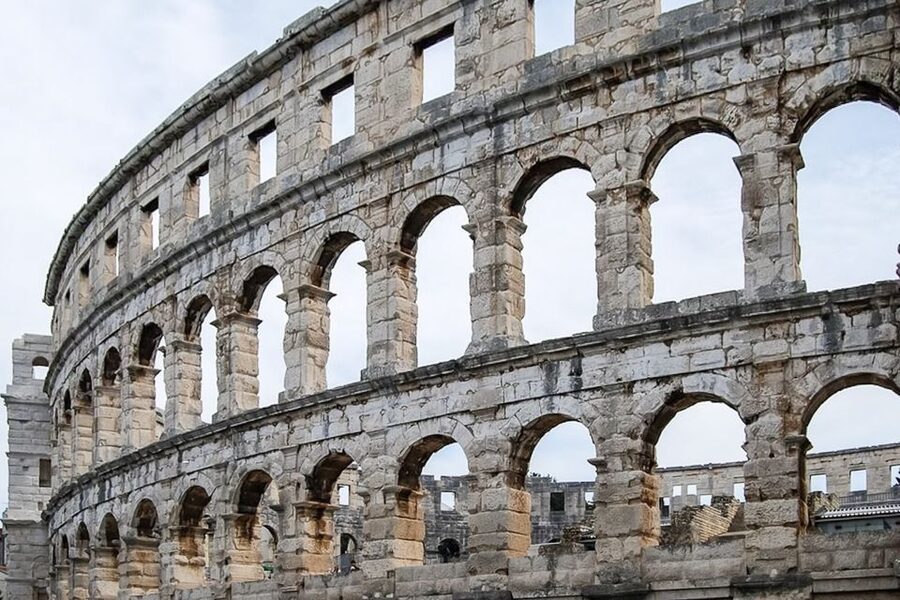
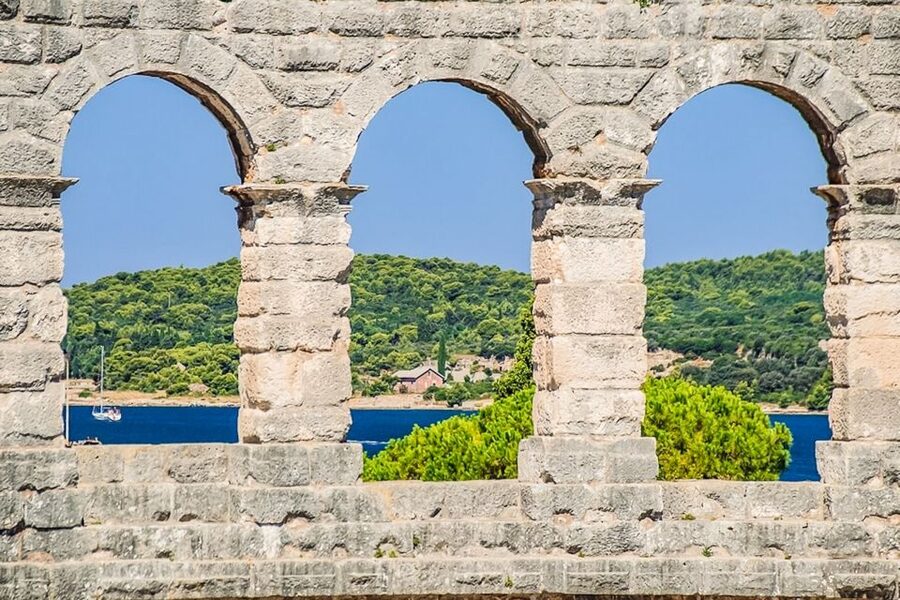
Pula Arena is no dusty pile of stones. This nearly 2,000-year-old amphitheater still has its tall outer walls, broad seating levels, and a powerful sense of place. You can walk where gladiators and animals once appeared, then look out toward the water from the upper levels. It is one of Croatia’s most memorable historic sights.
I like the freedom to explore without being tied to a guide, and I like the underground exhibition, where full-size reproductions show how olive oil and wine were made in ancient Istria. The drawback is that the ticket is for entry only. QR codes provide information, but audio content has not always been available, and buying online may not always mean walking straight past the ticket counter.
Key points to know before you go
- The underground gladiator area has an exhibition on ancient olive oil and wine production, with mills, presses, tanks, and amphorae.
- Plan on about one to two hours inside, depending on how much you read and how long you spend taking in the structure.
- Go early in summer, when the open stone galleries offer little shade and tour groups begin arriving.
- The arena is also a working event venue, so concerts, festivals, and stage construction can affect the atmosphere.
- QR codes offer self-guided information, but an audio guide is not included and may not always be operating.
- The site is wheelchair accessible except for the lower basement gallery, which has limited access.
Why Pula Arena feels different from a standard ruin
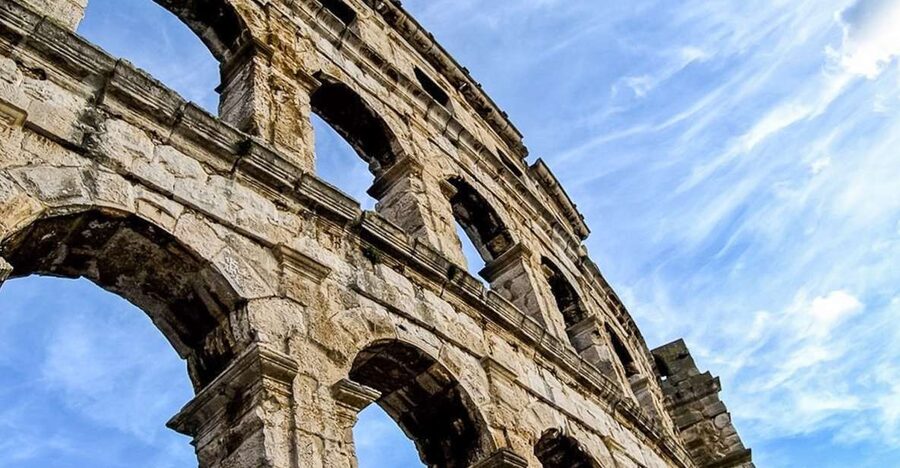
Pula Arena is the kind of monument you understand with your feet before you read a single sign. From outside, the huge pale-stone walls rise right beside the city streets. Inside, the oval arena opens wide around you, and the surviving arches give the building a strong sense of scale.
This is not Rome’s Colosseum, and that is part of its appeal. Pula’s amphitheater is smaller and easier to take in, with less confusion about where to go. You can walk through the seating areas, look down toward the arena floor, and study the construction without needing a long guided tour.
The site is also unusually alive. Pula Arena still hosts concerts, festivals, recreation of gladiatorial tournaments, and other events in the summer. That can mean a stage or sound equipment during your visit, but it also helps you understand why this building was designed for crowds and spectacle. The acoustics can be remarkable, especially when an event is being prepared.
The location makes a visit easy to add to a day in Pula. You do not need a bus or a full-day excursion. The arena is in the city, close to shops and other historic sights, so you can combine it with the Temple of Augustus, the fortress, and the old streets.
A few more Pula half-days to weigh up
- Medulin -Kamenjak 5h boat trip with lunch & drinks on Sandra Boat
★ 5.0 · 1,621 reviews - Full-Day Boat Tour of the Medulin Archipelago from Medulin
★ 5.0 · 1,389 reviews - 3hours all inclusive Sunset&Dolphin Tour from Medulin on Sandra
★ 5.0 · 1,130 reviews
Entering the amphitheater with the prepaid ticket
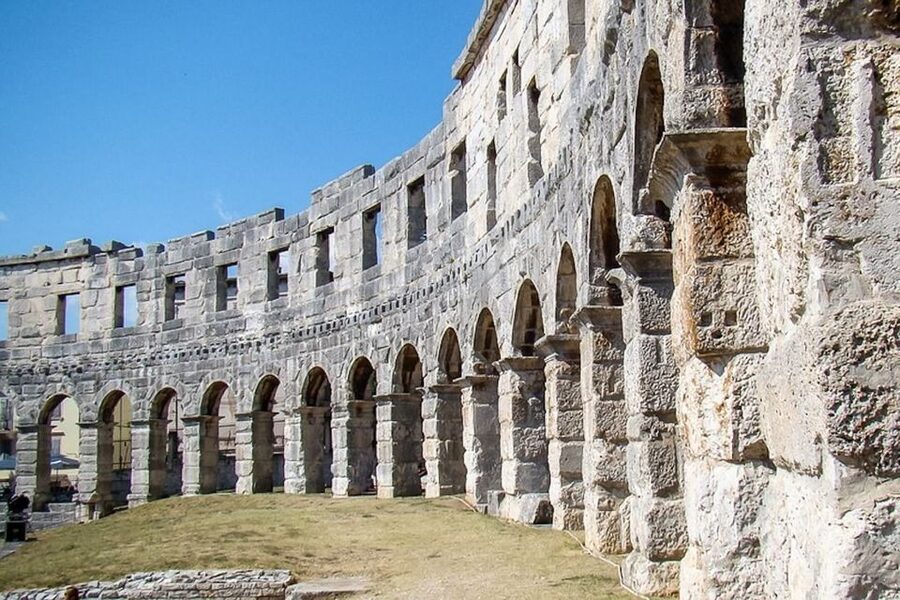
Your meeting point is the main Pula Arena entrance. The ticket is valid for one day, and you explore independently rather than joining a scheduled group.
The practical benefit of booking ahead is simple: you have secured admission before arriving. Several people found the online ticket useful during busy periods, especially when they wanted to avoid a longer line to buy tickets. But do not assume that prepaid means instant entry every time.
The entrance process can require the QR code to be scanned and exchanged for a receipt. At some times, that has meant going through the ticket office line anyway. At other times, the process was quick. The sensible approach is to keep the QR code open on your phone, allow a little extra time, and ask staff where prepaid tickets should be processed.
This matters most in July and August, when the sun is strong and tour groups can arrive in waves. If you come early, the arena is more peaceful and your ticket is easier to use before the entrance gets crowded. An early visit also gives you cooler conditions for walking the open galleries.
Walking the stone galleries and seating levels
Once inside, take a slow circuit before concentrating on the information. The first impression comes from the structure itself: repeated arches, steep stone seating, and the oval view toward the arena floor.
You are free to walk at your own pace. There is no fixed route that forces you through in a certain order, so you can pause for photographs or return to a section that interests you. That works well for families, since children can move a little more freely than they could on a tightly scheduled tour.
The high walls and open galleries provide excellent views, but they also leave you exposed to the weather. In summer, the stone can feel hot and there is intense sun in much of the complex. Bring water, wear a hat, and consider visiting early or later in the day. On a rainy day, the arena remains impressive, but the exposed areas are less comfortable and photographs lose some of their drama.
The seating areas help explain the social purpose of the building. This was not merely a place to watch a show. It was a public gathering point, built to hold large crowds and direct their attention toward the arena floor. Even without a live performance, the design makes the old spectacles easier to picture.
Look closely at the masonry and arches. The appeal here is not just the size of the monument. It is the repeated engineering: each opening, wall, and level contributes to a building that has survived for centuries and still works as a public venue.
The underground gallery and ancient Istrian production
The most distinctive part of the ticket is the permanent underground exhibition, titled Istrian Olive and Viticulture in Antiquity. It occupies the basement area once associated with the gladiators and the support functions of the arena.
The displays focus on olive oil and wine production in ancient Istria. You will see reproductions of mills, presses, and sedimentation tanks, along with amphorae used to package and transport oil and wine.
This section adds useful local context. The arena can easily become a story only about gladiators, but the exhibition shifts your attention to everyday trade, agriculture, food, and technology. It shows how products were processed and moved, rather than treating Roman life as a string of battles and emperors.
Allow extra time here if you like practical history. The tools and equipment make the past easier to understand than a short inscription alone. You can see the basic stages of production and imagine the labor behind the goods that moved around the Roman world.
Access is not identical throughout the site. The whole arena is wheelchair accessible except for the lower gallery in the basement. If you use a wheelchair, or are visiting with someone who has limited mobility, the main galleries and much of the exhibition area should be accessible, but the lowest section may not be.
Same stretch of coast, a completely different day out:
- Dolphin Watching & Sunset Boat Tour With Dinner and Drinks
★ 5.0 · 1,075 reviews - Pula: Kayaking,Snorkeling, Cliff jumping Tour with Wetsuit
★ 4.8 · 861 reviews - BOAT & KAYAK! Sea Adventure – Snorkeling & Cliff Jumps
★ 5.0 · 808 reviews - Pula: National Park Brijuni Island Visit & Dolphin Cruise
★ 4.5 · 788 reviews
Using QR codes instead of an included audio guide

The ticket does not include an audio guide. Instead, information points and QR codes around the arena can provide self-guided material, including audio content when the system is working.
Bring headphones. They make the QR-based material easier to hear and keep your phone free while you walk. You will also want a charged phone and a reliable data connection, since the information is accessed digitally.
The QR system is useful because you can choose how much interpretation you want. If you already know Roman architecture, you may prefer to focus on the building and scan only a few points. If you are visiting with children or want more context, use the codes as prompts for a slower walk.
Do not treat the QR material as a guaranteed replacement for a live guide. Audio service has not always been available, and some visitors found the promised English guidance or self-guided audio inactive. That is a real limitation for anyone expecting a fully narrated tour.
You can still enjoy the arena without audio, since the monument itself does most of the work. But if detailed explanation is important to you, bring headphones, check the QR points early, and be prepared to read the available information rather than depend on a continuous commentary.
How long to stay inside Pula Arena
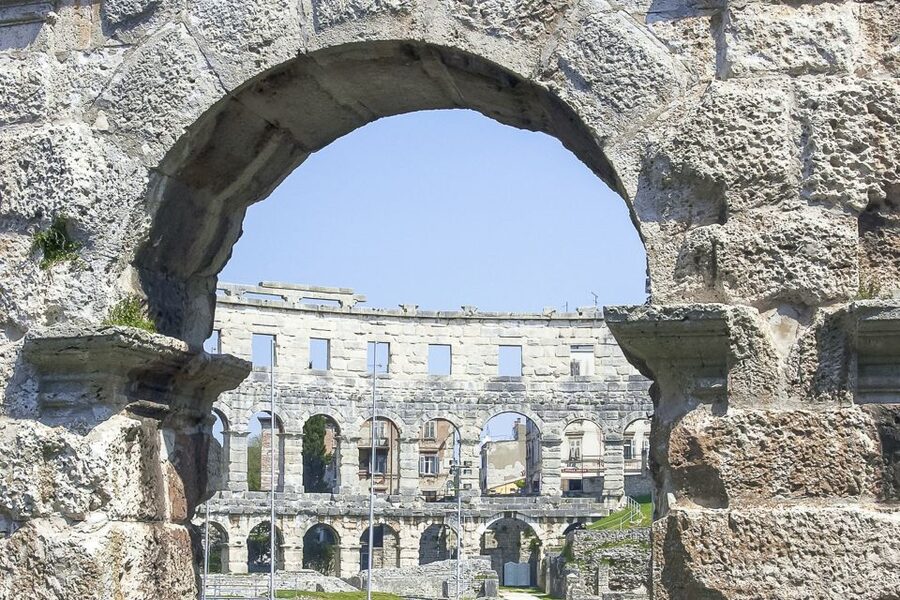
The ticket is valid for one day, but most people will not need an entire day inside the amphitheater. I would allow 60 to 90 minutes for a relaxed visit, and closer to two hours if you scan the information points, study the exhibition, and take plenty of photographs.
A shorter visit works if you mainly want to see the interior and the underground displays. The building is easy to understand at a glance, so you do not need to force yourself to stay for hours.
A longer visit makes sense if you enjoy architecture or Roman history. Sit for a moment in the viewing areas and study the relationship between the arena floor, seating, and outer walls. The quietest parts of the day can make the building feel much more powerful than a quick stop between beach visits.
The arena also works well as a break from Pula’s beaches. On a hot afternoon, the open galleries are not cool, but the site gives your day a different rhythm. You trade swimming and sun for stone, engineering, and stories about ancient public life.
Timing, crowds, weather, and event preparation
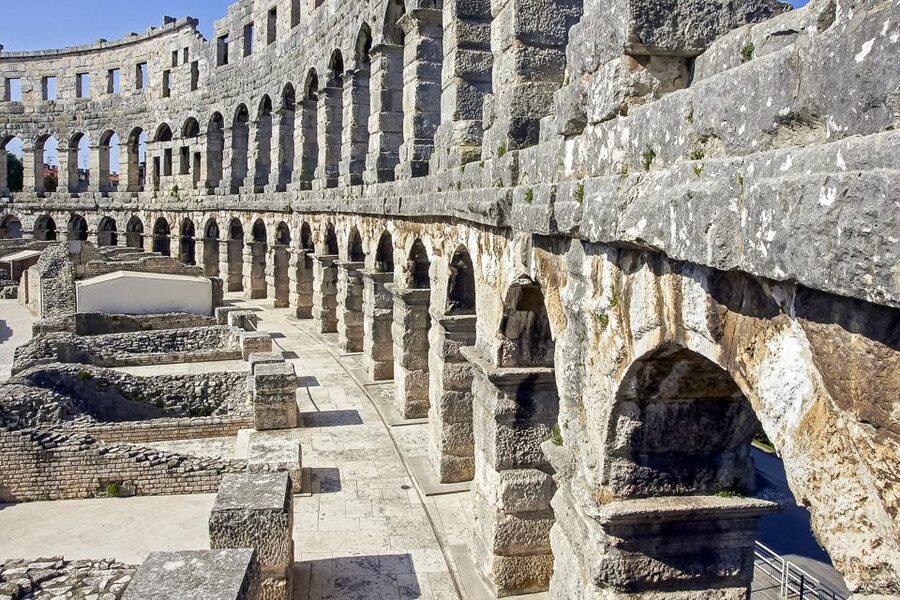
The clearest practical advice is to arrive early. Several people found the arena nearly empty around 8:00 or 9:30 in the morning, while others recommended arriving before large groups. Early hours also help with photographs, since fewer people appear in the seating and arena-floor views.
Crowds vary by season and by event schedule. Summer is the busiest period, but it is not automatically crowded every afternoon. Still, you should expect more heat, more visitors, and possible preparations for a concert or festival.
Stage construction can create noise and block part of the atmosphere. This does not make the arena a poor visit, but it can reduce the sense of an untouched ancient site. On the other hand, an event setup lets you hear the acoustics in action. The contrast between old stone and modern performance is part of Pula Arena’s continuing life.
Rain does not close off the whole experience, but you will spend much of your time outdoors. Check the forecast, wear suitable shoes, and keep your phone protected if you plan to use QR codes.
Is the $11 admission good value?
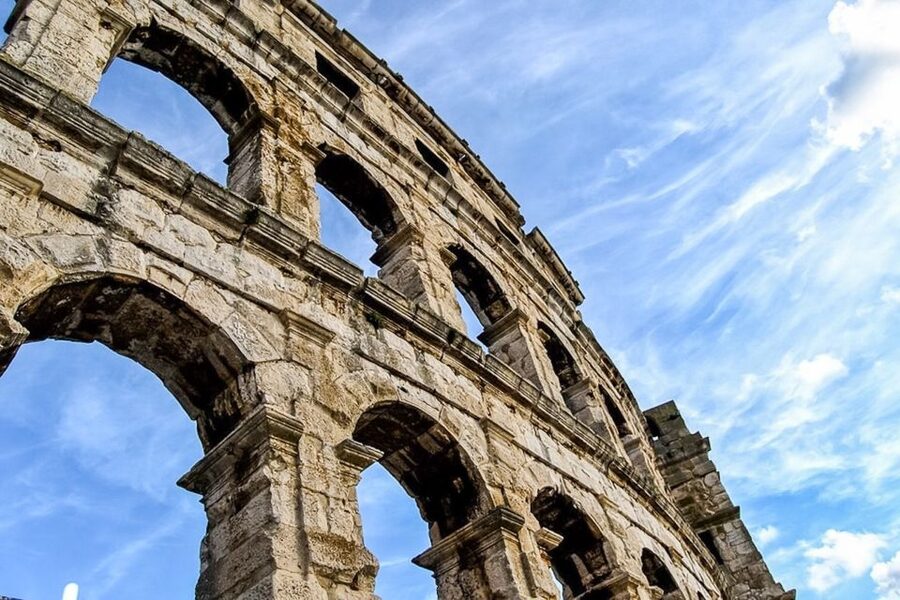
At $11 per person, this is a reasonably priced historic sight, especially if you are already spending time in Pula. You get entry to the main amphitheater and the permanent underground exhibition, not just a view from the street.
The value depends on what you want. If you are happy seeing the exterior, you can view much of the arena without paying. That is the strongest argument against admission. The outside walls are impressive, and casual visitors may feel they have seen the main attraction before entering.
Inside, however, the building has a different effect. You gain access to the seating levels, the arena interior, and the underground exhibition. You also support the care of a major archaeological site. For anyone interested in Roman buildings, local history, photography, or architecture, the admission feels justified.
The ticket is less satisfying if you expect a guided experience. There is no guide included, no guaranteed audio tour, and no special actor-led performance. You are paying for access, not a fully narrated program.
I would call it good value for a self-guided visit, particularly if you arrive early and spend time with the underground displays. If you only want one quick photograph, save your money and admire the exterior.
Who should book this Pula experience?
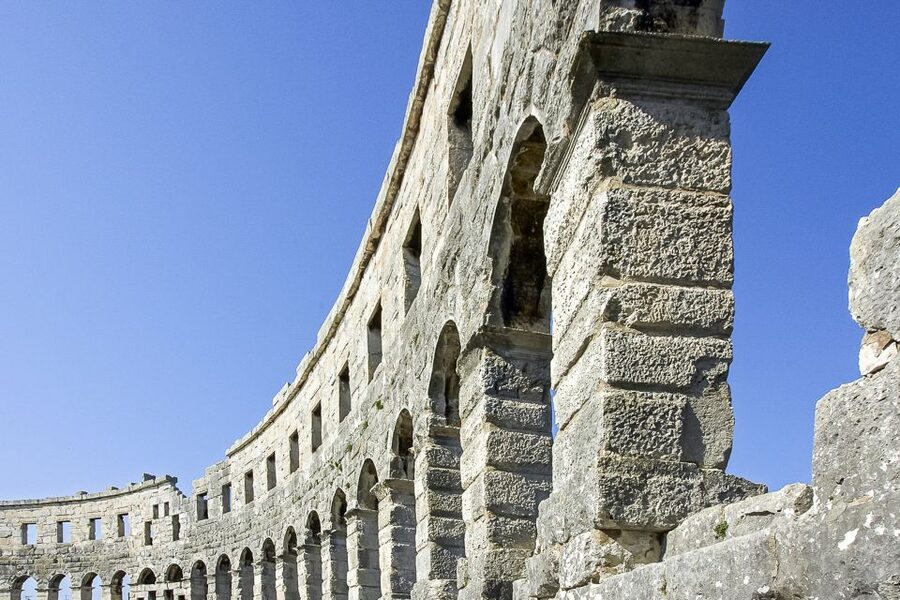
I recommend it to anyone with a serious interest in Roman history, but you do not need to be an expert. The scale is easy for children to appreciate, and families can turn the arena into an imaginative lesson about gladiators, public entertainment, and ancient engineering.
It also suits independent sightseers who dislike fixed schedules. You can enter, walk, scan the QR points, and leave when you are ready. There is no transport, meeting group, or long excursion to manage.
Photographers should come early for quieter views. History-minded visitors should give the underground exhibition enough time. People who prefer a live guide should consider looking for a separate guided option, since this ticket does not promise one.
The main audience I would not push toward this ticket is someone who has no interest in entering historic buildings and only wants an exterior view. Pula Arena is visible from outside, and the admission offers its best value when you are willing to explore the inside properly.
Booking, cancellation, and access in brief
You can cancel up to 24 hours in advance for a full refund, and the reserve-now, pay-later option keeps your plans flexible. Check the available date and opening times when booking, since the ticket is valid for one day rather than for an unlimited period across your trip.
Redeem the ticket at the main entrance. Keep the mobile code ready, and allow time for scanning or exchanging it for a receipt. Headphones are worth bringing for the QR-based information points.
The site is wheelchair accessible except for the lower gallery in the basement. Most of the arena is open-air, so plan for sun, heat, or rain depending on the season.
Should you book Pula Arena?
Book it if you want to step inside one of Croatia’s finest Roman monuments, especially if you can visit early and enjoy a self-guided walk. The underground exhibition gives the ticket more substance than a simple arena circuit, and the $11 price is fair for a one to two-hour stop.
Skip it if you only want an exterior photograph or if a professional audio tour is essential to your visit. For everyone else, enter with modest expectations about the guide service, bring headphones, and take your time with the stonework and ancient production displays. Pula Arena is worth seeing from outside, but its real atmosphere begins once you walk through the gate.
FAQ
How much does the Pula Arena entrance ticket cost?
The ticket costs $11 per person.
How long is the Pula Arena ticket valid?
The ticket is valid for one day. Check availability for the available starting times or visit details when booking.
What does the ticket include?
It includes entrance to Pula Arena and access to the permanent underground exhibition on ancient Istrian olive oil and wine production.
Is an audio guide included?
No. An audio guide is not included. QR codes around the arena provide self-guided information, and headphones are recommended.
Where do I redeem the ticket?
Redeem the ticket at the main entrance to Pula Arena. Keep your mobile QR code ready for scanning.
Is Pula Arena wheelchair accessible?
The site is wheelchair accessible except for the lower gallery in the basement.
Can I cancel the ticket?
Yes. You can cancel up to 24 hours in advance for a full refund.
Just added around Pula
- Kamenjak Nature Park: Kayak Tour with Snorkeling & Cave Exploring★ 5.0 · 15 reviews
- Dolphin & Sunset tour with Brijuni panorama★ 5.0 · 119 reviews
- Transfer Pula – Poreč★ 5.0 · 5 reviews
- Kayaking to Island Saint Jerolim with snorkeling activitie★ 4.5 · 26 reviews
- Clear Kayak Glow Night Tour★ 5.0 · 69 reviews
- Pula / Pješčana Uvala: Sunset SUP Tour – Explore & Chill★ 5.0 · 16 reviews
- Scuba Diving for Beginners in Pula★ 5.0 · 29 reviews
- Pula Kayak Tour-Cliff jumping,snorkeling& free GoPro pictures★ 5.0 · 94 reviews
Pula Tours, compared.
Kamenjak 5h boat trip with lunch & drinks on Sandra Boat
Read our review →
Full-Day Boat Tour of the Medulin Archipelago from Medulin
Read our review →
3hours all inclusive Sunset&Dolphin Tour from Medulin on Sandra
Read our review →
Dolphin Watching & Sunset Boat Tour With Dinner and Drinks
Read our review →
Kayaking,Snorkeling, Cliff jumping Tour with Wetsuit
Read our review →
BOAT & KAYAK! Sea Adventure – Snorkeling & Cliff Jumps
Read our review →
National Park Brijuni Island Visit & Dolphin Cruise
Read our review →
Brijuni Sunset Dolphin Cruise with Dinner & Drinks
Read our review →Browse the lists this tour appears in