

Reviewed · PULA TOURS
Pula city tour in German
Pula reveals its character quickly: Roman ruins sit beside Austrian-era streets, Venetian traces, a working market, and small details most people walk past. This German-language tour with local guide Marina begins at the Roman Arena and turns the city into a readable story, not just a collection of old stones.
I like the personal format and the way the tour uses legends, everyday life, and Roman facts rather than dates alone. I also like that Marina has been praised for speaking very good German, welcoming questions, and offering useful tips for the rest of an Istrian holiday. The main limitation is simple: 90 minutes goes quickly, and admission to the Arena is not included.
Key points to know before booking
- A local German-speaking guide: Marina leads the walk in German and brings a personal connection to Pula.
- The Roman Arena anchors the tour: You spend about 30 minutes learning how the amphitheater worked and why it mattered.
- Small and personal: The experience is private in style, with a maximum group size of 15 people.
- More than the headline sights: The route includes the Punishment of Dirce mosaic, Roman gates, and the remains of an octagonal mausoleum.
- Morning market stop: The market is included only on the morning version, making the 10:30 start especially useful.
- Good value for a short orientation: At $28.66 per person, the tour works best as a first look at Pula before exploring on your own.
Why this short Pula walk works
Pula is easy to underestimate. Many people come for the Arena, take a few photos, and move on. That misses the city’s best quality: its layers. Roman foundations, Venetian gates, Austrian influence, Croatian daily life, and modern cafés all occupy the same compact center.
This tour gives you a framework for those layers. Marina explains the Roman buildings, but she also connects Pula to Istria and compares ordinary life in Croatia and Germany. That personal touch matters. You are not simply memorizing that a gate is Roman. You are learning why the city looks the way it does and how locals see it.
The tone appears to be conversational rather than formal. Marina has been praised for making the walk a dialogue, answering questions, and showing details that can easily escape notice. Families should also find the format workable, since the stories and legends give children something to follow beyond a list of construction dates.
Still, keep your expectations in proportion. This is a one-and-a-half-hour orientation walk, not a full archaeological tour or a long museum visit. You will see many important places from the outside, but you will not have time to explore every nearby sight or spend much time inside each monument.
A few more Pula half-days to weigh up
- Pula: Arena Entrance Ticket
★ 4.3 · 2,590 reviews - Medulin -Kamenjak 5h boat trip with lunch & drinks on Sandra Boat
★ 5.0 · 1,621 reviews - Full-Day Boat Tour of the Medulin Archipelago from Medulin
★ 5.0 · 1,389 reviews
Starting at Pula Arena

Meet at the Arena on Flavijevska ulica at 10:30 in the morning. This is a practical starting point because Pula’s most famous monument immediately gives you a sense of the city’s Roman importance.
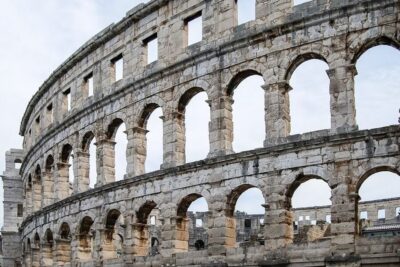
The first part lasts about 30 minutes. Marina explains the amphitheater’s structure, purpose, and place in Roman society, including the familiar idea of bread and games. The useful point is not only that gladiatorial spectacles took place here. You also learn how public entertainment helped Roman rulers keep the population loyal and occupied.
The Arena is impressive from the outside, but the explanation helps you read its design. Arches, tiers, entrances, and the shape of the building begin to make sense as parts of a large public machine. That is where a guide earns the fee. A quick look on your own gives you the scale. A good explanation gives you the reason behind the scale.
Admission is not included. This is important when comparing the tour’s $28.66 price with other city walks. You pay for the guided walk, while an interior visit requires a separate ticket. Some people will prefer to enter on another day, especially if they want more time for the site. Others may buy admission separately and continue exploring after the tour.
The Arena is also where the tour seems to receive its strongest praise. The explanation of its construction and function is a major part of the experience, so book this walk if Roman Pula is your main interest.
A morning look at Gradska Trznica
The next stop is Gradska Trznica Pula, the city market. It includes a green market with local products and a fish market, making it a useful change of pace after the ancient Arena.
The market is not just a place to pass through. It shows how Pula works today. You move from Roman public spectacle to ordinary shopping, local food, and the daily rhythm of the city. That contrast helps keep the tour grounded.
There is one timing detail to watch. The market is included only on the morning tour. Since the stated departure is 10:30, this route is designed to include the morning market stop, but market activity can naturally vary by day and season. If the market matters to you, confirm the timing when booking.
The listed stop lasts about 10 minutes. That is enough for an introduction, not a full food tour. You might get local orientation and suggestions for the rest of your visit, but you should not expect time for an extended tasting session or a leisurely shopping break.
Arco dei Sergi and Pula’s Roman gateways
The walk continues to the Arco dei Sergi, one of three Roman city gates. It is a compact stop, about 10 minutes, but it helps explain how ancient Pula was entered and organized.
Gates are easy to treat as isolated monuments. Here, the guide places the arch in the larger pattern of the city. You begin to see that Pula’s old center is not a museum set apart from daily life. Its Roman remains still occupy streets used for ordinary movement.
The short stop also suits the pace of the tour. You are not held in one place for too long, and the route keeps moving through the center. If you like a brisk walk with frequent points of interest, this rhythm will suit you. If you prefer long pauses for photographs and detailed architectural study, the 90-minute limit may feel tight.
Same stretch of coast, a completely different day out:
- 3hours all inclusive Sunset&Dolphin Tour from Medulin on Sandra
★ 5.0 · 1,130 reviews - Dolphin Watching & Sunset Boat Tour With Dinner and Drinks
★ 5.0 · 1,075 reviews - Pula: Kayaking,Snorkeling, Cliff jumping Tour with Wetsuit
★ 4.8 · 861 reviews - BOAT & KAYAK! Sea Adventure – Snorkeling & Cliff Jumps
★ 5.0 · 808 reviews
Temple of Augustus and the Forum area
The Temple of Augustus is scheduled for about 15 minutes. It is described as the oldest and most beautiful Roman temple in Croatia, and it gives the tour a chance to explain the religious and civic side of Roman Pula.
After the Arena’s emphasis on public entertainment, the temple offers a useful contrast. Roman cities were not only about spectacles. They also had sacred buildings, public squares, political life, and ceremonies that shaped the community.
The temple is not an included admission attraction on this tour. As with the Arena, treat the stop as a guided introduction unless you arrange entry separately. The value comes from learning what you are looking at and deciding later which places deserve more of your time.
This is one reason I would take the walk early in a Pula stay. You can use Marina’s explanations to plan a second outing. The tour shows you the essential sites, then leaves you free to return at your own pace.
The Punishment of Dirce mosaic
The five-minute stop at the Punishment of Dirce mosaic may be the most satisfying small discovery on the route. It is the kind of detail that can disappear beneath your feet while you hurry between larger monuments.
A mosaic gives you another way to encounter Roman Pula. The Arena and temple are imposing, but the mosaic is intimate. It rewards careful looking and shows how ancient decoration could survive in an ordinary urban setting.
The short stop is also a reminder not to judge a sight by its size. You will not spend long here, but Marina’s purpose is to point it out and give it meaning. Afterward, you are more likely to notice similar details on your own.
Twin Gate and Gate of Hercules
The Twin Gate receives about 10 minutes. Its name points to its paired openings, but the tour also connects it with more than the Roman past. That broader context is useful because Pula’s old center contains several periods at once.
The Gate of Hercules follows as a five-minute stop. Hercules is presented as a protector of the city, linking the monument to legend as well as history. This is the sort of story that makes a walking tour more memorable for children and for anyone who prefers a strong narrative to a string of technical facts.
The two gates also show how quickly the character of Pula changes from block to block. One moment you are looking at a major public monument. A few minutes later, you are standing beside a smaller remnant that has survived as part of the modern street plan.
Do not expect a long architectural lecture at either gate. The stops are short by design. You receive the essential story, take in the remains, and continue.
The Roman Mausoleum near the city wall
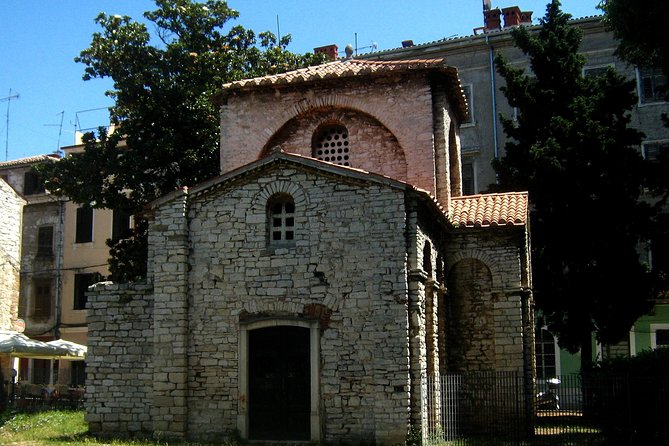
The final listed stop is the Roman Mausoleum, an octagonal structure dating from the first century. Only the lower remains are visible today, and the site is located near the Twin Gate, the Archaeological Museum, and the city wall.
This is a modest ending, but a useful one. It reminds you that Pula’s Roman past is not limited to the famous Arena. Burial architecture, city defenses, temples, gates, and decorative art all formed part of the ancient settlement.
The five-minute visit will not satisfy anyone seeking a full archaeological study. It will, however, give you a pointer to an overlooked remnant and show how much can survive in fragments. If you are interested in ancient sites, note its position near the Archaeological Museum so you can return for more context.
What makes Marina’s guiding style useful
The strongest feature here is the guide. Marina has been praised for good German, a warm manner, clear explanations, and an easy exchange with the group. That matters especially on a private walk, where the quality of the conversation can shape the whole experience.
You can ask about the monuments, but you can also ask about present-day Pula and the rest of Istria. Practical advice, including a restaurant recommendation, has been part of the experience for some participants. Such tips are not guaranteed as a formal part of the tour, but the format allows room for questions.
Marina also contacts participants through WhatsApp before the walk to confirm arrangements. That can be reassuring when you are meeting in an unfamiliar city. You still need to arrive at the stated meeting point, but direct communication makes the plan clearer.
The German is a key reason to book this particular tour. If you understand German better than English, you will get more from the details, humor, and back-and-forth. A language match can turn a standard city walk into a more relaxed conversation.
Group size, pace, and practical comfort
The experience is described as private and has a maximum of 15 people. That is smaller than a large bus group, though not necessarily a one-family tour if other bookings are combined. If you require a fully exclusive guide, confirm what private means for your booking before you pay.
The walk lasts approximately 1 hour and 30 minutes. Most people can participate, and the tour is near public transportation. Service animals are allowed. These details make it a practical choice for a first day in Pula, a shore excursion with limited time, or a short cultural break before lunch.
Wear comfortable shoes and expect an urban walking route with repeated stops. The information provided does not specify a separate accessibility plan, so anyone with mobility concerns should ask the provider about the exact route before booking.
The end point is the market at Flanatička ulica 21. That is useful for continuing your day. You can remain in the market area, find a meal, or use the central location to explore more of the old town.
Is $28.66 a fair price?
At $28.66 per person, the tour is reasonably priced for a German-language guided walk, especially if you value a small group and local conversation. The price includes the licensed guide, not entry to the Arena or Temple of Augustus.
The value depends on how you use the 90 minutes. If you want a quick orientation, clear explanations, and a list of places to revisit, the cost makes sense. You receive a route that covers more than the headline monument and may save time that would otherwise go into researching the city yourself.
The value is weaker if you want long interior visits, extensive archaeological detail, or a full-day tour. You will need to budget separately for monument admission, food, and any museum visit. The tour is best seen as a focused introduction, not as the entire Pula experience.
The high 4.9 rating from 34 ratings and the 100 percent recommendation figure suggest a strong record, but the shorter length is worth taking seriously. One participant felt the walk could be longer and that nearby sights could have been added. That is a fair concern, even though the tour’s advertised duration and stop list make its limits clear.
Who should book this German Pula tour?
I would choose this tour if you want:
- A German-speaking guide with local ties to Pula
- A friendly walk rather than a large formal group
- A clear explanation of the Roman Arena
- Stories and legends that work for children
- Practical suggestions for the rest of an Istrian holiday
- An efficient first look at the old center
Families appear well suited to the format. The route changes sights often, and the stories about the Arena, Hercules, and ancient life give younger visitors something to hold onto. Adults who enjoy asking questions will also benefit from the conversational approach.
I would choose something longer if Pula is your main cultural stop and you want to enter several monuments during the same outing. In that case, use this walk as an orientation, then plan separate visits to the Arena, Temple of Augustus, and Archaeological Museum.
Book at least a few days ahead if your dates are fixed. The average booking lead time is 16 days, which suggests that waiting until the last minute may not always work, particularly during busy periods.
The cancellation terms are straightforward: you receive a full refund if you cancel at least 24 hours before the local start time. Cancellations or changes within 24 hours are not refunded or accepted.
My recommendation
Book this tour if you want Pula explained in natural, fluent German by a guide who encourages questions and points out details you might otherwise miss. Marina’s personal style, strong Arena presentation, and useful local advice are the main reasons to choose it.
Do not book it expecting a full archaeological day or included admission. At 90 minutes, it is a well-focused city introduction. Take the walk early, note the places you want to revisit, and use the finish at the market to continue exploring on your own.
FAQ
How long does the Pula city tour in German last?
The tour lasts approximately 1 hour and 30 minutes.
What language is the tour conducted in?
The tour is conducted in German by a local German-speaking guide from Pula. Marina is identified as the guide in the available tour information.
Where does the tour begin?
The tour begins at Pula Arena, on Flavijevska ulica, 52100 Pula, Croatia.
Where does the tour end?
The tour ends at the market on Flanatička ulica 21, 52100 Pula, Croatia.
Is admission to the Arena included?
No. Admission to the Pula Arena is not included in the tour price.
How many people can join the tour?
The activity has a maximum of 15 participants and is presented as a private walking tour.
Can I cancel for a full refund?
Yes. You can cancel at least 24 hours before the local start time for a full refund. Cancellations and changes made less than 24 hours before the start are not refunded or accepted.
Just added around Pula
- Transfer Pula – Poreč★ 5.0 · 5 reviews
- Kamenjak Nature Park: Kayak Tour with Snorkeling & Cave Exploring★ 5.0 · 15 reviews
- Dolphin & Sunset tour with Brijuni panorama★ 5.0 · 119 reviews
- Clear Kayak Glow Night Tour★ 5.0 · 69 reviews
- Pula / Pješčana Uvala: Sunset SUP Tour – Explore & Chill★ 5.0 · 16 reviews
- Kayaking to Island Saint Jerolim with snorkeling activitie★ 4.5 · 26 reviews
- Scuba Diving for Beginners in Pula★ 5.0 · 29 reviews
- Pula Kayak Tour-Cliff jumping,snorkeling& free GoPro pictures★ 5.0 · 94 reviews
Pula Tours, compared.
Kamenjak 5h boat trip with lunch & drinks on Sandra Boat
Read our review →
Full-Day Boat Tour of the Medulin Archipelago from Medulin
Read our review →
3hours all inclusive Sunset&Dolphin Tour from Medulin on Sandra
Read our review →
Dolphin Watching & Sunset Boat Tour With Dinner and Drinks
Read our review →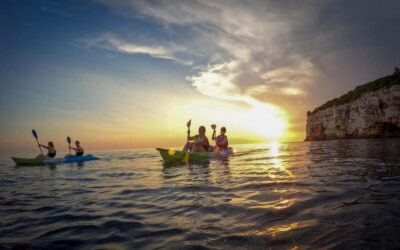
Kayaking,Snorkeling, Cliff jumping Tour with Wetsuit
Read our review →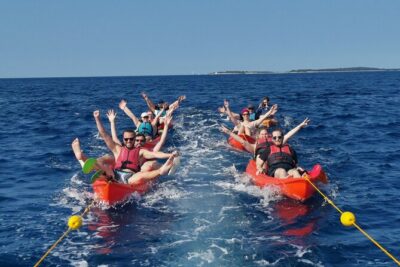
BOAT & KAYAK! Sea Adventure – Snorkeling & Cliff Jumps
Read our review →
National Park Brijuni Island Visit & Dolphin Cruise
Read our review →Browse the lists this tour appears in