
Reviewed · ROVINJ TOURS
Rovinj guided tour – personally ( german )
Rovinj’s old town is a maze built for wandering, but this private German-language walk gives the maze a clear story. With Marina, you trace the town from the Venetian lion above Balbi Arch to Saint Euphemia’s hilltop church, then down to the harbor and its flat-bottomed batana boats.
I like the private format, since your group can ask questions without waiting for a large crowd. I also like the range of stops: art-lined Grisia Street, old gates, colorful houses, and the port all fit into a compact 90-minute route. The main drawback is the short length. You will get a focused orientation, not a long museum visit or an unhurried tour of every corner.
What makes this Rovinj walk worth your time
- Marina guides in German, with clear explanations and time for your questions.
- Balbi Arch and the Venetian lion introduce Rovinj’s long connection with Venice.
- Grisia Street offers art galleries and a direct climb toward Saint Euphemia’s church.
- The old town reveals island life, including balconies, colorful houses, narrow lanes, and former defensive walls.
- The harbor’s batana boats connect the sightseeing walk with Rovinj’s fishing tradition.
- A private 90-minute route keeps the experience personal and easy to fit into an afternoon.
Starting at Balbi Arch at 2 pm
Meet at Trg Maršala Tita 7 at 2 pm. The tour begins near Balbi Arch, a natural gateway into the oldest part of Rovinj. From here, the streets tighten and the modern town gives way to a compact web of lanes and small squares.
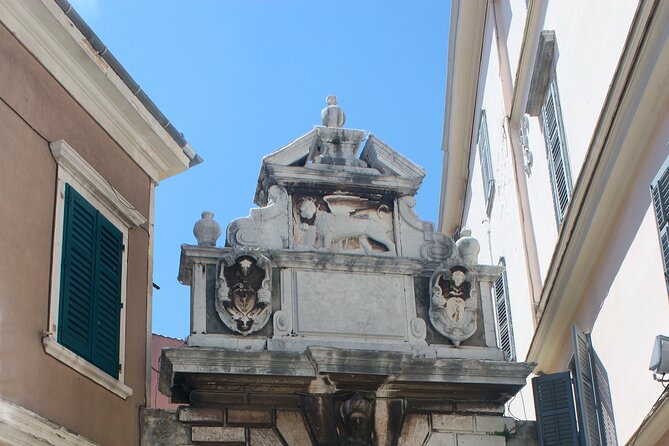
The arch itself is more than a photo stop. A Venetian lion sits at the top, and Marina explains what that symbol meant for Rovinj. This is a useful opening because it gives you a political and cultural clue before you begin climbing through the old town.
You spend about five minutes here, with no admission charge. Do not expect an extended architectural inspection. The value is in getting your bearings and learning how Rovinj’s Venetian past still appears in its buildings and symbols.
Because the meeting point is in the central town area, you should plan to arrive a little early. The tour finishes back at the same meeting point, so you do not need to arrange a separate pickup or find your way back from an unfamiliar part of town.
A few more Rovinj half-days to weigh up
- Vrsar: Dolphin Watching Boat Tour including Drinks
★ 4.6 · 1,227 reviews - Rovinj: Sunset Cruise with Swim Stop, Drinks, and Fruits
★ 4.9 · 944 reviews - Rovinj: Sunset Boat Trip with Dolphin Watching
★ 4.6 · 644 reviews
Trg G. Matteottija and the old town administration
The next short stop is Trg G. Matteottija, where you see Rovinj’s town hall and the imposing city palace dating from the 16th century. The city administration still operates there today, which gives the building a practical link to present-day Rovinj.
I like this kind of stop because it avoids treating the old town as a collection of pretty façades only. You see how the civic center worked, and how a historic building can remain part of daily town life.
The visit lasts about five minutes and admission is free. Marina’s role here is to explain what you are looking at rather than usher you through an interior. If you want a detailed look inside the palace, this tour does not promise that, so treat the stop as a compact explanation of Rovinj’s civic past.
Garzotto and the former market square
At Garzotto, also called Veliki trg or the Great Square, Marina explains how the space functioned as a medieval market. Renaissance houses from the 16th century frame the square, and the old town’s main streets once led toward this central point.
This is one of the better places to understand Rovinj’s layout. The narrow streets can feel random when you first arrive, but the market square shows that the town had a clear center. Trade, movement, and public life all came together here.
The stop is brief, around five minutes, so look up at the surrounding buildings before the group moves on. There is no ticket to buy, and the point is not to enter a major attraction. It is to read the town’s plan through its streets and buildings.
Grisia Street and the climb to Saint Euphemia
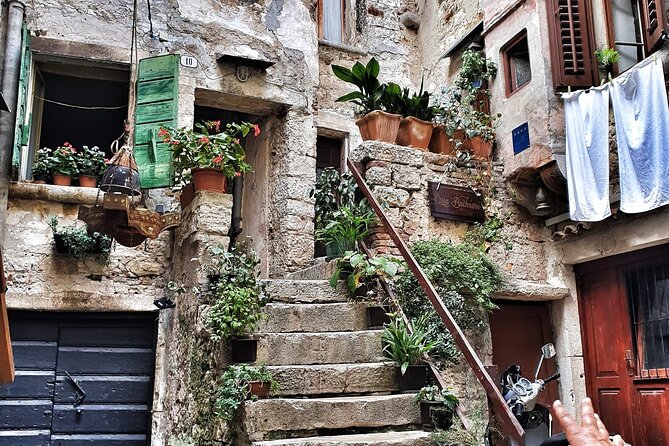
Grisia Street is one of Rovinj’s best-known lanes. Small art galleries line the route, making the walk more than a history lesson. You move through a street that still has a strong creative identity while heading toward the plateau below the parish church.
The route lasts about 20 minutes here, making it one of the longer sections. That extra time matters. You can look at the galleries, take in the old houses, and ask Marina about what you are seeing instead of simply marching uphill.
The climb is part of the character of Rovinj’s old town. The supplied details do not specify the exact level of physical effort, but the route includes old lanes and a rise toward the church. If you have mobility concerns, ask about the path before booking. Service animals are allowed, and most people can take part, but the old-town setting is not a flat, modern promenade.
The gallery doors and façades can also make this a good stop for visitors who want a little art mixed with architecture. It is not presented as a gallery tour, so you should expect exterior viewing and explanation rather than a scheduled gallery admission.
Same stretch of coast, a completely different day out:
- Vrsar: Dolphin-Watching Sunset Adventure with Speedboat
★ 4.8 · 624 reviews - Vrsar: Dolphin Watching Boat Ride
★ 4.4 · 425 reviews - Vrsar: Lim Fjord Boat Tour with Swimming near Pirate’s Cave
★ 4.2 · 322 reviews - From Poreč: Lim Fjord, Rovinj, and Vrsar Boat Trip
★ 4.7 · 276 reviews
Saint Euphemia and Rovinj’s patron saint
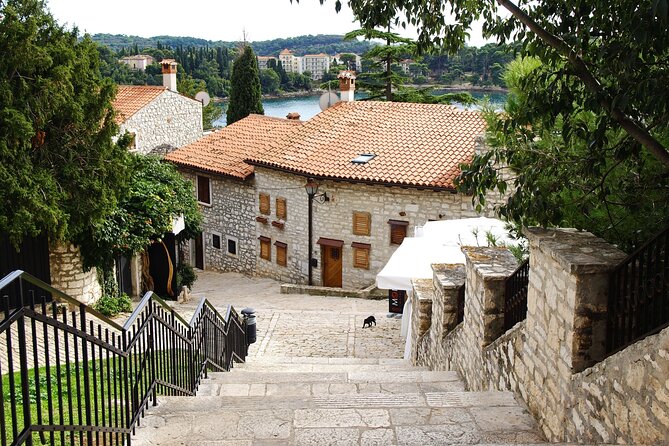
The Church of Saint Euphemia is the spiritual high point of the walk. Saint Euphemia is especially honored in Rovinj, and Marina explains the legends connected with the saint’s life and death.
The stop lasts about 15 minutes. That gives you enough time to understand why Saint Euphemia matters to the town, while keeping the whole tour moving. The church sits above the old town, so this is also a useful point for pausing after the climb through Grisia Street.
The experience focuses on the story and local devotion. No admission ticket is listed, and there is no promise of a long interior visit. Dress and behave appropriately for a religious site, and keep in mind that church access can depend on local conditions, though the scheduled stop itself is part of the route.
This is where the tour answers one of the central questions about Rovinj. The town is not simply an attractive coastal settlement. Saint Euphemia is tied to its identity, and the church gives the old town a focal point that you can recognize for the rest of your stay.
Narrow lanes, colorful houses, and island life
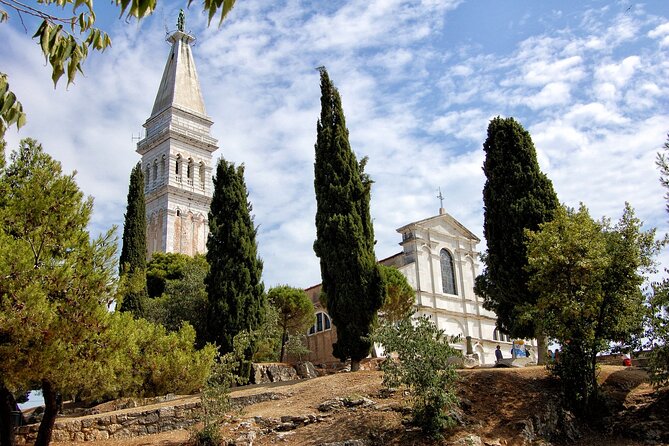
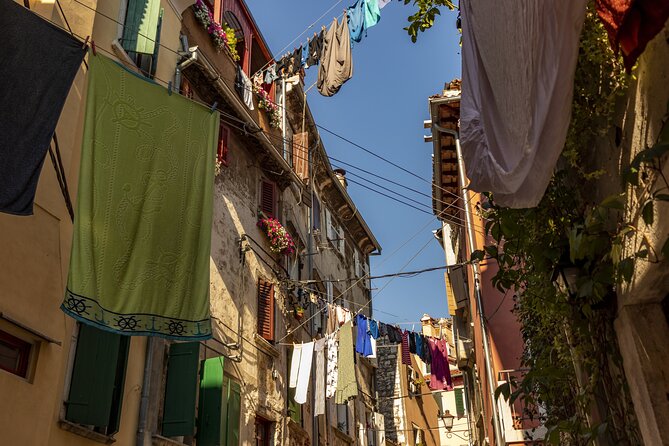
The old-town section lasts about 20 minutes and gives you time to look beyond the major landmarks. You see winding lanes, colorful houses, balconies, traditional Istrian galleries called baladur, and remnants of the old fortress walls.
These details explain why Rovinj can feel like Little Venice. The nickname is not just about a postcard view. It relates to the tight lanes, close-set houses, water nearby, and the town’s long Venetian influence. Marina also addresses why Rovinj sits on a peninsula, giving you a better sense of how its position shaped daily life.
The most useful part of this section is the human scale. For centuries, many residents lived together in a small area. Balconies and galleries were not merely decoration. They helped homes make use of limited space, and the old walls show how the settlement was protected.
This is also the part of the tour where you will want comfortable shoes. The streets are old and winding, and you may spend much of the time looking up, stopping for photographs, or turning into a lane to inspect a doorway. Keep your attention on the guide and your footing.
The Holy Cross Gate on Ulica Sv. Križa
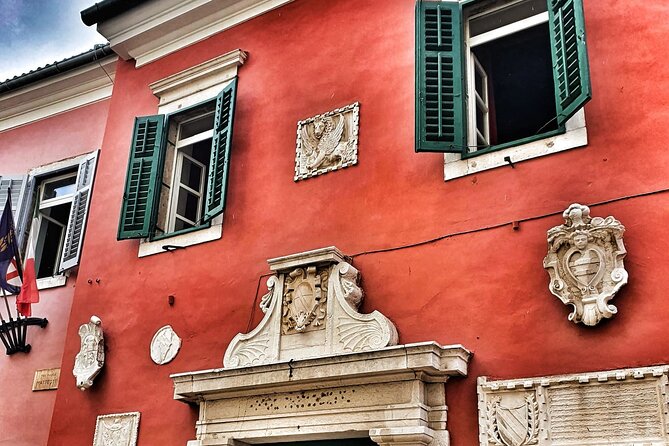
Ulica Sv. Križa brings you to the Gate of the Holy Cross. Rovinj once had seven entrance gates, but only three remain. This short stop, about 10 minutes, gives you a physical reminder that the peninsula was once a contained and defended town.
The gate is easy to appreciate after walking through the old lanes. You have already seen how compact the settlement is, so the idea of controlling access becomes more concrete. A gate was not an abstract feature on a plan. It marked the boundary between the town and the outside world.
There is no admission charge, and the visit does not involve a separate attraction entrance. It is another example of the tour’s approach: small sites, explained in context, rather than a long stay at one formal monument.
Rovinj harbor and the batana boats
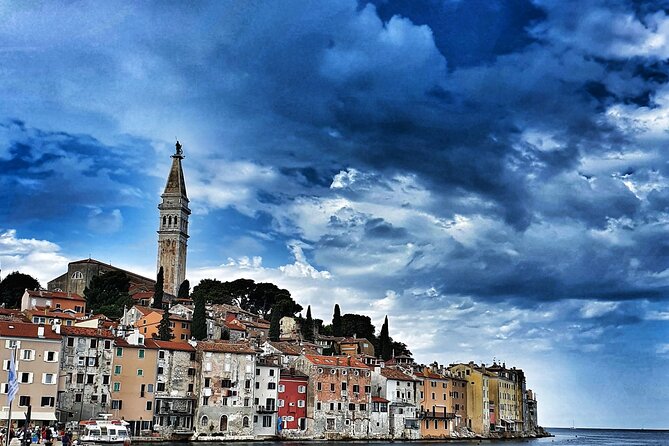
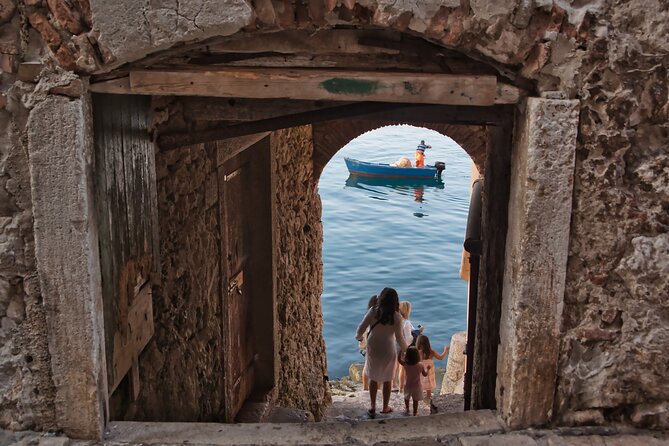
The final stop is the port, where you see Rovinj’s distinctive batana boats. These wooden boats were built by local shipbuilders, sometimes on the ground floors of their own homes. The Rovinj batana is recognized as part of Croatia’s intangible cultural heritage.
This is an excellent ending because it brings the walk down from churches and walls to work on the water. You see how local building traditions and fishing life connect with the town’s narrow urban form. The boats are not just decorative objects for a harbor photograph. They represent a craft tradition tied to the community.
The port visit lasts about 10 minutes. You can ask Marina about the boats and their construction, then finish near the water before returning to the original meeting point. The route ends where it began, which makes it simple to continue with dinner, a harbor walk, or independent sightseeing afterward.
The supplied details do not promise a boat ride, a museum visit, or a demonstration. Book this for an explanation of the batana tradition and a look at the boats, not for time on the water.
What Marina adds to the experience
The guide is Marina, and the tour is conducted in German. That matters if you want to ask detailed questions or prefer to hear local stories without translating them in your head.
Marina’s German is described as clear, and she makes room for questions. That personal exchange is especially useful in a private tour. You can ask about the Venetian lion, Saint Euphemia, the old houses, or the boats instead of following a fixed script without interruption.
One useful detail from the feedback is that Marina also helped point out restaurant possibilities. The tour does not include a meal, but you may be able to ask her for suggestions about where to eat after the walk. Since the activity finishes in the center, you can put that advice to use immediately.
A private tour also changes the pace. The total route is still about 90 minutes, but your group is the only group taking part. That can make the walk feel more relaxed than a large public tour, particularly in narrow lanes where a crowd can block the route or make conversation difficult.
Price, group size, and practical value
The listed price is $63.67 per person. That is not the cheapest way to see Rovinj’s old town, especially for one person, since the walk covers public streets and free-access sights.
The value improves when you are a small group and want a German-speaking private guide. You are paying for personal explanation, local context, and the ability to ask questions, not for admission tickets. Group discounts are available, though the exact savings are not specified.
For a first visit, 90 minutes is a useful orientation length. You cover the town hall, former market square, Grisia Street, Saint Euphemia, old fortifications, a historic gate, and the port. You then have the rest of the day to return to the places that caught your attention.
The price is harder to justify if you only want a quick look at the main church and harbor. It makes more sense if German is important to you, if you enjoy local stories, or if you want a private introduction before exploring on your own.
Who should book this Rovinj tour?
I would choose this experience for couples, families, and friends who want a private walk in German. It also suits anyone who prefers a local guide’s explanation to reading signs or piecing together the town’s story alone.
The route has a good mix of subjects:
- Venetian symbols and civic buildings
- Medieval market life
- Art galleries and Renaissance houses
- Saint Euphemia and local religious tradition
- Old walls and entrance gates
- Traditional fishing boats
It is less suited to someone looking for a full-day cultural program, extensive church interiors, or a boat excursion. The short format keeps the tour manageable, but it also limits how long you can spend at each stop.
The activity is scheduled for 2 pm and ends at the starting point. That timing works well if you want a late-afternoon introduction, though the tour does not include transportation. You make your own way to Trg Maršala Tita 7.
Free cancellation is available up to 24 hours before the start time. Changes or cancellations made inside that window are not accepted for a refund, with cut-off times based on Rovinj’s local time.
Should you book this private German-language walk?
Book it if you want Rovinj explained in German by Marina, especially if you value personal questions and a route that covers more than the standard postcard views. The batana boats, Holy Cross Gate, baladur galleries, and old market square add useful local detail.
Skip it if you prefer to wander alone, need a much longer visit, or want included admissions and a boat ride. At $63.67 per person, the strongest value comes from sharing the private experience with your own group and making full use of Marina’s local explanations.
FAQ
How long does the Rovinj guided tour last?
The tour lasts approximately 1 hour and 30 minutes.
What time does the tour start?
The start time is 2 pm.
Where does the tour begin?
The meeting point is Trg Maršala Tita 7, 52210 Rovinj, Croatia.
Where does the tour end?
The activity ends back at the meeting point.
Is this a private tour?
Yes. Only your group participates in the activity.
Can I cancel for a full refund?
Yes. You can cancel at least 24 hours before the start time for a full refund. Cancellations or changes made less than 24 hours before the start time are not accepted for a refund.
Just added around Rovinj
- Rovinj by night★ 5.0 · 6 reviews
- Private Guided Sunset Dolphin Watching in Adriatic Sea★ 5.0 · 12 reviews
- Rovinj Sunset kayaking tour★ 5.0 · 12 reviews
- Private Boat Tour with Skipper★ 5.0 · 50 reviews
- Postojna Cave & Predjama Castle – Shore Excursion from Rijeka★ 4.5 · 10 reviews
- Private walking tour Opatija -Romantic spotlight of the Adriatic★ 5.0 · 12 reviews
- Plitvice Lakes Day Tour from Rijeka, Simple & Safe★ 4.0 · 8 reviews
- Photo safari trough the Winnetou canyon★ 5.0 · 17 reviews
Rovinj Tours, compared.

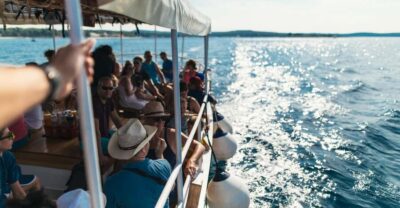
Sunset Cruise with Swim Stop, Drinks, and Fruits
Read our review →
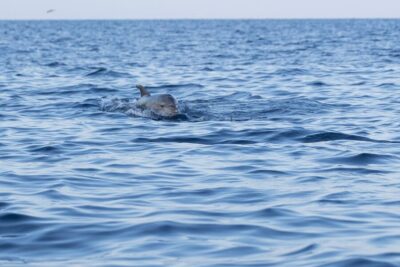
Dolphin-Watching Sunset Adventure with Speedboat
Read our review →
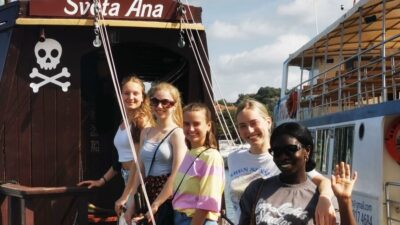
Lim Fjord Boat Tour with Swimming near Pirate’s Cave
Read our review →
Browse the lists this tour appears in