Reviewed · DUBROVNIK TOURS
Guided Tour to Kupari From Holiday Resort to War Zone
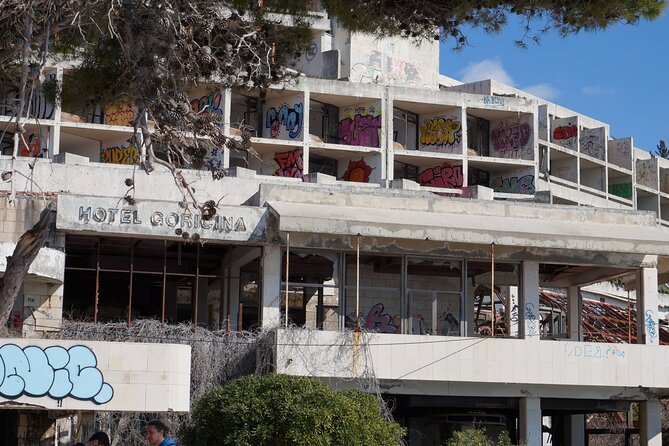
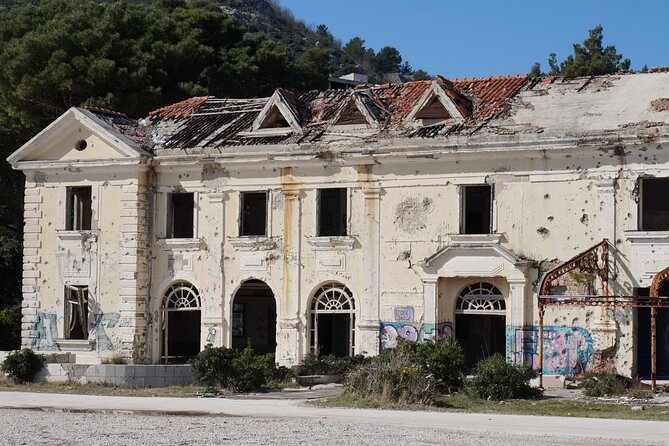
Kupari is not a pretty postcard stop. It is a war-damaged holiday resort, with abandoned hotels, shell scars, and an Olympic-sized pool left behind beside a beautiful Adriatic beach. The contrast is the point: you see how a place built for privilege and leisure was changed by the Homeland War.
I like the tour’s personal angle, especially Vedran’s first-hand connection to the war years. I also like that it gives meaning to buildings you could otherwise wander past without understanding. The main drawback is practical: one booking report says the experience had stopped operating during redevelopment, so you should confirm availability directly before paying or arranging transport.
Key points about the Kupari tour
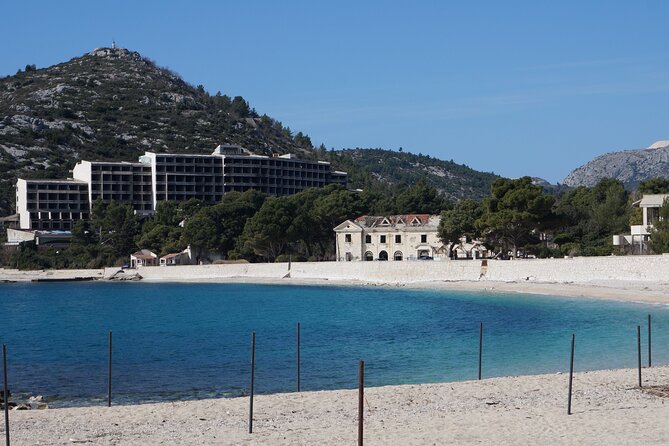
- Abandoned hotels beside the sea: Explore the remains of a former military resort, including old reception areas, bars, and a large swimming pool.
- Vedran’s personal perspective: The guide explains the resort’s past and the Homeland War in a calm, human way.
- Two stops, about two hours: Spend roughly one hour at Kupari and 30 minutes at Kupari Beach, with the remaining time used for moving between and discussing the sites.
- A resort built for Yugoslav officers: Kupari was developed mainly for military personnel of the former Yugoslav National Army.
- A beach worth lingering at: Kupari Beach is described as one of the best local places for a swim after the tour.
- Small-group format: The maximum group size is 30 people, and the tour is offered in English.
Why Kupari tells a different story about Dubrovnik
Dubrovnik is easy to admire from its walls, cable car, and polished waterfront. Kupari asks you to look at another side of the region, one tied to military power, tourism, and the breakup of Yugoslavia.
After the Second World War, Kupari became a holiday resort intended mainly for officers of the Yugoslav National Army. In its prime, it was not simply a beach with a few rooms. It was a planned retreat for a powerful institution, with several hotels and large facilities built close to the shore.
The resort also had a life before that period. Its earlier connection with a tile factory matters because those tiles supplied the red roofs of Dubrovnik. That detail gives the place an unexpected link to the old city. Kupari was not an isolated resort with no connection to its surroundings. Its materials and later purpose tied it closely to the wider Dubrovnik area.
The war changed all of that. The hotels were heavily damaged, and the site was never fully restored. Today, the broken buildings sit beside the water, with signs of shelling still visible. You are not looking at a carefully preserved museum. You are looking at an open, damaged place where the past remains in the walls.
That can be more powerful than a formal exhibit, but it also demands care. Kupari is a serious historical site, not just an unusual background for photographs.
A few more Dubrovnik half-days to weigh up
- Blue Cave Small-Group Boat Tour from Dubrovnik
★ 5.0 · 9,360 reviews - Full-Day Dubrovnik Elaphite Islands Cruise with Lunch and Drinks
★ 5.0 · 8,823 reviews - Dubrovnik: Epic Game of Thrones Tour + Lokrum & Saver Option
★ 4.9 · 5,995 reviews
Meeting Vedran at the Sheraton in Srebreno
The tour begins at 9:00 am outside the Sheraton Dubrovnik Riviera Hotel, Šetalište Dr. F. Tuđmana 17, in Srebreno. The activity returns to this same meeting point.
Starting in Srebreno makes sense if you are staying in the Dubrovnik Riviera area, especially around Mlini or nearby resorts. The meeting point is near public transportation, which gives you an alternative to arranging a taxi. Still, check your route carefully, since the tour does not begin in Dubrovnik’s Old Town.
The tour is offered in English, and a mobile ticket is accepted. Most people can participate, and service animals are allowed. The group can reach 30 people, though the strongest praise centers on the guide’s personal explanations rather than on a large-group sightseeing format.
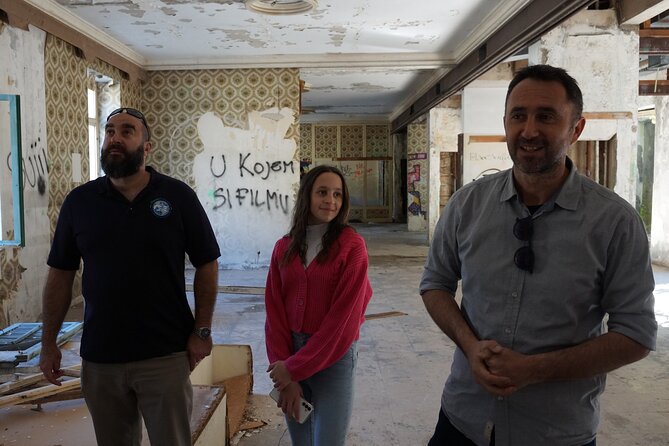
Vedran is the guide most closely associated with this experience. His value is not just in naming buildings or dates. He explains what the resort was used for, how it functioned, and what happened during the war. He also brings a local perspective to a period that can be difficult for outsiders to understand.
One especially important quality is his tone. The subject is painful, but the tour is described as informative without becoming needlessly bleak. You receive context about the war and its effect on the area, while still having room to ask questions and consider what you are seeing.
Walking through Kupari’s abandoned hotels
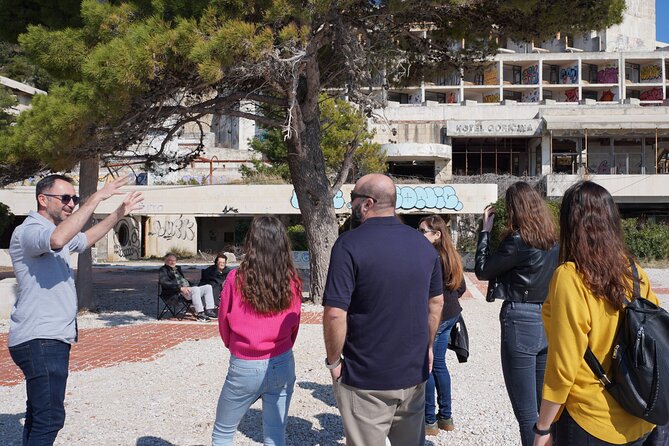
The first part of the visit focuses on Kupari itself and lasts about one hour. This is where the tour earns its price.
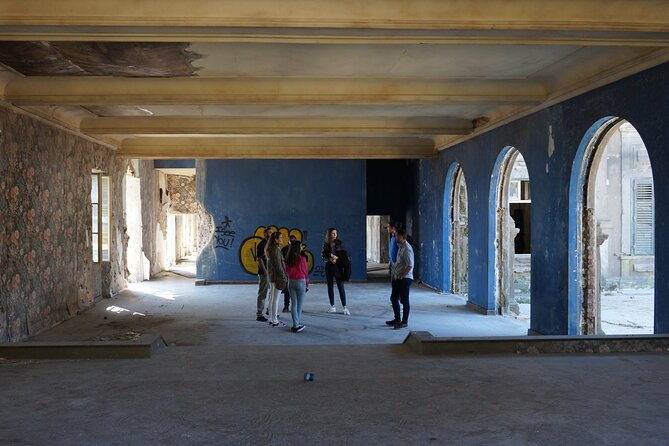
You can see the remains of several hotels, including old reception desks and bars. An Olympic-sized swimming pool is also still present. These details help you picture the resort as a functioning destination rather than a collection of empty shells.
That shift in perspective is important. If you explore Kupari alone, you might notice cracked concrete, exposed rooms, and damaged facades. With Vedran’s explanation, those fragments become clues. A reception desk points to the resort’s former operation. A bar suggests the social life that once filled the building. The pool shows the scale of the complex and the level of investment behind it.
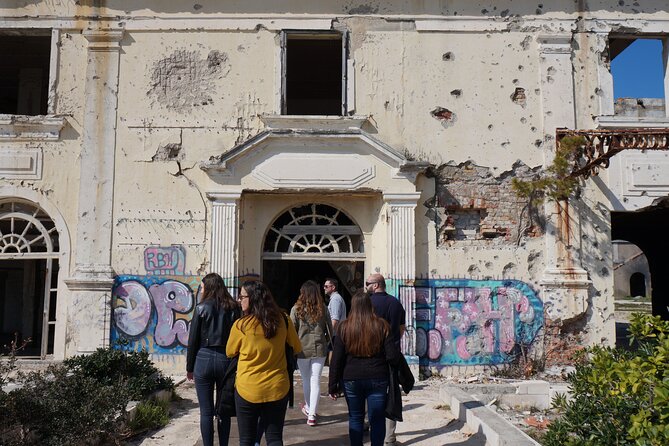
The buildings also reveal how abruptly the resort’s story ended. War damage remains visible, and the site has not been restored. You can see the scars rather than reading about them on a plaque.
I like this part because it avoids turning history into a list of facts. The tour connects the physical remains with the people and institutions that used them. You are encouraged to think about who stayed there, why the resort was built, and how quickly a place designed for comfort became a symbol of destruction.
The open condition of the site is both an advantage and a limitation. It allows you to see the buildings in an unpolished state, with no modern interpretation getting between you and the evidence. At the same time, the exact walking conditions are not detailed, so sensible footwear is a good idea. The site may also feel rough compared with standard attractions.
One practical tip comes from a past visit: bring insect repellent. The natural setting around the abandoned buildings can mean bugs, particularly in warm weather.
The military resort behind the beach
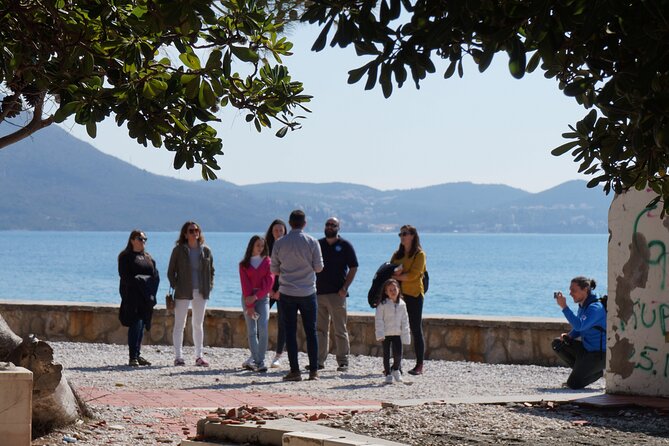
The second stop is Kupari Beach, planned for about 30 minutes. The beach is not an unrelated add-on. It helps explain why this location was chosen for a major resort in the first place.
The shoreline and surrounding setting made Kupari attractive for leisure, while its connection with the military gave the resort a particular role during the former Yugoslav period. It was intended first and foremost for military personnel, especially officers of the Yugoslav National Army.
That background adds an uncomfortable layer to the sunny beach setting. You are standing in a place associated with rest, rank, and privilege, but also with a political and military system that later became part of a violent regional conflict.
The beach also gives the tour a useful change of pace. After an hour among ruined buildings and war damage, you can look out over the bay and understand the resort’s appeal without pretending the past did not happen.
If conditions allow and you have time after the guided portion, the beach is a natural place to stay longer. One account describes it as an excellent spot for a swim after the tour. The official activity itself ends back at the Sheraton meeting point, so treat any extra beach time as your own plan rather than part of the scheduled two hours.
Same stretch of coast, a completely different day out:
- Dubrovnik: Elaphiti Islands Full-Day Cruise with Lunch
★ 5.0 · 5,938 reviews - Dubrovnik: Old Town Walking Tour
★ 4.8 · 5,174 reviews - Dubrovnik: The Original Game of Thrones Tour & Lokrum Option
★ 4.8 · 5,064 reviews - Dubrovnik Game of Thrones Tour & Optional Lokrum Island Visit
★ 5.0 · 4,702 reviews
What the guide adds that a self-guided walk cannot
You could probably reach Kupari and inspect the buildings without paying for a guide. That is the strongest argument against booking this tour.
The stronger argument in favor is that the buildings do not explain themselves. You can see a damaged hotel, but you may not know that the resort once catered mainly to military officers. You can spot old hotel fittings, but you may not understand how the complex operated. You can see shell damage, but you may not know how it fits into the story of the Dubrovnik region during the Homeland War.
Vedran fills those gaps. His explanations are described as clear, friendly, and open to questions. His personal experience as a teenager during the war gives the visit a human scale, though the tour does not appear to turn into a personal memoir from start to finish.
That balance matters. A guide with a local connection can make the history feel real, but the best approach is one that still leaves room for your own response. Kupari is already visually striking. You do not need theatrical storytelling. You need accurate context and a guide who knows when to let the place speak.
For me, that is the central value here. You are paying for interpretation, not admission. Both listed stops have free admission, so the $60.01 price per person mainly covers the guide’s time, organization, and historical explanation.
Is $60.01 good value for two hours?
At $60.01 per person, this is not a budget beach outing. If your goal is simply to see the shore, the price is hard to justify because Kupari Beach itself is free.
The calculation changes if you want to understand the abandoned resort and its wartime history. A two-hour guided visit gives you a focused introduction to a place that would otherwise be easy to misread. The price is more reasonable for people who value local interpretation, small historical sites, and direct access to a guide who can answer questions.
The maximum group size is 30, which is not especially intimate. A group that large could make it harder to hear or ask questions, especially around damaged buildings. On the other hand, several bookings have taken the form of private or specially arranged visits, suggesting that the operator may sometimes be flexible. Do not assume a private tour is included, though. Confirm the format before booking.
The fact that the tour is often reserved far in advance may make planning difficult if your schedule is uncertain. It is listed as being booked an average of 176 days ahead, so early planning could matter during the busy season.
There is also a more serious booking issue. One customer arrived after spending about 40 euros on transport and was told by the operator that the booking had not reached him and that the location was affected by redevelopment. This conflicts with the otherwise positive experience details, but it cannot be ignored. Before you commit, contact the operator directly and confirm that the tour is running on your date, that the meeting point is correct, and that the site remains accessible.
Who will appreciate this experience most?
I would choose this tour if you want more than Dubrovnik’s famous sights. It suits you if you are interested in the Homeland War, former Yugoslavia, military history, abandoned buildings, or the way tourism can be shaped by politics.
It also works well if you have already spent time in the Old Town and want a quieter, more sobering outing. The tour gives you a different way to understand the Dubrovnik region without requiring a full-day trip.
Families with older children or teenagers may find the site thought-provoking, but the war subject and damaged buildings call for mature discussion. The activity information says most people can participate, though no detailed accessibility information is provided.
I would be less likely to recommend it if you have only a short time in Dubrovnik and want classic views, polished monuments, or a relaxed day beside the sea. Kupari is not restored for comfort or presented as a conventional attraction. Its appeal comes from its rough edges and difficult story.
Timing, clothing, and small practical details
The 9:00 am start gives you a useful early outing, especially in hot weather. The total duration is about two hours, and the tour ends where it begins at the Sheraton Dubrovnik Riviera Hotel.
Wear practical shoes and bring water. Insect repellent is worth packing. If you hope to swim afterward, bring what you need, but remember that the scheduled activity returns to the meeting point.
The tour is mobile-ticket friendly and conducted in English. Free cancellation is available up to 24 hours before the start time for a full refund. Cancellations or changes made less than 24 hours before the start are not accepted for a refund.
Most importantly, verify current operation. Kupari has been discussed as a redevelopment site, and one failed booking resulted in wasted transport costs. A direct confirmation can save you money and frustration.
Should you book the Kupari tour?
Book it if you want a thoughtful look at Dubrovnik’s recent past and prefer a guide-led visit to wandering among ruins without context. Vedran’s personal connection, the preserved hotel remains, and the beach’s striking contrast make this far more than a quick photo stop.
Skip it if you are mainly looking for swimming, famous architecture, or a low-cost activity. Also pause before booking until you confirm that the tour is active and that Kupari is accessible on your chosen date.
If that check comes through, I think the experience is worthwhile for history-minded visitors. You are not paying for admission. You are paying for the story behind the broken buildings, and at Kupari, that story is the reason to go.
FAQ
Where does the Kupari tour begin?
The tour begins at 9:00 am at the Sheraton Dubrovnik Riviera Hotel, Šetalište Dr. F. Tuđmana 17, 20207 Srebreno, Croatia.
Where does the tour end?
The activity ends back at the Sheraton Dubrovnik Riviera Hotel, the same place where it begins.
How long does the tour last?
The tour lasts approximately two hours. About one hour is planned for Kupari and 30 minutes for Kupari Beach, with the remaining time used for the rest of the visit.
What language is the tour offered in?
The tour is offered in English.
How much does the tour cost?
The listed price is $60.01 per person.
Is admission to Kupari included?
Admission to both Kupari and Kupari Beach is listed as free. The price mainly covers the guided experience.
Who guides the tour?
Vedran is the guide associated with the tour. He explains Kupari’s resort history and the effects of the Homeland War, drawing on his personal experience of the period.
How many people can join the tour?
The activity can include a maximum of 30 people.
Can I cancel for a full refund?
Yes. You can cancel at least 24 hours before the local start time for a full refund. Cancellations or changes made less than 24 hours before the start time are not accepted for a refund.
Just added around Dubrovnik
- Full- Day Private Speedboat Tour in Dubrovnik on Elaphiti Islands★ 5.0 · 21 reviews
- Wine Lover’s Tour of Peljesac Peninsula★ 5.0 · 150 reviews
- Wine tour peninsula Pelješac★ 5.0 · 3 reviews
- Elaphiti Islands Private Dubrovnik Boat Unique Experience★ 5.0 · 10 reviews
- Dubrovnik at War 1991-1992 Private Walking Tour★ 5.0 · 4 reviews
- PRIVATE Wine Tour to Konavle country side★ 5.0 · 11 reviews
- Welcome to Dubrovnik Walking Tour★ 5.0 · 36 reviews
- Walls of Liberty: A Self-Guided Audio Tour of Dubrovnik★ 3.5 · 3 reviews
Dubrovnik Tours, compared.

Blue Cave Small-Group Boat Tour from Dubrovnik
Read our review →
Full-Day Dubrovnik Elaphite Islands Cruise with Lunch and Drinks
Read our review →
Epic Game of Thrones Tour + Lokrum & Saver Option
Read our review →


The Original Game of Thrones Tour & Lokrum Option
Read our review →
Dubrovnik Game of Thrones Tour & Optional Lokrum Island Visit
Read our review →