
Reviewed · PULA TOURS
Pula Arena Amphitheater Admission Ticket
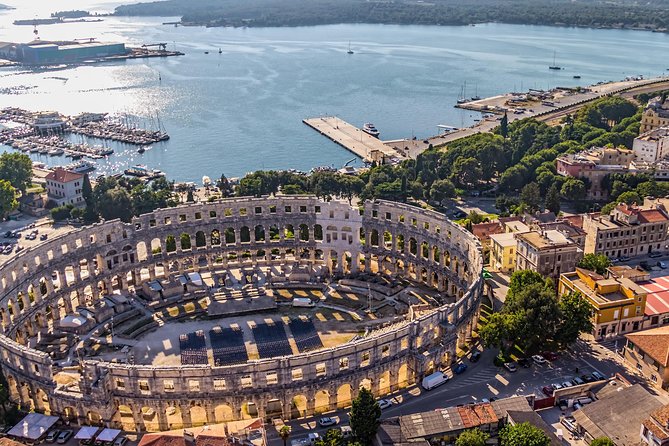
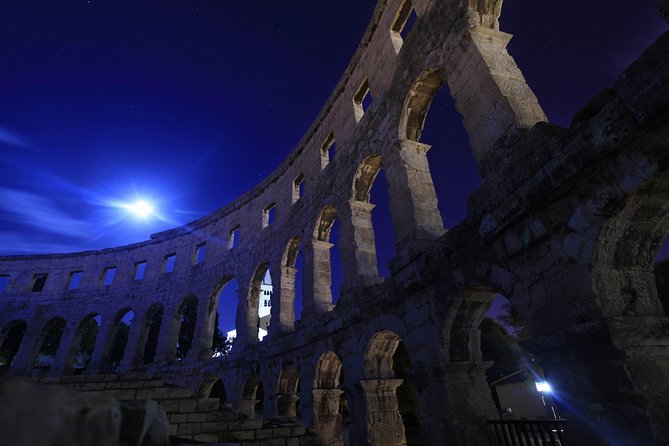
Pula Arena is the kind of monument that needs no grand introduction. Its enormous Roman walls rise just outside the old city, and the oval structure still makes you picture gladiators, crowds, and dusty contests. The scale is the main thrill, especially when you stand inside and look up at the surviving stonework.
I like two things here: you can visit at your own pace, and the ticket is valid throughout the opening hours rather than tied to one short entry slot. The lower areas, including the old olive-oil production displays, add more than a quick photo stop. The main drawback is that this is admission only, not a guided tour, and the voucher may need to be exchanged for an entrance ticket at the gate.
Key points before you book
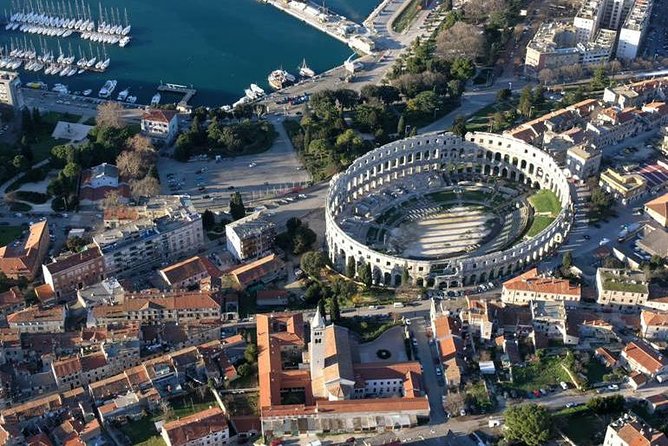
- A remarkably complete Roman amphitheater: Pula Arena is largely intact and its outer walls reach about 32.45 meters high.
- A self-guided visit: You explore the arena, four floors, Roman walls, and lower displays without a scheduled guide.
- Flexible timing: Tickets are valid during opening hours, making it easy to fit the visit around a day in Pula.
- Worth looking below the arena floor: The underground area explains ancient olive-oil production and is easy to overlook.
- Allow about one hour: You can see the main structure in that time, though history fans may want longer.
- Check the final entry time: Last admission is one hour before closing, and you must arrive before that cutoff.
Why Pula Arena feels bigger than a quick sightseeing stop
Pula is often described as Croatia’s answer to Rome, and the comparison makes sense once you see its main monument. The amphitheater sits about 200 meters northeast of the former city walls, aligned with the Roman street grid. You do not need to hunt for it. Its pale stone shell is hard to miss.
The outer wall measures about 132.5 meters along one central axis and 105.1 meters along the other. Those figures matter because they help explain the first impression: this is not a small provincial ruin tucked into a corner of town. It is a huge public building, designed to hold attention from a distance and handle large crowds.
Inside, you can walk around the arena floor and look across the curved seating structure. The four levels give you different views of the building. From lower down, the walls feel heavy and close. From higher points, you get a better sense of the oval plan and the relationship between the arena and Pula beyond it.
I especially like the way the monument works without a tour script. You can pause where the stonework catches your eye, take your photographs, and spend more time in the sections that interest you. If you want a detailed explanation of every architectural feature, though, you will need to bring your own guidebook or research.
A few more Pula half-days to weigh up
- Pula: Arena Entrance Ticket
★ 4.3 · 2,590 reviews - Medulin -Kamenjak 5h boat trip with lunch & drinks on Sandra Boat
★ 5.0 · 1,621 reviews - Full-Day Boat Tour of the Medulin Archipelago from Medulin
★ 5.0 · 1,389 reviews
Exploring the four floors and Roman walls
Your visit is mostly a walk through the structure rather than a fixed route with timed stops. The arena’s four floors let you see how Roman architecture created separate levels for movement, seating, and spectacle. Even without a guide, the scale and layout make the building easy to understand.
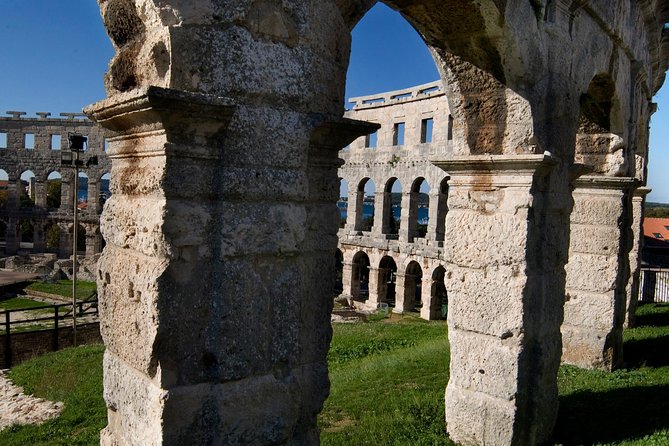
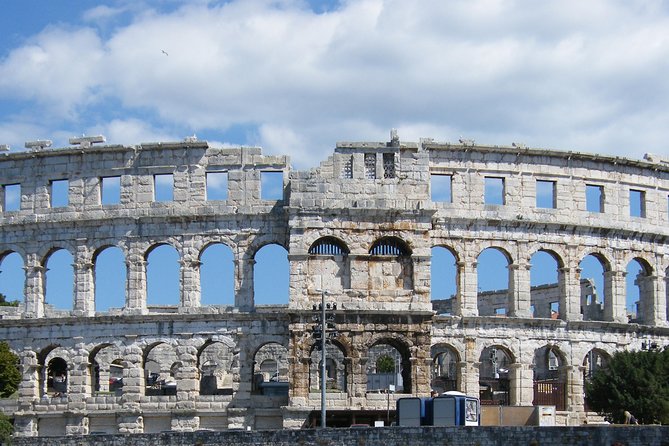
Start by taking in the whole oval before moving into the details. Look at the repeated arches, the height of the surviving exterior, and the way the structure curves around the central space. Pula Arena is known for being unusually well preserved, and its complete circular form is one reason the visit feels more substantial than a typical ruin.
The outer walls reach a maximum height of 32.45 meters. That height is most impressive when you stand near the arena floor and look straight upward. It also shows how much engineering was required to build a venue of this size in the Roman period.
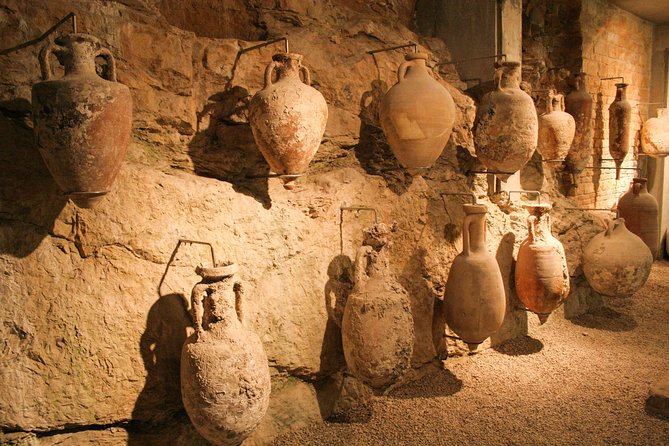
The lower levels offer a different kind of interest. The underground area includes displays connected with ancient olive-oil production. This is a useful reminder that the arena was not only a place for public contests. It also contained practical working spaces tied to everyday life and local industry.
Do not rush past this section. Several comments about the visit singled out the olive-oil displays as one of the most interesting parts of the experience. The amphitheater’s exterior is the obvious attraction, but the lower area gives you a closer look at how people used the building and its spaces.
What the self-guided format gives you
This ticket is simple: enter, explore, and leave when you are ready. There is no guide, live narration, or scheduled group route. For many people, that is exactly the right arrangement for a one-hour stop in Pula.
You can visit early, late, or somewhere in between, provided you arrive during the published opening hours. That flexibility helps if you are combining the arena with the old town, another attraction, a meal, or a trip to and from the airport.
A self-guided visit also suits different interests. If you care most about Roman architecture, you can focus on the arches, wall construction, and sightlines. If you are traveling with children, you can keep moving rather than staying with a group. If you enjoy photography, the open schedule gives you time to wait for a clear view.
The tradeoff is just as clear. You will not have a guide explaining how the building operated, what happened in each part of the arena, or how its uses changed over time. The ticket gives you access, not interpretation.
The product description calls the amphitheater one of the largest in the world, and it is certainly among the most imposing surviving Roman arenas. You should not expect a fully staged historical presentation with ordinary admission. Special gladiator events may take place on some evenings, but those are separate from this basic entry ticket.
The underground olive-oil displays are worth your time
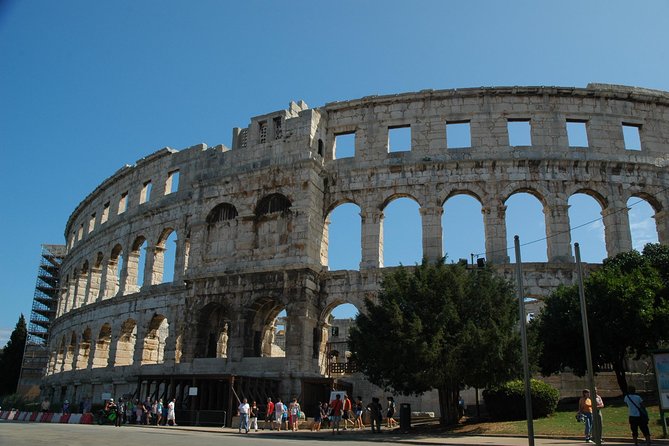
The most useful piece of practical advice is to look below the main arena. The ancient olive-oil production area is included, and it adds a local, working dimension to the monument.
The arena floor and outer walls show public spectacle. The lower exhibits point to production and commerce. Together, the two areas give you a fuller picture of the site. You see both the grand public face of Roman Pula and the less theatrical work that supported daily life.
This is also where a one-hour visit can become more rewarding. If you only circle the main arena, you may finish quickly. If you spend time below, study the displays, and compare the lower spaces with the enormous upper structure, the visit feels better balanced.
I would plan to see the underground area before leaving, even if your main reason for coming is the architecture. It is easy to focus on the dramatic walls and forget that the smaller displays often carry the most specific information.
Same stretch of coast, a completely different day out:
- 3hours all inclusive Sunset&Dolphin Tour from Medulin on Sandra
★ 5.0 · 1,130 reviews - Dolphin Watching & Sunset Boat Tour With Dinner and Drinks
★ 5.0 · 1,075 reviews - Pula: Kayaking,Snorkeling, Cliff jumping Tour with Wetsuit
★ 4.8 · 861 reviews - BOAT & KAYAK! Sea Adventure – Snorkeling & Cliff Jumps
★ 5.0 · 808 reviews
Choosing the best time to enter
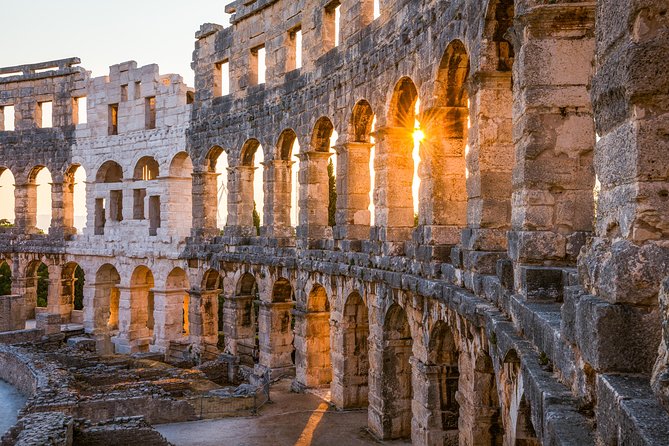
The ticket is valid anytime during the attraction’s opening hours, but the schedule changes by season. The supplied hours give several seasonal ranges, so check the current operating time shown with your booking before setting out.
The listed periods include:
- September: 8:00 AM to 9:00 PM
- October: 8:00 AM to 8:00 PM in one published schedule
- November through December: 9:00 AM to 9:00 PM in the listed date table
- Additional seasonal information lists July and August until 11:00 PM, May and June until 9:00 PM, April until 8:00 PM, October until 7:00 PM, and November through March from 9:00 AM to 5:00 PM
Because these hours are not presented in one fully consistent seasonal table, I would rely on the current confirmation or contact the supplier before visiting. The important rule is firm: last admission is one hour before closing. You must arrive at least an hour before the end of working hours.
An early visit may give you a quieter look at the stonework. One Monday morning visit at 9:30 AM was described as having hardly any other people inside, though crowd levels naturally vary by date and season. Evening entry can also be appealing when the hours allow it, especially if you want to see the arena in softer light.
Do not cut it too close. A ticket valid all day is useful only if you leave enough time for the entrance process and a proper walk through the lower areas.
Is the $15.38 price good value?
At $15.38 per person, this is not the cheapest Roman monument admission you will find, but the value depends on how you use it. You are paying for access to a major surviving structure, not for a short photo opportunity outside the gates.
The ticket makes better financial sense if you give the arena a full hour, walk through all accessible levels, and visit the olive-oil displays. If you only want to step inside for ten minutes and take a few photographs, the price may feel high.
Prepayment also has a practical benefit. It guarantees your admission and lets you plan around a known cost. Several details make the process sound straightforward, with the voucher exchanged for an entry ticket at the entrance. Still, one booking note was unclear about the voucher itself, so read your confirmation carefully and be prepared to show it at the gate.
The experience has a maximum group size of 15, but this is not a small guided group. Your visit remains self-directed. The group limit matters mainly as a cap on the booking arrangement, not as a promise of personal guiding.
Food and drinks are not included, and transportation to or from the arena is not included. That is easy to manage because the site is close to central Pula and near public transportation, but you need to arrange your own route.
How long should you stay at Pula Arena?
The advertised duration is about one hour, and that is a sensible minimum for the main visit. In sixty minutes, you can enter, walk around the arena, inspect the walls and upper levels, and spend time in the underground displays.
You may want longer if Roman architecture is a major interest. The structure is large enough to reward slower viewing, especially if you want photographs from several angles. The flexible ticket means you do not have to treat the hour as a hard departure time.
I would not plan the rest of your day around a long guided program. This is a compact, independent attraction visit. Its strength is that it can fit neatly into a wider Pula schedule.
The arena is also a practical stop for visitors arriving by air. One account put the site roughly 15 minutes from the airport and found parking easy, though journey times and parking conditions can change. Treat that as a useful orientation rather than a guarantee.
Who will enjoy this ticket most?
This admission works best for you if you want control over your schedule and are comfortable learning at your own pace. It is especially suitable for:
- People interested in Roman architecture and ancient public buildings
- Visitors who prefer independent sightseeing to a fixed tour
- Families who need the freedom to move at their own speed
- Photographers looking for multiple views of a well-preserved amphitheater
- Anyone fitting Pula into a larger Istrian itinerary
- History fans who will take time to see the underground olive-oil displays
You may want another option if you need a guide to explain the monument in depth. You may also prefer a special event if your main goal is a staged gladiator performance. That is not included with this admission.
The site is near public transportation, and service animals are allowed. Most people can participate, but the information provided does not give detailed access conditions for every level or surface. If you have specific mobility needs, contact the supplier before booking.
Important ticket details before you arrive
You receive confirmation at the time of booking. The attraction accepts the voucher for admission, but some accounts indicate that it may be exchanged for the actual entry ticket at the entrance. Bring the booking details with you and allow time for that step.
The supplier is Gulliver Travel. Its bookings department requests calls only, not text messages, so use a phone call if you need help with a reservation issue.
This ticket is non-refundable and cannot be changed for any reason. That makes the flexible opening-hours rule useful, but it also means you should check your date, seasonal hours, and plans before paying.
The admission is for the amphitheater itself. Food, drinks, and transport are separate. A negative test or health passport was previously connected to a special gladiator show, not to ordinary amphitheater admission, according to the supplied clarification. Do not assume that a show is part of this ticket.
Should you book Pula Arena admission?
I would book this if you are visiting Pula and want an easy, independent look at its defining Roman monument. The well-preserved walls, the large oval interior, and the underground olive-oil displays give you enough substance for a worthwhile hour, while the open entry window makes planning simple.
I would pause if you expect a guided tour, detailed live commentary, or an included performance. You are buying entrance, not a complete historical program. Also confirm the current opening hours and understand that last entry is one hour before closing.
For most first visits to Pula, the ticket is a practical choice. Arrive with enough time, walk beyond the obvious arena floor, and do not miss the lower displays. That is where the visit moves from impressive Roman shell to a more revealing look at how the place functioned.
FAQ
How long does the Pula Arena visit take?
The approximate duration is one hour. You may spend longer inside because the ticket is valid during opening hours.
Is this a guided tour?
No. This is a self-guided admission ticket. You explore the arena and its displays at your own pace.
What does the ticket include?
It includes entrance to Pula amphitheater and all fees and taxes. Food, drinks, and transportation to or from the attraction are not included.
When can I use the ticket?
The ticket is valid anytime during the amphitheater’s opening hours for the applicable date and season. Opening hours vary, so check the current schedule with your confirmation.
What is the latest time I can enter?
Last entrance is one hour before closing. You must arrive at the entrance no later than one hour before the end of working hours.
Can I cancel or change the booking?
No. This experience is non-refundable and cannot be changed for any reason.
Just added around Pula
- Kamenjak Nature Park: Kayak Tour with Snorkeling & Cave Exploring★ 5.0 · 15 reviews
- Dolphin & Sunset tour with Brijuni panorama★ 5.0 · 119 reviews
- Transfer Pula – Poreč★ 5.0 · 5 reviews
- Clear Kayak Glow Night Tour★ 5.0 · 69 reviews
- Pula / Pješčana Uvala: Sunset SUP Tour – Explore & Chill★ 5.0 · 16 reviews
- Kayaking to Island Saint Jerolim with snorkeling activitie★ 4.5 · 26 reviews
- Scuba Diving for Beginners in Pula★ 5.0 · 29 reviews
- Pula Kayak Tour-Cliff jumping,snorkeling& free GoPro pictures★ 5.0 · 94 reviews
Pula Tours, compared.
Kamenjak 5h boat trip with lunch & drinks on Sandra Boat
Read our review →
Full-Day Boat Tour of the Medulin Archipelago from Medulin
Read our review →
3hours all inclusive Sunset&Dolphin Tour from Medulin on Sandra
Read our review →
Dolphin Watching & Sunset Boat Tour With Dinner and Drinks
Read our review →
Kayaking,Snorkeling, Cliff jumping Tour with Wetsuit
Read our review →
BOAT & KAYAK! Sea Adventure – Snorkeling & Cliff Jumps
Read our review →
National Park Brijuni Island Visit & Dolphin Cruise
Read our review →Browse the lists this tour appears in