
Reviewed · ROVINJ TOURS
Rovinj: Guided Walking Tour
Rovinj’s old town makes more sense once you know it used to be an island. This 90-minute walk traces the filled-in channel, explains why Bridge Square has no bridges, and ends high above the Adriatic at Saint Euphemia Church. I like the way the route connects old stones with everyday life, especially the advice on coffee, gelato, markets, and beaches. I also like that guides such as Goran bring humor and clear local stories to the walk.
The main drawback is the footing. Half the tour runs over cobblestones, and the final climb toward the church can be awkward for anyone with limited mobility. At $32 per person, the walk is good value if you want context and local recommendations, but it is less appealing if you prefer to explore quietly on your own or already know Rovinj well.
Key points at a glance
- See the former island channel: Learn where Rovinj’s channel and bridge once stood before the waterway was filled in about 1,000 years ago.
- Follow the city’s trade story: Carera Street helps explain how olive oil, fish, and wine shaped Rovinj’s fortunes.
- Walk beyond the postcard streets: The route includes the old Jewish Ghetto area, stables, city walls, and less obvious corners of the old town.
- Finish at the best viewpoint: Saint Euphemia Church gives you a broad view over the terracotta roofs and blue Adriatic.
- Get useful local advice: Your guide can point you toward coffee, cakes, gelato, restaurants, produce, and good beach areas.
- Expect an easy but uneven walk: The climb is described as fairly easy, but cobbles and slopes make this a poor choice for people with mobility impairments.
Why Rovinj’s old island story matters
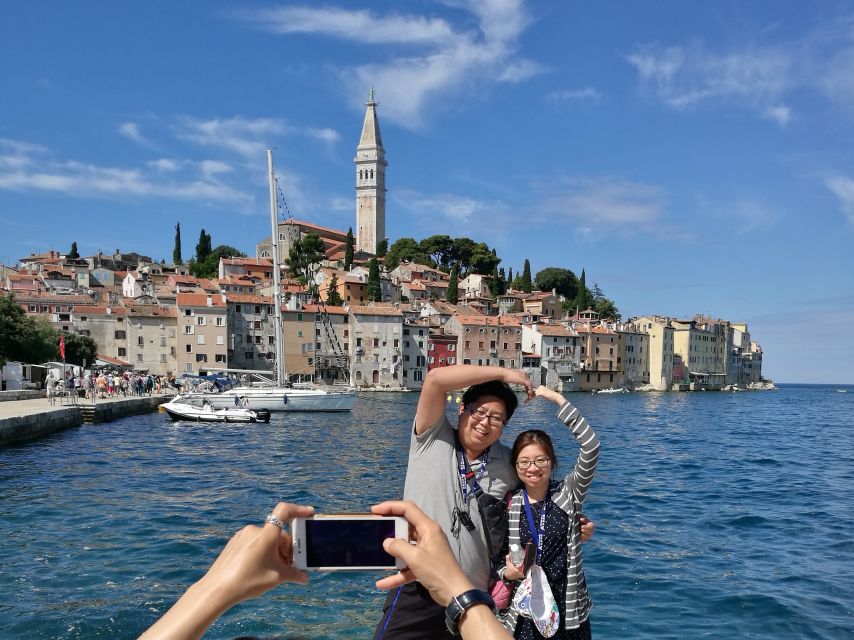
Rovinj is easy to admire without understanding. The old town rises above the water in a tight cluster of stone lanes, with Saint Euphemia watching over the rooftops. This walk gives you the missing pieces: how the town was shaped, where people lived, and how trade helped it grow.
You begin in the lower town near the farmers’ market, outside the white World War II memorial on Pietra Ive Street. The meeting point is in front of a large rectangular whitewashed stone structure, just off the market. That detail matters because the market area can be busy, and the meeting point is not simply described as the market entrance.
The guide is a local person born in Rovinj. That gives the walk a useful edge. You are not just hearing dates and names. You are encouraged to ask about food, daily routines, neighborhoods, and the places locals actually use. Goran, who leads many departures, is especially good at mixing facts with humor, and several of his tours have been praised for clear English and an entertaining style.
More walking tours in Rovinj:
- Romantic Rovinj – a private walking tour
★ 5.0 · 8 reviews - Dubrovnik: Old Town Walking Tour
★ 4.8 · 5,174 reviews - Split: Old Town and Diocletian Palace Walking Tour
★ 4.9 · 4,727 reviews
Valdibora Square and the vanished bridge
The first important stop is Valdibora Square, the area people reach when approaching Rovinj from the north. This is where the old town’s island identity becomes clear.
Your guide points out the former channel and explains where the bridge once connected the settlement to the mainland. The channel was filled around 1,000 years ago, turning Rovinj from an island into a connected part of the coast. It is a simple detail, but it changes how you read the town. The compact streets, defensive walls, and steep hill were not random. They were shaped by a settlement that once depended on water around it.
The route also explains the odd name Bridge Square. You will not find a bridge there today. The point is precisely that the bridge disappeared when the channel was filled. This is the sort of small local fact that guidebooks can skip, yet it helps you understand why Rovinj’s public spaces look the way they do.
Allow about 15 minutes for this opening part of the walk. It is a good orientation before you enter the denser old town. You begin to see Rovinj not only as a pretty coastal town, but as a place built around defense, trade, and limited space.
Carera Street and the money behind the stone
From the lower town, the walk follows Carera Street. This is one of the best places to connect Rovinj’s attractive architecture with its economic past.
In the 18th century, trade in olive oil, fish, and wine helped create wealth in the town. As you walk, your guide explains how that prosperity showed itself in the buildings and streets. The value of this section is not just architectural. It gives you a reason for the town’s appearance.
I like this part because it keeps the story grounded. Instead of treating the old town as a collection of picturesque walls, the route asks how people earned money and why some homes were built with more care than others. You get a better sense of the working town behind the holiday photographs.
This section lasts about 15 minutes. Expect regular stops for explanation rather than a nonstop march. If you want to take photographs, listen first and shoot during the pauses, since the streets are narrow and other pedestrians may be passing through.
The waterfront, with time for an aperitif
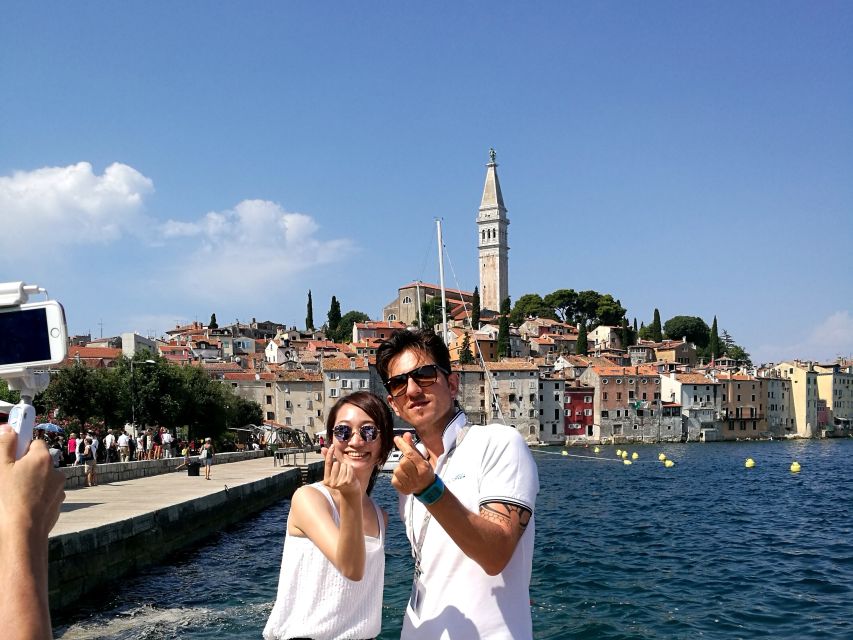
The walk then reaches Rovinj’s waterfront, one of the town’s natural pause points. The Adriatic opens up here, and the view back toward the old town shows the familiar cluster of warm-colored roofs rising toward Saint Euphemia.
The guide points out why this is a good place for an Aperol Spritz. Drinks are not included, so this is an optional stop rather than a formal tasting. That arrangement works well for independent visitors. You can return later, choose your own drink, or simply enjoy the view without spending more.
Allow around 10 minutes for this part. The value is visual as much as historical. After the earlier talk about channels and trade, the waterfront shows why sea access mattered so much to Rovinj. It also gives you a break before the tighter lanes and uphill section.
You should keep the recommendation practical. The tour does not include food or drinks, and the $32 price covers the licensed local guide only. If you want the full café or aperitif experience, budget separately.
A few more Rovinj half-days to weigh up
- Vrsar: Dolphin Watching Boat Tour including Drinks
★ 4.6 · 1,227 reviews - Rovinj: Sunset Cruise with Swim Stop, Drinks, and Fruits
★ 4.9 · 944 reviews - Rovinj: Sunset Boat Trip with Dolphin Watching
★ 4.6 · 644 reviews - Vrsar: Dolphin-Watching Sunset Adventure with Speedboat
★ 4.8 · 624 reviews
Through the old Jewish Ghetto and stables area
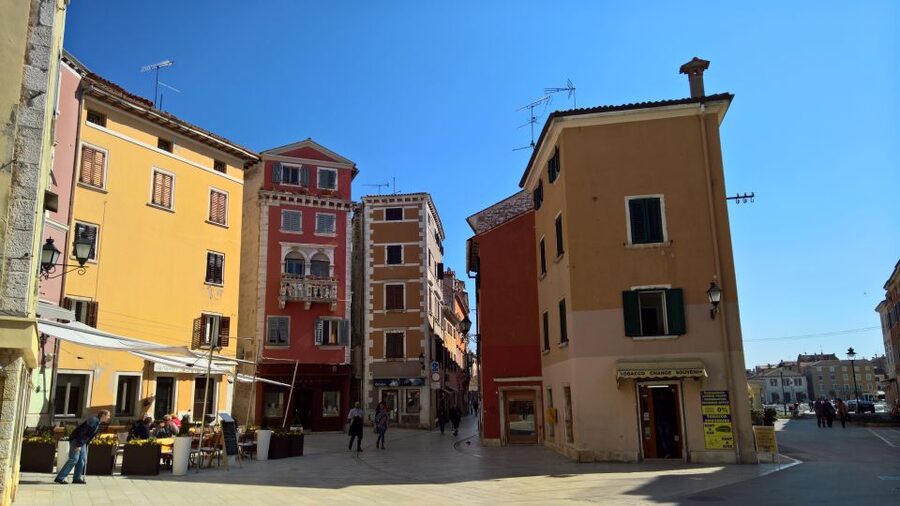
Next comes one of the more unusual sections of the route. You move through the maze of cobbled lanes toward the area around the old Jewish Ghetto, just off the Arch of the Bearded, and then toward the former stables area.
This is where a local guide adds real value. The lanes can look alike when you first arrive, and a quick walk through them may leave you with little sense of how the town was organized. The tour draws attention to the way people lived in a dense settlement, where thousands of locals occupied a very small island for centuries.
The old Jewish Ghetto area adds another layer to the town’s story. The route does not treat Rovinj as a single, unchanging community. It points to the different groups and functions that shaped the old town, including places linked with work, worship, storage, and animals.
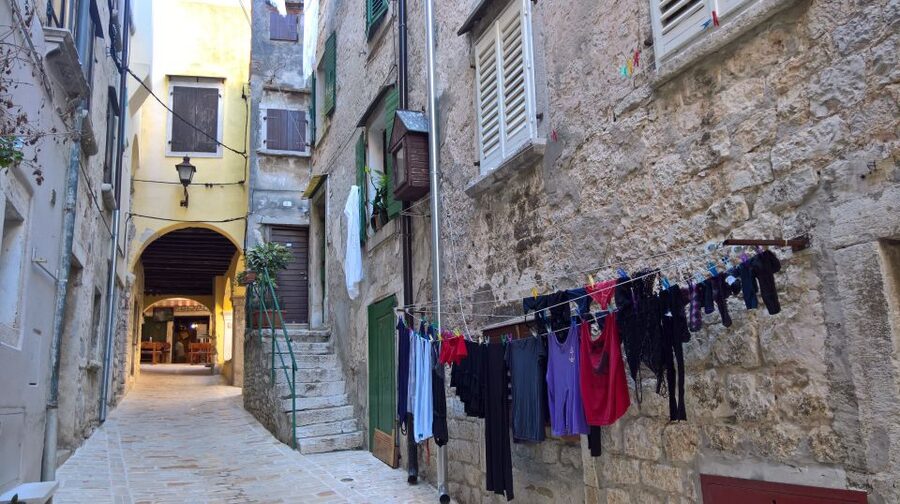
The stables area is also a useful reminder that this was a lived-in town, not a preserved stage set. Stone lanes once served practical needs. People moved goods, kept animals, repaired boats, sold produce, and made a living here. You might find this section less visually grand than the church or waterfront, but it is one of the better parts for understanding ordinary life.
Plan on about 20 minutes here. The cobbles are uneven, and the route may feel crowded in high season. Wear shoes with a firm sole. Smooth sandals or thin fashion shoes are a poor match for this walk.
The final climb to Saint Euphemia Church
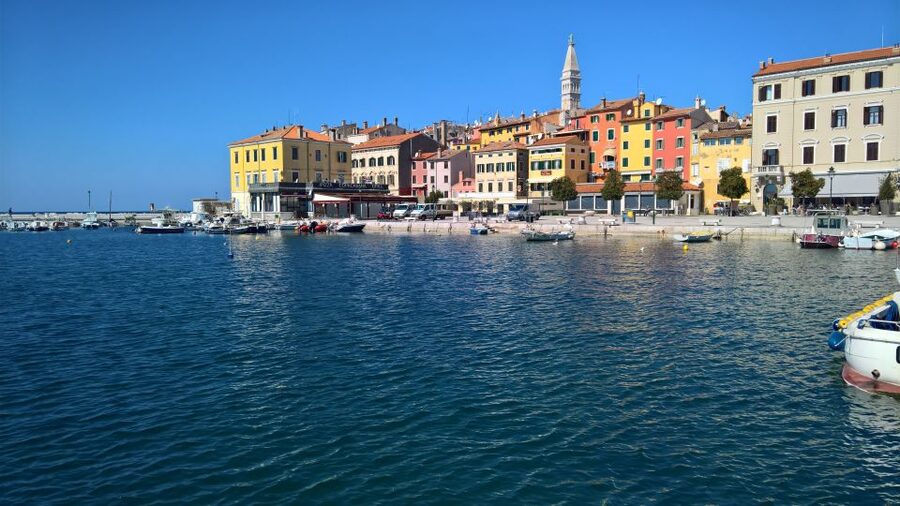
The last 30 minutes lead along the ancient city walls and uphill to the Church of Saint Euphemia. This is the tour’s strongest finish.
The climb is fairly easy for a person who walks comfortably, but it is still a climb. You are moving over cobblestones and sloping streets, so anyone with mobility limitations should think carefully before booking. The activity is specifically not suitable for people with mobility impairments.
At the top, Saint Euphemia watches over Rovinj and the Adriatic. The church is also the tour’s endpoint, so you are not rushed back to the starting point. That makes the final stop useful for planning the rest of your day. You can stay in the upper town, explore nearby lanes, or wait for the sunset.
The view is the main reward. From here, you see the town’s rooftops, the coastline, and the blue water beyond. The guide presents it as one of the best sunset locations on the Adriatic. Sunset timing changes with the season, so check the tour start time if this is important to you. The walk lasts 90 minutes, and not every departure will finish at the right moment for sunset.
What makes the local advice useful
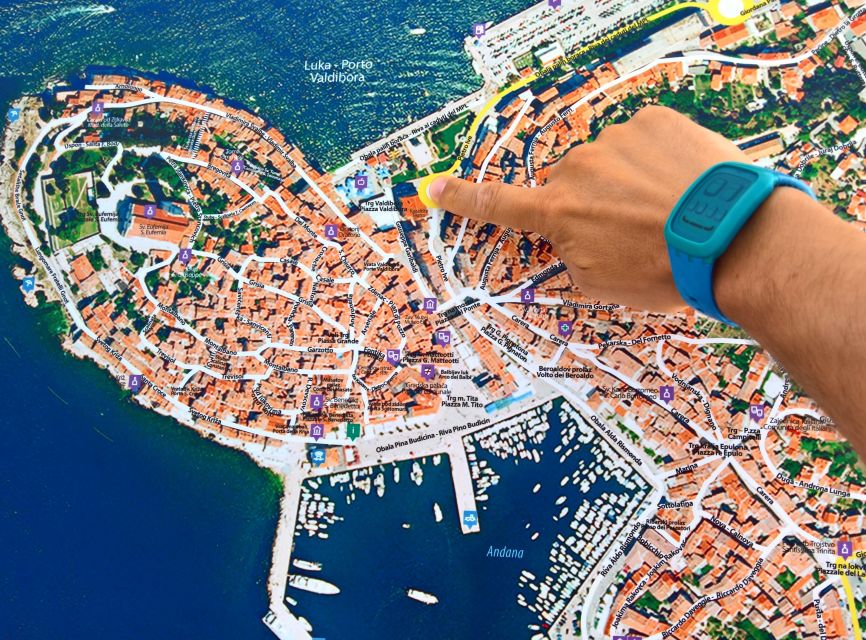
The historical route is the main reason to book, but the practical advice may be just as valuable during a short stay.
Your guide can show you where locals buy fruit and vegetables, where coffee is made well, and where to find cakes and gelato. You also get suggestions for restaurants and beach areas. This helps you avoid spending your entire visit on the most obvious waterfront choices.
The advice is particularly useful if you are in Rovinj for only a day. A walking tour early in your stay can help you decide where to return for dinner, where to stop for a sweet snack, and which parts of the coast suit a swim or a quieter afternoon. Goran is often praised for giving specific food and café suggestions rather than vague advice.
You should still treat these as personal recommendations, not guarantees. The tour does not include tastings, meals, or drinks, and it does not promise reserved tables or special access. Its strength is local direction, not a food tour.
How much value do you get for $32?
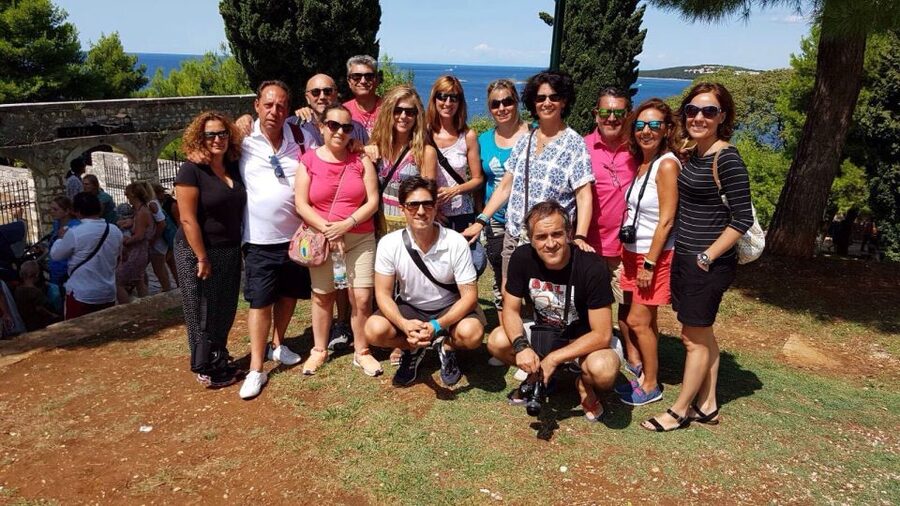
At $32 per person, this is not the cheapest way to walk around Rovinj. You can see many streets and viewpoints without paying anything. The question is what you want from the visit.
I think the price is fair if you want a clear introduction in a short amount of time. Ninety minutes covers the old island channel, trade streets, waterfront, historic neighborhoods, walls, and church viewpoint. You also get a local guide who can answer questions in English, Italian, Portuguese, French, or Croatian.
The value improves if you are visiting for one day, arriving from a cruise, or staying outside Rovinj and want a quick orientation. It is also worthwhile for anyone who likes knowing why a place developed as it did, rather than simply photographing it.
The value is weaker if you already have a strong grasp of Rovinj or want a slow, private walk with long pauses. The route covers a lot in 90 minutes, so the pace may feel brisk when you want to stop for photographs.
You can cancel up to 24 hours before the start for a full refund, and you can reserve now and pay later. Those terms make it easier to fit the walk into a changeable itinerary.
Who will enjoy this walk most?
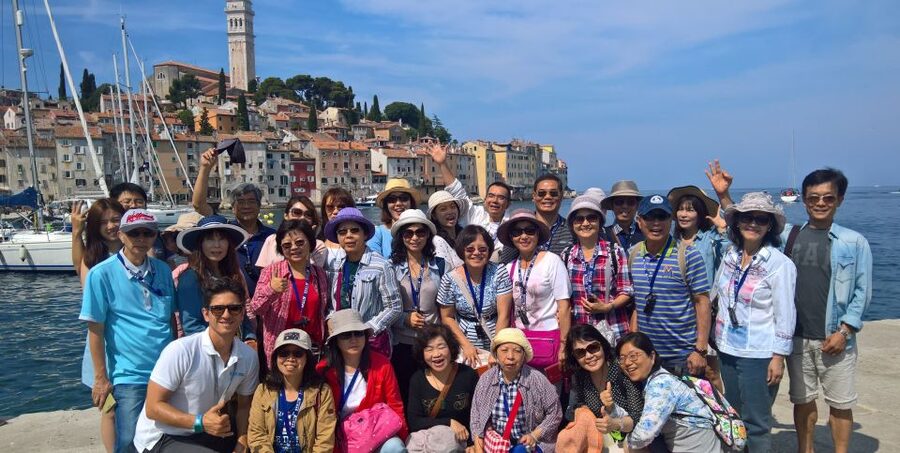
I would choose this tour for first-time visitors, couples, families with older children who can manage cobbles, and anyone interested in local stories beyond the main sights. It also suits people who like to pair history with practical food and beach advice.
The tour works well at the start of a Rovinj visit. You learn the layout before returning on your own, and the market meeting point places you close to the lower town from the beginning.
I would be cautious about booking it for anyone who uses a wheelchair, has serious balance problems, or finds uneven surfaces difficult. The route includes cobblestones for roughly half the walk and ends with an uphill section. A person who walks slowly but comfortably may manage it, yet the experience is not designed for limited mobility.
The language choice is another strength. English, Italian, Portuguese, French, and Croatian departures are available, though you should confirm the desired language when checking times.
Should you book the Rovinj walking tour?
Book it if you want Rovinj’s prettiest views explained through its past, along with useful advice on coffee, gelato, restaurants, markets, and beaches. The former channel, Bridge Square, old Jewish Ghetto area, and stables give the walk more substance than a simple highlights stroll.
I would especially consider it if Goran is leading your departure. His style combines local facts, humor, and easy conversation, which helps the information stick.
Skip it if you dislike guided walks, already know the old town well, or need a fully accessible route. For most first-time visitors who can handle cobblestones and a modest climb, $32 buys a well-focused introduction and a better sense of how Rovinj fits together.
FAQ
How long does the Rovinj walking tour last?
The tour lasts 90 minutes.
Where do I meet the guide?
Meet the guide in front of the white World War II memorial, a large rectangular whitewashed stone structure on Pietra Ive Street, just off the local farmers’ market.
Where does the tour finish?
The tour finishes at the Church of Saint Euphemia.
What languages are available?
The live guide may conduct the tour in English, Italian, Portuguese, French, or Croatian.
Is food or drink included?
No. Personal expenses, including food and drinks, are not included.
Is the tour suitable for people with mobility impairments?
No. About half of the route uses cobblestones, and the walk up to the church can be challenging for people with limited mobility.
Can I cancel for a refund?
Yes. You can cancel up to 24 hours in advance for a full refund. You can also reserve the tour and pay later.
Just added around Rovinj
- Rovinj: Shared Dolphin and Sunset Tour with Drinks★ 4.9 · 18 reviews
- Rovinj Sunset kayaking tour★ 4.9 · 8 reviews
- Rovinj: Red Island and Pirate Cave speedboat tour★ 4.7 · 85 reviews
- Rovinj: Sunrise Dolphins & Fishermen at Work Speedboat Tour★ 4.8 · 32 reviews
- Rovinj or Vrsar: Lim Fjord & Rovinj islands Speedboat Tour★ 4.9 · 10 reviews
- Rovinj: Rovinj Archipelago and South Coves Speedboat Tour★ 5.0 · 7 reviews
- Rovinj: Family Friendly Dolphin Watching Tour★ 3.3 · 3 reviews
- Rovinj: Lim Fjord and Pirate Cave Boat Tour★ 4.5 · 133 reviews
Rovinj Tours, compared.

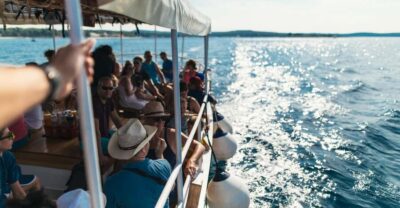
Sunset Cruise with Swim Stop, Drinks, and Fruits
Read our review →

Dolphin-Watching Sunset Adventure with Speedboat
Read our review →
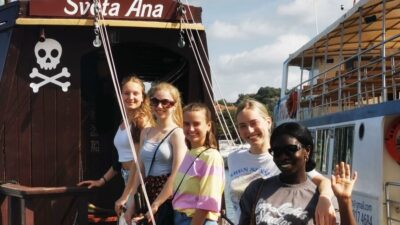
Lim Fjord Boat Tour with Swimming near Pirate’s Cave
Read our review →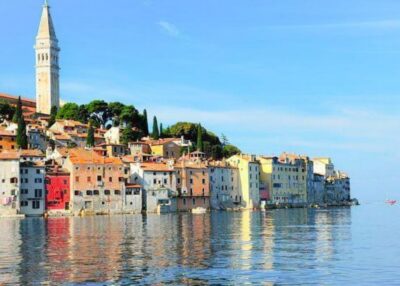
Browse the lists this tour appears in