
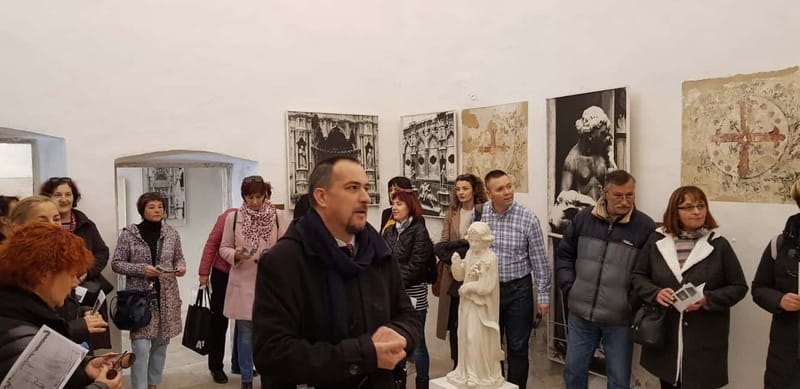
Reviewed · SIBENIK TOURS
Šibenik: Medieval Night Walking Tour
After sunset, Šibenik changes character. Its stone lanes grow quiet, shadows gather under arches, and the old town’s steep stairs feel much closer to their medieval past. This one-hour walk takes you through places that can be easy to miss in daylight, including a medieval water cistern, a cave beside St. Lawrence Monastery, and the narrowest streets of the historic center.
I like the tour for two clear reasons: the night setting makes the old town feel authentic, and guide Dario Mikulandra connects buildings to curious local stories rather than simply naming dates. I also like that the walk stays focused, with the cathedral, cistern, monastery, old streets, and several lesser-known corners packed into a manageable hour.
The main drawback is the short length. At $49 per person, this is not a cheap stroll, especially if you are traveling with a larger family. You are paying for a specialist guide and a very specific evening atmosphere, not for museum admissions or a long sightseeing program.
Key points before you book
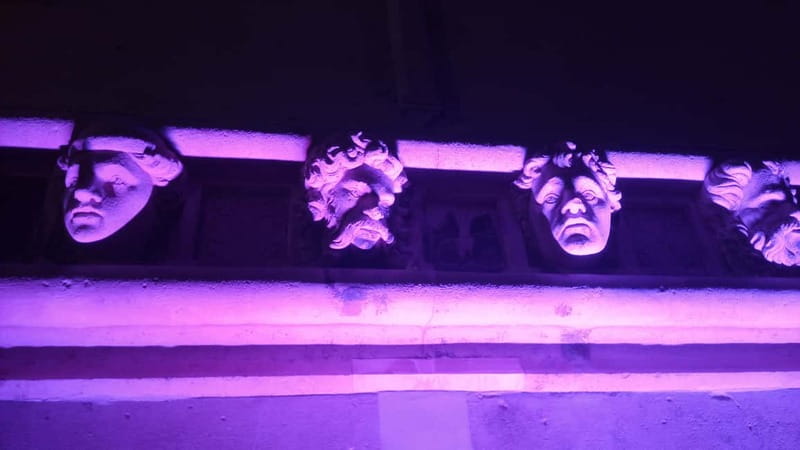
- A true after-dark walk: You explore narrow lanes, covered passages, tunnels, and stairways in the kind of darkness that shaped medieval Šibenik.
- Dario Mikulandra leads the tour: He guides in English, Croatian, and Serbo-Croatian, with a lively style and strong command of the city’s past.
- The four-well cistern is a highlight: You learn how water was collected and what this vital medieval structure looked like inside.
- The route includes unusual corners: Expect the cave beside St. Lawrence Monastery, the oldest street, the shame column, and a chapel linked to Šibenik’s first doctor.
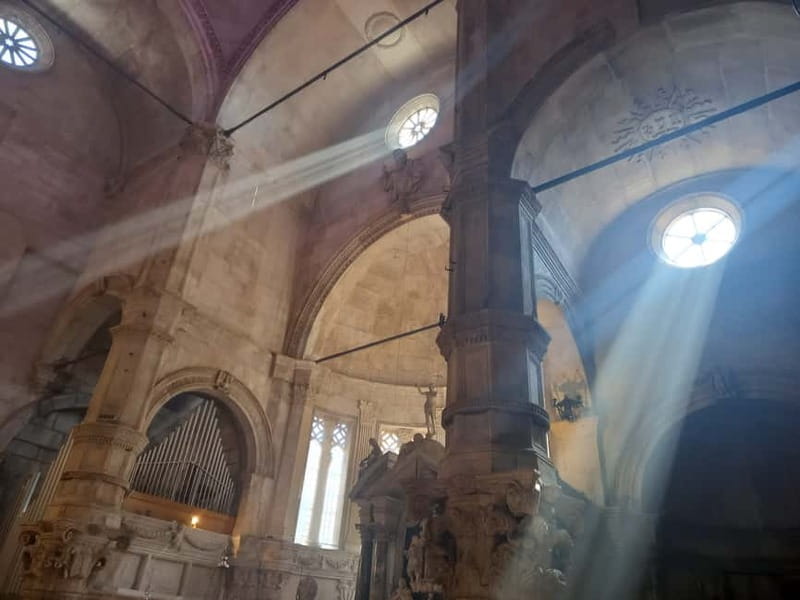
- The Cathedral of St. James anchors the walk: You hear why light mattered in its design, how quickly it was built, and what it meant to local people.
- You finish where you start: Meet at the cathedral’s west-facing main portal and return there at the end.
Why Šibenik works so well after dark

Many old towns are pleasant at night, but Šibenik has a useful advantage: its medieval core is built for walking. The streets are narrow, stair-stepped, and full of passageways that were not lit during the Middle Ages. Without the daytime crowds and glare, you can better picture how residents once moved through the city.
Your guide uses the darkness as part of the lesson. This is not a standard circuit of bright squares and grand facades. You walk into shadowed lanes, through covered passages, and along streets more than 600 years old. The setting gives ordinary stonework a little drama, but the value comes from the stories tied to each spot.
You will hear where the pillar of shame once stood, how people who cheated at the medieval fair tried to escape, and where nuns prayed for the city from darkened monasteries. These details help turn Šibenik from a collection of old buildings into a place where people worked, worshipped, argued, feared disease, and depended on one another.
The night setting also helps during hot Dalmatian summers. One of the tour’s advantages is walking in the evening, away from the strongest daytime heat. You still need to handle stairs and uneven stone, but the cooler hour can make the climb much more pleasant.
More walking tours in Sibenik:
- Sibenik: Guided Evening Walking Tour
★ 4.9 · 62 reviews - From Sibenik: Private Walking Sibenik Sightseeing Tour
★ 4.9 · 15 reviews - Sibenik: Guided Walking Tour
★ 5.0 · 8 reviews
Meeting at the cathedral’s west portal
The meeting point requires a small but important bit of care. Start at the main entrance portal of the cathedral facing west, opposite the statue of sculptor Juraj Dalmatinac. Do not wait at the cathedral doors with the lions.
That distinction matters because Šibenik’s cathedral has more than one notable entrance, and it is easy to choose the wrong one when the square is busy. The walk ends back at this same meeting point, so you do not have to find your way to a distant finish after dark.
The cathedral square gives Dario a natural opening. He introduces the city through the building that dominates Šibenik’s old center, then explains how the cathedral was constructed and what it represented to the people who funded and built it.
You also hear about the role of light in the cathedral’s design. That is a particularly good subject for an evening tour. As daylight fades, you can think about how builders planned openings, stone surfaces, and religious spaces in an era before electric lighting.
Cathedral of St. James and the meaning of stone
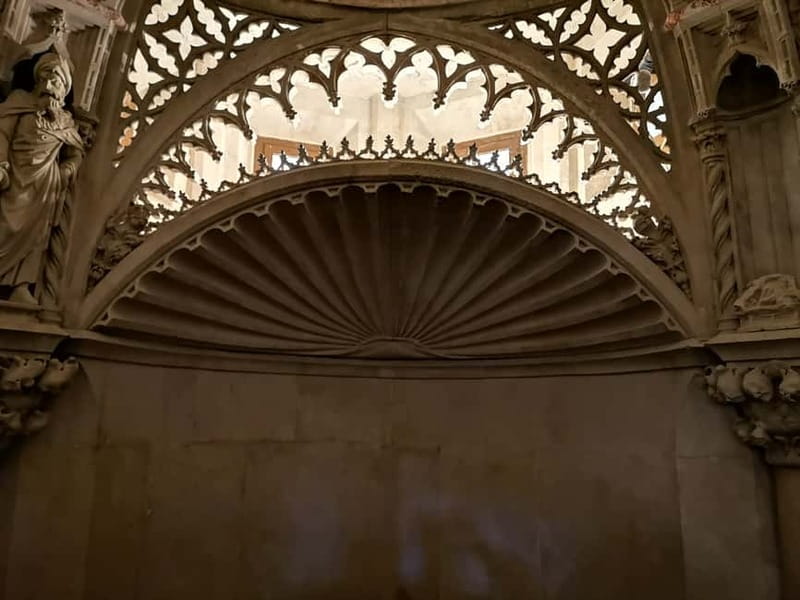
The cathedral is the tour’s best-known stop, but the walk treats it as more than a photo opportunity. You hear about the construction process, whether the work took a long time or was completed at a remarkable speed, and why the building mattered so much to Šibenik.
The tour also includes the church of St. John and its reliefs. This gives you a useful comparison with the cathedral. Instead of looking at one famous facade and moving on, you get a sense of how religious buildings and carved details are spread through the old town.
Dario also explains local traditions tied to the city calendar. One story concerns midnight on December 17, when all 72 bells of the city rang. Another explains why weddings are not held in Šibenik during May. These customs may sound small beside a cathedral, but they show how faith, local memory, and the calendar shaped daily life.
The tour does not include church or museum entrance fees. That keeps the route moving, but it also means you should not expect an interior visit to the cathedral or other churches during this short walk. If you want to see interiors, plan a separate daytime visit.
The four-well cistern and medieval water
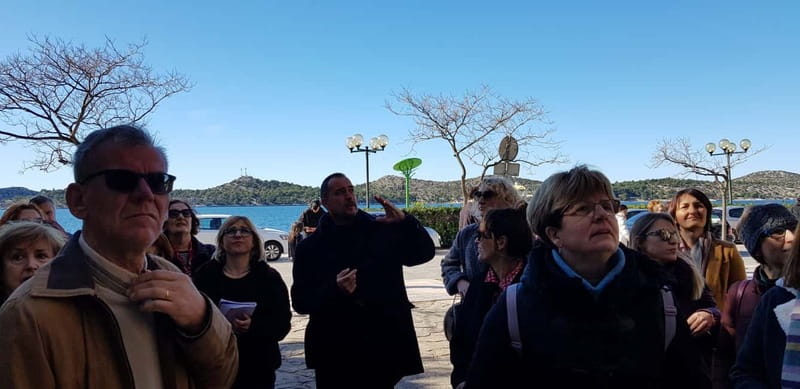
The visit to the medieval cistern of four wells gives the tour one of its most useful practical stops. Water supply is easy to overlook when admiring old architecture, yet it was a basic concern for every medieval town.
Here, you learn how water was collected and what the cistern looked like inside. The stop adds substance to the walk because it shifts attention from churches and palaces to the systems that allowed the city to function.
This is also a place where Dario’s storytelling matters. A cistern can be easy to pass without context. With an explanation of its purpose, construction, and place in city life, it becomes a clue to how people managed daily needs before modern pipes and reservoirs.
The cistern is one of the reasons I would recommend taking this tour early in your stay. It helps you notice practical features around Šibenik during later walks. One person who enjoyed the tour returned the next morning to revisit several places, including St. Lawrence’s medieval gardens and the cathedral.
More evenings out in Sibenik:
- Split: Illuminated Evening Guided Kayaking Tour
★ 4.8 · 1,622 reviews - Dubrovnik: Sea Kayaking&Snorkelling Guided Day/Sunset Tours
★ 4.8 · 1,554 reviews - Dubrovnik: City Walls Early Morning or Sunset Walking Tour
★ 4.8 · 1,523 reviews - 3hours all inclusive Sunset&Dolphin Tour from Medulin on Sandra
★ 5.0 · 1,130 reviews
The oldest street, tunnels, and steep steps
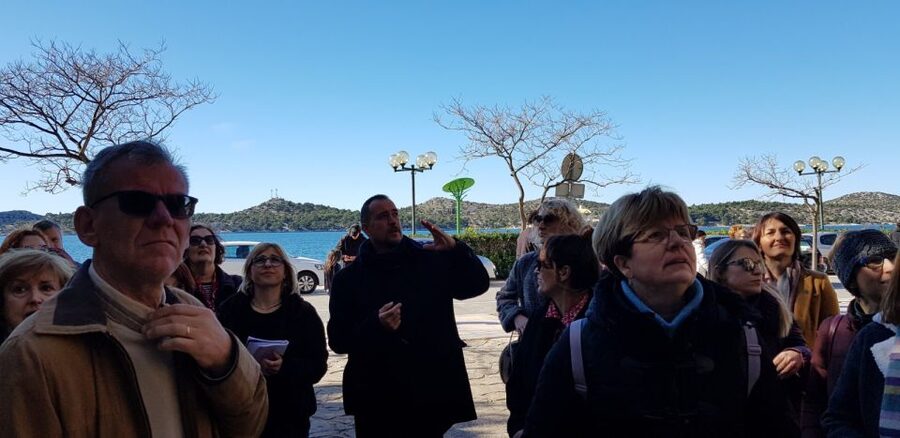
Šibenik’s oldest street and its narrow lanes give you the strongest sense of the city’s medieval layout. The route includes tunnels, covered passageways, and a multitude of stairs. You are not simply looking at the old town from a square. You are moving through the spaces that connect it.
The stairs are part of the charm, but they are also the chief physical consideration. This is a walking tour in a compact historic core, not a flat promenade. Wear shoes that feel secure on old stone, and expect the pace to include stops for stories rather than a continuous march.
Dario points out how houses were built inside the old city core. That explanation helps you read the dense architecture. Narrow streets and close-set buildings were not accidental decoration. They reflect the need to use limited space, protect the town, and connect homes with religious, commercial, and civic areas.
The walk also covers the town’s crafts and a medieval sign associated with the Šibenik subway. The wording may sound unusual to modern ears, but it belongs to the tour’s effort to show how the city’s working life and hidden infrastructure fit together.
St. Lawrence Monastery and the old town cave
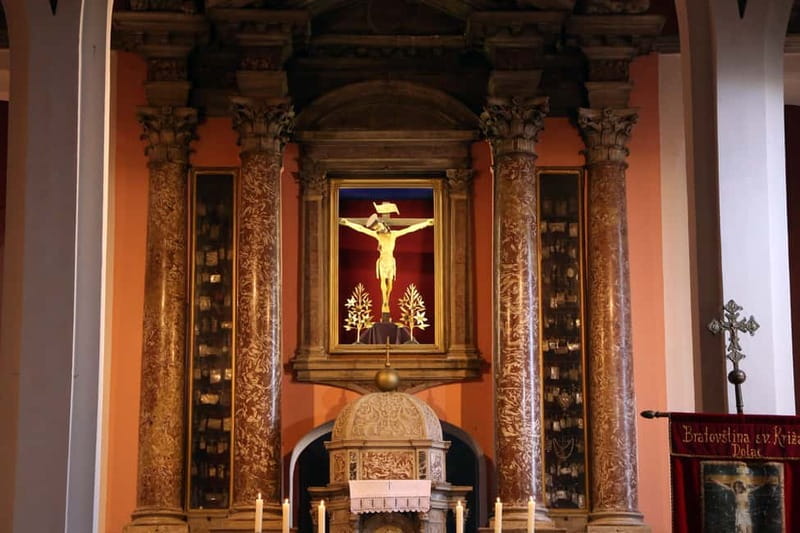
The cave beside the Monastery of St. Lawrence is one of the tour’s most unusual stops. It gives the walk a touch of mystery without turning it into a ghost tour. You are seeing a physical feature tucked beside a religious complex, then hearing how it fits into the old town.
The monastery itself adds another layer. You learn where nuns prayed for the city in darkened monasteries, which connects the building to the fears and hopes of medieval residents. This is a quieter story than the cathedral’s grand construction, but it may stay with you longer.
The route also includes a chapel linked to Šibenik’s first doctor, dating to 1419. That detail widens the tour beyond religious art and military-era streets. It points to medicine, public welfare, and the people who served the city in earlier centuries.
Because the entire walk lasts about an hour, these stops are introductions rather than full visits. You will not spend long periods inside each site. The benefit is range: in one compact route, you encounter water management, worship, medicine, trade, punishment, and urban design.
Plague, bells, and the people behind the stones
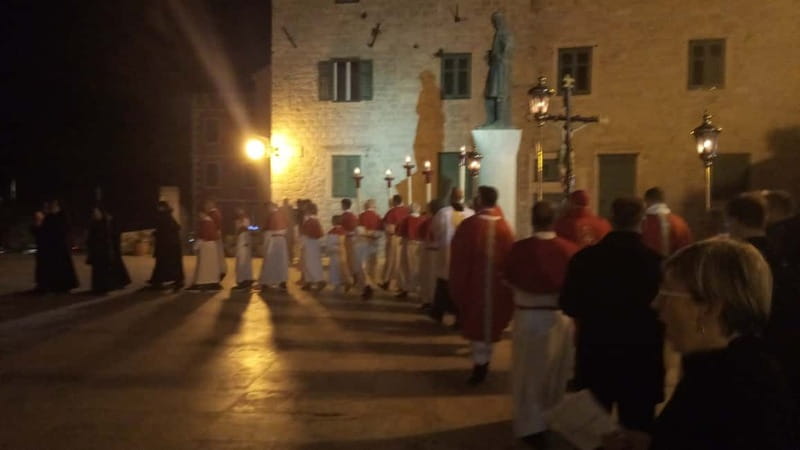
One of the darker subjects is the plague that nearly destroyed Šibenik in 1649. The story gives needed weight to the city’s pretty stone streets. Medieval and early modern life was not just markets, bells, and carved facades. Epidemics could threaten the whole community.
Dario also explains the old fair, including the place where cheaters escaped, and the pillar of shame. These stories bring law and commerce into the tour. You begin to picture the old town as a working community with rules, disputes, public penalties, and crowded trading days.
The 72 bells and the December 17 tradition provide a different mood. They show how sound once carried across the city. At night, when modern traffic and daytime activity have eased, it is easier to imagine bells marking time, warning residents, or gathering them for religious occasions.
The strongest part of this storytelling is the connection between the grand and the ordinary. The cathedral may draw your eyes first, but a story about a fairground cheat or a doctor’s chapel can make the city feel more human.
What the $49 price really covers
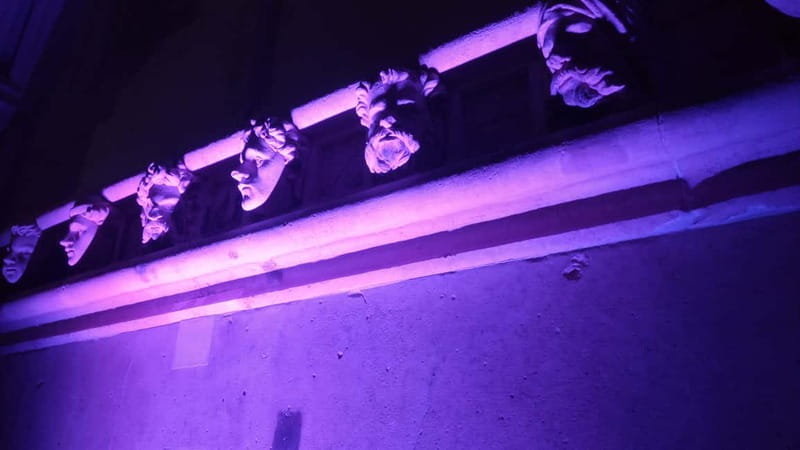
At $49 per person, this is a premium price for a one-hour walking tour. You are not paying for a full evening program, transportation, meals, or admission to churches and museums. The cost goes toward a professional guide, a specialized route, maps, and brochures in your language.
The value depends on how you like to travel. If you only want a quick orientation, the price may feel high for 60 minutes. You can walk through Šibenik’s streets on your own for free, and the cathedral square is easy to find.
I think the price makes more sense if you want context that is difficult to gather alone. The cave, cistern, oldest street, shame column, chapel, and local traditions are easy to overlook. A guide from one of the medieval brotherhoods can also give the walk a connection to local customs that a general city stroll may lack.
The tour has a five-star rating from 19 published ratings, and the strongest praise focuses on Dario’s clear English, humor, enthusiasm, and ability to answer questions. One family with two young children found the route worked for everyone, while another person returned in daylight to see the cathedral and St. Lawrence gardens more closely.
I would book this as an introduction, not as your only Šibenik sightseeing activity. Use the walk to mark places you want to revisit in daylight. That approach gives you the atmosphere at night and the visual detail later.
Who will get the most from this walk
This tour suits you if you enjoy local stories, old streets, and compact walks with frequent stops. It is especially useful for a first evening in Šibenik because it gives you a sense of direction and points out places you might otherwise miss.
Families can consider it, since the one-hour length is easier for children than a long historical walk. The cave, tunnels, bells, stairs, and medieval punishments also offer concrete details that can hold a child’s attention better than a long lecture about dates.
History fans will appreciate the range of subjects. You cover the cathedral, water collection, medicine, plague, religious life, crafts, fair rules, and old urban planning in a short time.
You may want to skip it if you dislike uneven streets, stairs, or night walking. You should also think twice if your main goal is entering churches and museums, since no admission visits are included.
The languages listed are English, Croatian, and Serbo-Croatian. Dario has been praised for his English and sense of humor, which matters because a story-heavy tour depends on clear delivery. The guide also answers questions, so you can shape part of the walk around what interests you.
Practical details for a smoother evening
The activity lasts one hour, and starting times depend on availability. Check the time carefully when booking, since the dark setting is central to the experience.
Meet at the west-facing main cathedral portal, opposite the statue of Juraj Dalmatinac. If hotel pickup is needed, the guide can wait at your hotel reception, but the stated meeting point is the cathedral entrance and square.
Maps and brochures are provided in your language. These are useful after the tour, especially if you want to return to the cathedral, museum, St. Lawrence gardens, or another stop the next morning.
You can cancel up to 24 hours before the activity for a full refund, and the reserve-now, pay-later option keeps your plans flexible. Those terms are helpful if your Dalmatian itinerary depends on changing weather or transport.
Should you book the Šibenik Medieval Night Walking Tour?
Book it if you want a short, story-led introduction to Šibenik and like the idea of seeing the city without the daytime heat. Dario’s personal approach, strong English, humor, and knowledge of local places add real value to a route that includes more than the usual cathedral stop.
I would especially recommend it for a first night in town, for families who want a manageable activity, and for anyone curious about the city’s lesser-seen corners. At $49, it is not a bargain free walk, but the specialist route and guide make it worthwhile if you will use the tour as a guide to further exploring.
Skip it if you want extensive interior visits, a long tour, or a flat route. For everyone else, the darkness, stairs, cistern, monastery cave, old streets, and local stories offer a memorable way to meet Šibenik.
FAQ
How long is the Šibenik Medieval Night Walking Tour?
The tour lasts one hour.
What is the price?
The price is $49 per person.
Where does the tour start?
Meet at the cathedral’s main entrance portal facing west, opposite the statue of the sculptor Juraj Dalmatinac. This is not the cathedral entrance with the lions.
Where does the tour finish?
The walk ends back at the original meeting point.
Which languages are available?
The live guide operates in English, Croatian, and Serbo-Croatian.
Who guides the tour?
The experience provider is Magnificat, owned by Dario Mikulandra. Dario leads the walk and is a member of one of the medieval brotherhoods.
Does the tour enter churches or museums?
No entrance fees for churches and museums are included. The tour covers the cathedral square and other historic locations from the outside or as part of the walking route.
What places are included?
The route includes the cathedral square, the medieval cistern of four wells, the oldest street in Šibenik, St. Lawrence Monastery, the old town cave, the town’s crafts, the medieval Šibenik subway sign, a 1419 chapel, the pillar of shame, St. John’s Church and its reliefs, and the first public lighting lamp from 1895.
Can I cancel the booking?
You can cancel up to 24 hours in advance for a full refund. You can also reserve the activity and pay later.
Just added around Sibenik
- The beauty of the Middle Ages-Šibenik★ 4.7 · 7 reviews
- Šibenik : Zipline Šibenik – Čikola Canyon★ 5.0 · 3 reviews
- Sibenik: Guided Evening Walking Tour★ 4.9 · 62 reviews
- Šibenik walking tour in one hour!★ 5.0 · 6 reviews
- Sibenik: Full-Day Kornati National Park Boat Tour★ 5.0 · 19 reviews
- Sibenik: Guided Walking Tour★ 5.0 · 8 reviews
- RIVIERA TOUR FROM ŠIBENIK, ZLARIN, PRVIĆ AND TIJAT★ 4.6 · 14 reviews
- Private Krka Waterfalls Tour from Split with stop in Trogir★ 5.0 · 5 reviews
Sibenik Tours, compared.
Vodice: Krka Waterfalls National Park Boat Tour
Read our review →
Krka National Park Full-Day Tour with Wine Tasting
Read our review →

Browse the lists this tour appears in