
Reviewed · SPLIT TOURS
Split: Magical Evening Sightseeing Private Tour
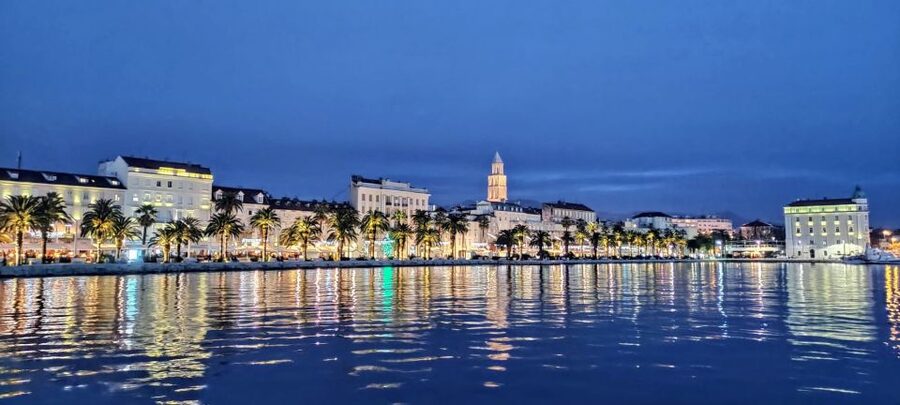
Split’s old town is a Roman palace that became a living city, and this evening walk takes you through its most important spaces while summer life unfolds around you. You’ll move from the cellars of Diocletian’s Palace to Peristyle, the Cathedral of St. Domnius, medieval squares, and the waterfront.
I like the private format, since you can set the pace and ask for more Roman history or more modern city life. I also like the timing: the streets and squares feel social after sunset, while the two-hour length keeps the tour manageable. The main drawback is clear: the cathedral and palace interiors may be closed or require separate tickets, so this is mainly an exterior and cellar-focused evening visit.
Key things to know before you book
- Diocletian’s Palace is still part of the city: You walk through streets, squares, shops, and cafés built into a 1,700-year-old Roman complex.
- The tour is private for up to 20 people: The $129 price is per group, making it strongest value for families or friends traveling together.
- Evening timing changes the mood: Summer squares, markets, shopping streets, and the Riva are active when the heat of the day has eased.
- Guide Zrinka receives special praise: Her calm pace, personal manner, and restaurant suggestions are useful extras for your first night in Split.
- Interior access is limited: Cathedral entry and palace admission are not included, and the cathedral will likely be closed at this hour.
- You can avoid steps if needed: Comfortable shoes still matter, but the guide can adjust the route when necessary.
Why an evening walk works so well in Split
Split makes a strong first impression because its oldest monument is not fenced off from daily life. Diocletian’s Palace forms the core of the city, but people live, shop, eat, and meet friends inside and around it. You are not simply looking at ruins. You are walking through a working town shaped by Roman, medieval, Venetian, and modern Croatian life.
The evening setting helps. Summer days in Dalmatia can be hot, and the later hours bring more comfortable walking conditions. The streets and squares also take on a different character as shops, cafés, markets, and restaurants become active. You get history without losing the feeling of present-day Split.
This is a private tour, not a large group shuffle. For a family, a couple traveling with friends, or a group with mixed interests, that matters. You can ask your guide to slow down near a monument, keep moving when younger children lose patience, or spend more time on Roman architecture. The advertised price is $129 for the whole group of up to 20 people, so the value improves as your group grows.
The tour lasts two hours. That is enough for a useful first look at the old town, but not enough for every museum, church, and corner. Think of it as an orientation walk with historical depth, not a full-day study of Split.
More evenings out in Split:
- Split: Illuminated Evening Guided Kayaking Tour
★ 4.8 · 1,622 reviews - Split: Stand Up Paddleboard Night Glow Tour
★ 4.9 · 916 reviews - Split: Sunset Boat Party with Live DJs and Blue Lagoon Swim
★ 4.5 · 638 reviews
Meeting the guide beside Diocletian’s cellars
The meeting point is in front of the entrance to the cellars of Diocletian’s Palace at Obala Hrvatskog narodnog preporoda 23. The route information also gives Obala Hrvatskog narodnog preporoda 15b as the starting and ending location, so check the precise meeting instructions when booking.
This is a sensible place to begin. The palace cellars sit beside the waterfront and help you understand the scale of the Roman complex right away. Your guide introduces the plan, then leads you toward the Riva and into the historic center.
The available tour languages are English, French, and Croatian. If you want a particular language, confirm availability for your date and starting time. Guide Zrinka is specifically associated with a relaxed pace, clear explanations, and practical restaurant recommendations. Those dining suggestions can be handy because the tour ends near cafés and restaurants rather than in an isolated meeting area.
The Riva, Split’s waterfront starting point
The Riva is your first formal stop, with about 15 minutes for a guided look and photographs. This broad waterfront promenade gives you a useful contrast to the tight lanes inside the palace.
Here, you see Split as a Mediterranean city rather than only as an archaeological site. The waterfront is also a natural place to orient yourself. From it, your guide can connect the modern promenade with the older structures behind it, helping you understand how the palace sits inside the wider city.
I would use this first stop to ask practical questions. Ask where the old town ends, where the best evening cafés are, and which streets are easiest to revisit on your own. Since the tour finishes back at the same general waterfront area, you can continue your evening without arranging transport.
Entering the Roman palace through the cellars
The main portion of the tour takes about an hour inside and around Diocletian’s Palace. Built for the Roman emperor Diocletian, the palace is the central reason to book this walk.
The cellars are especially useful because their layout reflects the rooms above them. Your guide can explain how the Roman complex was organized and how later generations used and altered it. The well-preserved lower level gives you a stronger sense of the original building than a quick look at scattered stones would.
From the cellars, you walk up toward Peristyle, the palace’s grand central area. Stairs are part of the route, but steps can be avoided if necessary. Tell the guide before or at the start if you need a route with fewer steps. Comfortable shoes remain a smart choice because the walk includes historic surfaces and regular movement between sites.
The palace section is not a museum visit with every room open. The entrance fee for Diocletian’s Palace is not included, and opening conditions can affect what you see. The value here comes from the guide’s explanation of how the palace became part of a living city, along with the chance to see its most important public spaces.
A few more Split half-days to weigh up
- Split: Krka Waterfalls Trip with Boat Cruise and Swimming
★ 4.8 · 10,519 reviews - From Split: Krka Waterfalls, Food & Wine Tasting Tour
★ 5.0 · 9,326 reviews - Blue cave, Mamma Mia and Hvar, 5 islands speedboat tour
★ 5.0 · 7,150 reviews - From Split: Krka Waterfalls, Food & Wine Tasting Tour
★ 4.9 · 6,598 reviews
Peristyle and the Jupiter Temple
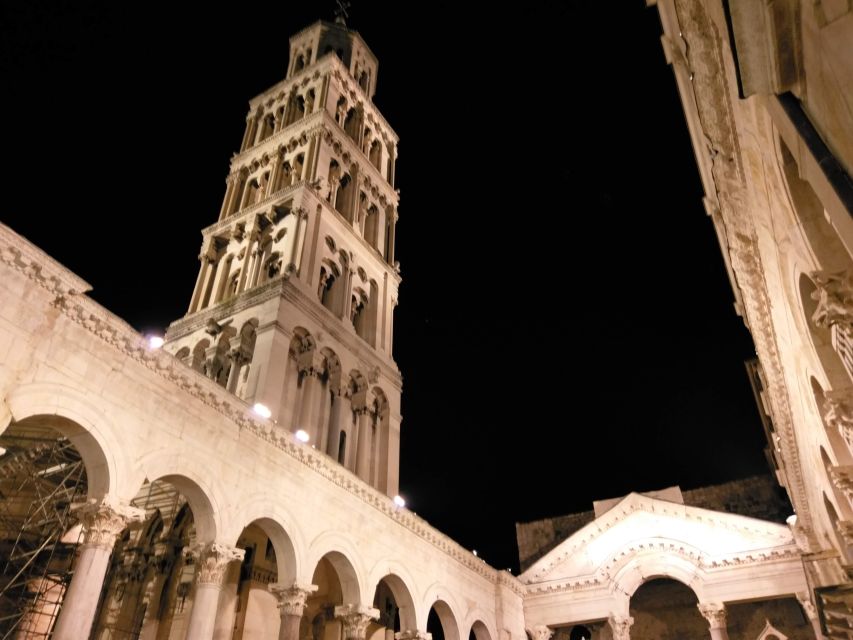
Peristyle is one of the essential stops in Split. This formal Roman courtyard connects the palace’s imperial past with the city around it. Your guide can point out how the space functioned within the palace and how later buildings grew around it.
You also see the Jupiter Temple. The temple is part of the palace story, and its presence helps explain that Diocletian was not creating an ordinary private residence. This was an imperial complex with religious and ceremonial spaces.
The evening setting is useful here because you are likely to see the square as part of city life, not only as a quiet monument. That can make the history easier to remember. You see how a Roman space can remain part of the daily route through town.
St. Domnius Cathedral and the old mausoleum
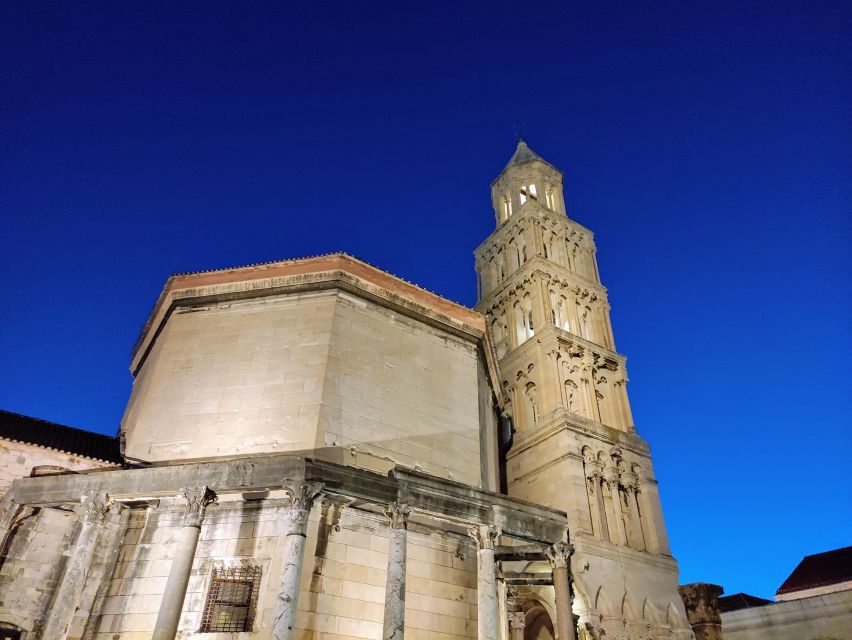
The Cathedral of St. Domnius is dedicated to Split’s patron saint and occupies what was originally Diocletian’s mausoleum. That change from imperial tomb to Christian cathedral is one of the clearest examples of Split’s layered past.
The cathedral is often described as the oldest cathedral in the world, and your guide can explain the claim in the context of the building’s earlier use. The tour includes a 15-minute photo stop, but you should not plan on a full interior visit. Due to its operating hours, the cathedral will likely be closed during this evening tour.
This limitation is important. You can admire the exterior and hear the story, but cathedral entry is not included. If seeing the interior is a priority, arrange a separate visit during opening hours. The same advice applies to anyone hoping for a bell tower climb or a close look inside every major monument. This evening experience is not designed around paid interior access.
Golden Gate and the medieval city
The Golden Gate is another brief photo stop. It was one of the major entrances to Diocletian’s Palace, and it helps you picture the palace as a fortified imperial residence with controlled access.
As you leave the Roman core, the tour shifts into the medieval part of Split. This change is one of the walk’s best features. You are not stopping at the palace and turning back. You are seeing how the town grew beyond its original Roman walls.
A walk through Split is a walk through time, but the changes are not arranged like tidy museum rooms. Roman stonework, medieval streets, later Venetian influence, and modern commerce overlap. A private guide can make those transitions easier to follow, especially if you ask how one period altered the next.
People’s Square and Fruit Square
People’s Square, also known as Piazza from the period of Venetian rule, gives you a look at another chapter of Split’s story. The stop includes a guided explanation and time for photographs.
This is the kind of place where the private format pays off. You can ask about Venetian influence, the square’s role in city life, or the buildings around it. The tour does not treat the square as a quick name on a list. It uses the space to show how Split changed after the Roman period.
Fruit Square is another short visit and photo stop. Its name hints at its market connection, and the square helps you see the everyday side of the historic center. These smaller public spaces add balance to the grand palace monuments. You get a sense of how people use the old town, not just how emperors and bishops shaped it.
The listed timing gives about 15 minutes at each of these later stops. That is enough for an introduction and photographs, but not for a long, detailed examination of every building. If you want a slower visit, tell the guide what matters most to you at the start.
Ending by the Riva for dinner and a second look
The walk returns to the waterfront at Obala Hrvatskog narodnog preporoda. This is a practical finish because you can continue the evening with dinner, a drink, or another walk along the Riva.
Restaurant advice from Zrinka is a useful part of the experience. It is not a meal included with the tour, and you should not treat the guide’s suggestions as a replacement for checking current opening hours or menus. Still, ending near restaurants means you can put those recommendations to use immediately.
I also like the way this ending gives you a second look at the city. At the start, the Riva is mainly an orientation point. At the finish, you have context for the streets and monuments behind it. That makes it easier to return to the palace or squares on your own the next day.
What $129 means for your group
At $129 per group of up to 20 people, this is not priced per person. A couple pays the full group rate, so the cost is less attractive for only one or two people. For a larger family or private group, the arithmetic improves quickly.
The price includes a licensed guide. It does not include entrance fees to the cathedral or Diocletian’s Palace. Since the cathedral will likely be closed during the tour, the main cost is for the private interpretation, route planning, and flexibility rather than a package of admissions.
I see the strongest value for people who want a tailored introduction on their first evening. If you already know Split well, or if you mainly want to enter every monument, this tour may feel limited. If you want someone to connect the Roman palace with the medieval and modern city, the private format makes more sense.
You also get free cancellation up to 24 hours before the start, and you can reserve now and pay later. Those terms help if your Split plans may change, though you should still check the available starting time before booking.
Who should choose this private Split tour?
I would choose this tour for a first evening in Split, especially if you want the main sights explained before exploring alone. Families may appreciate the adjustable pace and the option to avoid steps. Couples and friend groups can make the private format work well by choosing their own focus.
It is also a good fit if you want a guide in English, French, or Croatian. The tour is wheelchair accessible, but the historic setting and possible steps make it wise to discuss route needs in advance.
I would hesitate if interior access is your main goal. The cathedral will likely be closed, and admission to the palace and cathedral is not included. You may prefer a daytime visit or a tour built around open interiors if you want to spend substantial time inside religious and Roman buildings.
The overall rating is 4.9 from six ratings, with the strongest praise focused on the guide’s personal manner, sensible pace, historical explanations, and restaurant advice. That matches what this experience does best: it gives you a clear, friendly introduction without trying to fill an entire day.
Final verdict: book it for orientation, not extensive entry access
Book this private evening walk if you want to understand Split’s old town in two focused hours, with a guide who can adjust the pace and add useful dining suggestions. It is particularly good for groups who can share the $129 cost and for anyone arriving in Split without a clear sense of how the Roman palace fits into the modern city.
Skip it if you need long interior visits, a bell tower climb, or included admission fees. For everyone else, the route from the cellars and Peristyle to St. Domnius, the Golden Gate, Venetian-era squares, and the Riva gives you a smart first chapter in Split’s story.
FAQ
How long does the Split evening tour last?
The tour lasts two hours.
What is the price of the private tour?
The price is $129 per group of up to 20 people.
Where does the tour meet?
The meeting point is in front of the entrance to the cellars of Diocletian’s Palace at Obala Hrvatskog narodnog preporoda 23, 21000, Split.
What languages are available?
The live guide is available in English, French, and Croatian.
Is the tour private?
Yes. It is offered as a private group tour.
Is the tour wheelchair accessible?
Yes, the activity is wheelchair accessible, and steps can be avoided if necessary.
Are entrance fees included?
No. Entrance fees to the Cathedral of St. Domnius and Diocletian’s Palace are not included.
Will the cathedral be open during the tour?
The cathedral will likely be closed because of its operating hours during the evening tour.
What should you bring?
Bring comfortable shoes.
Can you cancel the tour?
You can cancel up to 24 hours in advance for a full refund. You can also reserve now and pay later.
Just added around Split
- From Trogir, Seget, Okrug: Krka Waterfalls & Šibenik Culture Tour★ 5.0 · 10 reviews
- Krka Waterfalls & Primošten from Trogir, Seget, Čiovo & Kaštela★ 5.0 · 18 reviews
- Island Hopping Boat Excursion with Lunch (Trogir,Blue Lagoon, Šolta)★ 3.5 · 6 reviews
- From Split & Trogir: ATV Quad Tour on Island Čiovo★ 5.0 · 21 reviews
- Slatine – Island Hopping Excursion (Trogir/Blue Lagoon/Shipwreck)★ 4.0 · 24 reviews
- Split: Blue Lagoon Boat Trip with Lunch, Wine and Snorkeling★ 5.0 · 3 reviews
- Split Sunset Stand Up Paddle Tour★ 5.0 · 16 reviews
- Split: Sunset Guided Kayaking Tour★ 4.8 · 71 reviews
Split Tours, compared.

Krka Waterfalls Trip with Boat Cruise and Swimming
Read our review →
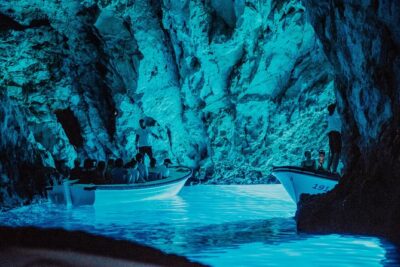
Blue cave, Mamma Mia and Hvar, 5 islands speedboat tour
Read our review →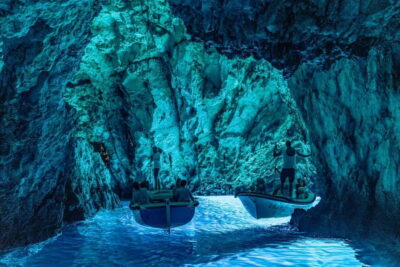
Blue Cave, Mamma Mia, Hvar and 5 Island Tour
Read our review →
Blue Lagoon & 3 Islands Cruise with Lunch from Split
Read our review →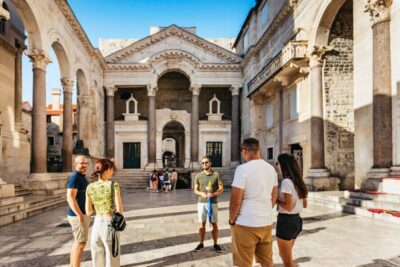

Blue Lagoon Boat Party with DJs, Shots & After Party
Read our review →Browse the lists this tour appears in