
Reviewed · WINE TOURS
Taste of Istria – wine, brandy, vinegar, local food
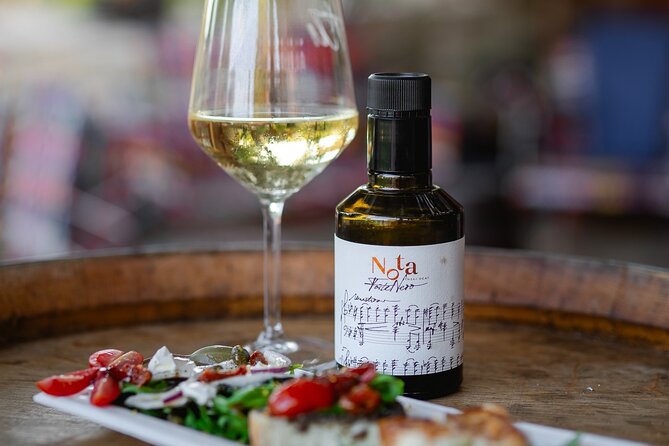
Istria’s best surprises are often poured into small glasses, and this tasting gives unusual attention to vinegar made from Croatian grapes and wine. You’ll walk through Tre Terre Estate’s vineyard and lavender fields, learn how vinegar develops, and taste it in ways that go far beyond a salad dressing.
I like the rare focus on a local product and the small group size, capped at seven people. I also like the tidy pairing of three vinegars, three Istrian wines, and three fingerfoods, which gives the short visit a clear shape.
The main consideration is time. At roughly 45 minutes to an hour, this is a focused tasting rather than a full winery visit. Minors are not allowed, and brandy is not clearly included in this particular format, so ask before booking if that is your main reason for coming.
Key points at a glance
- Vinegar takes center stage: Learn how Tre Terre Estate makes vinegar from autochthonous Croatian grapes and wines.
- A tasting with a walk: The experience combines a vineyard and lavender-field stroll with a welcome drink.
- Three-part pairing: Sample three vinegars, three Istrian wines, and three small fingerfoods.
- Small and personal: The maximum group size is seven, allowing time for questions and conversation.
- Guides with personality: Nina and Marcela are known for an easy, funny presentation and a strong grasp of wine.
- Short but weather-dependent: Plan on 45 minutes to one hour, with outdoor portions that require good weather.
Why Istrian vinegar makes this tasting different
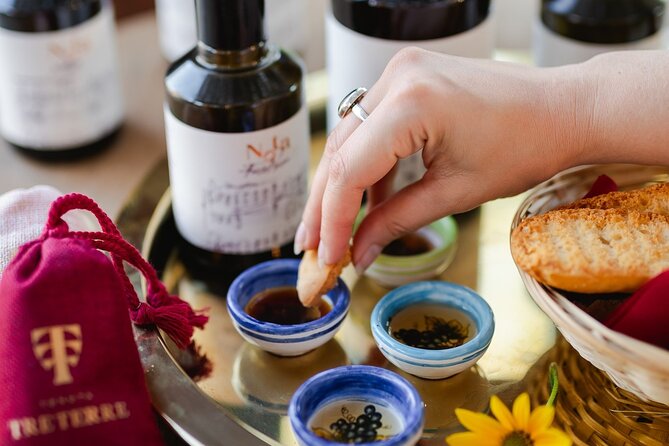
Wine tastings are common in Istria. A tasting built around vinegar is much less usual.
Tre Terre Estate uses Croatian autochthonous grapes and wines in its vinegar production. That matters because the vinegar is tied to the same local growing culture as the wine in your glass. You are not simply sampling a condiment from a bottle. You are looking at another way the estate uses its grapes and wine.
The tasting also gives you a practical reason to pay attention. You’ll hear about vinegar’s place in everyday cooking, including ways to use it in recipes and pair it with food. That makes the visit more useful than a quick sip followed by a sales pitch.
I like experiences that give a local ingredient a proper story. Vinegar can be easy to overlook, but small changes in acidity, sweetness, aroma, and aging can alter a dish. This visit helps you notice those differences.
The health claims should be treated sensibly. You’ll hear about the possible healthy aspects of vinegar in daily use, but the tour is best viewed as a food and culture experience, not medical advice.
More Istria wineries worth an afternoon:
- PERVINO – Wine tasting
★ 4.5 · 43 reviews - Buje: Authentic Istrian family farm, guided walk, foods & wine
★ 5.0 · 37 reviews - Wine picnic
★ 4.5 · 6 reviews
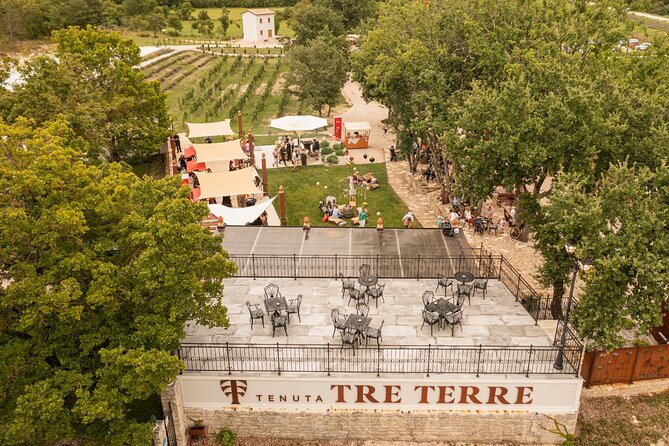
Arriving at Tre Terre Estate near Momjan
The meeting point is Dragočevac 1, 52460 Marušići, Croatia. The activity begins and ends there, so you should plan your transport around a return to the same place.
That simple start and finish can be helpful if you are staying in the Istrian countryside or arranging your own day around Momjan. It also means you should not expect a transfer between several wineries as part of this short booking. The supplied details describe one estate, one meeting point, and a compact tasting.
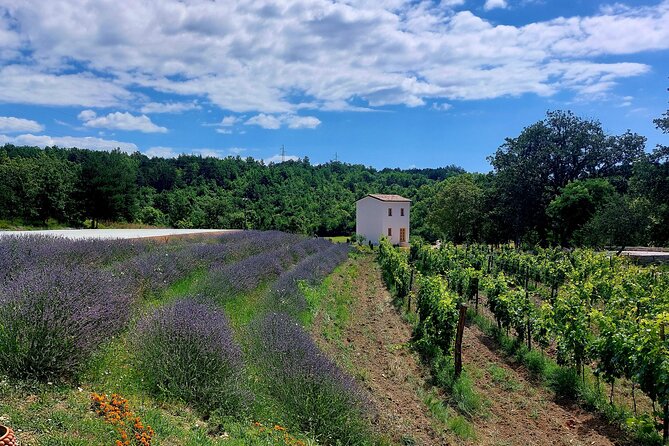
The setting does much of the work. Tre Terre Estate has vineyards and lavender fields, giving you an outdoor introduction before the food and wine. This is not just a table in a tasting room. You get a short walk that connects the products to the land where the grapes grow.
The outdoor setting brings one practical catch: good weather is required. If conditions force a cancellation, you are offered another date or a full refund. Wear shoes suitable for a walk through estate grounds, though no special equipment is listed.
The vineyard and lavender walk
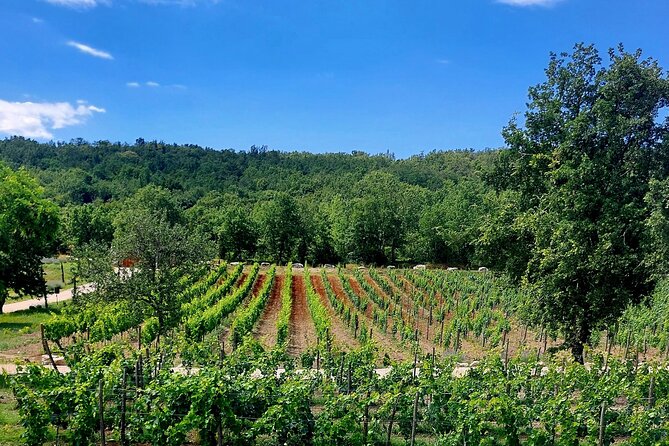
The visit begins with a welcome drink from Tenuta Tre Terre, followed by a walk through the vineyard and lavender fields. The walk is important because it gives you a sense of place before you taste.
I find that wine makes more sense when you first see the setting behind it. You do not need a long lecture on farming to understand that grapes, weather, soil, and local habits shape what ends up in the glass. Here, the lavender adds another sensory note, especially when the visit takes place during its flowering period.
Do not expect a long hike. The full experience lasts about 45 minutes to an hour, so the walk is a gentle part of the visit rather than a separate nature excursion. Its value is in the connection between the estate and the tasting.
The outdoor portion may also affect the pace. If the weather is poor, the experience may be rescheduled or canceled. This is worth keeping in mind if you are building a tightly timed day around it.
Learning how vinegar is made
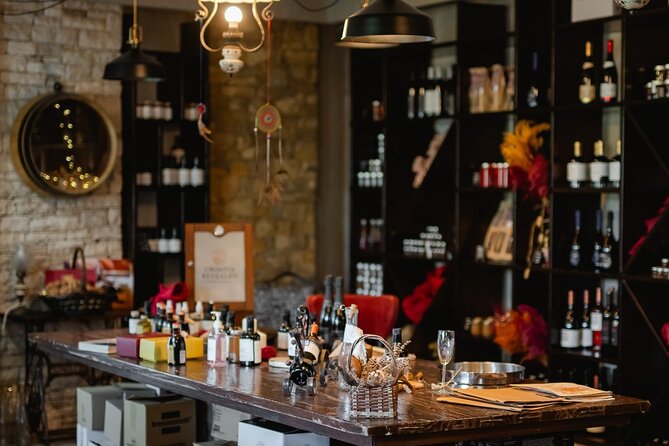
The central talk covers the process of producing vinegar from local grapes and wines. You’ll learn how wine changes into vinegar and how the finished product can be used at home.
The attraction here is the subject itself. Wine education often focuses on grape varieties, fermentation, barrels, or food pairing. This experience takes one step further and looks at what else can be made from wine. It gives you a fresh way to think about preservation, acidity, and the use of local produce.
The guides also share tips and recipes for using Istrian vinegar in cooking. That practical angle is a strong part of the visit. You can leave with ideas for dressings, marinades, and other dishes rather than only a memory of tasting three samples.
Nina and Marcela receive especially strong praise for being funny, warm, and generous with their knowledge. That combination matters in a short tasting. A dry technical talk could make vinegar feel like a chemistry lesson. Their relaxed style appears to keep the session social while still giving you useful information.
The experience is best for people who enjoy asking questions and trying unfamiliar flavors. If you only want to drink wine and skip the educational part, the vinegar focus may feel more detailed than expected.
More food tours in Istria:
- Private Sparkling Wine Tasting in Istria
★ 5.0 · 5 reviews - From Split: Krka Waterfalls, Food & Wine Tasting Tour
★ 5.0 · 9,326 reviews - From Split: Krka Waterfalls, Food & Wine Tasting Tour
★ 4.9 · 6,598 reviews - Split: Blue Lagoon and 3 Island Cruise with Food and Drinks
★ 4.8 · 1,969 reviews
Three vinegars, three wines, and three fingerfoods
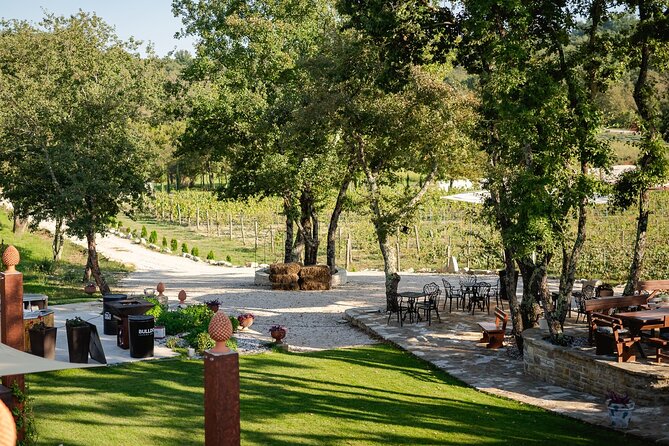
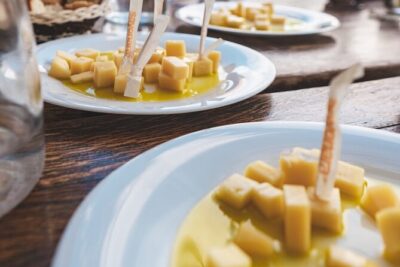
The tasting has a clear structure: three different Istrian vinegars paired with three local wines and three fingerfoods prepared with the estate’s vinegars.
This is where the experience earns its price. At $52.41 per person, you are paying for more than three wine samples. You get the estate setting, the welcome drink, the short walk, an explanation of production, three food pairings, and a small-group format.
The fingerfoods are especially useful because vinegar is hard to judge on its own. Food shows you how each sample behaves in a real dish. One may sharpen a bite, another may add fruit or sweetness, and another may bring a stronger acidic note. The supplied details do not specify the exact dishes, so you should not book expecting a particular menu.
The three local wines give you a second point of comparison. You can consider how the vinegar works beside wine, rather than tasting the products in isolation. The pairings are described as carefully matched, which should make the tasting feel like one connected session instead of separate samples.
Food portions are fingerfoods, not a meal. I would not use this activity as a substitute for lunch or dinner. It works better as a small culinary stop during a day in Istria.
A small group with room for conversation
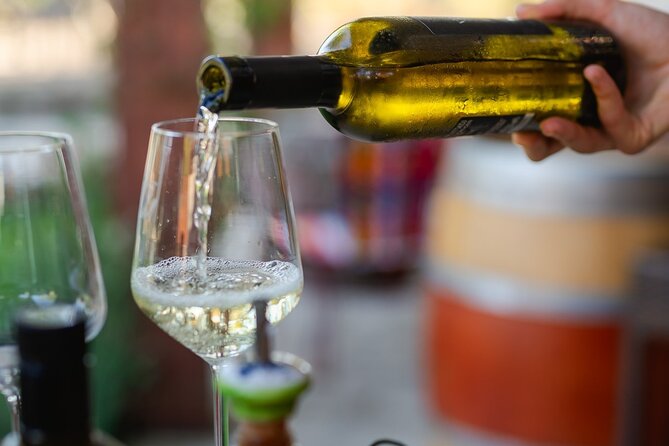
The maximum group size is seven. That is one of the best practical details here.
A small group gives you more opportunity to ask how the vinegar is made, which dishes suit it, and why one sample tastes different from another. It also makes the walk through the estate easier to manage than a large coach group.
Nina and Marcela are described as professional, funny, and passionate about wine. Their style seems to be a major part of the appeal. You can expect a friendly presentation rather than a formal lecture, with enough room for the human side of the estate to come through.
The small capacity can also mean limited availability. Confirmation is normally sent at booking, but bookings made within one day of travel are confirmed as soon as possible and remain subject to availability. If your Istrian schedule is fixed, reserving ahead makes sense.
Service animals are allowed, and most people can take part. The stated age rule is firm: minors are not allowed. That makes this an adults-only tasting, not a family activity.
What the price gives you
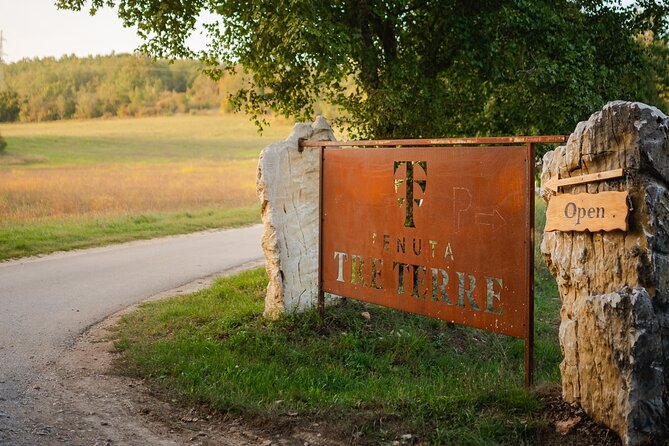
At $52.41 per person, this is not the cheapest way to sample an Istrian wine. It can still be good value if you care about the vinegar lesson and the estate setting.
You receive a welcome drink, a vineyard and lavender walk, instruction on production and everyday use, three vinegars, three local wines, and three fingerfoods. The group limit of seven adds a personal feel that larger tastings may not offer.
The value is less clear if your only goal is to drink wine. The session is short, and you are not promised a full meal, a long cellar tour, or transportation between wineries. You are paying for a compact, specialized food experience.
I would compare it with the cost of a standard tasting in the area, but I would not judge it by wine volume alone. The unusual product is the point. If you are curious about Istrian food traditions and want something beyond the familiar olive oil and wine route, the price is easier to justify.
The experience information also mentions brandy in the wider tour description, and some related tasting experiences include brandy or olive oil. However, this specific 45-minute format clearly details vinegar, wine, fingerfoods, and a welcome drink. Ask the provider if brandy is essential to your plan.
Who will enjoy this most
I would recommend this to adults who enjoy regional food, small producers, and tastings with a clear local connection. It suits couples, friends, and small groups who want an easy stop rather than a half-day wine program.
You’ll get the most from it if you are willing to taste vinegar carefully and listen to how it can be used. The visit is also a good fit if you like meeting hosts who explain their work with humor and enthusiasm.
It may not suit you if you need a substantial meal, dislike acidic flavors, or want a long winery tour. The short duration is convenient, but it limits how much ground the guides can cover.
It is also not suitable for minors. Since outdoor weather affects the activity, I would avoid placing it at the center of a rigid schedule when rain is likely.
Practical planning for a smooth visit
Allow enough time to reach Dragočevac 1 in Marušići and remember that you return to the same meeting point. The supplied details do not include hotel pickup or transport, so arrange your own way there unless the provider tells you otherwise.
Use the mobile ticket provided at booking. Confirmation is normally immediate, though a booking made less than one day before departure may take longer while availability is checked.
The cancellation terms are fair but strict close to departure. You can cancel at least 24 hours before the start time for a full refund. Changes or cancellations inside that window are not accepted and are not refunded.
Weather can change the plan. If the experience is canceled because of poor weather or because the minimum number of participants is not reached, you are offered another date or experience, or a full refund.
The best preparation is simple: arrive ready to walk outdoors, taste wine and vinegar, and ask questions. You do not need prior wine knowledge. You only need an interest in how local ingredients reach the table.
Should you book Taste of Istria?
Book it if you want a small, personal introduction to Istrian wine with an unusual culinary focus. The combination of vineyard, lavender fields, local wines, fingerfoods, and grape-based vinegar gives the visit a distinct identity.
I especially like it for a first taste of Istria’s food culture. You get a local product, practical cooking ideas, and a chance to meet guides who bring warmth and humor to the subject.
Skip it if you are looking for a full winery circuit, a generous meal, or a guaranteed brandy tasting. For everyone else, the $52.41 price is reasonable when you value the setting and the vinegar lesson as much as the wine itself.
FAQ
Where does the Taste of Istria experience begin?
It begins at Dragočevac 1, 52460 Marušići, Croatia.
Where does the experience end?
The activity ends back at the meeting point in Marušići.
How long does the tasting take?
The experience lasts approximately 45 minutes to one hour.
What will I taste?
You will taste three Istrian vinegars, three local Istrian wines, and three fingerfoods prepared with the estate’s vinegars. A welcome drink is also included.
Are children allowed?
No. Minors are not allowed on this activity.
How many people can join?
The maximum group size is seven travelers.
What happens if the weather is poor?
The experience requires good weather. If it is canceled because of weather, you will be offered another date or a full refund.
Just added around Istria
- Wine picnic★ 4.5 · 6 reviews
- PERVINO – Wine tasting★ 4.5 · 43 reviews
- Private Truffle Hunting with Cooking Session★ 5.0 · 38 reviews
- Private Sparkling Wine Tasting in Istria★ 5.0 · 5 reviews
- Lim Bay Outrigger Canoe Tour★ 5.0 · 54 reviews
- Kayaking Experience in Lim Bay Sea in The Croatian Fjord★ 5.0 · 40 reviews
- Parenzana Trail Full Day Cycling Tour from Pula, Rovinj, Poreč or Buje★ 5.0 · 3 reviews
- Full-Day trip to Lake Bled★ 5.0 · 26 reviews
Wine Tours, compared.

Krka Waterfalls With Boat Cruise, Wine and Olive Oil
Read our review →

Krka Waterfalls, Food & Wine Tasting, Boat Ride & Zadar Old Town
Read our review →Browse the lists this tour appears in