
Reviewed · SPLIT TOURS
Split: Cultural Walking Tour with Anthropologist Guide
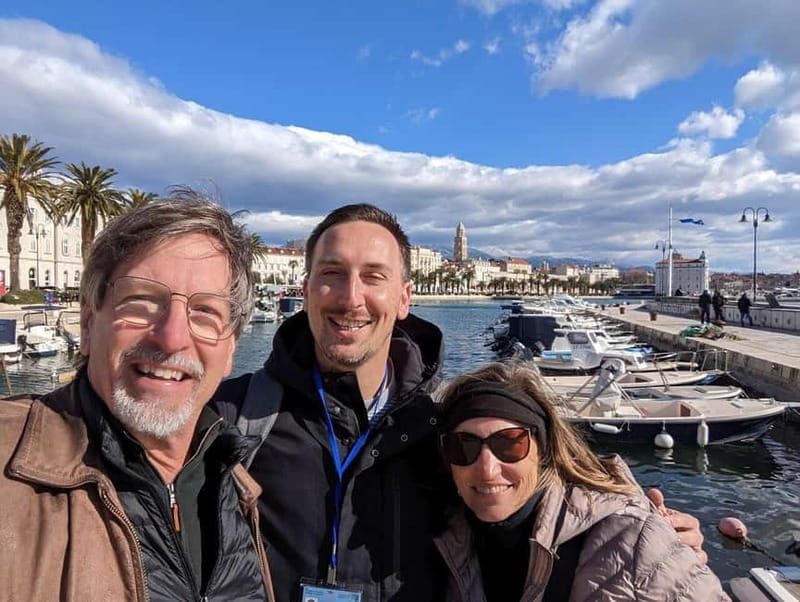
Split: Cultural Walking Tour with Anthropologist Guide offers something many city walks leave out: the arguments, silences, and unsettled questions behind the monuments. Guide Marin connects Split’s Roman remains and medieval lanes to modern Croatian identity, politics, religion, demographics, sexuality, and economics.
I like the direct treatment of contested history and the way each stop ties a physical place to present-day society. I also like the compact two-hour route, which gives first-time visitors a useful introduction without turning into a full-day lecture. The main consideration is simple: this is not a light sightseeing stroll. If you want only dates, photo stops, and amusing legends, its serious subject matter may feel demanding.
Key points to know before you book
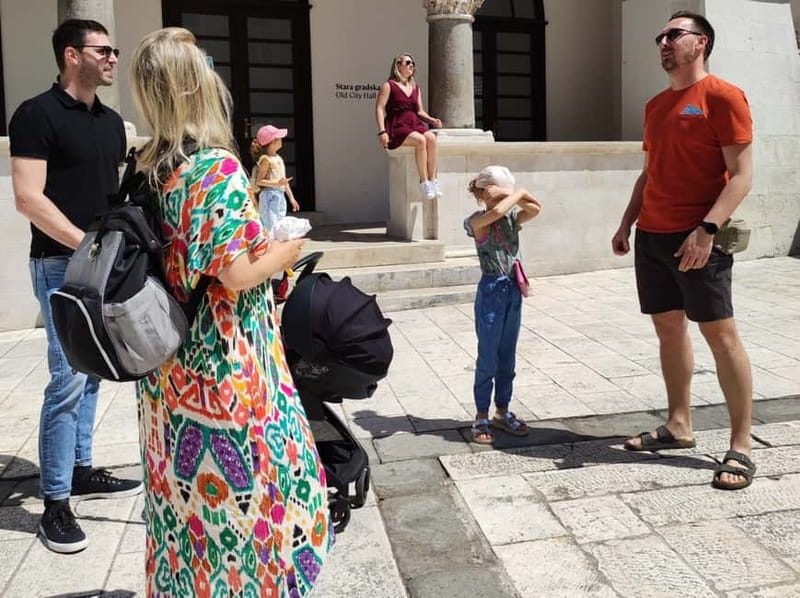
- Controversial subjects are central: Expect discussion of politics, geopolitics, religion, identity, ethnicity, sexuality, demographics, and economics.
- Marin teaches through places: The cultural anthropologist and school teacher uses Split’s buildings and public spaces to explain how history affects society today.
- The route covers major sights: You visit the Golden Gate, Peristil, Diocletian’s Cellars, People’s Square, Židovski prolaz, Fruit Square, Republic Square, and the Riva.
- It suits curious beginners: You see the city center’s main landmarks while getting more context than a standard monument-focused tour usually provides.
- Extra visual material helps: Audio-visual material is provided for each topic covered.
- Plan around the tone: The tour is in English, lasts two hours, and is wheelchair accessible, but the subject matter is aimed at mature, intellectually curious participants.
A different way to meet Split
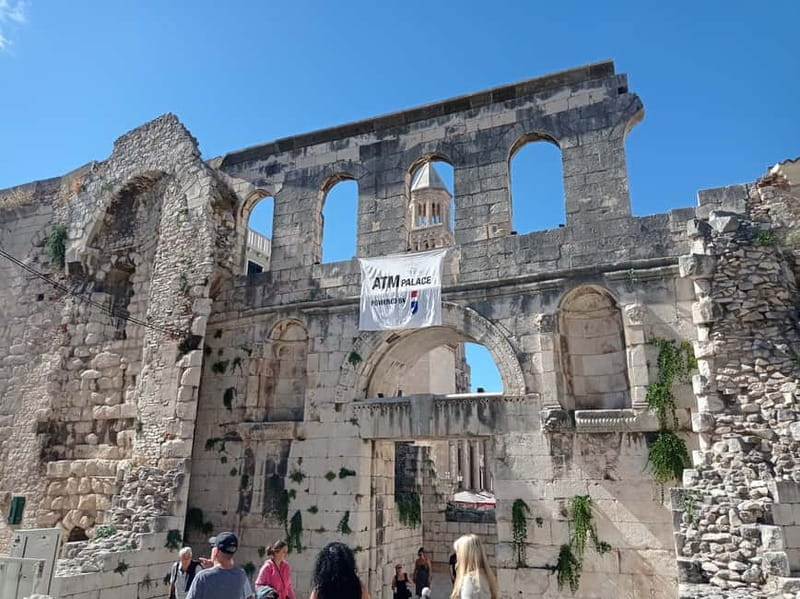
Most introductory walks through Split follow a familiar pattern: Roman emperor, ancient palace, church, square, photo, and onward. This experience uses those same places but asks harder questions. Who gets remembered? Which parts of the past become public history? How do religion, ethnicity, war, and politics affect the way a country explains itself?
That approach gives you more than a list of dates. It helps you read Split as a living city, not only as a Roman site with cafés built into its walls. Marin’s background in cultural anthropology and teaching is important here. He is not simply reciting facts. He uses architecture and public spaces as starting points for social questions.
I would book this near the beginning of your time in Split if you want a framework for the rest of your stay. The tour can help you understand later conversations about Croatia, identity, and the region. You should also arrive ready to listen. The advertised focus is no gloves on, and controversial issues are not a small side note.
More walking tours in Split:
- Split: Old Town and Diocletian Palace Walking Tour
★ 4.9 · 4,727 reviews - Walking Tour of Split and Diocletian’s Palace
★ 5.0 · 2,588 reviews - Krka Waterfalls tour with Trogir Walking tour and Krka panoramic boat cruise
★ 5.0 · 1,659 reviews
Starting beside the fountain in Strossmayer Park
The meeting point is in Park Josipa Jurja Strossmayera, at Ul. kralja Tomislava 12. Look for the fountain in the middle of the large park. This is a practical starting place because you begin in a public square rather than at a hard-to-find doorway.
The walk then moves into Split’s historic center. The route is about two hours, with several stops lasting roughly 10 to 15 minutes. That timing matters. You get enough explanation to grasp the main idea at each place, but you will not receive an exhaustive lecture on every stone.
The tour is conducted in English. Additional audio-visual material is included for each topic, which adds another layer to a discussion that may otherwise involve many names, events, and social groups. Since the guide may connect ancient events to modern politics, these materials can help keep the story clear.
Golden Gate: the first lesson in public memory
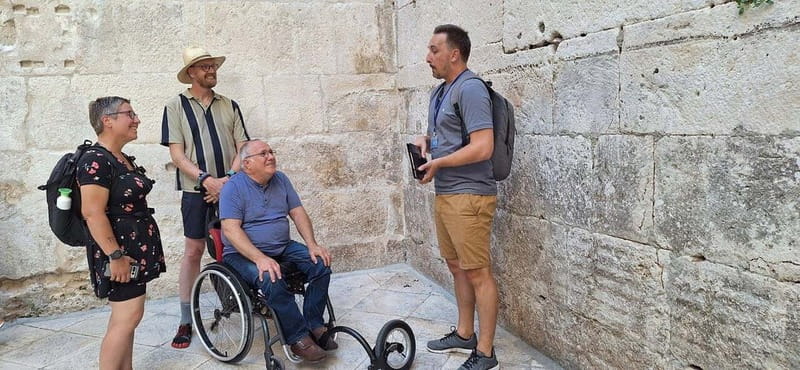
The Golden Gate is the first major stop, with about 15 minutes of guided explanation. Its Roman setting gives Marin a strong opening point for discussing how Split presents its ancient past.
You will see a famous entrance to Diocletian’s Palace, but the point is not just the gate’s age or design. The tour asks you to consider how a city uses an imperial monument and how later generations assign meaning to it. That shift from architecture to social memory is one of the tour’s defining traits.
For a first-time visitor, the Golden Gate also provides useful orientation. You are entering the central historic area, and the guide can establish the connection between Split’s ancient foundations and its current identity. Do not expect the stop to be a long architectural lesson. Its value comes from the wider questions attached to the structure.
Peristil: Rome, religion, and identity
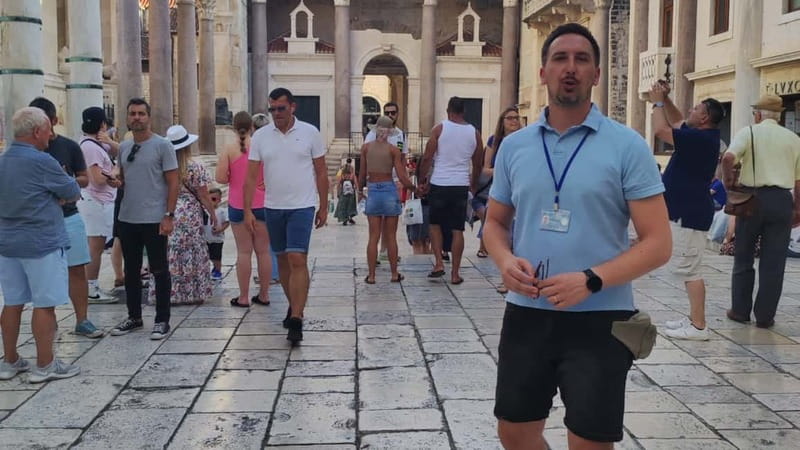
At Peristil, the tour spends about 15 minutes. This is one of Split’s essential public spaces, and it gives the guide a natural setting for discussing authority, religion, and the ways old symbols are reused.
The square can look straightforward at first: columns, stone, steps, and the remains of Diocletian’s complex. Marin’s approach pushes you to notice that public spaces carry several meanings at once. They can be archaeological sites, religious settings, civic stages, and symbols of national identity.
I like this stop for visitors who want context rather than a string of isolated facts. The conversation moves between ancient history and the way Croatians understand their past today. That makes Peristil more useful than a quick photo stop, though the amount you take away will depend on your interest in political and social questions.
A few more Split half-days to weigh up
- Split: Krka Waterfalls Trip with Boat Cruise and Swimming
★ 4.8 · 10,519 reviews - From Split: Krka Waterfalls, Food & Wine Tasting Tour
★ 5.0 · 9,326 reviews - Blue cave, Mamma Mia and Hvar, 5 islands speedboat tour
★ 5.0 · 7,150 reviews - From Split: Krka Waterfalls, Food & Wine Tasting Tour
★ 4.9 · 6,598 reviews
Diocletian’s Cellars: history beneath the city
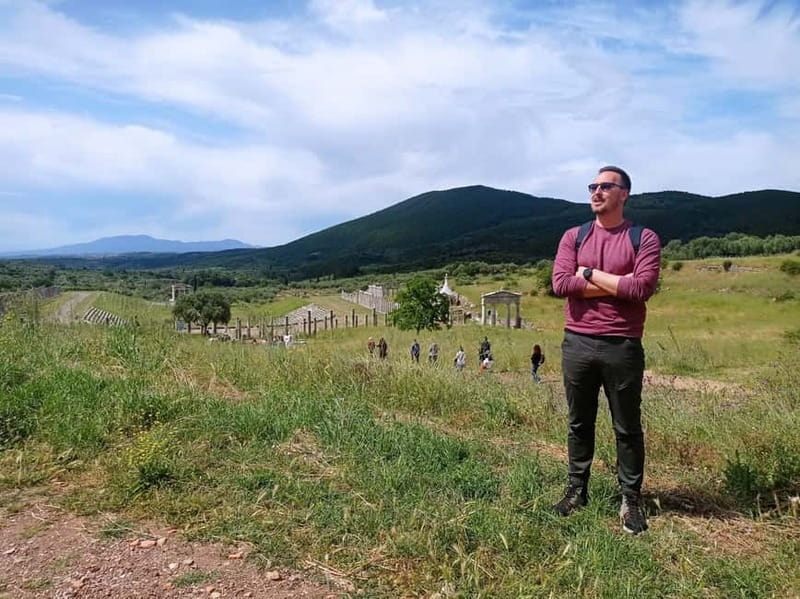
The Cellars receive about 10 minutes of guided attention. They are a major part of the palace complex and offer a physical sense of the layers beneath modern Split.
The shorter stop suggests that the tour will not get bogged down in technical archaeology. Instead, the Cellars help show how old structures remain part of daily urban life. The discussion can connect the palace’s material remains to larger questions about preservation, tourism, ownership, and the relationship between the old city and modern economic life.
This is also a good point to remember what kind of tour you have chosen. If you want a detailed explanation of construction methods or every Roman feature, a specialist archaeology tour would likely suit you better. Here, the Cellars are evidence in a larger story about society.
People’s Square: the city beyond the palace
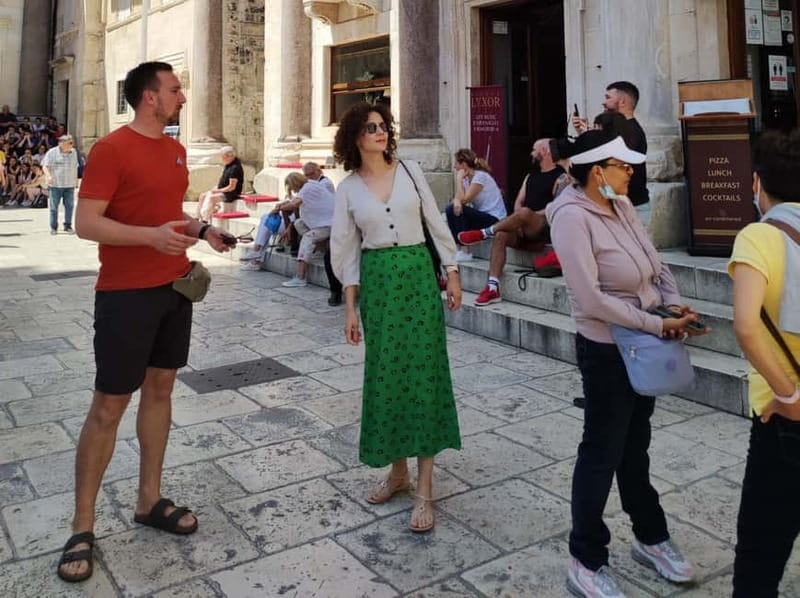
People’s Square gets around 15 minutes. This stop moves the focus from the imperial complex to a more civic setting, where questions about public life and local identity can come into sharper view.
A city’s squares often reveal how power is displayed and contested. Here, Marin can connect Split’s older history with the social and political forces that shaped modern Croatia. The tour’s themes include demographics, economics, religion, and identity, so this kind of public space is especially useful for showing how history becomes part of ordinary urban life.
I would pay attention to the transitions between subjects. The strength of this walk is not one startling fact at one landmark. It is the way the guide links the places together, creating a chain from ancient rule to medieval and modern society.
Židovski prolaz and the parts of history often left quiet
The stop at Židovski prolaz lasts about 10 minutes. Its inclusion signals that the route is willing to look at communities and histories that do not always receive much space in a standard city tour.
This is where the tour’s interest in ethnicity, religion, identity, and less public parts of the past becomes especially clear. A narrow passage may not have the visual impact of Peristil, but it can open a more personal discussion about who lived in the city, how communities were treated, and what gets preserved in public memory.
You should not expect a separate, full course on Jewish history in Split. The stop is brief, and it forms part of a wider story. Still, it is one of the details that makes this walk different from a standard palace circuit.
Fruit Square: modern pressures in an old center
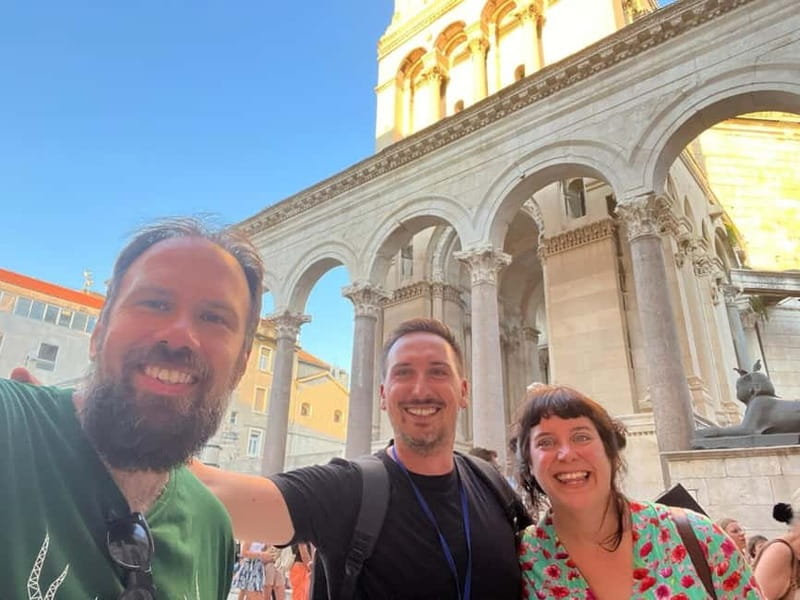
Fruit Square receives about 15 minutes of explanation. As with People’s Square, the setting allows Marin to discuss the city as a place where heritage, commerce, residents, and visitors meet.
The tour’s economic themes fit naturally here. Historic centers are not only preserved monuments. They are also places where people live, work, trade, and negotiate the effects of tourism. The tour does not present Split as a frozen museum. It asks how the city’s past shapes its current choices and tensions.
For you, this stop can make the rest of the route easier to understand. Ancient walls and modern social issues are not separate subjects. They occupy the same streets. That is the central idea running through the experience.
The Riva: a brief pass with a wider view

The group passes along the Riva for about five minutes rather than stopping for a full explanation. This is the shortest part of the route, but it helps connect the old center to Split’s public waterfront.
The Riva is a useful place to think about civic identity and public space. It is also a natural transition toward the final stop. Since the group is only passing by, do not count on a long waterfront discussion or free time for photos. The route has a clear pace, and the main focus remains the social interpretation of central Split.
Republic Square: ending with modern Croatia in mind
Republic Square receives about 15 minutes and provides the final substantial stop. By this point, the guide has moved through Roman power, religious and civic space, minority history, economics, and public memory.
The final discussion can bring those themes together. The experience aims to explain how socio-political movements shaped modern Croatia and how older divisions and identities still influence society. You may leave with more questions than you had at the start, which is part of the point.
The listed route ends at Trumbićeva obala, while the activity information also says the experience ends back at the meeting point. Because those details do not match perfectly, confirm the exact end location when you reserve. Either way, the route remains concentrated in central Split and does not require transport between stops.
Why the $33 price can make sense
At $33 per person, this is priced above a bare-bones orientation walk but below many longer specialist experiences. The value depends on what you want from a guide.
If you mainly need directions and a few facts about Diocletian’s Palace, you can find cheaper ways to see the center. If you want an English-language walk that combines the major sights with anthropology, modern politics, religion, identity, and contested history, the price is easier to justify.
The extra audio-visual material also matters. It suggests preparation beyond a guide simply pointing at buildings and speaking from memory. The tour’s high rating from the five available reviews supports the idea that Marin’s teaching style is a major part of the value, though a small review sample should not be treated as a guarantee.
The two-hour format keeps the cost practical for a busy itinerary. You are not committing a whole morning or afternoon, and you can place the walk alongside other Split plans.
Who will appreciate Marin’s approach
I would recommend this experience most strongly to:
- People interested in how history shapes current politics and identity.
- First-time visitors who want the main center sights with more context.
- Students, teachers, and intellectually curious adults.
- Visitors who prefer social history to a purely architectural tour.
- Anyone willing to discuss difficult subjects without reducing them to simple slogans.
One reviewer specifically found the tour suitable for people aged 15 and older because it is not technical. That is useful guidance, but the subject matter still calls for maturity. Discussions of ethnicity, religion, sexuality, war, politics, and contested memory may not suit young children or anyone looking for a purely cheerful introduction.
The tour can also work well for mixed-interest groups. A companion who wants to see the palace gets the main landmarks, while someone interested in social change gets a broader explanation. Just make sure everyone understands that the tour’s purpose is discussion, not entertainment alone.
Practical details that affect your choice
The walk is wheelchair accessible, a useful feature in a historic center where surfaces and access can sometimes be concerns. The supplied information does not give details about the exact route surface or every entrance, so confirm any specific mobility needs in advance.
You can cancel up to 24 hours before the tour for a full refund. The reserve-now, pay-later option lets you hold a place without paying today, which is helpful when your Split schedule is still moving.
Starting times vary, so check availability rather than assuming a fixed departure. The meeting point is the fountain in Strossmayer Park. Arrive with enough time to find the park and identify the fountain before the group begins.
The tour is offered in English with a live guide. One participant who was deaf was accommodated through interpretation time, and the guide adjusted when rain affected the plan. That suggests a thoughtful teaching style, but you should still state any communication or accessibility needs when booking.
The honest trade-off
This tour asks more of you than a standard city walk. You need to concentrate, follow connections between centuries, and sit with disputed subjects. It may not provide the relaxed, joke-heavy mood some people want on their first day.
The reward is a clearer sense of why Split and Croatia cannot be understood through Roman ruins alone. Marin’s strongest quality is the ability to connect places to people and politics. He also keeps the tour accessible rather than turning it into a technical academic seminar.
Book it if you want to understand the city as a society as well as a historic center. Skip it if your priority is a quick monument checklist or a tour aimed mainly at children. For an intellectually curious first day in Split, $33 buys a useful framework for everything you see afterward.
FAQ
How long does the Split cultural walking tour last?
The tour lasts two hours.
What language is the tour conducted in?
The live tour is conducted in English.
Who leads the walking tour?
The tour is led by Marin, a cultural anthropologist and school teacher.
How much does the tour cost?
The listed price is $33 per person.
Is the tour wheelchair accessible?
Yes, the activity is listed as wheelchair accessible.
Where does the tour start?
It starts at Ul. kralja Tomislava 12 in Split, in Park Josipa Jurja Strossmayera. Meet beside the fountain in the middle of the park.
What places are covered during the walk?
The route includes the Golden Gate, Peristil, Diocletian’s Cellars, People’s Square, Židovski prolaz, Fruit Square, the Riva, and Republic Square.
Can I cancel for a full refund?
Yes. You can cancel up to 24 hours in advance for a full refund. You can also reserve now and pay later.
Just added around Split
- From Trogir, Seget, Okrug: Krka Waterfalls & Šibenik Culture Tour★ 5.0 · 10 reviews
- Island Hopping Boat Excursion with Lunch (Trogir,Blue Lagoon, Šolta)★ 3.5 · 6 reviews
- Krka Waterfalls & Primošten from Trogir, Seget, Čiovo & Kaštela★ 5.0 · 18 reviews
- From Split & Trogir: ATV Quad Tour on Island Čiovo★ 5.0 · 21 reviews
- Slatine – Island Hopping Excursion (Trogir/Blue Lagoon/Shipwreck)★ 4.0 · 24 reviews
- Split: Blue Lagoon Boat Trip with Lunch, Wine and Snorkeling★ 5.0 · 3 reviews
- Split Sunset Stand Up Paddle Tour★ 5.0 · 16 reviews
- Split: Sunset Guided Kayaking Tour★ 4.8 · 71 reviews
Split Tours, compared.

Krka Waterfalls Trip with Boat Cruise and Swimming
Read our review →

Blue cave, Mamma Mia and Hvar, 5 islands speedboat tour
Read our review →
Blue Cave, Mamma Mia, Hvar and 5 Island Tour
Read our review →
Blue Lagoon & 3 Islands Cruise with Lunch from Split
Read our review →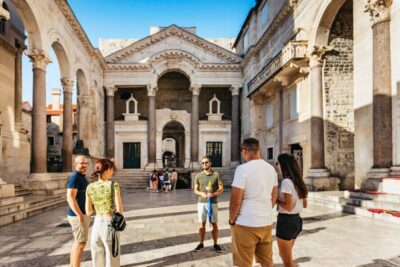

Blue Lagoon Boat Party with DJs, Shots & After Party
Read our review →Browse the lists this tour appears in