
Reviewed · SPLIT TOURS
Split; Private Morning Walking Tour in Split
Split’s old town is not a museum behind glass. It is a living city built into a 1,700-year-old Roman palace, with cafés, homes, shops, market stalls, and daily life tucked among ancient stone. This private morning walk gives you a calm way to get oriented before the streets fill up.
I especially like the early timing, which suits anyone who wants cooler air and less pressure in the narrow lanes. I also like the private format for up to 10 people, since you can ask questions about food, nightlife, and what to do next without being part of a large crowd. The main drawback is the short two-hour length: you will see the key places, but this is an introduction rather than a slow archaeological study.
Key points
- Roman palace turned city center: Walk through Diocletian’s Palace while ordinary Split life carries on around you.
- Quiet morning start: Begin before the busiest part of the day for a more relaxed visit.
- Cellars and cathedral included: See the preserved substructures and the former imperial mausoleum, now St. Domnius Cathedral.
- Local market stop: Visit Pazar, where Dalmatian produce is bought and sold.
- Private group value: The $129 rate covers up to 10 people, making the price more attractive when shared.
- English or German guidance: The live tour is offered in both languages, with guides identified as Kristina or Christina in guest feedback.
Why a morning walk works so well in Split
Split can feel confusing at first. Ancient walls, modern shops, apartment doors, restaurant tables, and polished stone all share the same few streets. A morning tour helps you understand the layout before you begin exploring on your own.
The tour is designed for a private group of up to 10 people and lasts two hours. That balance matters. You get a personal guide rather than a large crowd, but you also keep enough of your morning for the beach, a museum, lunch, or a ferry connection.
The guide talks about both past and present. That makes sense in Split, where the most important historical site is also the city’s main neighborhood. You are not simply looking at old walls. You are seeing how people use them.
The two guides named in the written feedback are Kristina and Christina. The comments describe a personal, informative walk and praise the way the guide explains the city and its story. Since the information gives both spellings, check the assigned guide when booking if having a particular person matters to you.
More walking tours in Split:
- Split: Old Town and Diocletian Palace Walking Tour
★ 4.9 · 4,727 reviews - Walking Tour of Split and Diocletian’s Palace
★ 5.0 · 2,588 reviews - Krka Waterfalls tour with Trogir Walking tour and Krka panoramic boat cruise
★ 5.0 · 1,659 reviews
Starting with Split’s historic core model
The meeting point is the model of Split’s historic core. This is a useful place to begin because the palace and surrounding old town can be hard to picture from street level.
I like starting with a model before entering the lanes. It gives you a basic map in your head: where the palace walls run, where the central squares sit, and how the old core connects with the waterfront. The guide can then point out how the city grew around the Roman structure.
This first stop also keeps the tour practical. You are not immediately thrown into a maze of stone passages. You begin with a broad view, then move into the details.
Diocletian’s Palace and its Roman bones
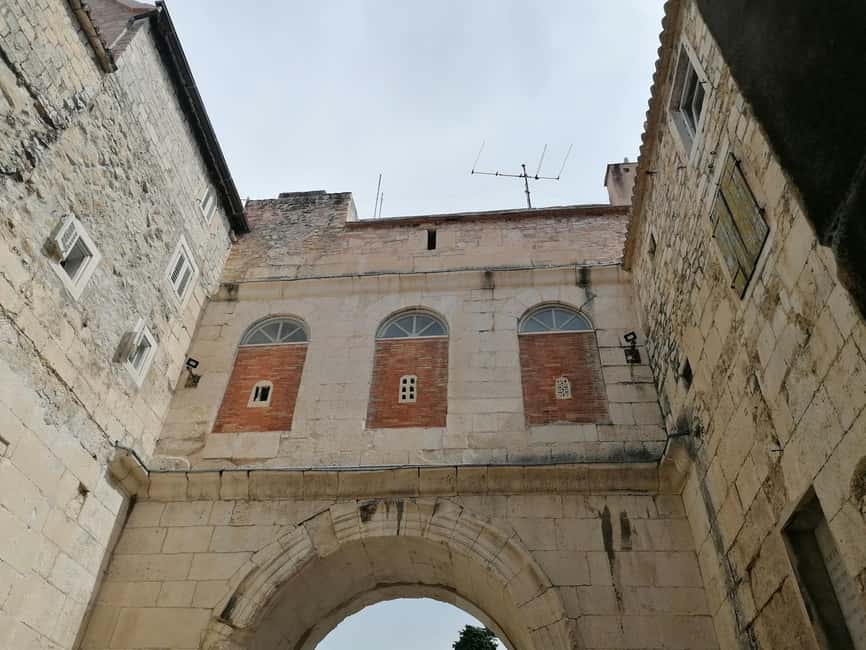
The palace is the main event. Built for Emperor Diocletian around the turn of the fourth century, it now forms the heart of modern Split.
The important thing to understand is that this is not one isolated building. The palace is a large historic complex, and its streets and squares have become part of the city. During the walk, you will see how Roman remains, later buildings, shops, and homes occupy the same space.
A photo stop at the palace lasts about 10 minutes. That is enough for an introduction and a few questions, though you should not expect a detailed examination of every surviving wall. The guide’s broader explanation is likely more valuable than simply collecting photographs.
The tour gives you the setting you need for the rest of your stay. Once you understand that the palace is the old town’s framework, streets that first seem random begin to make more sense.
Down into Diocletian’s Cellars

The guided visit to Diocletian’s Cellars lasts about 10 minutes. These preserved substructures show the practical side of Roman palace design and help you understand the original building above.
The cellars are especially useful because their layout reflects the spaces that once supported the imperial residence. I find underground remains easier to appreciate when a guide explains what they were built to do, rather than leaving you to guess from bare stone.
Ten minutes is a brisk visit. You will get the essential orientation, but not an extended archaeological lecture. If underground sites are your main interest, you may want extra time on another visit. For a first look at Split, the short stop keeps the walk moving.
The cellars also provide a change of pace from the open squares and narrow streets. Keep water with you, as requested for the tour, and expect some walking on old surfaces.
More early starts in Split:
- Morning Split Sea Kayaking Tour
★ 5.0 · 11 reviews - Morning Stand Up Paddle Tour in Split
★ 4.9 · 6 reviews - Dubrovnik: City Walls Early Morning or Sunset Walking Tour
★ 4.8 · 1,523 reviews - Morning and Day Tours – Sea Kayaking & Snorkelling Dubrovnik
★ 5.0 · 891 reviews
St. Domnius Cathedral, once an imperial mausoleum

The Cathedral of St. Domnius, or Sveti Duje, was originally built as Diocletian’s mausoleum. Its present religious role gives the building a layered story, connecting the Roman emperor with the later Christian identity of Split.
The guided cathedral stop takes about 10 minutes. I like that the tour includes it because the building is not just another church on a sightseeing route. Its original purpose is central to understanding Diocletian’s Palace.
The short timing means the guide will focus on the main facts and the building’s place in the city. If you want a long visit inside or detailed attention to every feature, plan to return independently if your schedule allows. This walk is aimed at context and orientation.
Peristil, the palace’s grand public space
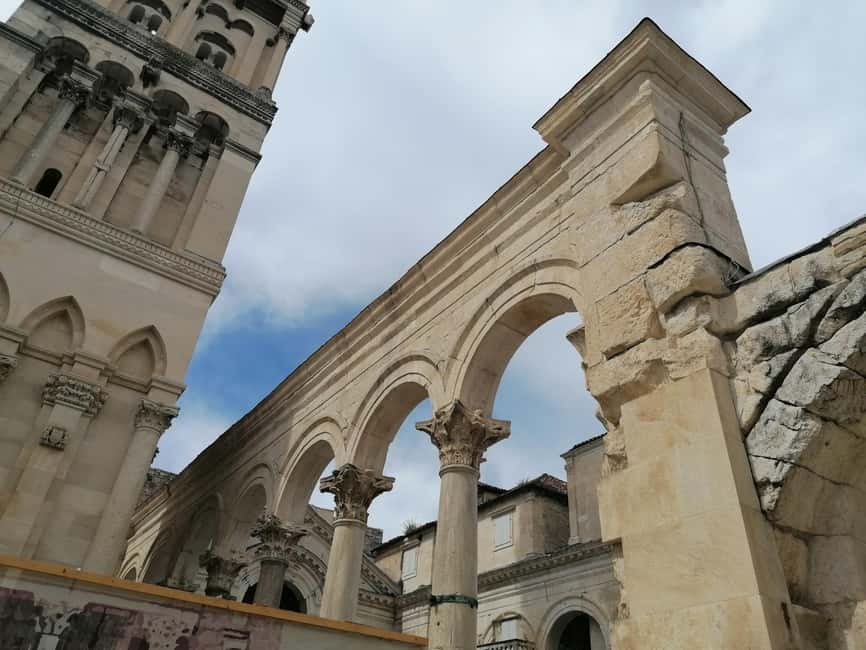
The visit to Peristil lasts about 15 minutes. This is one of the key spaces in the palace and a natural point for the guide to explain how the imperial complex was organized.
Here, the scale of the ancient setting becomes easier to grasp. The square links the palace’s major areas and shows how formal Roman space has been absorbed into everyday Split.
I would pay close attention to the guide’s explanation here rather than rushing through for another photograph. Peristil helps connect the cellars, cathedral, palace streets, and gates into one understandable plan.
Because the tour takes place in the morning, you may find this stop more comfortable than a midday visit. The supplied information specifically presents the morning as a way to avoid crowds and reduce stress, which is useful in a compact historic center.
The Golden Gate and the city’s entrances
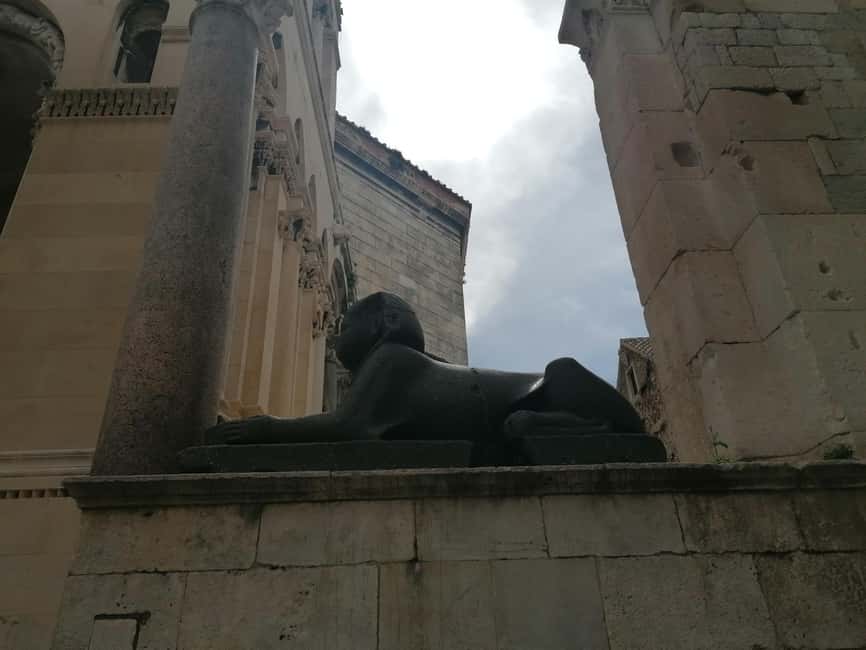
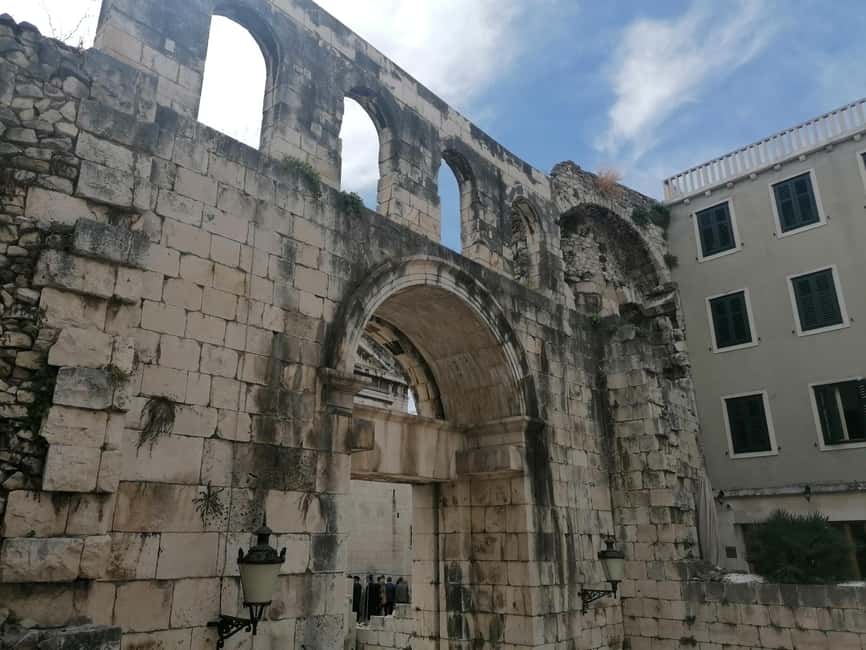
The Golden Gate receives about 15 minutes, including a photo stop. This is one of the places where the palace’s defensive and ceremonial character becomes clear.
A gate can look like a simple photo opportunity if you do not know what you are seeing. With a live guide, you can place it within the palace walls and understand how people entered and moved through the complex.
The stop is long enough to hear the basic story and take pictures. It is not a separate museum visit, so keep your expectations focused on the gate’s role within the wider old town.
A secret stop, with room for local character

The 20-minute secret stop is the least defined part of the walk. That is both its appeal and its limitation.
You are told that it is a visit, but not exactly where it takes place or what you will see. I would treat this as a flexible moment for the guide to show you something that does not fit neatly into the main list of landmarks. Ask about it at the start if you want to know how it fits into the route.
The lack of detail means I would not book the tour solely for this stop. Still, a private walk benefits from an unscripted pause, especially when the guide can connect the city’s past with current life.
People’s Square and the rhythm of modern Split
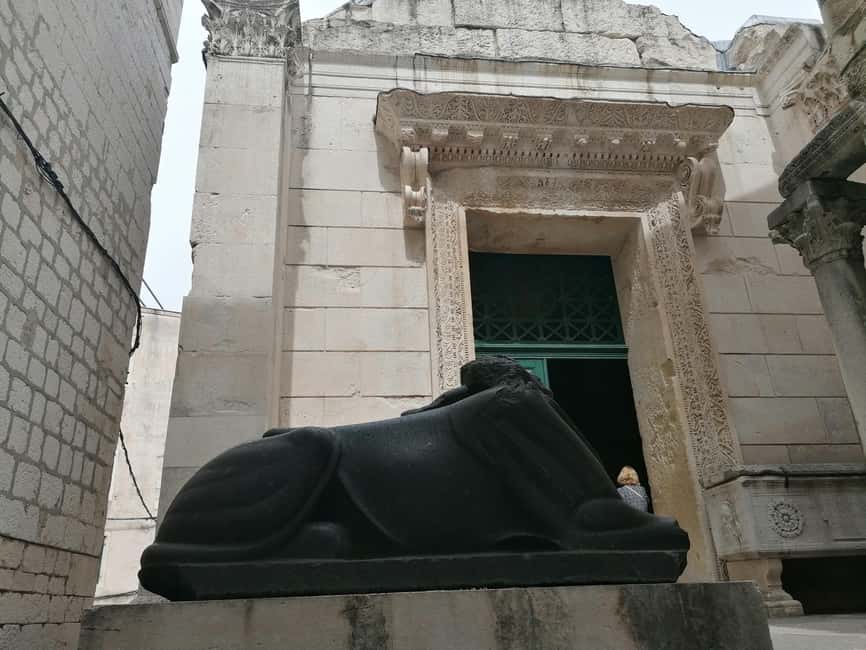
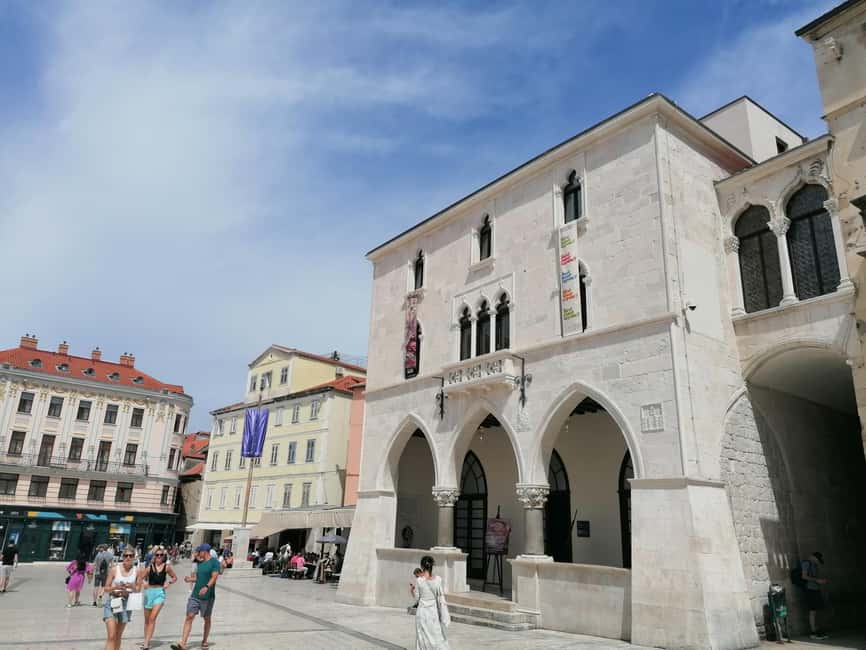
People’s Square combines sightseeing with shopping and receives about 15 minutes. It helps shift the tour from the imperial palace toward the wider historic center.
This is where the walk’s theme of city breathing becomes clearest. Split is not just a collection of Roman monuments. People pass through, shop, eat, work, and meet in these spaces.
The guide also offers tips about dining, nightlife, and other activities in Split and the surrounding area. That advice can be valuable early in a visit, when you still have time to use it. I would bring a short list of questions, such as where to eat later or which additional activity best fits your schedule.
Pazar market, the local stop that adds flavor
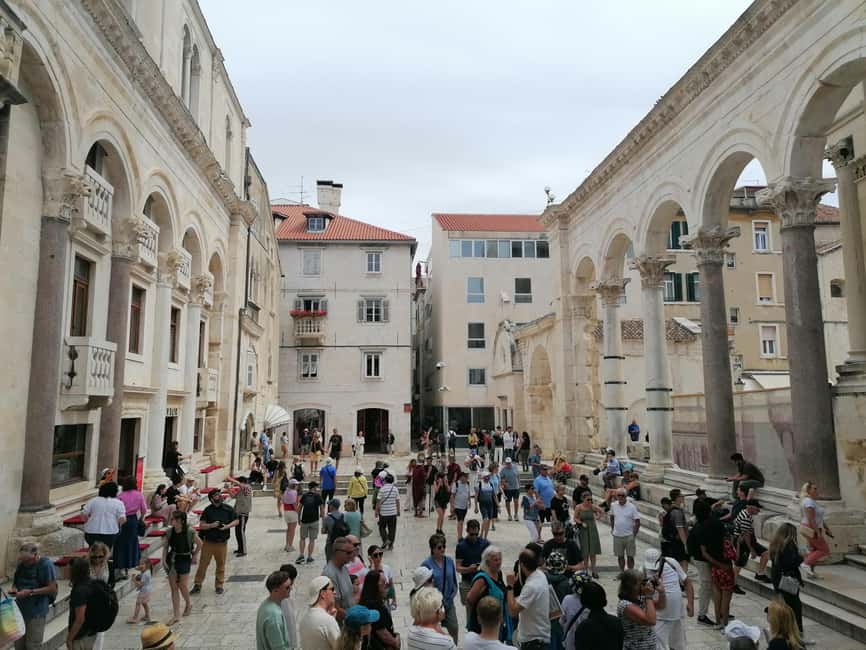
The tour includes Split’s Green Market, known locally as Pazar. This is where local people buy and sell products from Dalmatian soil.
I like this part because it adds something the grand monuments cannot. Ancient stone tells you how Split began, while Pazar shows how the city feeds itself and carries on today.
The supplied route details do not assign a separate time to Pazar, so expect it to be folded into the old-town portion of the walk rather than treated as a long market tour. You will have a chance to see the setting and ask the guide what local products are worth noting.
Personal spending is not included. That is worth remembering if you want to buy produce or other items at the market. The tour itself covers the licensed guide, not purchases.
A final walk along the Riva
The Riva promenade is the waterfront finish, with about 10 minutes set aside for photographs. It is a fitting close because the promenade gives you a wider view after the enclosed lanes of the palace.
I like ending by the water. You can compare the tight Roman street plan with the open waterfront and get a better feel for how Split connects its old center with the modern city.
This is a photo stop, not a full waterfront stroll. If you want to sit by the sea or linger over coffee, use the tour’s end as a starting point for your own time.
The listed route also includes a 10-minute break at the model of Split’s historic core. Since the route begins there as well, confirm with your guide how this pause is handled on the day. The total experience is advertised as two hours, so the stop times are best treated as approximate.
What $129 means for a private group
The price is $129 per group of up to 10 people. For one or two people, that is a significant cost compared with a shared walking tour. For a family or group of friends, the calculation changes quickly: ten people would bring the cost to $12.90 each, before any personal spending.
The value comes from the format. You are paying for a licensed guide and a private walk in English or German, with room to ask about history, food, nightlife, and later plans. You are not paying for transportation, meals, or personal purchases.
I would choose this tour when several people are traveling together or when you want a focused introduction soon after arriving. Solo visitors and couples should compare the private price with other walking options before booking.
Free cancellation is available up to 24 hours before the start for a full refund, and you can reserve now and pay later. Those terms help if your Split schedule may change, though you should still check the available starting times when selecting a date.
Who will get the most from this walk
I would recommend it most to first-time visitors who want to understand Split quickly. Families and small groups should also find the private structure useful, especially if different people have different questions.
It suits history-minded visitors who want the Roman palace, cellars, cathedral, gates, and main squares explained in one compact route. It also works for people who care less about dates and more about how old buildings fit into daily life.
The walk is less suitable if you want a long cathedral visit, extended time underground, or a detailed archaeological tour. The stops are short and the route covers several major places, so the emphasis is on a clear overview.
Wear comfortable shoes and bring water. The old town’s historic surfaces and walking pace make practical footwear more important than dressing for photographs alone.
Should you book the Split morning walk?
Book it if you want a private, calm introduction to Split and plan to use the guide’s advice for the rest of your stay. The combination of palace history, local market life, main squares, and waterfront gives you a useful first map of the city.
The strongest reasons are the morning timing, the small private group, and the personal style associated with Kristina or Christina in the written feedback. The main caution is price for very small groups and the limited time at each major stop.
For a group of several people, $129 can be fair value. For a couple, book only if personal guidance and flexible questions matter more to you than finding the lowest-cost way to see the old town.
FAQ
Where does the tour meet?
The meeting point is the model of the historical core of the city of Split.
How long does the walking tour last?
The tour lasts two hours.
What is the price?
The price is $129 per private group of up to 10 people.
Is this a private tour?
Yes. The activity is arranged as a private group experience.
Which languages are available?
The live tour guide is available in English and German.
What places are included?
The route includes Diocletian’s Palace, Diocletian’s Cellars, the Cathedral of St. Domnius, Peristil, the Golden Gate, a secret stop, People’s Square, the Riva, Pazar market, and the model of Split’s historic core.
Is a guide included?
Yes. A licensed tour guide is included.
Are personal expenses included?
No. Personal expenses, such as purchases at the market, are not included.
What should I bring?
Bring water.
Can I cancel for a refund?
You can cancel up to 24 hours in advance for a full refund. You can also reserve now and pay later.
Just added around Split
- From Trogir, Seget, Okrug: Krka Waterfalls & Šibenik Culture Tour★ 5.0 · 10 reviews
- Krka Waterfalls & Primošten from Trogir, Seget, Čiovo & Kaštela★ 5.0 · 18 reviews
- Island Hopping Boat Excursion with Lunch (Trogir,Blue Lagoon, Šolta)★ 3.5 · 6 reviews
- From Split & Trogir: ATV Quad Tour on Island Čiovo★ 5.0 · 21 reviews
- Slatine – Island Hopping Excursion (Trogir/Blue Lagoon/Shipwreck)★ 4.0 · 24 reviews
- Split: Blue Lagoon Boat Trip with Lunch, Wine and Snorkeling★ 5.0 · 3 reviews
- Split Sunset Stand Up Paddle Tour★ 5.0 · 16 reviews
- Split: Sunset Guided Kayaking Tour★ 4.8 · 71 reviews
Split Tours, compared.

Krka Waterfalls Trip with Boat Cruise and Swimming
Read our review →

Blue cave, Mamma Mia and Hvar, 5 islands speedboat tour
Read our review →
Blue Cave, Mamma Mia, Hvar and 5 Island Tour
Read our review →
Blue Lagoon & 3 Islands Cruise with Lunch from Split
Read our review →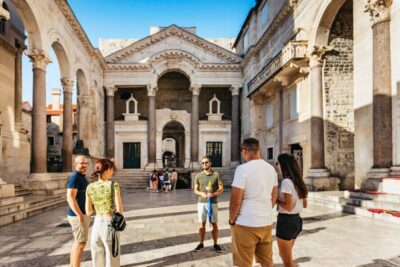

Blue Lagoon Boat Party with DJs, Shots & After Party
Read our review →Browse the lists this tour appears in