
Reviewed · SIBENIK TOURS
The beauty of the Middle Ages-Šibenik
Šibenik saves its best reveal for last: St. James Cathedral, a remarkable stone church assembled without mortar in the 15th and 16th centuries. This 90-minute walk also gives you the city’s setting, old gates, noble streets, monasteries, and fortress views before the cathedral takes center stage.
I like the small group, capped at 10, and the way guide Dario Mikulandra connects grand monuments with odd local customs, including why Šibenik has no weddings in May. I also like that the cathedral entry is included, rather than treated as an extra cost.
The main drawback is the number of stairs. This is not a flat stroll, and one review reports a missed meeting after a 30-minute wait. That appears to be an isolated complaint among mostly high marks, but I would still confirm the meeting details before setting out.
Key points at a glance
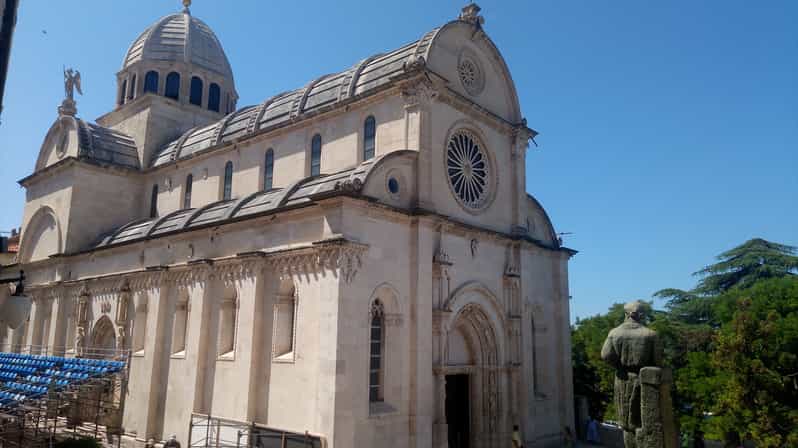
- St. James Cathedral comes last: Allow time to study its sculpted heads, stone construction, and unusual details.
- The walk begins by the water: You get an opening view toward the old town and St. Michael’s Fortress.
- St. Francis Monastery includes a 1762 organ: Petar Nakić built one of Croatia’s most valuable historic organs.
- The noble quarter is full of clues: Look for coats of arms, carved portals, palaces, and Šibenik’s unusual historic measuring unit.
- The route includes steep steps: Gorica, the four-well square, and the old streets require a reasonable level of mobility.
- Dario leads a small English or Croatian tour: The group limit of 10 should make questions easier.
Starting beside the water, with Šibenik spread before you
The tour begins along the coast, looking across toward Šibenik’s old town and St. Michael’s Fortress. This is a smart opening because it lets you see the city as a whole before you thread through its narrow lanes.
From this viewpoint, Šibenik feels compact but layered. The stone center rises above the waterfront, with churches, fortifications, and old homes packed into a small area. I like this kind of beginning because it gives you a mental map. Later, when you turn into a side street or climb toward Gorica, you know where the pieces fit.
The route enters the medieval center through the eastern city gates. You are not simply walking from sight to sight. The gates help explain how the old town was entered and protected, while the tight streets show how different the medieval city was from a modern Croatian resort town.
You should wear practical shoes. The route includes narrow stone streets and many stairs, and the old paving can make a casual sandal choice uncomfortable. The supplied information does not give a formal accessibility rating, so anyone who has trouble with steps should ask before booking.
A few more Sibenik half-days to weigh up
- From Split: Krka National Park Tour
★ 4.7 · 2,359 reviews - Vodice: Krka Waterfalls National Park Boat Tour
★ 4.6 · 250 reviews - Split: Krka Waterfalls Guided Day Trip with Swim & Boat Tour
★ 4.5 · 170 reviews
St. Francis Monastery and a rare historic organ
The first major stop is the monastery and church of St. Francis. The monastery is nearly seven centuries old, and the tour looks at both its religious role and the secrets tied to its long life.
The most specific highlight here is the organ built by Petar Nakić in 1762. It is described as one of the most valuable organs in Croatia. Even if you are not an organ specialist, the date gives the stop real weight. You are looking at a working piece of 18th-century craftsmanship inside a much older religious complex.
I appreciate that this part of the walk moves beyond exterior sightseeing. Šibenik’s churches can look beautiful from the street, but entering one changes your sense of scale and use. A guide with an interest in sacred art can point out why the building matters, rather than leaving you to admire a doorway and move on.
Dario is described as especially enthusiastic about Šibenik, and that matters in a place like this. A dry list of dates would not do much for a monastery. The best version of this stop should explain how the church, organ, monastery, and city fit together.
Palaces, portals, and the noble streets
From St. Francis, the walk continues through the part of town associated with Šibenik’s noble families. This is where you can slow down and look above eye level.
The streets contain old palaces, carved portals, and family coats of arms. These details are easy to miss if you walk through the old town alone. A doorway may look decorative, but a crest can tell you who lived there and how public status was displayed.
The tour also introduces four important medieval fraternities of Šibenik. That is a useful subject because city life was not shaped only by rulers and church officials. Fraternities helped organize religious and social life, and their presence adds another layer to the city’s story.
Another unusual detail is the Šibenik meter, a local unit of measurement. This is exactly the sort of small, place-specific fact I enjoy on a walking tour. It gives you something concrete to look for after the guide points it out, and it makes the old streets feel less like a museum set.
This section is likely to appeal most to you if you enjoy architecture and small clues. If you mainly want sweeping views and famous monuments, some of the palace details may feel slower. The tour works best when you are willing to pause for the carved stonework.
Gorica, St. Luca, and a local May custom
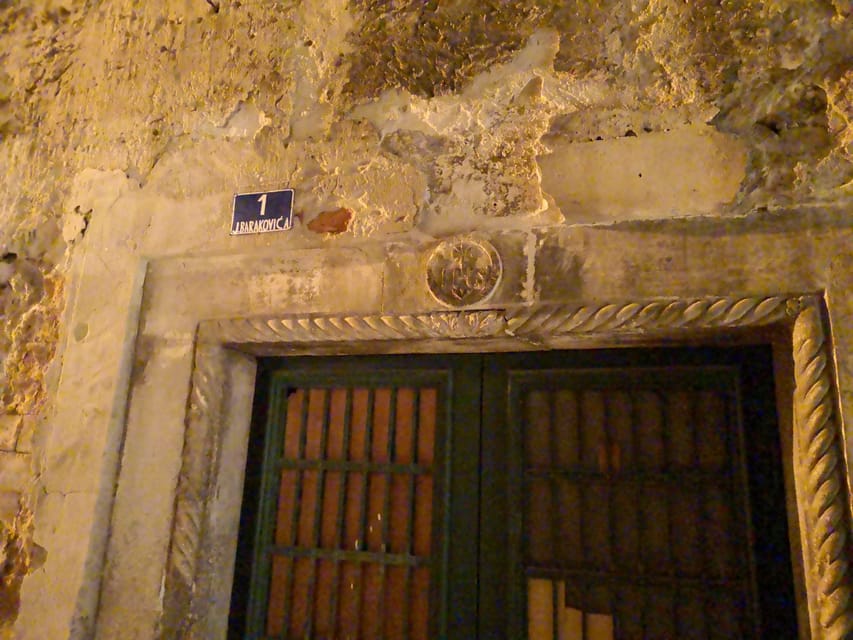
The route then climbs through Gorica, another historic part of Šibenik. Here you see the Benedictine Monastery of St. Luca and hear the local explanation for why weddings do not take place in Šibenik in May.
The information provided does not spell out the custom’s explanation, which is a good reason to ask Dario directly during the tour. It is the kind of local belief that gives a city personality, especially when it appears beside a monastery and centuries-old streets.
Gorica also brings a change in pace. You are no longer just examining doorways and churches. The route opens toward a view of the Lurd cliff, described as being in the heart of the city. That contrast, a close stone street followed by an open view, helps keep the walk from feeling like a long succession of similar facades.
This part also adds to the physical challenge. The tour descends stairs toward the square of the four wells, but the route has already involved uphill walking. If you want a gentle, level orientation walk, this is probably not the right choice. If you can handle steps and want a closer look at the old center, the changing elevation is part of the experience.
Same stretch of coast, a completely different day out:
- Split: Krka National Park Full-Day Tour with Wine Tasting
★ 4.9 · 142 reviews - Sibenik: Guided Evening Walking Tour
★ 4.9 · 62 reviews - Panorama Tour – Eco City Tour Šibenik
★ 4.8 · 31 reviews - Šibenik: Medieval Night Walking Tour
★ 5.0 · 19 reviews
The four wells and Šibenik’s old water supply
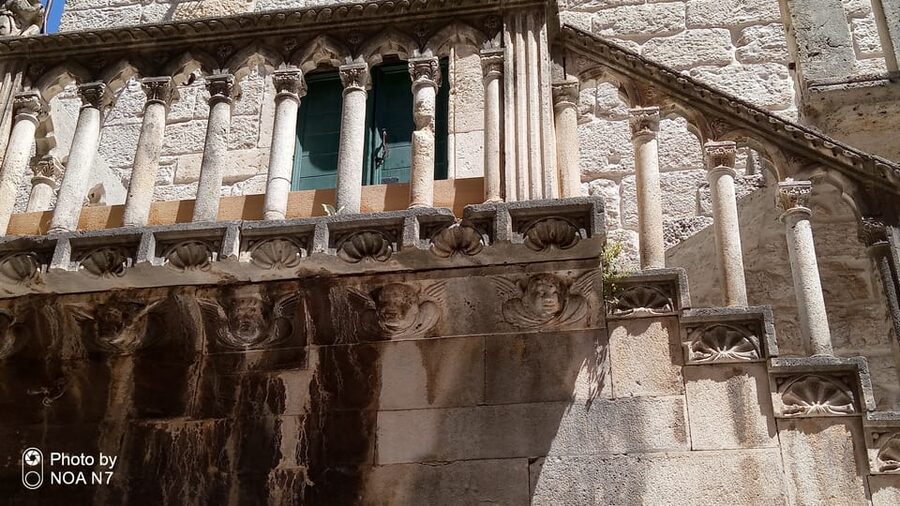
At the square of the four wells, the tour looks below street level at the city’s largest cistern. Water storage was a practical concern for a fortified medieval town, and this stop shows how ordinary needs shaped urban design.
I like the inclusion of the cistern because it breaks up the expected church-and-palace pattern. Šibenik is not only a collection of grand buildings. Its survival also depended on systems that are easy to overlook, including water storage.
The supplied description promises a close look into the cistern, but it does not give details about how far you enter it or the exact access conditions. You should expect an explanation and a view into this historic feature, not assume that the route includes a separate underground visit.
By this point, the walk has covered religious life, noble families, civic customs, local measurements, water supply, and city defenses. That range is one reason the 90-minute format works well. You get more than a quick introduction to the cathedral, though the pace will necessarily remain fairly brisk.
Saving St. James Cathedral for the grand finale
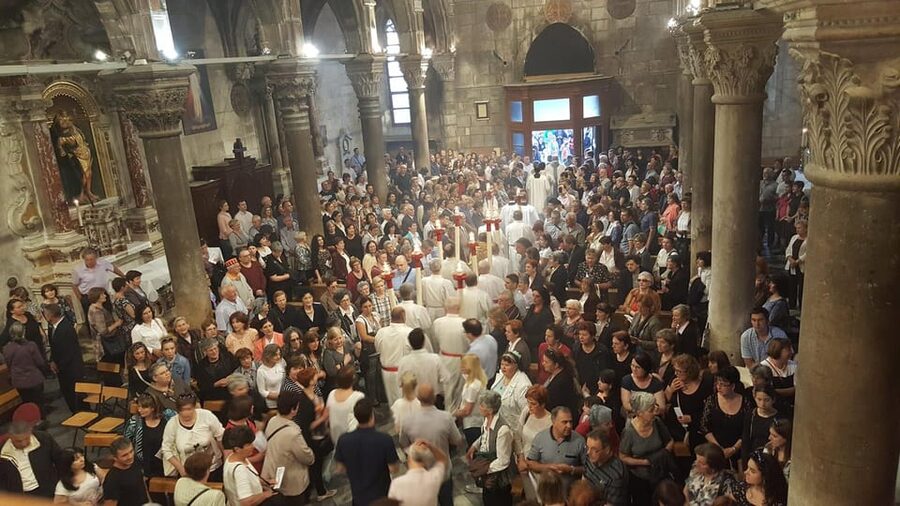
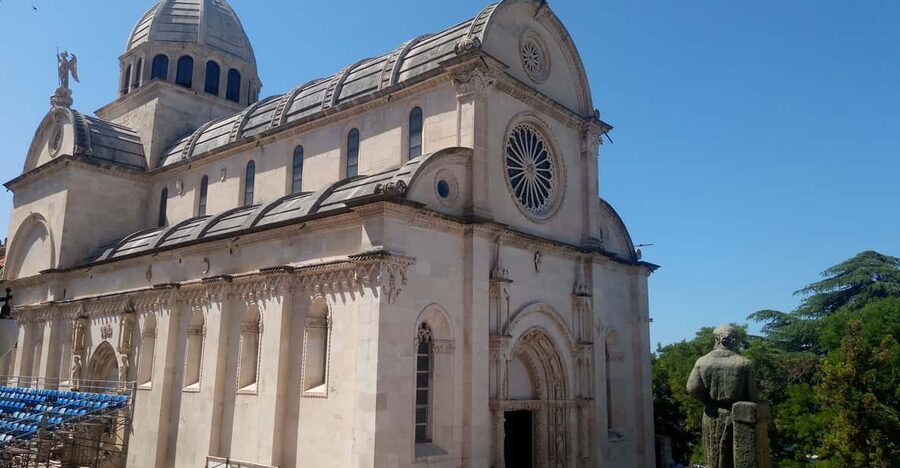
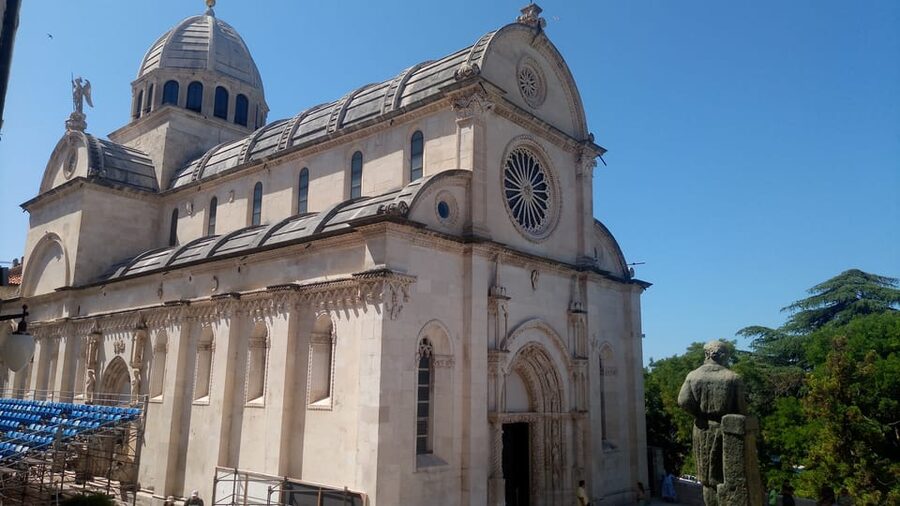
The final stop is the cathedral of St. James, called St. Jacob’s Cathedral in the supplied tour details. The meeting point is at the cathedral’s main western portal, opposite the statue of sculptor Juraj Dalmatinac. Do not go to the cathedral doors with the lions. That distinction is important because the complex has more than one notable entrance.
The cathedral is the reason many people will book this walk. It is widely presented as one of Croatia’s most beautiful churches, and the tour gives it the time it deserves. The listed entry ticket is included in the $32 price, so you are not paying for a guided exterior view and then facing another admission charge at the end.
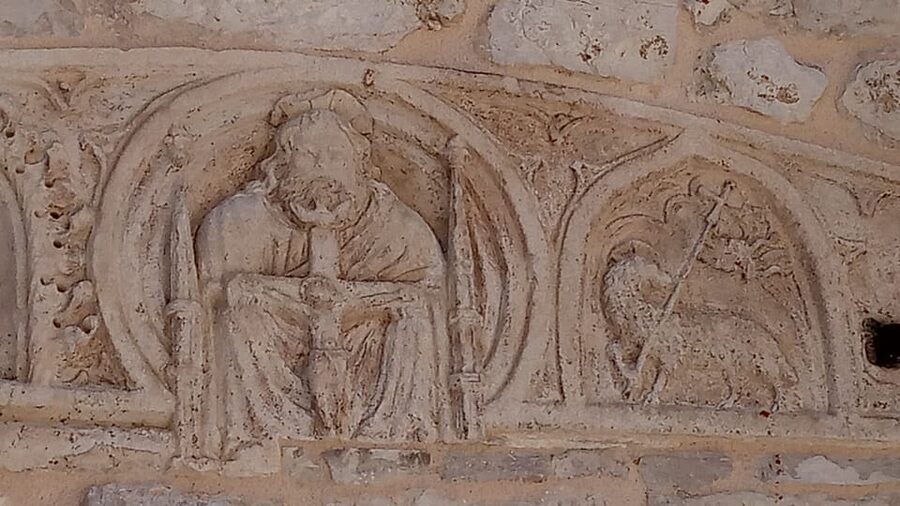
The cathedral’s construction is particularly striking because it was built from stone blocks rather than ordinary mortar. The tour promises the secrets, details, and beauty of the building, with special attention to the work of Juraj Dalmatinac and the cathedral’s place in Šibenik.
I would not rush this stop. A cathedral can seem impressive at first glance, then become more interesting as you notice sculpture, portals, faces, coats of arms, and the way the stone fits together. Since the cathedral is the centerpiece, you should expect to spend a substantial part of the 90 minutes here.
One review specifically notes that quite a bit of time is spent at the cathedral. That was considered acceptable by the writer, but it is worth knowing in advance. If you have already taken an in-depth cathedral visit, you may prefer a tour focused more heavily on the fortresses or wider Dalmatian history.
What Dario adds to the experience
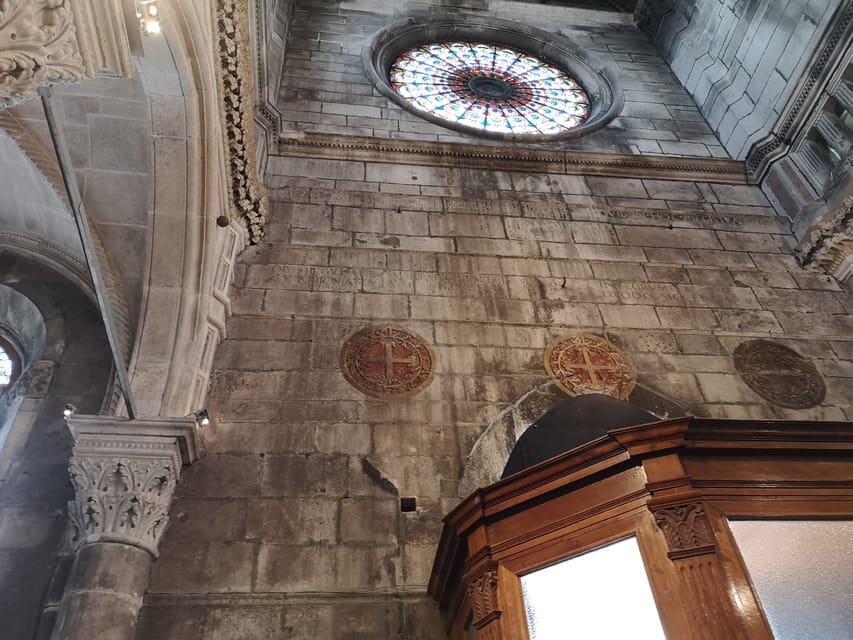
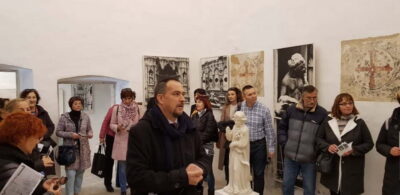
Dario Mikulandra, owner of Magnificat, is listed as the guide and is described as a history enthusiast and specialist in sacred art. The strongest praise centers on his explanations and enthusiasm for Šibenik.
That combination suits this route. The walk depends on details: an organ date, a family crest, a fraternity, a local custom, a cistern, and a sculptor’s work. You need a guide who can give those details a clear connection instead of treating them as isolated facts.
The tour is offered in English and Croatian. The small group limit of 10 is useful here because several stops involve narrow streets and interiors. It should also make it easier for you to ask about the organ, the May wedding custom, or the cathedral’s construction.
The written feedback includes strong marks from visitors using English, German, Polish, Dutch, and Spanish, although the comments themselves are not all in English. One poor rating reports that the guide did not appear at the meeting point, leaving the customer waiting for half an hour. Since the other supplied ratings are mostly very positive, I would treat this as a warning to verify the start time and exact portal rather than as proof of a regular problem.
Is $32 fair for 90 minutes?
At $32 per person, this is not the cheapest way to wander Šibenik’s old town. You can walk the streets independently for free, and the waterfront views cost nothing.
The value comes from the combination of a live guide, a small group, the monastery and church visit, and entry to St. James Cathedral. If you tried to research the four fraternities, the Šibenik meter, the cistern, the organ, the noble families, and the cathedral on your own, you would spend time assembling information that Dario can connect during one walk.
The price makes the most sense if you want context rather than a checklist. It is also useful early in your stay, since the opening view and route through the old center can help you understand Šibenik before exploring alone.
For a family with young children, the value depends on patience and stamina. The stories may appeal to older children, but the steps and 90-minute pace could be tiring. For adults interested in medieval architecture, church art, and local customs, the price is easier to justify.
Free cancellation up to 24 hours before the start and the option to reserve now and pay later add flexibility. I would still check the available departure time and confirm the meeting point at the cathedral’s western portal.
Who should book this Šibenik walk?
I would choose this tour if you want a compact introduction with real historical detail. It suits first-time visitors, architecture fans, people interested in sacred art, and anyone who prefers a local guide to a phone audio tour.
It is also a good fit if you like small discoveries. The 1762 organ, the noble coats of arms, the four fraternities, the May wedding custom, and the cistern give you more to remember than a simple list of major sights.
I would hesitate if stairs are difficult for you, if you want a slow and level walk, or if your main goal is a long visit to the fortress. The route starts with a view toward St. Michael’s Fortress, but the provided details do not say that the tour enters the fortress. One review praises the fortress view, yet the stated itinerary focuses on medieval streets, monasteries, and St. James Cathedral.
Should you book it?
Book it if you want to understand how Šibenik’s churches, noble families, religious fraternities, water supply, and streets connect. The cathedral entry and small group strengthen the value, while Dario’s enthusiasm appears to be a major part of the experience.
Before paying, make two checks: confirm that you can manage the stairs, and make sure you know the correct cathedral portal, the western entrance opposite Juraj Dalmatinac’s statue. With those points handled, this is a focused and worthwhile way to meet Šibenik’s medieval center.
FAQ
Where does the tour meet?
The meeting point is at the main entrance portal of St. James Cathedral, facing west. It is opposite the statue of sculptor Juraj Dalmatinac, not at the cathedral doors with the lions.
How long does the tour last?
The tour lasts 90 minutes.
How much does the experience cost?
The listed price is $32 per person.
Is cathedral admission included?
Yes. Entry to St. James Cathedral in Šibenik is included.
Which languages are available?
The live tour is available in English and Croatian.
How large is the group?
The tour is limited to 10 participants.
Does the route include many stairs?
Yes. The route includes stairs, especially around Gorica and the descent toward the square of the four wells. Anyone concerned about steps should consider this before booking.
Who leads the tour?
The experience is provided by Magnificat, owned by Dario Mikulandra. The tour description identifies Dario as a professional guide, history enthusiast, and specialist in sacred art.
Just added around Sibenik
- Šibenik : Zipline Šibenik – Čikola Canyon★ 5.0 · 3 reviews
- Sibenik: Guided Evening Walking Tour★ 4.9 · 62 reviews
- Šibenik: Medieval Night Walking Tour★ 5.0 · 19 reviews
- Šibenik walking tour in one hour!★ 5.0 · 6 reviews
- Sibenik: Full-Day Kornati National Park Boat Tour★ 5.0 · 19 reviews
- Sibenik: Guided Walking Tour★ 5.0 · 8 reviews
- RIVIERA TOUR FROM ŠIBENIK, ZLARIN, PRVIĆ AND TIJAT★ 4.6 · 14 reviews
- Private Krka Waterfalls Tour from Split with stop in Trogir★ 5.0 · 5 reviews
Sibenik Tours, compared.
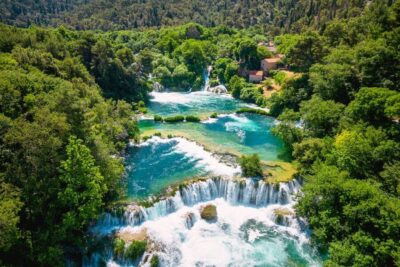
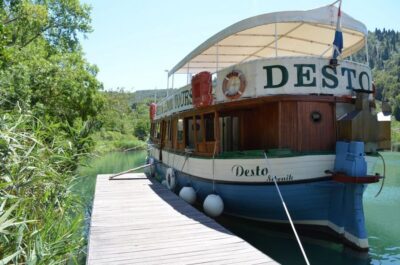
Vodice: Krka Waterfalls National Park Boat Tour
Read our review →
Krka National Park Full-Day Tour with Wine Tasting
Read our review →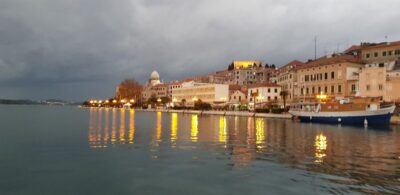

Browse the lists this tour appears in