
Reviewed · DUBROVNIK TOURS
Dubrovnik Fun Facts and History: 1 or 2hr Tour with Antonio
Dubrovnik’s old walls tell only part of the story. This walking tour with Antonio explains how a small maritime republic stayed independent for nearly 450 years, using diplomacy, trade, and careful political choices instead of sheer military strength. You’ll also hear the odd, funny, and surprising details that make the past feel human.
I especially like the focus on Dubrovnik as a working republic, not just a pretty medieval town. I also like the coffee stop on the two-hour version, held at a small local shop inside the walls where you can pause and talk about present-day Dubrovnik. The main consideration is physical: the route is not suited to wheelchair users or people with mobility impairments, and the one-hour option may feel brief if you want a full look at the earthquake and the republic’s institutions.
Key points to know before you book
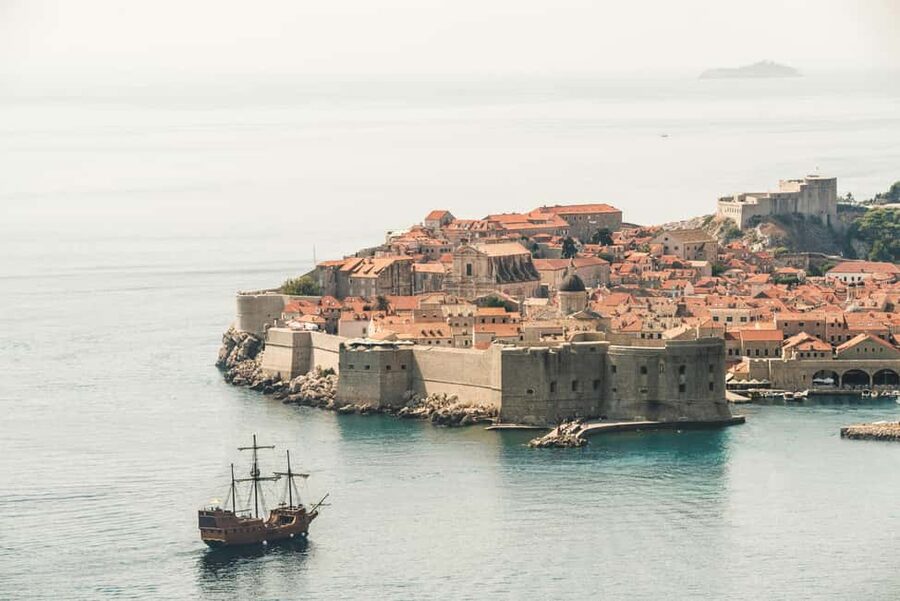
- Start beside Revelin Fortress: Meet in a shaded little square with a view toward Dubrovnik’s Old Harbour.
- Learn how independence worked: Antonio explains the republic’s diplomacy, trade, and dealings with larger colonial powers.
- See the 1667 earthquake in context: The disaster changed the city’s buildings, streets, and balance of power.
- Choose between one and two hours: The short tour gives you a compact introduction, while the longer version adds more stories and a coffee break.
- Get local context beyond the usual sights: Antonio brings in details about daily life, present-day Dubrovnik, mathematics, astronomy, maritime practice, and diplomacy.
- Plan for uneven walking: Comfortable, breathable clothing, sturdy shoes, and water are sensible choices.
Starting near Revelin Fortress and the Old Harbour
The tour begins in the shade of a small square beside Revelin Fortress. This is a useful meeting point because it is easy to identify and gives you an immediate view toward the Old Harbour before the walk moves into the city.
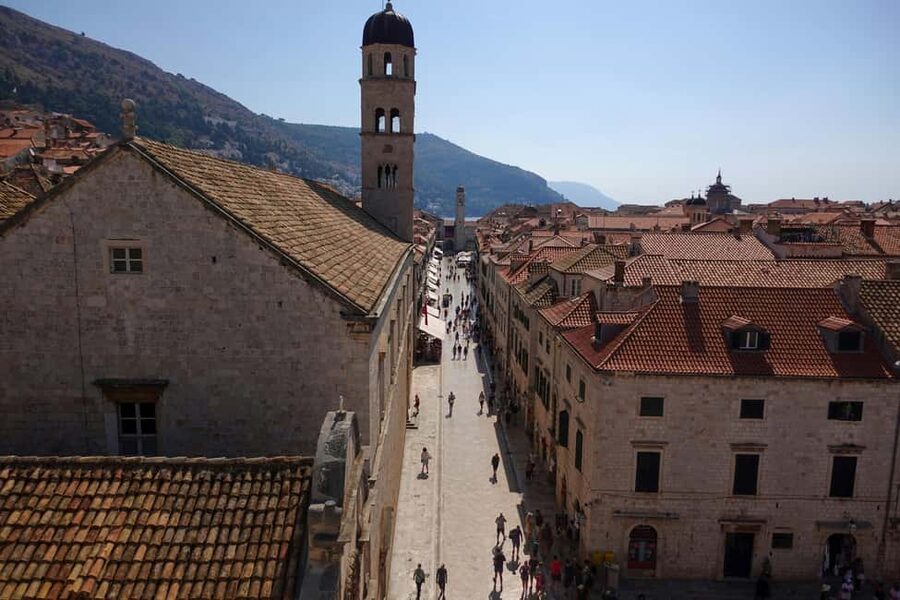
That opening setting also points toward the central subject of the tour. Dubrovnik’s success depended on the sea, ships, commerce, and political caution. The harbour was not just a scenic corner. It was part of the republic’s connection to the wider Adriatic and Mediterranean world.
I like starting here rather than jumping straight into a list of dates. You first get a sense of Dubrovnik’s position: a compact city with strong walls, a valuable port, and powerful neighbors. Antonio then uses that setting to explain the larger question of how such a small state protected its freedom for almost half a millennium.
You return to the same meeting point at the end. That makes the walk simple to fit into a day of sightseeing, especially if you want an introduction before visiting other parts of the Old Town on your own.
More history-led days in Dubrovnik:
- Dubrovnik Old Town History Walking Tour
★ 5.0 · 1,684 reviews - Game of Thrones & History of Dubrovnik Tour
★ 5.0 · 628 reviews - Dubrovnik: Old Town History Walking Tour
★ 4.9 · 474 reviews
The small republic beside larger powers
The main story is not simply that Dubrovnik was old. It is how the Republic of Dubrovnik survived next to larger and often more dangerous powers.
Antonio focuses on the tools that made independence possible. Diplomacy and trade mattered as much as fortifications. The republic had to judge when to negotiate, how to protect commercial interests, and how to maintain useful relationships with surrounding powers. You’ll learn why political skill was essential for a state that could not rely on size alone.
This is a helpful angle if you already know Dubrovnik as a walled city but not as a political entity. The tour places the streets and buildings inside a broader story about the Balkans, the Adriatic, and the shifting interests of major powers.
The experience also looks at areas where the republic and its people were ahead of their time. The subjects include government, maritime rules, mathematics, astronomy, and diplomacy. The point is not to claim that Dubrovnik invented everything, but to show how its small size did not prevent it from producing serious ideas and practical systems.
Some of these details may surprise you because they are not the standard first paragraph of a city guide. You’ll hear about what the republic was known for, what its people achieved, and which practices helped it function. Antonio’s aim is to connect these subjects to modern life, showing where older standards still influence the way things are done today.
Stories that make the history easier to remember
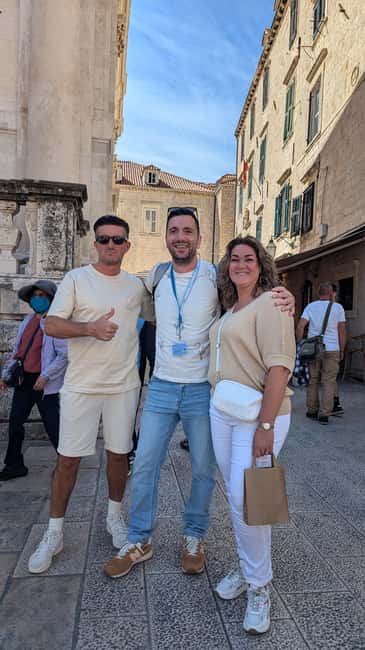
A good city walk needs more than a timeline. Antonio adds anecdotes about past and present Dubrovnik, including stories gathered through years of living in the city and researching its past.
That personal connection is one of the strongest reasons to choose this experience. You are not only walking from one landmark to the next. You are hearing how Antonio understands his hometown, including the less polished and less predictable parts of its story.
The tone is meant to be relaxed. Some stories are funny, while others deal with difficult events. That balance matters in Dubrovnik, where beautiful streets and impressive walls can easily make the past seem too neat. A local account can add the human details that formal descriptions often leave out.
You can also ask about modern Dubrovnik. Antonio welcomes questions about current life, culture, and local issues, so the conversation does not have to stop in the seventeenth century. If you want to know how the old city works today, this is a useful chance to ask someone who lives there.
The exact order of stories can depend on the questions you bring. That makes the walk feel less like a fixed lecture and more like a conversation with a clear historical backbone.
The 1667 earthquake and the city rebuilt
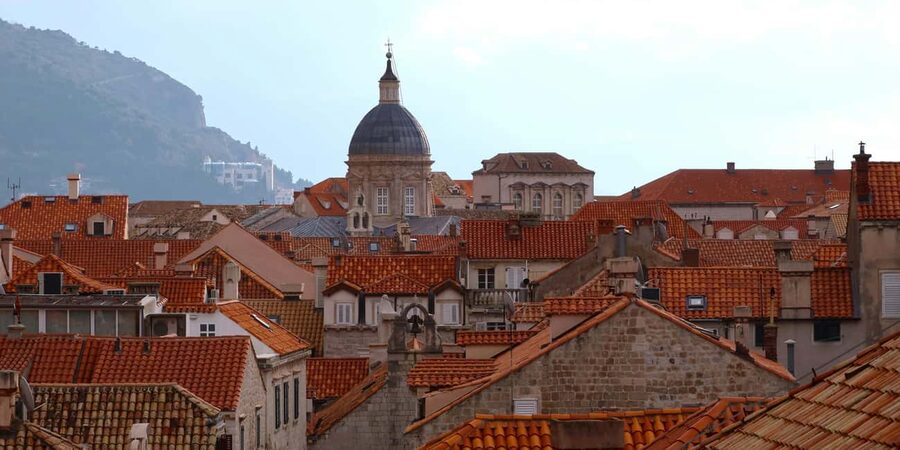
The earthquake of 1667 is a major part of the two-hour experience. It was not treated as a single dramatic date, but as an event that changed Dubrovnik’s appearance and its political life.
You’ll look at what happened before and after the earthquake, then consider the rebuilding that followed. The discussion covers the effect on architecture, the city’s residents, and the way power was divided within the republic.
This section is especially useful because Dubrovnik can look uniform at first glance. A guide can help you notice that the city you see today reflects several periods of construction and repair, rather than one untouched medieval design.
The longer route gives Antonio more time to explain those changes. If you want only the broad outline of Dubrovnik’s independence, the one-hour version may be enough. If the earthquake, rebuilding, and political consequences interest you, I would choose two hours.
You should also keep expectations realistic. This is a walking history tour, not a detailed architectural inspection of every building. The earthquake is part of a larger story about the republic, so the emphasis is on meaning and consequences rather than a long list of structural details.
A few more Dubrovnik half-days to weigh up
- Blue Cave Small-Group Boat Tour from Dubrovnik
★ 5.0 · 9,360 reviews - Full-Day Dubrovnik Elaphite Islands Cruise with Lunch and Drinks
★ 5.0 · 8,823 reviews - Dubrovnik: Epic Game of Thrones Tour + Lokrum & Saver Option
★ 4.9 · 5,995 reviews - Dubrovnik: Elaphiti Islands Full-Day Cruise with Lunch
★ 5.0 · 5,938 reviews
A coffee stop inside the walls
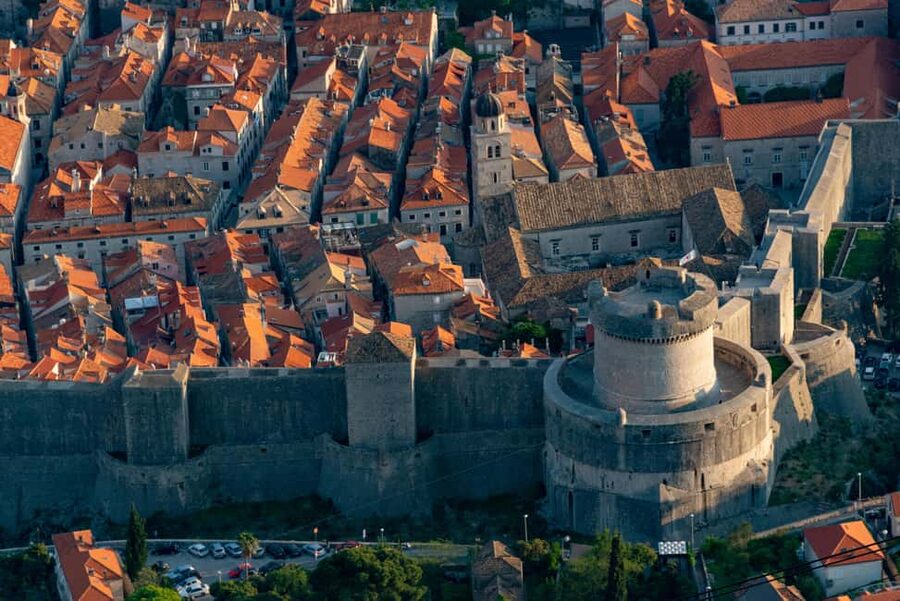
At about the halfway point of the two-hour tour, Antonio stops for coffee at a small shop owned by a local couple. This is more than a quick drink break.
The pause gives you a chance to sit, ask questions, and shift from formal explanation to ordinary conversation. You may also receive some local specialties, according to the experience details. That makes the stop feel personal without turning the tour into a meal or food tasting.
I see this as a real benefit on a hot Dubrovnik day. Old Town walking can be tiring, and a shaded break helps you pay attention during the second half. It also gives the tour a different rhythm from a nonstop march through landmarks.
The coffee stop applies to the two-hour route. If you book one hour, do not expect this part to be included. The shorter choice is better for a quick orientation, a tight schedule, or a first look before another activity.
Choosing one hour or two
The one-hour tour suits you if you want a compact introduction to Dubrovnik’s republic and a few memorable local stories. It can help you get your bearings early in a visit, especially if you plan to return later for more independent sightseeing.
The two-hour tour offers better value if you enjoy history and conversation. You get more time for the republic’s political methods, the earthquake of 1667, the city’s rebuilding, and the discussion of past and present Dubrovnik. The coffee stop adds a welcome break and a local setting.
At $28 per person, the price is reasonable for a private-feeling history conversation led by a licensed local guide, provided you use the time well. The value comes less from entrance tickets, since none are listed, and more from the explanation you receive while walking through a city whose streets can otherwise be hard to read.
I would not choose the two-hour option simply because longer sounds better. Pick it if you ask questions, like connecting local details to wider history, or want time to discuss current life in the city. If you prefer a fast overview, one hour keeps the cost and commitment lower.
The published score is five out of five from six ratings. That is a small sample, so I would treat it as encouraging rather than final proof. The strongest pattern in the comments is clear communication, an easy-to-find meeting point, engaging stories, and Antonio’s affection for Dubrovnik.
What the walk feels like in practice
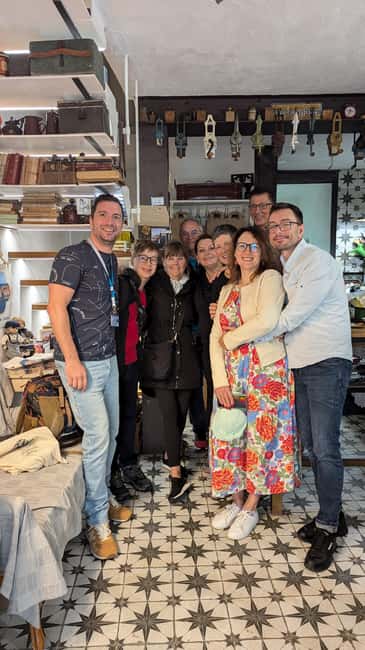
Antonio is a Dubrovnik County licensed guide and local resident. He leads the experience in Croatian or English, so you should select the language that lets you ask questions comfortably.
Communication begins before the walk, and the meeting arrangements are straightforward. The starting square beside Revelin Fortress is specific enough to avoid the confusion that can come with meeting somewhere inside the crowded Old Town.
Expect a walking route through historic streets, with frequent stops for explanation and conversation. The tour does not list a fixed group size, so you should confirm the current booking details if group size is important to you.
The route is not suitable for people with mobility impairments or wheelchair users. It is also not recommended for people over 80 years old, babies under one year, or anyone who may find uneven city walking difficult. Wear comfortable shoes, breathable clothing, and carry a reusable water bottle.
Alcohol, drugs, littering, explosive substances, and audio recording are not allowed. The recording rule is worth noting if you usually capture guided talks on your phone. You can still take in the stories and ask questions directly, but plan to listen rather than record.
Who will get the most from Antonio’s tour
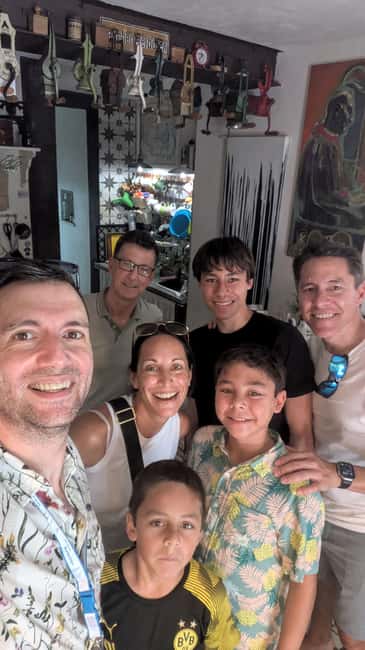
This experience is a good match for you if you enjoy:
- Political and maritime history rather than only famous buildings
- Short local stories and unusual facts
- A guide who can discuss both the past and present
- Small details that do not always appear in standard city information
- A relaxed pace with room for questions
- A coffee break during a longer walk
It is less suitable if you want a major attraction with formal entry, a large number of monuments, or a strictly timed lecture. You should also choose another option if you need step-free access or avoid extended walking.
Families with older children may find the anecdotes easier to follow than a dense academic explanation, but the experience details do not give a specific minimum age. For young children, consider the one-hour version and ask before booking if the pace and content fit your group.
This tour also works well early in a Dubrovnik visit. The republic’s diplomacy, trade, and rebuilding story can give you a useful frame for later visits around the walls and Old Town. You will notice more when you understand why the city was built and governed as it was.
The local touch that gives the tour its value
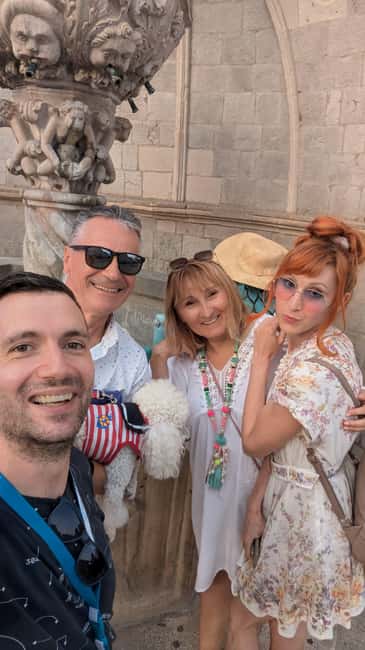
The most praised part of Antonio’s approach is his connection to the city. He is described as warm, clear in his communication, and proud of Dubrovnik without treating it as flawless.
That distinction matters. A local guide can tell you about the city with affection while still discussing war, disaster, political pressure, and the less pleasant sides of its past. The result is a more rounded picture than a string of flattering city facts.
The coffee break adds to that feeling. At the local couple’s shop, the experience shifts from sightseeing to hospitality. You are still learning, but the setting encourages a normal conversation about what life in Dubrovnik is like now.
I would especially value this tour if I had already seen the city’s most famous views and wanted to understand the people and decisions behind them. The walls are impressive, but the republic’s survival is the more interesting story.
Should you book this Dubrovnik history walk?
Book Antonio’s tour if you want a personal introduction to Dubrovnik’s 450 years as an independent republic, especially the role of diplomacy, trade, and practical statecraft. Choose two hours for the fuller treatment of the 1667 earthquake, more anecdotes, and the coffee stop inside the walls.
Choose one hour if your schedule is tight or you want a quick historical orientation. At $28 per person, the experience offers solid value for a licensed local guide, a clear meeting point, and a conversation that covers both historic Dubrovnik and the city you see today.
Skip it if you need accessible routes, dislike walking, or want a tour focused only on major sights and dates. For most able-bodied visitors who prefer stories, context, and local conversation, this is a strong way to look beyond Dubrovnik’s postcard image.
FAQ
Where does the tour begin?
The tour begins in a shaded small square next to Revelin Fortress, beside a viewpoint toward Dubrovnik’s Old Harbour.
Where does the tour end?
The walk ends back at the starting meeting point.
How long is the tour?
You can choose between a one-hour and a two-hour history and sightseeing tour.
Is a coffee break included?
A coffee break at a small local shop inside Dubrovnik’s walls is included during the two-hour tour. It is not listed for the one-hour option.
Who leads the tour?
Antonio, a Dubrovnik County licensed tour guide and local resident, leads the experience.
Which languages are available?
The tour is offered in Croatian and English.
What should I bring?
Bring comfortable shoes, comfortable and breathable clothing, and a reusable water bottle.
Is the tour suitable for wheelchair users?
No. The experience is not suitable for wheelchair users or people with mobility impairments. It is also not suitable for people over 80 years old, babies under one year, or anyone affected by the other stated restrictions.
Just added around Dubrovnik
- Full- Day Private Speedboat Tour in Dubrovnik on Elaphiti Islands★ 5.0 · 21 reviews
- Wine Lover’s Tour of Peljesac Peninsula★ 5.0 · 150 reviews
- Wine tour peninsula Pelješac★ 5.0 · 3 reviews
- Elaphiti Islands Private Dubrovnik Boat Unique Experience★ 5.0 · 10 reviews
- Dubrovnik at War 1991-1992 Private Walking Tour★ 5.0 · 4 reviews
- PRIVATE Wine Tour to Konavle country side★ 5.0 · 11 reviews
- Welcome to Dubrovnik Walking Tour★ 5.0 · 36 reviews
- Walls of Liberty: A Self-Guided Audio Tour of Dubrovnik★ 3.5 · 3 reviews
Dubrovnik Tours, compared.

Blue Cave Small-Group Boat Tour from Dubrovnik
Read our review →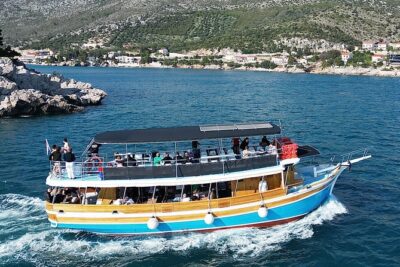
Full-Day Dubrovnik Elaphite Islands Cruise with Lunch and Drinks
Read our review →
Epic Game of Thrones Tour + Lokrum & Saver Option
Read our review →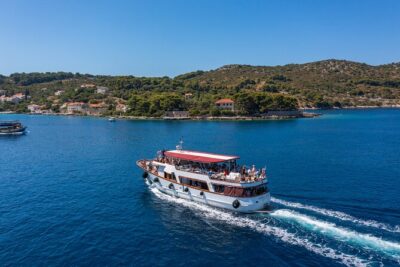
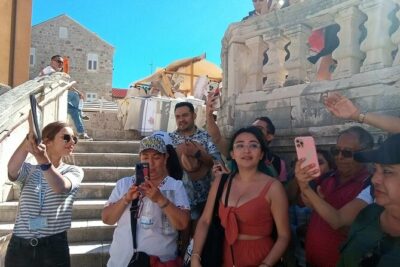
The Original Game of Thrones Tour & Lokrum Option
Read our review →
Dubrovnik Game of Thrones Tour & Optional Lokrum Island Visit
Read our review →
Elaphite Island Cruise w/ Drinks & Optional Lunch
Read our review →Browse the lists this tour appears in