
Reviewed · ROVINJ TOURS
Romantic Rovinj – a private walking tour
Rovinj’s magic is not locked inside one grand sight. It is in the way narrow lanes climb toward Saint Euphemia’s Church, how old Italian and Croatian influences meet, and how daily life still fills the medieval center. This private walk with Romina, a local guide from Rovinj, is built around that feeling rather than a checklist of monuments.
I like two things right away: the private format, which gives your group room to ask questions, and Romina’s personal approach to local history. She connects the town’s past with its economy, people, and daily life, then adds stories from her own connection to Rovinj. The main consideration is mobility: steep, narrow streets and uneven old-town surfaces make this a poor fit for wheelchair users or anyone who struggles with walking.
Key points to know before you book
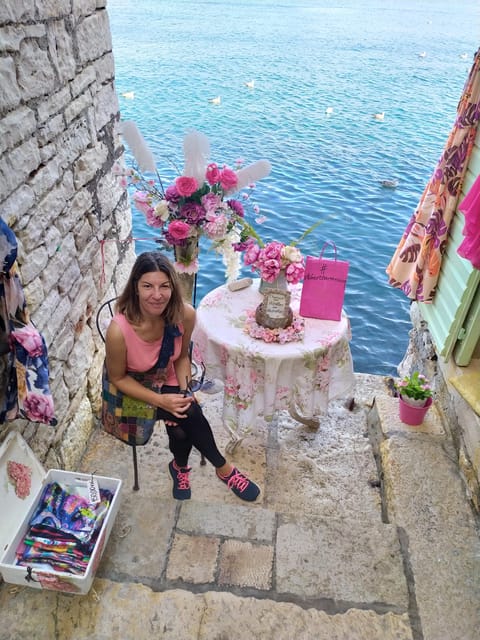
- A true local perspective: Romina presents Rovinj as her hometown and personal passion, not simply as a collection of dates and buildings.
- A compact two-hour route: You see major old-town landmarks without giving up an entire morning or afternoon.
- Saint Euphemia’s Church is included: This is one of the most important stops on the walk.
- Private groups up to six: Your party gets the guide’s attention instead of sharing the route with a large crowd.
- Several languages are available: Tours can be conducted in English, German, Italian, Spanish, or Portuguese.
- The route begins and ends at Trg na mostu: That makes it easy to fit into a day of exploring Rovinj.
Why Rovinj rewards a slow walk
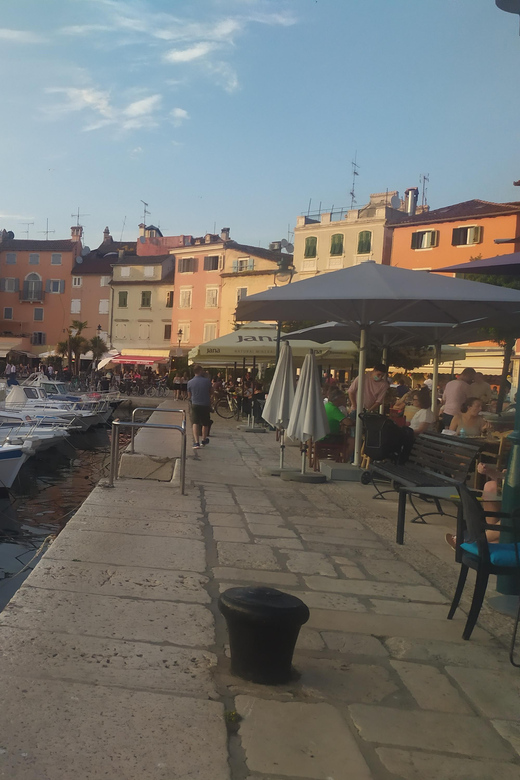
Rovinj is colorful, compact, and shaped by the sea. Its Old Town occupies what was once an island, and the starting point at Trg na mostu recalls the bridge that once connected that island to the mainland. You begin with a useful piece of geography, because it explains why the center feels so distinct from a modern Croatian town.
I like this opening because it gives you a sense of place before the tour turns to individual sights. You are not just told that Rovinj is old. You learn how its physical form developed and why its lanes, squares, and waterfront feel different.
The town also carries more than one cultural influence. It is Croatian and Italian, but the strongest identity here is Istrian. That mix appears in the language, food, architecture, and local customs, though the tour’s focus is history and everyday life rather than a dedicated tasting experience. Food and drinks are not included, so plan those separately.
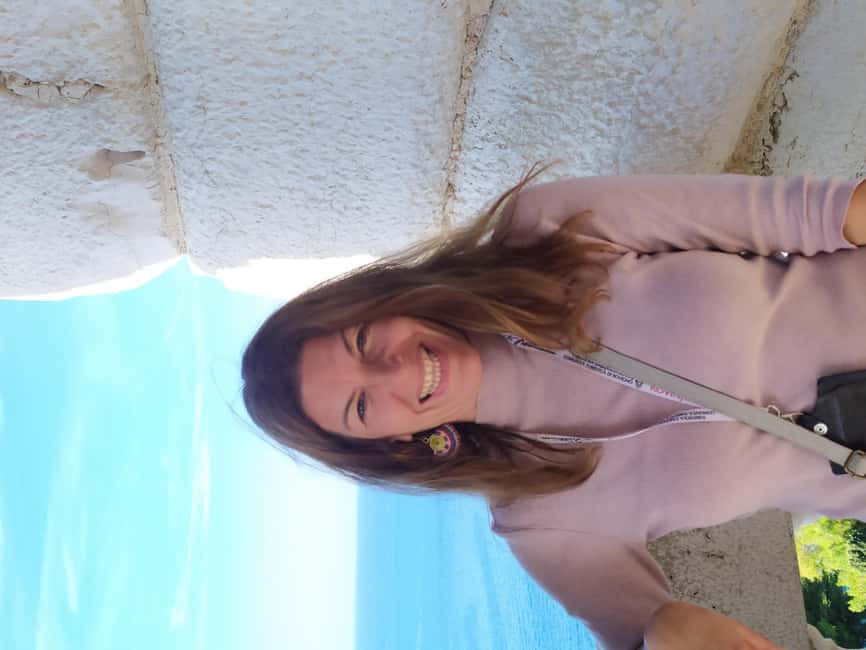
Romina’s style is central to the experience. She presents the town through what can be called brand-historytelling: stories that connect the place’s public image with the people who live there. A guide who knows Rovinj as home can point out how a street or square fits into local life, not just explain when it was built.
More walking tours in Rovinj:
- Rovinj: Guided Walking Tour
★ 4.8 · 113 reviews - Dubrovnik: Old Town Walking Tour
★ 4.8 · 5,174 reviews - Split: Old Town and Diocletian Palace Walking Tour
★ 4.9 · 4,727 reviews
Starting at Trg na mostu
The meeting point is the Tourist Board Information Office at Trg na mostu. This is a sensible place to begin because it sits at the threshold between the newer part of town and the historic center.
From here, the guide introduces the former island setting and the bridge that once separated the old settlement from the mainland. That small detail helps you read Rovinj’s shape. The Old Town is not an isolated museum district. It grew from a settlement with practical links to the shore, trade, homes, worship, and work.
The tour also uses this first stretch to set its tone. You can expect scenic views along the way and opportunities to stop for photographs. Since this is a private group, you can ask for clarification or pause briefly without having to keep pace with a large party.
The walk returns to Trg na mostu at the end. That is helpful if you have dinner plans, a second activity, or a hotel outside the Old Town. You will not need to arrange a separate pickup or figure out your way back from an unfamiliar corner of the city.
Carrera Street and Rovinj’s everyday rhythm
Carrera Street brings the walk into a more active shopping area. This is where Rovinj feels less like a preserved medieval setting and more like a lived-in town.
I like this part of the route because it balances the old stones with present-day life. You can browse shops, watch local movement, and see how the main historic center serves residents as well as people visiting for the day. The tour’s purpose is not to turn every stop into a shopping break, but Carrera Street gives you useful context for how the town functions now.
The street also helps explain Rovinj’s blend of influences. The town’s identity is not limited to one national story, and the guide’s English, German, Italian, Spanish, or Portuguese commentary lets her shape the explanation for your group.
Keep in mind that the route is a walking tour, not a shopping tour. If you want time to browse carefully, you may need to return later. Two hours goes quickly, particularly when your group asks questions or stops for photos.
Maršal Tito Square and Balbi’s Arch
Maršal Tito Square is the main square and one of the route’s useful orientation points. After moving through smaller lanes and commercial streets, you get a clearer sense of Rovinj’s civic center.
A private guide can help you connect the square to the town’s wider story. The value here is not simply seeing an open space. It is understanding how public life, movement, and local identity gather around central squares.
From there, the walk continues to Balbi’s Arch, one of the Old Town’s recognizable entrances. The arch marks a change in mood. You move from a broad public area into a tighter network of old streets where the medieval character becomes more obvious.
This is a good place to slow down and look up. Rovinj’s charm is often found in details around doorways, walls, and narrow passages. The supplied route promises surprises beyond the listed stops, so the exact order and extra stories may vary. That is a strength if you enjoy discovery, but it means the experience is not designed as a rigid, minute-by-minute sightseeing schedule.
A few more Rovinj half-days to weigh up
- Vrsar: Dolphin Watching Boat Tour including Drinks
★ 4.6 · 1,227 reviews - Rovinj: Sunset Cruise with Swim Stop, Drinks, and Fruits
★ 4.9 · 944 reviews - Rovinj: Sunset Boat Trip with Dolphin Watching
★ 4.6 · 644 reviews - Vrsar: Dolphin-Watching Sunset Adventure with Speedboat
★ 4.8 · 624 reviews
Through the Old Town’s narrow lanes
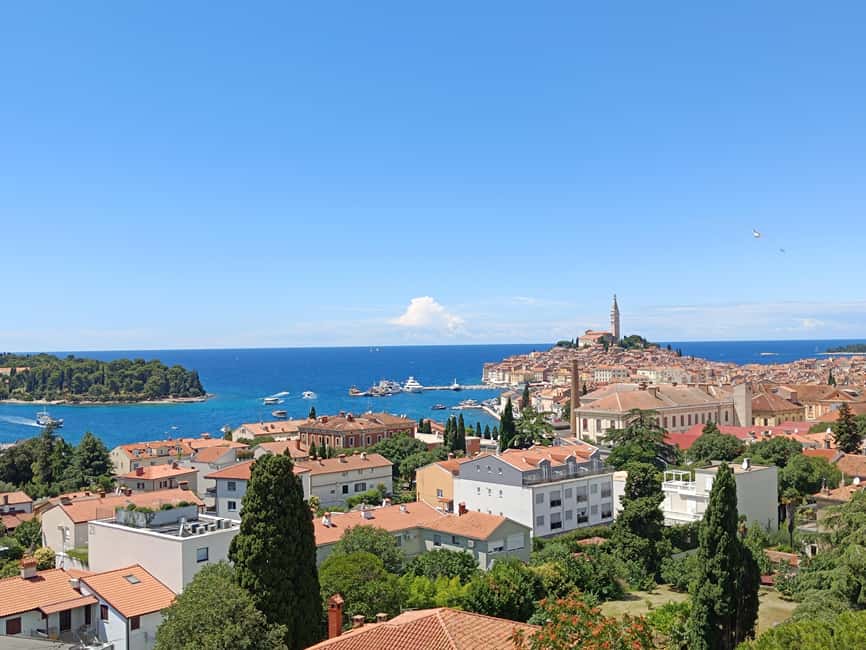
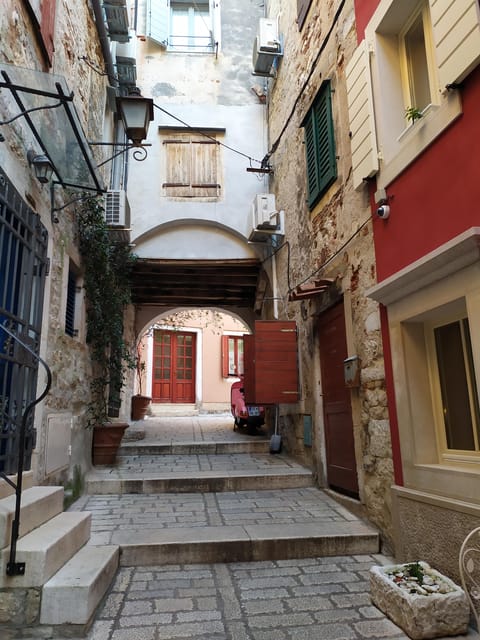
The Old Town is the heart of the experience. Its lanes form a maze, and that is part of the appeal. You are not simply crossing from one attraction to another on a straight road. The route lets you see how medieval planning still shapes the way people move through town.
I would book this walk early in your stay if you want help getting your bearings. Romina’s route gives you a framework for returning on your own later. You can recognize the main square, shopping street, church, and old entrances instead of treating the center as a beautiful but confusing collection of alleys.
The personal angle also matters here. History can feel dry when it is reduced to dates and rulers. Romina links the past to her own life and to the town’s economic and demographic story. One group described her as painting a picture of Rovinj through historic, economic, demographic, and personal viewpoints, which is a useful guide to what you can expect from the conversation.
That approach suits you if you prefer context over a rapid list of facts. It may be less suitable if you want a highly academic lecture or a tour focused only on architecture. The emphasis is friendly, personal, and tied to the way Rovinj is experienced today.
Saint Euphemia’s Church and the upper town
The tour includes a visit to the Church of Saint Euphemia, the major religious landmark in Rovinj. Its position in the Old Town gives the walk a natural high point, both in the route and in the town’s visual character.
The church is more than a photo stop. It helps explain the importance of faith in the development of the settlement and gives you a place to connect local legend, worship, and architecture. The tour description also refers to medieval mysticism, so you can expect the guide to bring out the more atmospheric side of Rovinj’s past.
Entry to the church is included, but it must match the tour time you choose. That practical detail matters. If the church is a priority, check availability before booking and make sure your selected start time allows the visit to take place as planned.
The climb and surfaces around the upper Old Town are also important. This experience is not suitable for people with mobility impairments or wheelchair users. It is also not recommended for people with respiratory issues, babies under one year, or people over 95. Those limits may sound broad, but the route’s old streets and walking pace are the reason to take them seriously.
La Colonna and the story of Saint Euphemia
La Colonna is another distinctive stop. It is associated with the discovery of Saint Euphemia’s sarcophagus, giving the tour a chance to move from physical streets into local religious tradition.
This is the kind of detail that makes a walking route memorable. You are not just told where a saint is honored. You see how a specific place in town connects to the story and why that story remains part of Rovinj’s identity.
The tour balances this material with everyday life. That matters because Rovinj is not only a place of legends. It is also a town where people shop, work, worship, and meet friends. Romina’s strength is in placing the sacred and ordinary side by side.
The Batana Museum is not included. If you are interested in Rovinj’s traditional fishing boats and maritime culture, you will need to arrange that visit separately. This is a useful distinction when comparing the tour with a broader city pass or a full-day cultural program.
What the two-hour format really gives you
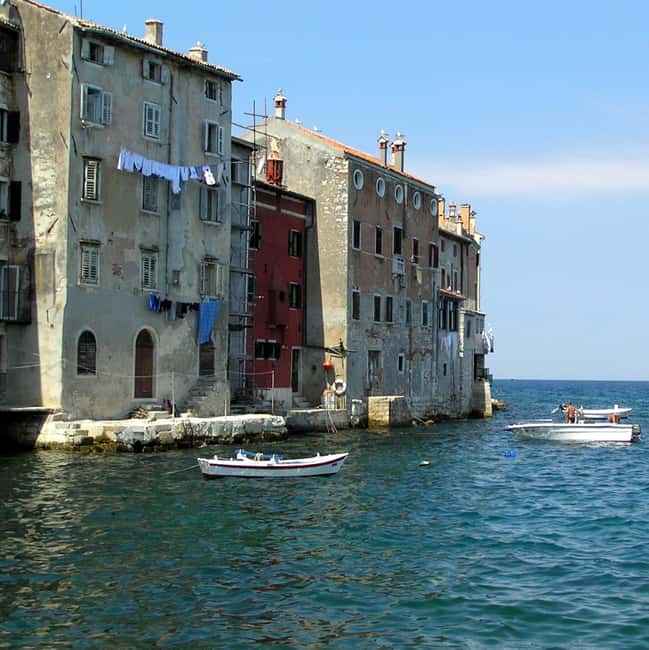
Two hours is enough for a strong introduction to Rovinj, but not enough to cover every museum, viewpoint, and side street in detail. That is not a flaw if you want a focused first look.
The route includes the former bridge area, Carrera Street, Maršal Tito Square, Balbi’s Arch, the Old Town, Saint Euphemia’s Church, and La Colonna. You also get scenic views and a stop at a local bar listed as a photo and guided-tour point. Food and drinks are excluded, so do not treat that stop as an included refreshment break.
A private group of up to six gives the time more value. At $170 per group, the price works out to about $28 per person for six people, or about $57 each for three. For one or two people, the per-person cost is much higher, but you still receive a private guide rather than joining a shared group.
That makes the tour especially appealing for families, couples, or a small group of friends who value conversation. If your main goal is the cheapest possible introduction, a larger group tour may cost less. If you want the freedom to ask about local life, restaurants, history, or personal connections to Rovinj, the private price is easier to justify.
One previous group of three spent more than two hours on the walk, so allow some flexibility if conversation and questions take the route beyond the advertised duration. That can be a benefit, but avoid booking a tight appointment immediately afterward.
Weather, languages, and practical planning
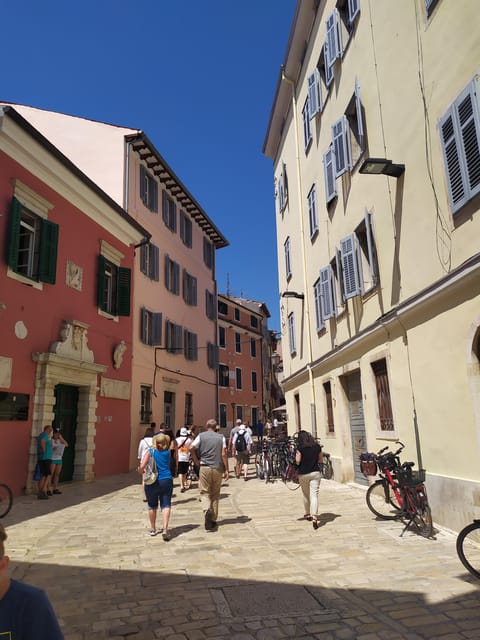
The tour runs in most weather, except heavy showers. Bring suitable shoes and clothing for a walking route through old streets. Since the experience includes scenic views and photo stops, weather will affect how enjoyable the route feels even when the tour can still operate.
Romina can guide in English, German, Italian, Spanish, or Portuguese. Choose the language that lets you ask questions comfortably. This is especially useful on a personal-history tour, where the value comes from conversation rather than only listening to a prepared speech.
The tour starts and ends at Trg na mostu, at the Tourist Board Information Office. There is no transport included, and there is no mention of hotel pickup. Food, drinks, souvenirs, tips, and the Batana Museum are also outside the price.
You can cancel up to 24 hours before the start for a full refund, and the reserve-now, pay-later option keeps you from paying at the time of booking. Check the available start times carefully because church entry needs to correspond with your chosen tour time.
Who will enjoy this walk most
I would recommend this experience to you if you want a warm local introduction rather than a formal lecture. It suits couples looking for a romantic stroll, small families with older children, and friends who want to understand Rovinj before exploring it alone.
It is also a good match for repeat visitors who have already seen the obvious sights but want more local context. Romina’s personal connection can add a different layer to familiar streets.
I would hesitate if you need step-free access, dislike uneven historic streets, or want a museum-heavy program. The Batana Museum is not part of the route, and food is not included. You should also allow extra time if your group tends to stop often or ask extended questions.
The strongest part of the experience is the guide’s personal storytelling. The available feedback repeatedly praises Romina’s passion, friendliness, professionalism, and ability to connect history with economic, demographic, and personal details. Several people also found her restaurant suggestion useful for dinner afterward, so it is worth asking for local advice if you want it.
Should you book Romantic Rovinj?
Book this private walk if you want to meet Rovinj through the eyes of someone who calls it home. The route covers the essential Old Town landmarks, but the real value is the connection between those places and Istrian life.
At $170 for up to six people, it is good value for a small group that wants a private guide and a flexible conversation. It is less compelling for solo visitors focused only on low cost, or for anyone who needs accessible routes.
For the best fit, choose a time that allows entry to Saint Euphemia’s Church, wear comfortable shoes, and leave room afterward for your own exploration. If your idea of a good tour is a friendly local voice, medieval streets, personal stories, and a clear introduction to Rovinj, this is a strong choice.
FAQ
Where does the Romantic Rovinj tour begin?
The meeting point is the Tourist Board Information Office at Trg na mostu in Rovinj.
Where does the tour end?
The walk returns to Trg na mostu.
How long does the tour last?
The advertised duration is two hours. A group may spend slightly longer if the conversation and questions continue.
How many people can join the private tour?
The price covers a private group of up to six people.
Which languages are available?
The live guide can conduct the tour in English, German, Italian, Spanish, or Portuguese.
Is entry to Saint Euphemia’s Church included?
Yes. A visit to the Church of Saint Euphemia is included, but entry must match the tour time you choose.
Is the Batana Museum included?
No. The Batana Museum is not included in this experience.
Can I cancel for a full refund?
Yes. You can cancel up to 24 hours in advance for a full refund.
Just added around Rovinj
- Rovinj: Shared Dolphin and Sunset Tour with Drinks★ 4.9 · 18 reviews
- Rovinj: Red Island and Pirate Cave speedboat tour★ 4.7 · 85 reviews
- Rovinj Sunset kayaking tour★ 4.9 · 8 reviews
- Rovinj: Sunrise Dolphins & Fishermen at Work Speedboat Tour★ 4.8 · 32 reviews
- Rovinj or Vrsar: Lim Fjord & Rovinj islands Speedboat Tour★ 4.9 · 10 reviews
- Rovinj: Rovinj Archipelago and South Coves Speedboat Tour★ 5.0 · 7 reviews
- Rovinj: Family Friendly Dolphin Watching Tour★ 3.3 · 3 reviews
- Rovinj: Lim Fjord and Pirate Cave Boat Tour★ 4.5 · 133 reviews
Rovinj Tours, compared.

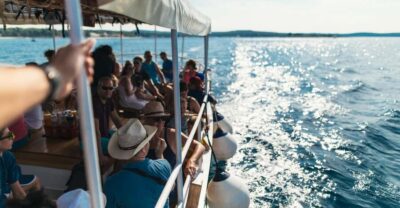
Sunset Cruise with Swim Stop, Drinks, and Fruits
Read our review →

Dolphin-Watching Sunset Adventure with Speedboat
Read our review →
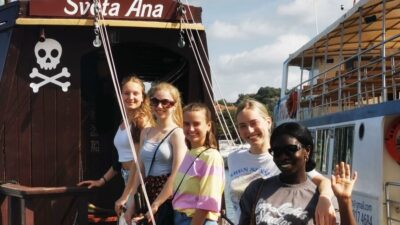
Lim Fjord Boat Tour with Swimming near Pirate’s Cave
Read our review →
Browse the lists this tour appears in