
Reviewed · PULA TOURS
Pula Sightseeing Walking Tour
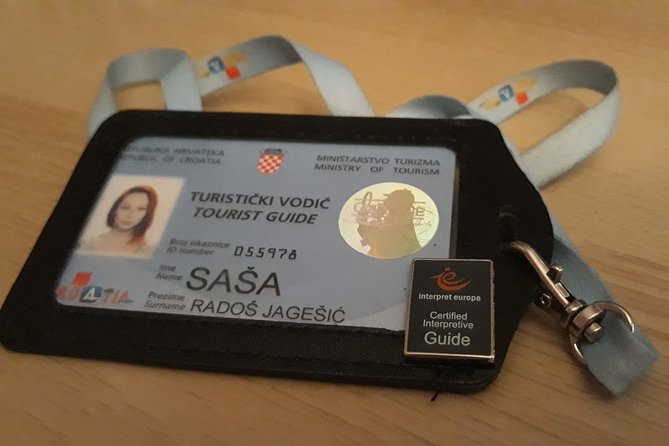
Pula’s best introduction is a walk that links its Roman Arena with quieter traces of the past, including old gates, a floor mosaic, and the Forum. Saša, a local who grew up in Pula and returned after college, brings the city to life through stories about the people and events that shaped it.
I like the choice between seeing the Arena from outside or paying to go in, and I like the practical local advice about museums, restaurants, and getting around. The main consideration is that the tour can last anywhere from 1 hour 30 minutes to 2 hours 30 minutes, and the optional climb to Kaštel may not suit everyone.
Key points to know before you book
- The Arena is the main anchor: Spend time outside for the big Roman setting, or pay the entrance fee if you want to explore inside.
- Saša tells history through people: The guide’s Badass People in Pula theme gives the walk a human angle instead of turning it into a list of dates.
- You see both famous and overlooked sights: The route includes the Sergii Arch, Hercules Gate, Twin Gates, Dirce mosaic, Augustus Temple, and Forum.
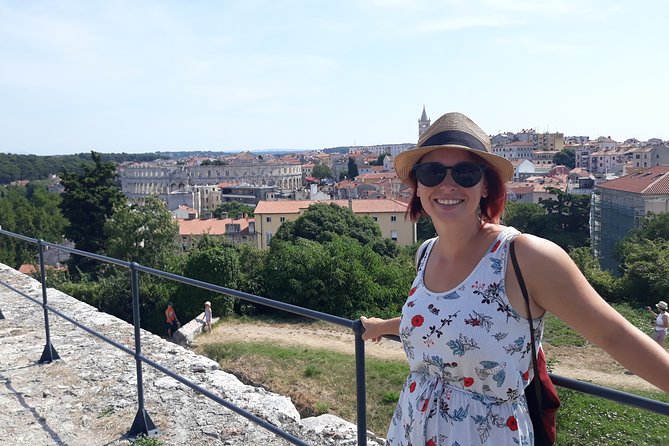
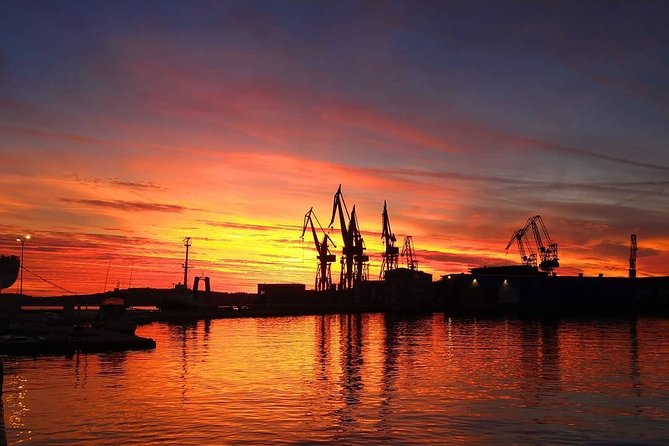
- Kaštel adds a climb and a view: The fortress stop is optional, but it gives you a different look toward the Arena and the shipyard side of town.
- The group is limited to 20: That is small enough for a conversational walk, though the experience may feel less personal at the maximum size.
- Budget for two entrance fees: The Arena costs 10 EUR and the Temple of Augustus costs 2 EUR, neither of which is included.
Why this Pula walking tour works well
Pula can look like a collection of Roman ruins at first glance. The Arena gets most of the attention, but the city’s older streets also preserve medieval, Venetian, and Austro-Hungarian layers. This tour helps you connect those pieces in a sensible order.
I especially like the local format. Saša grew up in Pula, left for college, and returned because of the appeal of life in Istria. That background matters because you are not only receiving a standard account of ancient Rome. You can also ask about present-day Pula, including places to eat, museums worth your time, and ways to get around.
The guide also uses stories about notable people who were born in Pula, lived there, or passed through its streets. That approach has clear appeal if formal history is not your favorite subject. The supplied feedback gives strong emphasis to Saša’s storytelling and to the unusual people-centered angle, with repeated praise for making the town and Croatia interesting through memorable characters.
At $34.91 per person, the tour is not the cheapest way to walk around Pula. Its value comes from the guide rather than from included admission. You are paying for a licensed local guide, historical interpretation, orientation, and suggestions that can improve the rest of your stay. If you only want to photograph the Arena and wander independently, you may find the price harder to justify. If you want context and a chance to ask questions, it is a fair use of your first morning or afternoon in town.
More walking tours in Pula:
- Pula: Historic Walking Tour with Local Guide & City Views
★ 4.8 · 143 reviews - Pula walking tour
★ 5.0 · 96 reviews - Pula: Historic Sites Guided Walking Tour
★ 4.8 · 78 reviews
Starting at the Roman Arena
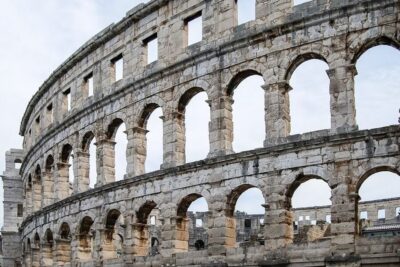
The tour begins at Flavijevska ul. 2, beside the Amphitheatre of Pula. This is the right place to begin because the Arena is Pula’s clearest link with Roman rule and its most recognizable monument.
You will spend about 30 minutes on this stop. Saša can explain the Arena from the outside or take the discussion inside, depending on your preference. That choice gives you control over the cost and pace, but remember that the entrance fee is not part of the tour. The stated admission price is 10 EUR.
The outside view is already a strong start. You can take in the scale of the structure before moving into the historic center, and Saša can explain its place in the story of Pula. Going inside costs extra, but it gives you a closer look at the Roman setting and may be worthwhile if you have not visited an amphitheater elsewhere.
I would decide before the tour begins how much time and money you want to spend here. If Pula is your only Roman stop in Croatia, paying to enter may make sense. If you have already visited several major Roman sites, the exterior explanation may be enough, leaving more of your budget for museums or a meal.
Getting oriented at Tito’s Park
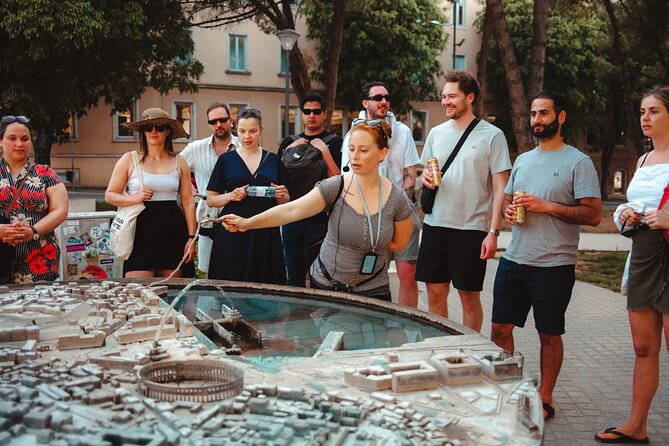
From the Arena, the walk moves to Tito’s Park. In front of the park is a small model of Pula’s center, used to explain the shape of the city and the route ahead.
This is a short stop of about 10 minutes, but it serves a useful purpose. A model can help you understand where the old gates, Forum, fortress, and Arena fit together. Instead of simply following a guide from one monument to the next, you get a mental map of the town.
That orientation is one of the quiet strengths of the tour. Pula’s center is compact enough to explore on foot, but its Roman remains do not always announce themselves. Knowing the basic layout makes it easier to return later to a place you want to see again.
The park itself is not listed as an admission site, so there is no extra ticket cost here.
Hercules Gate and the oldest entry point
The next stop is Hercules Gate, described as the oldest of Pula’s surviving town gates. The visit lasts about five minutes and is free.
This is a good example of the tour’s scale. You are not stopping only at the grand monuments. Saša also points out smaller remains that you could easily pass without understanding their age or purpose.
Do not expect a long visit at the gate. The value comes from its place in the larger walk and from the explanation that connects it to Pula’s Roman beginnings. If you explore alone, you might take a quick photo and continue. With a guide, the short stop becomes part of the city’s story.
A few more Pula half-days to weigh up
- Pula: Arena Entrance Ticket
★ 4.3 · 2,590 reviews - Medulin -Kamenjak 5h boat trip with lunch & drinks on Sandra Boat
★ 5.0 · 1,621 reviews - Full-Day Boat Tour of the Medulin Archipelago from Medulin
★ 5.0 · 1,389 reviews - 3hours all inclusive Sunset&Dolphin Tour from Medulin on Sandra
★ 5.0 · 1,130 reviews
The Sergii Arch and Pula’s grand street
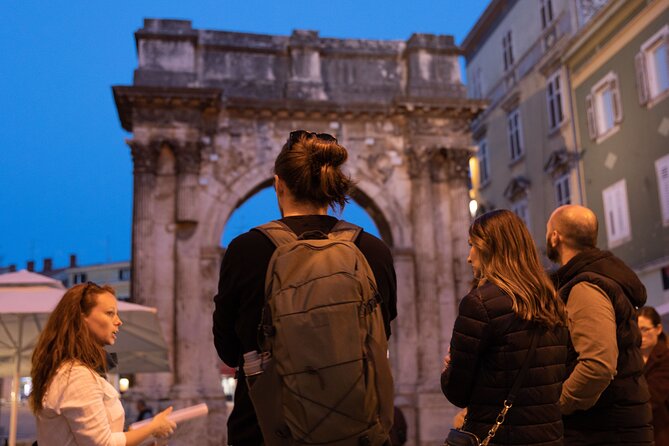
The Arco dei Sergi, also called the triumphal arch of the Sergii family, takes about 10 minutes. It sits at one end of one of Pula’s best-known streets, making it both a monument and a useful urban marker.
This stop shifts the focus from military Rome to the power of a local family. The arch was connected with the Sergii, and its location helps you see how historic Pula is organized around major routes rather than isolated ruins.
I like this part of the walk because it gives you a sense of how public monuments once worked. A triumphal arch was not just decoration. It announced status, memory, and political influence in a highly visible place.
The stop is free, and the street setting makes it easy to include without interrupting the flow of the tour. Keep your camera ready, but listen for the story too. The point is not simply to collect another photograph.
The Dirce mosaic, a quieter Roman clue
The floor mosaic known as The Punishment of Dirce is one of the more easily missed sights on the route. The visit takes about 10 minutes, and there is no admission fee.
The mosaic was found during World War II and indicates the location of a once wealthy Roman palace. That detail gives the stop real weight. You are not looking at a decorative floor in isolation. You are seeing evidence of a larger private building and a level of Roman wealth that is no longer visible above ground.
This is exactly the kind of place where a local guide earns the fee. A major monument advertises itself, but a mosaic can be overlooked unless someone explains why it matters. I would pay close attention here because the stop adds texture to the Roman story without requiring another ticket.
The condition and presentation of ancient remains can vary, so keep your expectations sensible. The appeal is the clue it provides about the lost palace, not the scale of the display.
The Twin Gates and the changing city
The Twin Gates are described as the first and youngest of the three Roman town gates still standing in Pula. The stop lasts about five minutes and is free.
Placed alongside Hercules Gate and the Arch of the Sergii, this short visit helps you compare different pieces of the old city. You begin to see Pula not as a single Roman monument, but as a town whose entrances, streets, and public buildings still guide movement today.
The wording about the gate being the youngest of the three is a useful reminder that Roman remains were not all built at once. A city changes over time, even when later residents continue to use or adapt its earlier structures.
Because the stop is brief, you will not spend long examining architectural details. Its main value is the connection to the rest of the route. If you want extensive Roman archaeology, you should plan separate museum time after the walk.
Kaštel, an optional climb above the center
Kaštel is the tour’s optional stop. The walk uphill takes about 15 minutes and leads to a medieval fortress that now houses the Historic and Maritime Museum.
This is the one part of the route that may affect your decision most. The climb is described as a bit of an ascent, so you can skip it if you prefer a flatter walk. If you do go up, you gain a view toward the Arena and the shipyard side of Pula, along with the chance to see the fortress setting.
The museum entrance is not included. The tour information does not give a ticket price for it, so ask Saša if you are considering going inside.
I like having this choice. Some walking tours force every person through the same route, even when a stop adds effort but not much interest for them. Here, you can decide based on your energy, the weather, and your interest in military and maritime history.
The view also gives you a different reading of Pula. From ground level, the Arena dominates. From Kaštel, you can place it within the wider town and see toward the working shipyard area. The view is part of the reward, but the climb is a real consideration for anyone who wants an easy stroll.
Augustus Temple and the Forum finish
The final main stop is the Temple of Augustus, which sits beside the medieval Venetian City Hall on the Forum. The discussion lasts about 10 minutes, and entry to the temple is not included. The stated admission price is 2 EUR.
This is a fitting ending because the Forum gathers several periods in one place. You get a Roman temple, a medieval and Venetian civic setting, and a clear sense of how Pula’s public center changed over the centuries.
The small admission fee makes entering the temple an easy add-on for many people, especially if you have room in your schedule. Still, you should not feel obliged to pay simply because it is on the route. Saša can explain the site from outside, and you can decide if the interior fits your interests.
The tour ends at Forum, 52100 Pula. That is practical because you finish in a central area rather than returning to the Arena. You can continue exploring, stop for food, or use the local advice you picked up during the walk.
What the storytelling adds
The strongest feature here is not the number of stops. It is the way Saša frames Pula through people and stories.
The Badass People in Pula theme gives the walk a distinctive voice. Instead of presenting history as a long sequence of rulers, the guide focuses on people who walked the streets, were born in the area, or lived in Pula for a time. The feedback places special emphasis on this approach, including from people who normally do not seek out history tours.
That is useful because stories help you remember places. You may recall a person connected with the Sergii Arch or the Forum more easily than a date you heard once and forgot. Saša also covers Croatia more broadly, so the experience is not limited to stones and construction periods.
The tone appears informal and conversational. You should feel free to ask about restaurants, museums, and practical movement around town. This is not a scripted audio guide, and its value depends partly on the exchange between you and the guide.
Timing, group size, and practical value
The advertised length ranges from 1 hour 30 minutes to 2 hours 30 minutes. That is a wide window, so do not schedule a tight connection immediately afterward. The longer version may reflect questions, the choice to enter the Arena, the optional Kaštel climb, or the pace of the group.
The maximum group size is 20 people. That is not a private tour, but it is still a manageable number for a walking experience. If the group reaches its maximum, you may need to stay close to hear every story, especially in busy public areas.
The tour uses a mobile ticket, and confirmation is sent within 48 hours of booking, subject to availability. It begins near public transportation, and most people can participate. Service animals are allowed.
Good weather is required. If poor weather cancels the experience, you receive the choice of another date or a full refund. You can also cancel for a full refund up to 24 hours before the local start time. Those rules are useful to remember in Pula, where a hot day or sudden rain can change how pleasant a climb and two-hour walk feel.
Who should book this walk?
I would choose this tour if you are visiting Pula for the first time and want a clear introduction before exploring alone. It also suits you if you like history best when it comes with personalities, local observations, and a few practical recommendations.
It is a good fit for people who want to see the major sights without spending the entire day inside museums. The route includes free stops, a choice about Arena admission, and an optional fortress climb. Families and mixed-interest groups may appreciate that flexibility, since not everyone needs to pay for or enter every site.
You may want a different plan if you dislike walking, want a private guide, or need a fixed finish time. The maximum group is 20, the duration can vary, and Kaštel involves an uphill stretch. Also, the tour does not cover admission fees, so the final cost will be higher if you enter the Arena, Augustus Temple, or the museum at Kaštel.
Should you book the Pula Sightseeing Walking Tour?
Book it if you want Pula explained by someone with a personal connection to the city. Saša’s people-centered stories, local tips, and coverage of both famous monuments and easily missed Roman remains give the walk more purpose than a quick monument checklist.
At $34.91, the price makes the most sense when you value interpretation and orientation. Add 10 EUR for the Arena and 2 EUR for the Temple of Augustus if you plan to enter both. Skip Kaštel if you want a shorter, flatter route, or include it if the view and fortress interest you.
I would book this near the start of a Pula stay, leaving enough time afterward to follow up on Saša’s museum and restaurant suggestions. It is not the right choice for a completely self-guided budget walk, but it is a strong introduction for anyone who wants the city’s Roman remains connected to the people and stories behind them.
FAQ
How long does the Pula Sightseeing Walking Tour last?
The tour lasts approximately 1 hour 30 minutes to 2 hours 30 minutes.
Where does the tour begin?
The meeting point is Flavijevska ul. 2, 52100 Pula, Croatia.
Where does the tour end?
The tour ends at Forum, 52100 Pula, Croatia.
Is admission to the Pula Arena included?
No. Arena admission is not included, and the stated entrance fee is 10 EUR. The Arena can be discussed from outside or inside, depending on your preference.
Is the climb to Kaštel required?
No. The walk up to Kaštel is optional. It takes about 15 minutes and includes an uphill section. Admission to the Historic and Maritime Museum is not included.
Can I cancel the tour for a full refund?
Yes. You can cancel at least 24 hours before the experience start time for a full refund. If poor weather causes the experience to be canceled, you are offered another date or a full refund.
Just added around Pula
- Kamenjak Nature Park: Kayak Tour with Snorkeling & Cave Exploring★ 5.0 · 15 reviews
- Dolphin & Sunset tour with Brijuni panorama★ 5.0 · 119 reviews
- Transfer Pula – Poreč★ 5.0 · 5 reviews
- Clear Kayak Glow Night Tour★ 5.0 · 69 reviews
- Pula / Pješčana Uvala: Sunset SUP Tour – Explore & Chill★ 5.0 · 16 reviews
- Kayaking to Island Saint Jerolim with snorkeling activitie★ 4.5 · 26 reviews
- Scuba Diving for Beginners in Pula★ 5.0 · 29 reviews
- Pula Kayak Tour-Cliff jumping,snorkeling& free GoPro pictures★ 5.0 · 94 reviews
Pula Tours, compared.
Kamenjak 5h boat trip with lunch & drinks on Sandra Boat
Read our review →
Full-Day Boat Tour of the Medulin Archipelago from Medulin
Read our review →
3hours all inclusive Sunset&Dolphin Tour from Medulin on Sandra
Read our review →
Dolphin Watching & Sunset Boat Tour With Dinner and Drinks
Read our review →
Kayaking,Snorkeling, Cliff jumping Tour with Wetsuit
Read our review →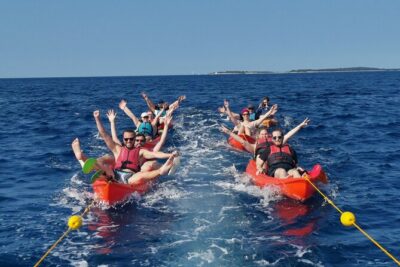
BOAT & KAYAK! Sea Adventure – Snorkeling & Cliff Jumps
Read our review →
National Park Brijuni Island Visit & Dolphin Cruise
Read our review →Browse the lists this tour appears in