
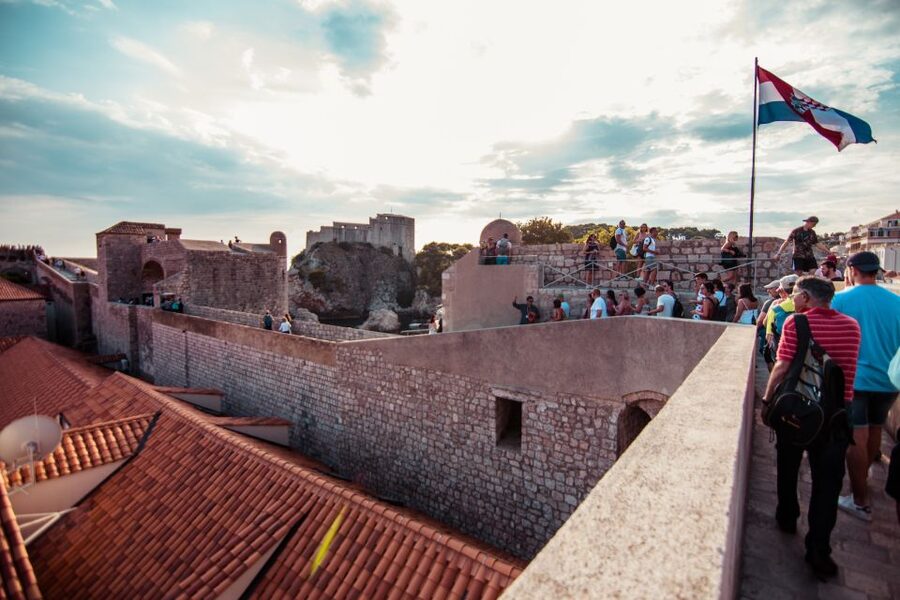
Reviewed · DUBROVNIK TOURS
Dubrovnik: Walls and Wars Walking Tour
Dubrovnik’s walls make far more sense when you learn why each tower, gate, and fortress was built. This two-hour walking tour connects the stone defenses with the city’s long fight to remain independent, from medieval threats to the 1991 Homeland War.
I like the panoramic views over the Old Town and harbor, and I like having a local guide explain what you are seeing instead of simply walking past it. Guides such as Davor, Goran, Andreja, and Darko are praised for clear storytelling, humor, and personal insight into Croatia’s recent past.
The main drawback is the price of admission. The €40 adult city walls ticket is not included in the $29 tour fee, so this is not a low-cost outing once you add everything together. The walk also includes many stairs, little shade, and exposed sections that can be hard in hot or windy weather.
Key points to know before you book
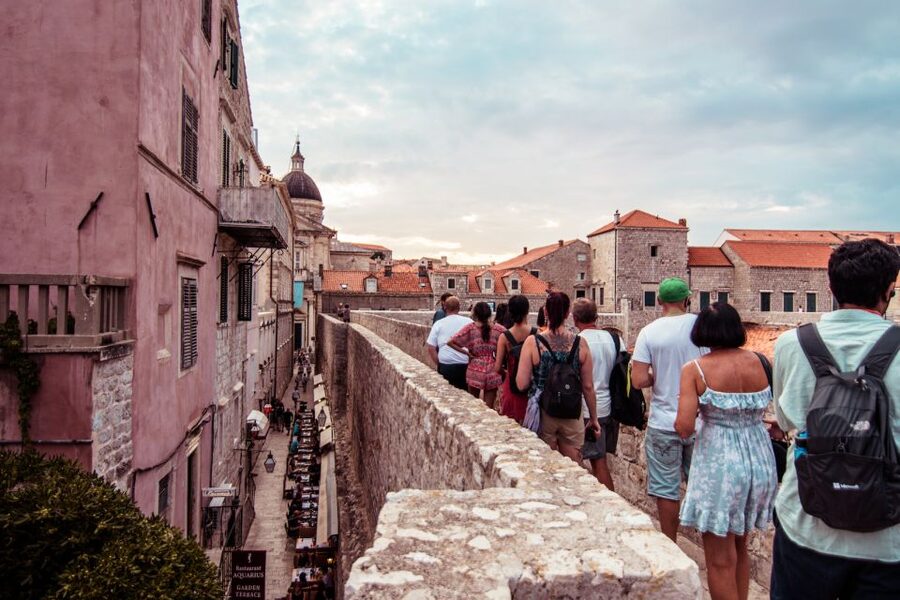
- The city walls ticket costs extra: Adults pay €40, and children aged 7 to 18 pay €15. A Dubrovnik Pass may also cover entry.
- Expect a serious stair workout: One guide estimated about 1,150 steps, with steep sections and no wheelchair access.
- The history covers more than medieval Dubrovnik: You will hear about the republic’s diplomacy, military defenses, earthquakes, occupying forces, and the 1991 war.
- Headsets make a difference: The wall is long and narrow, so the audio equipment helps you hear the guide while walking in a line.
- Late-day departures can help: The 6 p.m. outing has been praised for cooler temperatures and lighter crowds, though shade remains limited.
- You finish near the Old Town port: The tour begins at Brsalje 8 by the Pile bus stop, then ends near the port.
Why Dubrovnik’s walls deserve a guided walk
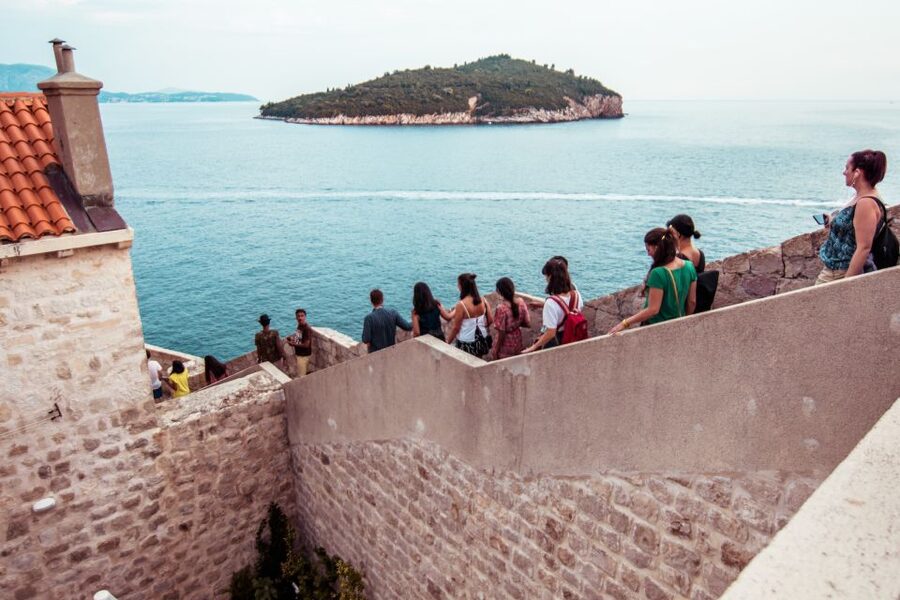
Dubrovnik’s fortifications are not just a photo platform wrapped around the Old Town. They explain how a small maritime republic protected its trade, people, and political freedom while larger powers pressed in from every direction.
The Republic of Ragusa, as Dubrovnik was known for centuries, relied on negotiation as much as stone. Its leaders used diplomacy, commercial skill, and careful alliances to survive beside powerful states and armies. The walls gave those political choices a physical backbone. They helped the city resist attack and showed potential enemies that Dubrovnik would not be easy to take.
Walking alone, you will see thick masonry, red roofs, the sea, and a series of towers. With a guide, those parts become connected. You learn why a tower faces one direction, why a fortress sits outside the main walls, and how the port shaped Dubrovnik’s fortunes.
That context is the real reason to pay for a tour. The wall admission is already expensive, and walking it without explanation can feel like buying an impressive view with no story attached. The guide supplies the story.
More walking tours in Dubrovnik:
- Dubrovnik: Old Town Walking Tour
★ 4.8 · 5,174 reviews - Dubrovnik Discovery Old Town Walking Tour
★ 5.0 · 4,458 reviews - Dubrovnik: Game of Thrones Walking Tour
★ 5.0 · 1,732 reviews
Meeting at Pile and climbing onto the fortifications
The meeting point is at Brsalje 8, beside the Pile local bus stop, the final bus stop before Dubrovnik’s Old Town. Look for the Dubrovnik Walks team holding orange umbrellas.
This is a useful location because Pile is a familiar arrival point for anyone coming by local bus or approaching the Old Town from outside the walls. Give yourself enough time to find the orange umbrellas, especially if the area is crowded.
The tour includes a live English-speaking guide and headset devices. The headsets matter here. Dubrovnik’s walls are long, narrow, and often busy, and the group can stretch out when people stop for photographs. A headset lets you keep moving while still hearing the explanation.
The first challenge is the climb. This is not a flat stroll through town. You will ascend stairs to reach the fortifications, then continue over uneven sections with more staircases along the route. A past participant described roughly 1,150 steps, which gives you a useful sense of the effort involved.
Wear firm, comfortable shoes. Bring water, a hat, and a credit card for the additional entrance fee. In summer, choose light clothing and consider a later starting time if one is available.
Revelin Fortress and Dubrovnik’s defensive planning
Revelin Fortress is one of the important defensive sites discussed on the route. Its position helps explain how Dubrovnik protected the approaches to the city and watched for threats coming from land and sea.
The value of this stop is not only the building itself. Your guide can show you how Dubrovnik’s defenses worked as a system. Walls, towers, gates, and detached forts were not separate curiosities. They supported one another, controlled access, and gave defenders better positions from which to watch and respond.
This is where the tour’s military focus becomes practical. Instead of hearing a long list of dates, you can begin to understand the city’s defensive logic. A fortress was placed where it could cover a weak point. A tower gave defenders height. A gate could be controlled, closed, or reinforced.
The route also helps you see why Dubrovnik was important. Its harbor connected the city to trade routes across the Adriatic and beyond. Protecting the port meant protecting the republic’s income and independence.
Minceta Tower and the highest views

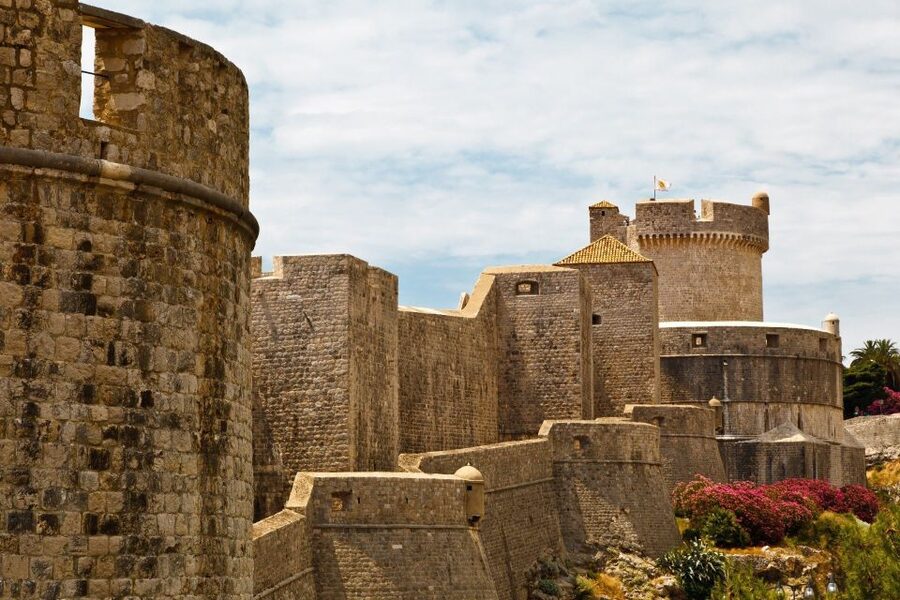
Minceta Tower is one of the most recognizable defensive structures on Dubrovnik’s walls. It is also a strong point for views across the Old Town and toward the surrounding coast.
The height is impressive, but it comes with a price: more stairs and exposure. You may find narrow passages and crowded viewing points, particularly at busy times. Keep close enough to the group to maintain headset reception, then take your photographs when the guide pauses.
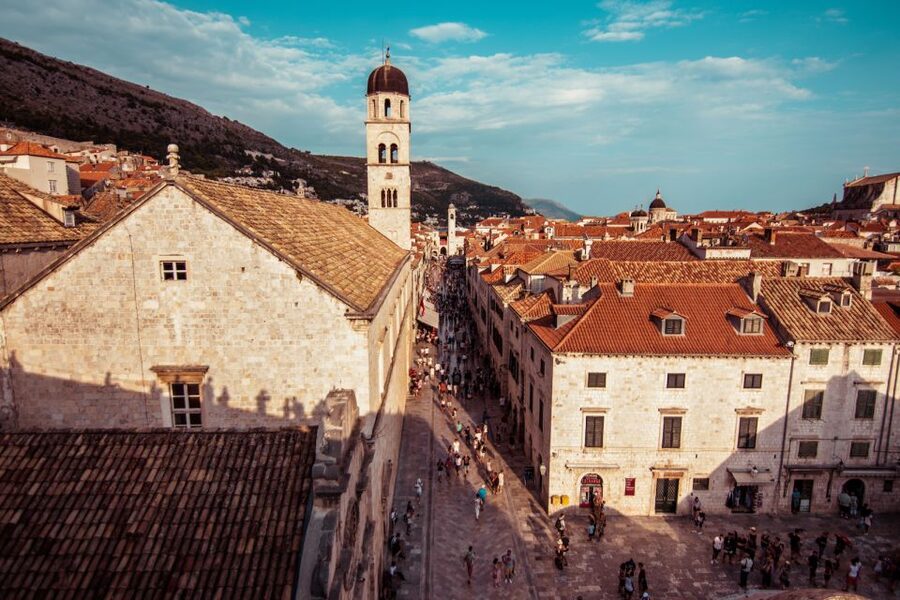
This is one of the places where the physical setting supports the history lesson. From above, you can see the compact shape of the Old Town, the dense red-tiled roofs, the harbor, and the line of the fortifications. The city’s position becomes easier to grasp from this height.
Guides have been praised for using photographs and visual aids to explain earlier events. That can be especially helpful when discussing damage, rebuilding, or changes to the walls over time. You are not simply looking at old stone. You are seeing a defense system that has been repaired and preserved through earthquakes, war, and changing political control.
A few more Dubrovnik half-days to weigh up
- Blue Cave Small-Group Boat Tour from Dubrovnik
★ 5.0 · 9,360 reviews - Full-Day Dubrovnik Elaphite Islands Cruise with Lunch and Drinks
★ 5.0 · 8,823 reviews - Dubrovnik: Epic Game of Thrones Tour + Lokrum & Saver Option
★ 4.9 · 5,995 reviews - Dubrovnik: Elaphiti Islands Full-Day Cruise with Lunch
★ 5.0 · 5,938 reviews
Lovrijenac Fortress and the outer defense line
Lovrijenac Fortress is vital to understanding why Dubrovnik’s defenses extended beyond the main wall circuit. Located outside the Old Town, it helped guard the western approach and the sea route toward the city.
Its position shows the basic rule of fortress design: protect the vulnerable approach before an enemy reaches the main settlement. The fortress also gives the guide a chance to explain how Dubrovnik’s leaders used geography. Cliffs, water, gates, and elevated positions all worked with the masonry.
You may not spend the same amount of time inside every structure, but the guide points out landmarks that shaped the city’s survival. The tour is best understood as a connected walk through a defensive plan, not as a series of unrelated photo stops.
The views from this part of the route are another reward. You will look back toward the Old Town from outside its main enclosure, which gives you a different angle from the wall-top views. The contrast helps explain how the city presented itself to the sea and to possible attackers.
From medieval threats to the 1991 Homeland War

The name of this tour matters. It is about walls and wars, not only medieval architecture.
Guides discuss Dubrovnik’s political struggles, shifting control, and the 1991 Homeland War. Some guides, including Davor and Goran, have personal or family connections to that recent period. Andreja has been praised for explaining the war while remaining attentive to the group’s need for rest and questions.
This part can make the tour more serious. Dubrovnik is often presented as a postcard city, but its modern past includes bombardment and civilian hardship. Hearing about the 1991 attacks while standing among the fortifications gives the subject a physical setting. You can consider both the age of the walls and the fact that they remained part of a living city during a modern conflict.
The quality of this section depends partly on your guide. The strongest guides keep the history direct and personal without turning the walk into a lecture. Goran and Davor have been singled out for combining facts with humor and personal perspective. That balance helps keep two hours engaging, especially when the heat and stairs begin to take their toll.
What the views are worth
Dubrovnik’s walls offer the city from several angles, and the variety keeps the walk interesting. From above, you can see the Old Town’s tight streets and roofs. Looking outward, you get broad views of the harbor and coast. Looking inward, you can understand how closely the defenses were tied to daily life.
The photographs are excellent, but the views alone are not the whole value. Dubrovnik’s wall entrance fee is high, so you want more than a quick circuit and a few pictures. A guide helps you notice details you might otherwise miss, such as the relationship between a tower and a gate or the way the port sits beneath the fortifications.
The route is exposed, though. Several people found hot weather difficult, and one report describes conditions around 34°C with more than one person needing to stop from exhaustion. Wind and rain can also affect the walk, although a little bad weather may make the stonework and harbor feel especially dramatic.
There is little shade on the walls. If you can choose your time, early morning or the 6 p.m. departure may be more comfortable than the hottest middle part of the day. Still, availability varies, so check the start times before booking.
Is the extra ticket worth the cost?
The advertised tour price is $29 per person, but the required wall admission changes the calculation. Add €40 for each adult, or €15 for a child aged 7 to 18. You may also use a Dubrovnik Pass if it includes city walls access for your chosen date and plan.
That combined cost is high compared with an ordinary walking tour. You should know this before arriving, since several people were surprised to learn about the separate admission at the meeting point.
The value improves if you already intend to walk the walls. You are paying for a licensed guide, a structured route, headsets, and explanations that turn the fortifications into a story. One two-hour evening group found that the added guidance made the expensive wall entry feel worthwhile.
I would not recommend paying the admission just to follow a guide passively. Ask questions. Look closely at the towers. Use the pauses to take in the view, and listen for the connections between Dubrovnik’s trade, diplomacy, and defense. That is how the tour earns its fee.
Who will enjoy this walk, and who should skip it
This tour suits you if you want a clear introduction to Dubrovnik’s political and military past, enjoy guided walking, and can manage sustained stairs. It is particularly useful on a first visit because it gives the Old Town a strong historical framework.
It also suits anyone interested in the 1991 Homeland War. The guide’s local perspective can add something that a purely architectural tour may not cover.
You should think twice if you have low fitness, heart or respiratory problems, mobility limitations, vertigo, or a fear of heights. The tour is not suitable for wheelchair users, baby strollers, or pregnant women, and it is specifically not recommended for people over 80 years old.
The route may also be a poor match for anyone who dislikes heat or exposed heights. There is little shade, and the walls can be windy. If you are unsure, the operator has sometimes moved people who could not manage the walls to an Old Town tour instead, but you should not rely on that as a guaranteed alternative.
Practical details that make the walk easier
Plan to arrive at the orange umbrellas by the Pile bus stop. The tour finishes near the Old Town port, so you can continue toward the harbor after the walk rather than returning to the starting point.
Carry water and wear shoes with a good grip. A hat is useful in direct sun, and a credit card is needed if you are buying the separate wall ticket at the entrance.
You cannot use baby strollers on the tour, and video recording is not allowed. The tour is in English, and the headsets help you follow the guide when the group spreads along the wall.
Free cancellation is available up to 24 hours before the start for a full refund. You can also reserve now and pay later, which helps if your Dubrovnik schedule depends on weather or cruise traffic.
Should you book the Walls and Wars Walking Tour?
I would book this tour if you already plan to walk Dubrovnik’s walls and want the fortifications to mean more than beautiful stone and sea views. The guides are the main strength. Davor, Goran, Andreja, Darko, and others have been praised for clear explanations, humor, thoughtful answers, and personal connections to Croatia’s recent past.
I would skip it if you cannot handle steep stairs, heights, heat, or a long exposed walk. I would also compare the total cost with a Dubrovnik Pass before booking, since the $29 fee does not include the required wall admission.
For a fit visitor who wants medieval defenses, political history, and the story of the 1991 war in one focused outing, this is a strong choice. Arrive prepared for the climb, choose a cooler time if possible, and treat the guide as the reason to go, not just an accessory to the view.
FAQ
How long does the Walls and Wars Walking Tour last?
The tour lasts two hours.
What language is the tour conducted in?
The live tour guide speaks English.
Is the Dubrovnik City Walls ticket included?
No. The city walls entrance ticket is separate from the $29 tour price.
How much is the separate wall entrance ticket?
The listed price is €40 per adult and €15 per child aged 7 to 18.
Can I use the Dubrovnik Pass for entry?
Yes. The wall ticket can be purchased at the entrance, in advance, or with the Dubrovnik Pass.
Where does the tour meet?
Meet at Brsalje 8 by the Pile local bus stop. Look for Dubrovnik Walks representatives with orange umbrellas.
Where does the tour finish?
The tour ends near the Old Town port in Dubrovnik.
Are headsets provided?
Yes. Headset devices are included so you can hear the English-speaking guide more clearly.
Is the tour suitable for wheelchair users?
No. The tour includes stairs and is not suitable for wheelchair users or people with mobility impairments.
What should I bring?
Bring comfortable shoes, a hat, water, and a credit card.
Just added around Dubrovnik
- Full- Day Private Speedboat Tour in Dubrovnik on Elaphiti Islands★ 5.0 · 21 reviews
- Wine Lover’s Tour of Peljesac Peninsula★ 5.0 · 150 reviews
- Wine tour peninsula Pelješac★ 5.0 · 3 reviews
- Elaphiti Islands Private Dubrovnik Boat Unique Experience★ 5.0 · 10 reviews
- Dubrovnik at War 1991-1992 Private Walking Tour★ 5.0 · 4 reviews
- PRIVATE Wine Tour to Konavle country side★ 5.0 · 11 reviews
- Walls of Liberty: A Self-Guided Audio Tour of Dubrovnik★ 3.5 · 3 reviews
- Parasailing in Cavtat★ 5.0 · 62 reviews
Dubrovnik Tours, compared.

Blue Cave Small-Group Boat Tour from Dubrovnik
Read our review →
Full-Day Dubrovnik Elaphite Islands Cruise with Lunch and Drinks
Read our review →
Epic Game of Thrones Tour + Lokrum & Saver Option
Read our review →


The Original Game of Thrones Tour & Lokrum Option
Read our review →
Dubrovnik Game of Thrones Tour & Optional Lokrum Island Visit
Read our review →
Elaphite Island Cruise w/ Drinks & Optional Lunch
Read our review →Browse the lists this tour appears in