
Reviewed · DUBROVNIK TOURS
Dubrovnik Discovery Old Town Walking Tour
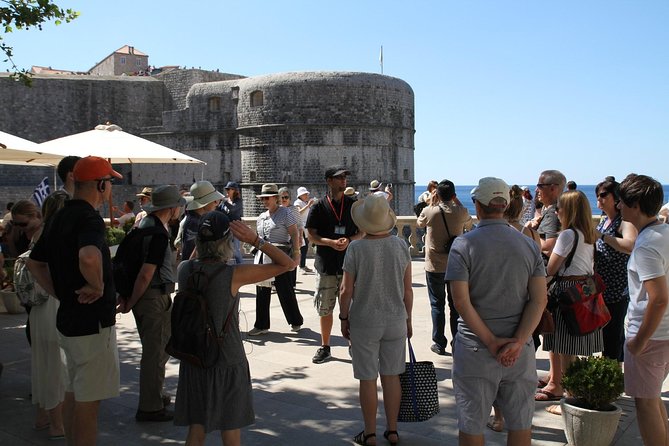
Dubrovnik’s story comes alive on foot, from the white limestone streets and massive walls to the small details around Luza Square. This 90-minute walk takes you from Pile Gate through the Old Town, covering landmarks such as Rector’s Palace, Sponza Palace, Onofrio’s Fountain, and the Cathedral of the Assumption.
I like the easy-to-find meeting point and the choice of departure times. I also like the guides’ personal approach. Branko, Lana, Davor, Alex, and Goran are all praised for clear storytelling, humor, and local insight, including candid discussion of the 1990s war and daily life in Dubrovnik.
The main consideration is pace. One guide was said to walk quickly through crowded streets, and one review found the tour more talk-heavy than site-heavy. Bring good shoes, especially in rain, when Dubrovnik’s polished stone can become slippery.
Key points to know before booking
- A compact introduction to Dubrovnik: The tour covers about 1,400 years of history in roughly an hour and a half.
- Strong local guiding: Branko, Lana, Davor, Alex, and Goran are among the guides praised for humor, clear English, and personal stories.
- Major landmarks from outside: You see Rector’s Palace, Sponza Palace, the Cathedral, Franciscan Monastery, and several fountains without paying separate admission.
- Simple meeting point: Look for the orange umbrella at Brsalje ul. 8, near Pile Gate and Sky Bar.
- Headsets for larger groups: Audio equipment is used when four or more people are on the tour.
- Good value at $24.19: You pay for a focused orientation walk, not attraction entry or a full-day sightseeing program.
Why a walking tour is the right first look at Dubrovnik
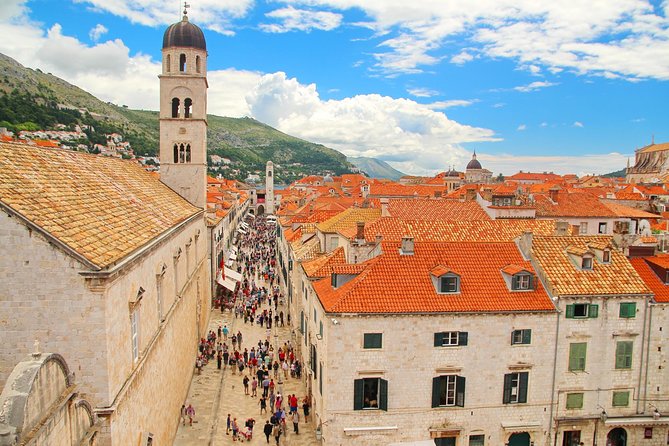
Dubrovnik can feel confusing at first. The Old Town is compact, but its polished lanes, stairways, alleys, squares, and layers of stone architecture can blur together when you explore without context.
This walk gives you a useful framework. Instead of seeing a church, palace, or fountain as an attractive old building, you learn how each fitted into the city’s political, religious, and practical life. You also hear how Dubrovnik grew from an Adriatic port into a small but powerful maritime republic.
The tour does not take you inside every building. That is important. You are mainly viewing the landmarks from the street while your guide explains what you are seeing. For a first visit, this is often the best use of 90 minutes because you can return later to places that catch your interest.
The format also keeps the day manageable. Dubrovnik’s heat, crowds, and stone streets can wear you down, especially during the warmer months. A short guided walk gives you orientation without taking over your entire schedule.
More Old Town Walking Tours in Dubrovnik
- Dubrovnik: Old Town Walking Tour
★ 4.8 · 5,174 reviews - Dubrovnik Old Town History Walking Tour
★ 5.0 · 1,684 reviews - Dubrovnik Combo: Old Town & Ancient City Walls
★ 5.0 · 1,019 reviews
Meeting at Brsalje and entering through Pile Gate
The meeting point is at Brsalje ul. 8, near the Pile area, in front of Sky Bar. Look for the orange umbrella, since the exact meeting spot may not be obvious from the address alone.
The first gathering takes place around Brsalje Square. Your guide introduces the route and explains the broad themes of the walk before leading the group toward the Old Town. This opening takes about five minutes, so you are not left waiting through a long formal briefing.
Pile Gate is the main western entrance to Dubrovnik’s Old Town. It is a natural place to begin because it shows how the city controlled movement in and out. It also gives you an immediate sense of the fortified setting before you enter the narrow streets.
The gate itself is a brief stop, not a full architectural lecture. The value comes from seeing the transition from modern Dubrovnik into the old fortified city. Once you pass through, the tone changes quickly: traffic drops away, stone walls close in, and the long pedestrian route of the Stradun opens ahead.
Franciscan Monastery, Stradun, and Onofrio’s Fountain
Inside the Old Town, the route passes the Franciscan Monastery and continues along the main streets. The monastery is one of the first reminders that Dubrovnik’s story is not only about walls and wars. Religious institutions shaped education, daily routines, and civic life here.
You then encounter Orlando’s Column, a familiar monument on the Stradun. The column reflects Dubrovnik’s long tradition of independence and sovereignty. Your guide uses it to explain how a small coastal republic protected its freedom and public identity.
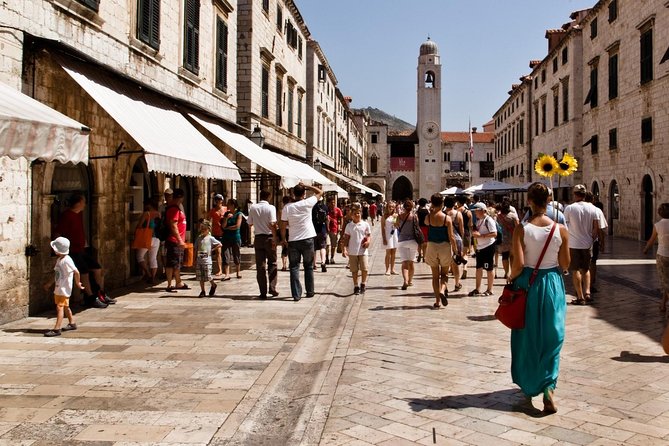
The Stradun is Dubrovnik’s main artery, and the walk helps you read it as more than a pretty limestone promenade. The broad street connects the western and eastern entrances and gathers many of the city’s most important civic buildings. It is also one of the busiest areas, so stay close if your group is moving quickly.
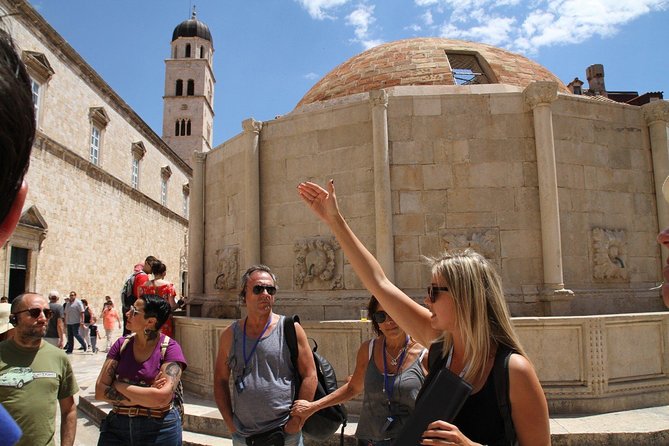
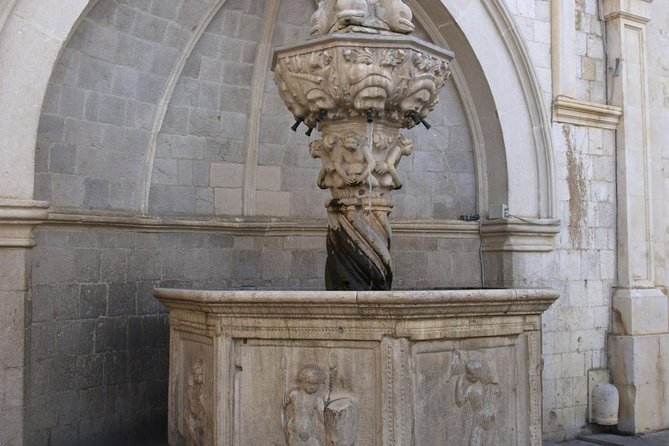
Onofrio’s Fountain offers one of the tour’s most useful practical history lessons. Built in 1438, it marked the end of an aqueduct stretching about 8 miles, or 12 kilometers, to bring water into the city. A fountain can look like a simple decorative stop, but here it explains how Dubrovnik supported life inside its walls.
This is also where the tour’s street-level format works well. You can study the fountain, hear the story, and continue walking without spending time on a formal museum visit.
Rector’s Palace and the machinery of power
Rector’s Palace is one of the key stops. It served as the seat of Dubrovnik’s rector, making it central to the city’s government and public life.
The guide explains the role of the rector and places the building within Dubrovnik’s system of rule. This is particularly helpful if you know little about the former maritime republic. The city’s power was not based only on grand armies. It relied on diplomacy, trade, law, and careful management of its position on the Adriatic.
The tour does not include a separate admission to the palace. You see it as part of the Old Town route and learn about its importance from outside. If you later decide to visit the interior, you will already have a clearer idea of why it matters.
I would pay attention here if you enjoy political history. The stop gives the tour more substance than a simple list of buildings. You begin to see Dubrovnik as an organized city-state with a distinctive civic system, not merely a medieval port surrounded by walls.
More old town walks in Dubrovnik:
- Dubrovnik: Blue Cave Tour with Panoramic Old Town View
★ 4.9 · 884 reviews - Dubrovnik: Old Town Walking Tour
★ 4.9 · 792 reviews - Dubrovnik: Old Town & City Walls Guided Tours Combo
★ 4.8 · 697 reviews - Dubrovnik Cable Car Ride, Old Town Walking Tour plus City Walls
★ 4.5 · 685 reviews
Sponza Palace and the Cathedral of the Assumption
Sponza Palace adds another piece to the city’s commercial and administrative story. It is one of the main buildings around Luza Square and helps show how Dubrovnik balanced trade, public business, and civic ceremony.
The Cathedral of the Assumption brings a different mood. The present baroque church was built after the devastating earthquake of 1667, an event that changed much of Dubrovnik’s architecture. The stop lets your guide connect the city’s older medieval fabric with later rebuilding.
That combination is one of the walk’s strengths. You are not seeing a perfectly preserved city frozen in one period. You are seeing a place shaped by earthquakes, political change, war, restoration, and ordinary use.
Guides also bring the modern past into the conversation. Branko is praised for discussing the 1990s war, including its effect on his own family, while other guides add personal experiences and present-day details. That material can be sensitive, but it gives the city a human scale that stone buildings alone cannot provide.
Luza Square and the main cluster of landmarks
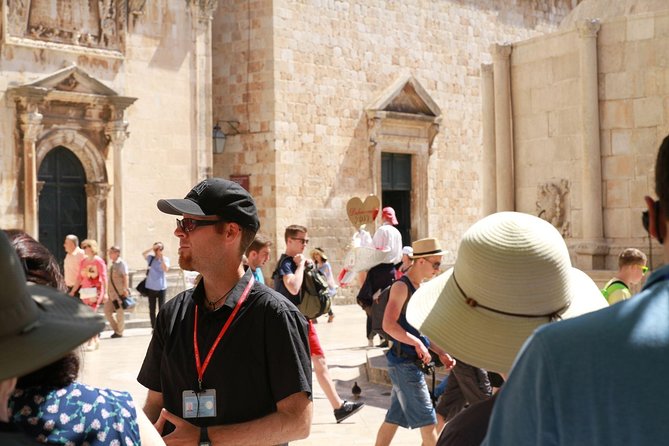
Luza Square is the central sightseeing pause, with about ten minutes devoted to several important sights. From here, the guide discusses St. Blaise’s Church, Orlando’s Column, Sponza Palace, the Small Onofrio’s Fountain, and the bell tower.
Because so much is concentrated in one square, this part can feel like a quick visual summary of Dubrovnik. You get a useful explanation of how religious, commercial, and civic buildings faced one another in the city center.
St. Blaise’s Church is tied to Dubrovnik’s civic identity, while the bell tower helps define the square’s appearance. The Small Onofrio’s Fountain gives you a second look at the city’s historic water system, this time on a smaller urban scale.
This is a good point to listen for connections among the buildings rather than trying to memorize every date. The guide’s job is to show how the square functioned as a public space, not simply to recite architectural facts.
One practical issue is crowding. Luza Square can be busy, and a guide who walks quickly may be harder to follow. If you have mobility concerns or prefer a slow pace for photographs, stay near the front and tell the guide early.
What the guides add to the route
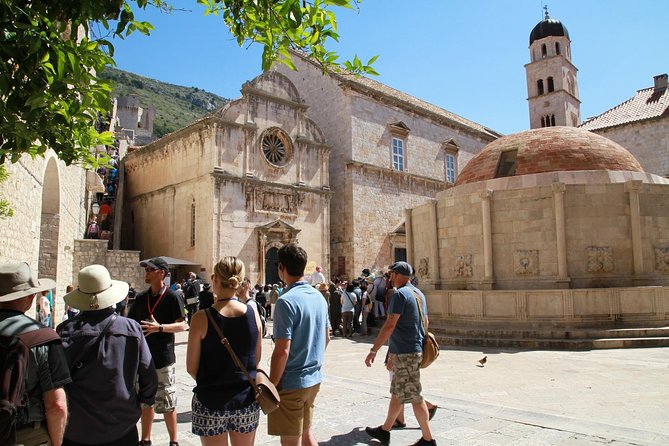
The strongest part of this tour is the guiding. The company uses licensed local guides approved by Croatia’s Ministry of Tourism, and the individual guides named in the feedback have distinct strengths.
Branko is repeatedly praised for humor, warmth, and an engaging way of explaining the past. His approach seems especially useful if you want more than dates and rulers. He connects ancient history, recent conflict, and present-day life.
Lana is praised for clear communication, personal stories, and small fun facts. Alex is described as passionate about local culture and good at bringing history alive. Davor is noted for experience, humor, and the ability to pack a lot into a short route. Goran is also praised for wit and strong command of the city’s story.
Your actual guide depends on the departure, so you should not book expecting one specific person unless the booking details confirm it. Still, the range of names and consistently positive comments suggest that the guiding team is the main reason this tour earns its strong 4.9 rating and 99 percent recommendation rate.
The tone is generally friendly rather than academic. That suits most people who want history explained in plain English. If you prefer long periods for quiet photography or independent wandering, the guided pace may feel less relaxed.
Group size, headsets, and the feel of the walk
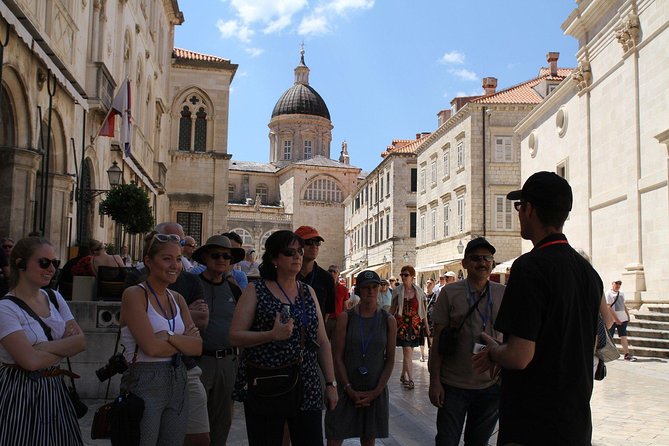
The tour requires at least four people to operate and can accept up to 99 participants. That upper limit is large for a walking tour, although the actual group size can vary by date.
For groups of four or more, audio headsets are provided. This is useful in crowded lanes, where a guide’s voice can disappear into street noise. It also means you can keep your eyes on the buildings instead of leaning toward the guide.
Large groups can still affect the experience. You may need to gather at each stop, and the guide cannot give every person the same amount of personal attention. One account specifically found that a guide was not always aware of where everyone was and moved quickly in crowded areas.
I would treat this as a structured overview rather than a private walk. Stay close, keep track of the orange umbrella or guide, and avoid drifting behind while taking photographs. The route is short, but the streets are busy and the stone surface demands attention.
The walking itself is not described as strenuous, and most people can participate. Service animals are allowed, and the meeting point is near public transportation. Wear shoes with reliable grip, especially if rain is in the forecast.
Is $24.19 a fair price?
At $24.19 per person, this is a reasonable price for a licensed local guide and a focused introduction to Dubrovnik’s Old Town. You are paying for interpretation and orientation, not for entry to Rector’s Palace, the cathedral, or another paid attraction.
The value is highest on a first visit. In 90 minutes, you cover the main western entrance, the Stradun, several important squares, palaces, churches, fountains, and a broad sweep of local history. Doing the same route alone would cost less, but you would miss the connections among the sights.
The price is less compelling if you have already taken another detailed Old Town tour or prefer to set your own pace. This walk follows a fixed route and gives limited time for interiors, long photo stops, or quiet exploration.
I see it as a good opening activity. Use the tour to learn the city’s layout, then spend the rest of your stay returning to the buildings and squares that interested you most.
Choosing the best departure time
Several departure times are available, so you can fit the walk around your schedule. A morning departure is useful if you want to orient yourself before sightseeing elsewhere.
An evening option can offer a different mood. One late-September walk ended around sunset, allowing the group to see Dubrovnik lit up as daylight faded. That timing may be especially appealing if you want to combine history with a change in atmosphere.
The data does not promise a particular sunset or lighting condition, so treat that as a seasonal possibility rather than a guaranteed feature. Your main choice should be based on heat, crowd levels, and the rest of your day.
Rain is a real consideration. The tour operates only in suitable weather, and cancellations caused by poor weather come with the option of another date or a full refund. If the walk does go ahead in rain, take care on the limestone streets, which can become slippery.
Who should book this Dubrovnik walk?
I would recommend it to first-time visitors, cruise passengers with a short stay, couples wanting a quick cultural introduction, and anyone who wants local context before exploring alone.
It also suits people who enjoy history presented through stories. The guides cover ancient Dubrovnik, its years as a prosperous port, the city’s culture, the earthquake of 1667, and the war of the 1990s. That range gives you a stronger sense of continuity than a route focused only on medieval buildings.
Fans of Game of Thrones may also enjoy the walk, since the Old Town’s famous streets and landmarks are familiar from the series. The tour is not presented as a dedicated filming-location walk, so book it for Dubrovnik’s history first.
I would hesitate if you need a private pace, want extensive interior visits, or dislike group movement through crowded streets. The route can also feel talk-heavy if your ideal tour is mainly about stopping for photographs.
Should you book the Dubrovnik Discovery Old Town Walking Tour?
Yes, if you want a short, affordable orientation led by a local guide. The best reasons to book are the clear route, the strong guiding team, the useful discussion of both old and recent history, and the chance to see Dubrovnik’s main sights without spending half a day.
Book it early if your schedule is tight, since the experience is commonly reserved about three weeks ahead. Confirm the meeting instructions, look for the orange umbrella, wear shoes with grip, and stay close to the guide in crowded areas.
Skip it only if you already know the Old Town well or want a private, slower walk with lots of time inside museums and churches. For most first visits, $24.19 buys a practical start and enough context to make the rest of Dubrovnik easier to understand.
FAQ
Where does the Dubrovnik Old Town walking tour begin?
It begins at Dubrovnik Walks, near the orange umbrella at Brsalje ul. 8 in Dubrovnik’s Pile area, in front of Sky Bar.
Where does the tour end?
The listed meeting point is also shown as the end point, but the tour ends near the Old Town port. The map may continue to display the original meeting location.
How long does the tour last?
The walking tour lasts approximately 1 hour and 30 minutes.
What language is the tour offered in?
The tour is offered in English.
Are attraction admission tickets included?
No separate attraction admission is included. The listed stops are viewed as part of the walking route, including Rector’s Palace, Sponza Palace, the cathedral, fountains, and squares.
Are audio headsets provided?
Audio headsets are used for groups of four or more people.
Can I cancel for a full refund?
Yes. You can cancel at least 24 hours before the local start time for a full refund. Changes or cancellations made less than 24 hours before the start time are not accepted for a refund.
More Walking Tours in Dubrovnik
- Dubrovnik: Game of Thrones Walking Tour
★ 5.0 · 1,732 reviews - Dubrovnik: City Walls Early Morning or Sunset Walking Tour
★ 4.8 · 1,523 reviews - Dubrovnik: Ancient City Walls & Wars Walking Tour
★ 5.0 · 1,270 reviews - Dubrovnik: Game of Thrones Walking Tour
★ 4.9 · 981 reviews
Just added around Dubrovnik
- Full- Day Private Speedboat Tour in Dubrovnik on Elaphiti Islands★ 5.0 · 21 reviews
- Wine Lover’s Tour of Peljesac Peninsula★ 5.0 · 150 reviews
- Wine tour peninsula Pelješac★ 5.0 · 3 reviews
- Elaphiti Islands Private Dubrovnik Boat Unique Experience★ 5.0 · 10 reviews
- Dubrovnik at War 1991-1992 Private Walking Tour★ 5.0 · 4 reviews
- PRIVATE Wine Tour to Konavle country side★ 5.0 · 11 reviews
- Walls of Liberty: A Self-Guided Audio Tour of Dubrovnik★ 3.5 · 3 reviews
- Parasailing in Cavtat★ 5.0 · 62 reviews
Dubrovnik Tours, compared.

Blue Cave Small-Group Boat Tour from Dubrovnik
Read our review →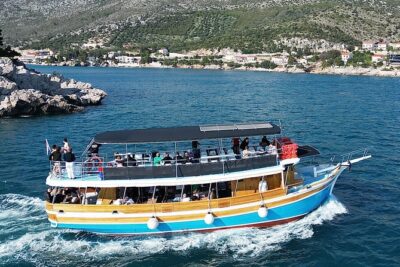
Full-Day Dubrovnik Elaphite Islands Cruise with Lunch and Drinks
Read our review →
Epic Game of Thrones Tour + Lokrum & Saver Option
Read our review →
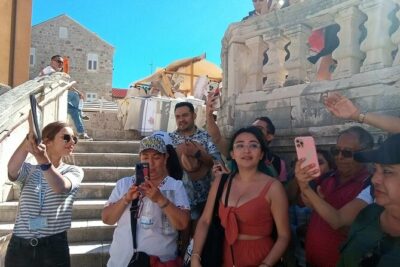
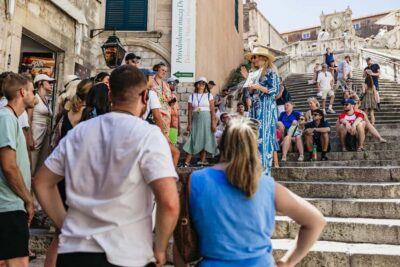
The Original Game of Thrones Tour & Lokrum Option
Read our review →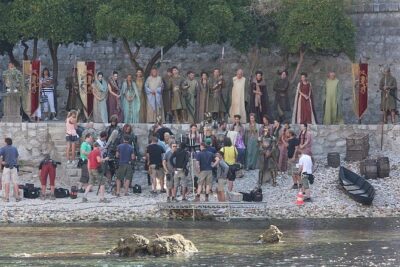
Dubrovnik Game of Thrones Tour & Optional Lokrum Island Visit
Read our review →
Elaphite Island Cruise w/ Drinks & Optional Lunch
Read our review →Browse the lists this tour appears in