
Reviewed · SPLIT TOURS
Evening Group Walking Tour – Split Old City Diocletian’s Pal
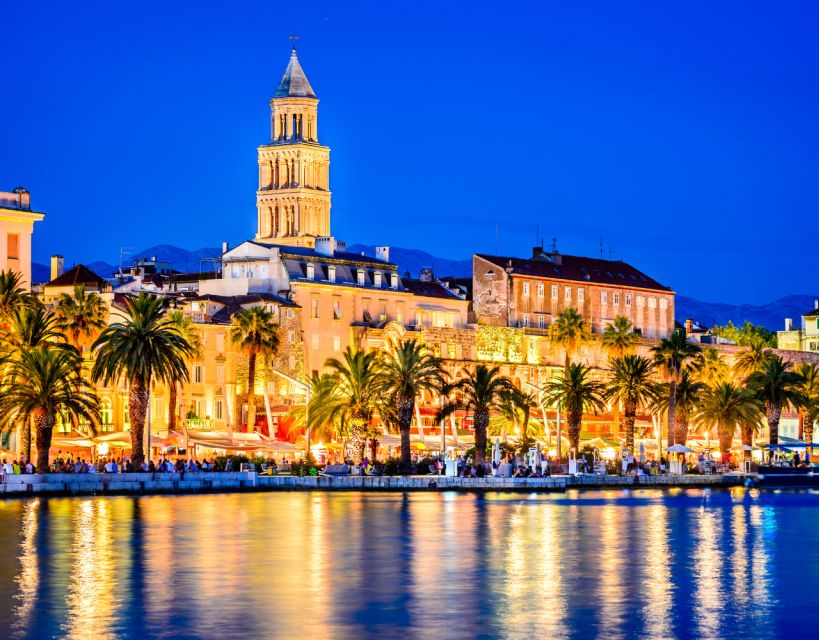
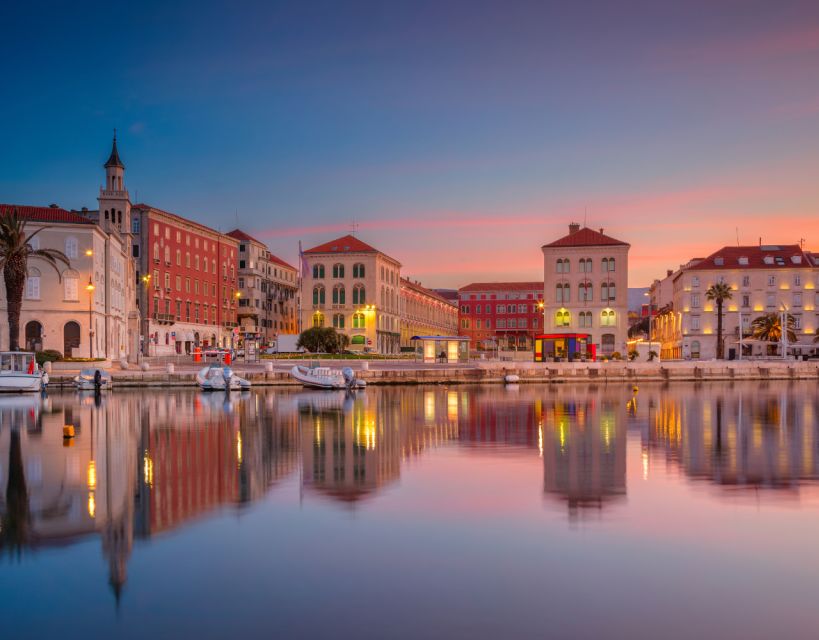
Diocletian’s Palace is not a fenced-off ruin. It is the heart of Split, where Roman walls frame modern streets, cafés, shops, and daily life. This evening walking tour gives you a brisk introduction to that unusual mix, with stops at Peristyle Square, the cathedral, the Temple of St. Jupiter, and the palace cellars.
I like the cooler timing and the chance to see the old city in a calmer, more romantic mood. I also like the price: at $21 per person, it is a sensible way to get your bearings before exploring on your own. The main drawback is the short length. One hour, or about 70 minutes as described, is not enough to treat every part of the palace in much detail.
Key points at a glance

- Evening timing helps in summer: You can avoid the strongest daytime heat while walking through the stone streets.
- The palace is part of modern Split: You see Roman remains mixed into the living city rather than visiting an isolated monument.
- Peristyle Square is the visual centerpiece: This grand open space gives you the clearest sense of the palace’s scale and power.
- The route includes the underground cellars: These lower chambers offer a different view of how the palace was built and used.
- The tour is short and focused: It works well as an introduction, but not as a full study of Split’s Roman and medieval past.
- English delivery can vary: The tour has earned strong marks overall, but one rating noted that fast speech made parts harder to follow.
Why an evening walk suits Diocletian’s Palace
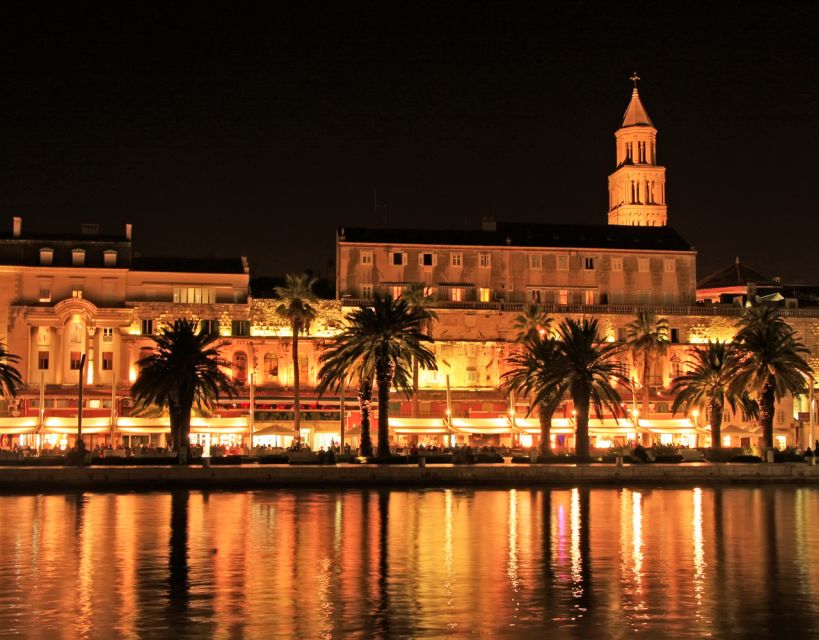
Split can feel hot in summer, especially among pale stone walls that hold the day’s heat. An evening start takes the edge off the weather and gives the old center a softer mood. That matters here because the tour is spent on foot, moving through squares, narrow streets, and open palace spaces.
The timing also changes what you notice. During the day, your attention may be split between heat, crowds, and finding your way. At night, you can focus more easily on the Roman layout and the way modern Split has grown inside it. The evening setting is a good fit if you want a gentle first look rather than a long, demanding sightseeing session.
The tour meets next to the large red sign marked Split. That landmark should be easy to identify, but give yourself enough time to find it in the old center. You will need to arrive ready to walk, since the experience is a guided route rather than a seated talk.
More walking tours in Split:
- Split: Old Town and Diocletian Palace Walking Tour
★ 4.9 · 4,727 reviews - Walking Tour of Split and Diocletian’s Palace
★ 5.0 · 2,588 reviews - Krka Waterfalls tour with Trogir Walking tour and Krka panoramic boat cruise
★ 5.0 · 1,659 reviews
Entering a palace that became a city
Diocletian’s Palace is about 1,700 years old, yet it does not feel like a single preserved building. It became part of Split itself. Streets pass through its former spaces, and the boundary between archaeological site and living neighborhood can be hard to spot at first.
That is where a local guide adds real value. A guide can point out the difference between a Roman remnant, a later addition, and a modern street that follows an older route. Without help, you might see attractive stonework but miss the reason it is there.
The tour is built around the palace and the old part of Split. You are not simply walking from one photo stop to another. The point is to understand how a Roman imperial residence shaped the city that followed. That basic idea is the strongest reason to book this tour early in your stay.
The English guide leads the group through the main highlights and gives historical details along the way. The quality of the delivery appears to depend on the individual guide. One highly rated guide was described as a Split local with a polished script, historical details, and fun facts. Another rating found the guide clear and well informed, while a lower rating reported little enthusiasm and an early departure from the walk. Those mixed comments make the guide’s energy an important consideration.
Peristyle Square, the palace’s grand stage
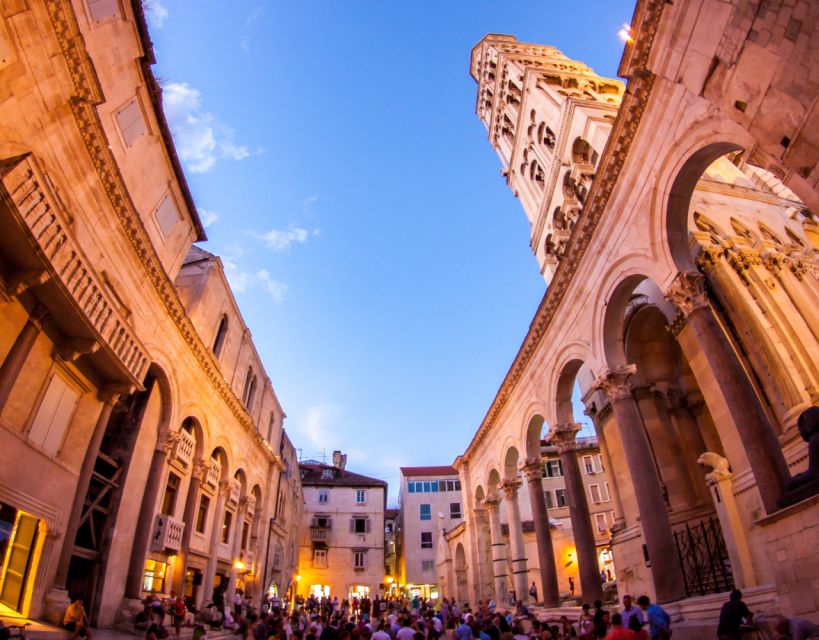
Peristyle Square is likely to be the most memorable stop. This open space forms a strong center for the palace, with tall stone architecture and a sense of ceremony that is easy to picture even after centuries of change.
Your guide can give the square meaning beyond its appearance. It was designed as a formal approach within the imperial palace, not simply as a public plaza. Standing there, you begin to understand how power was displayed through scale, columns, and controlled movement.
The square is also a useful place to orient yourself. From here, the surrounding streets and buildings make more sense, and you can better understand that the palace was a large planned complex rather than one grand hall. I would pay close attention here, since a one-hour tour moves quickly and this is one of the stops that rewards context.
Evening light should make the square pleasant to see, though exact conditions depend on the season and starting time. The tour information does not promise a particular sunset view or private access, so book it for the guided explanation rather than for a special lighting effect.
The underground cellars and Roman construction
The underground cellars add welcome variety to the walk. After seeing the open square and streets above, you move into lower spaces that show the palace from a more practical angle.
These chambers help explain the structure of the complex. They are not just another set of old walls. They reveal how the palace was supported and arranged below street level, giving you a clearer sense of the engineering behind the visible rooms and courtyards.
This stop can be especially useful if you like architecture and city planning. The upper palace may feel fragmented because modern Split occupies it, while the cellars can make the original plan easier to imagine. Still, the tour only has about an hour, so do not expect a long examination of every chamber.
The cellars are one reason this walk offers more than a quick look at the main square. You get both the ceremonial face of the palace and a glimpse of the practical structure beneath it.
More evenings out in Split:
- Split: Illuminated Evening Guided Kayaking Tour
★ 4.8 · 1,622 reviews - Split: Stand Up Paddleboard Night Glow Tour
★ 4.9 · 916 reviews - Split: Sunset Boat Party with Live DJs and Blue Lagoon Swim
★ 4.5 · 638 reviews - Split: Klis Sunset Sightseeing Bus Tour
★ 4.4 · 494 reviews
St. Jupiter’s Temple and the shift from Roman religion
The Temple of St. Jupiter gives the route another layer. It connects the palace to Roman religious life and helps show that Diocletian’s residence was designed around more than private living quarters.
The temple is also a reminder that buildings can change meaning over time. The walk links Roman imperial culture with the later Christian identity of Split, rather than presenting the city as frozen in one period. Your guide’s explanation is important here because the surviving stone alone cannot tell you how the space fit into the palace.
This is the sort of short stop that works well on an introductory walk. You see the place, hear why it matters, and can return later if you want a closer look. If you already have a strong interest in Roman religion or architecture, the brief visit may leave you wanting a longer specialist tour.
Cathedral of St. Duje and Split’s Christian center
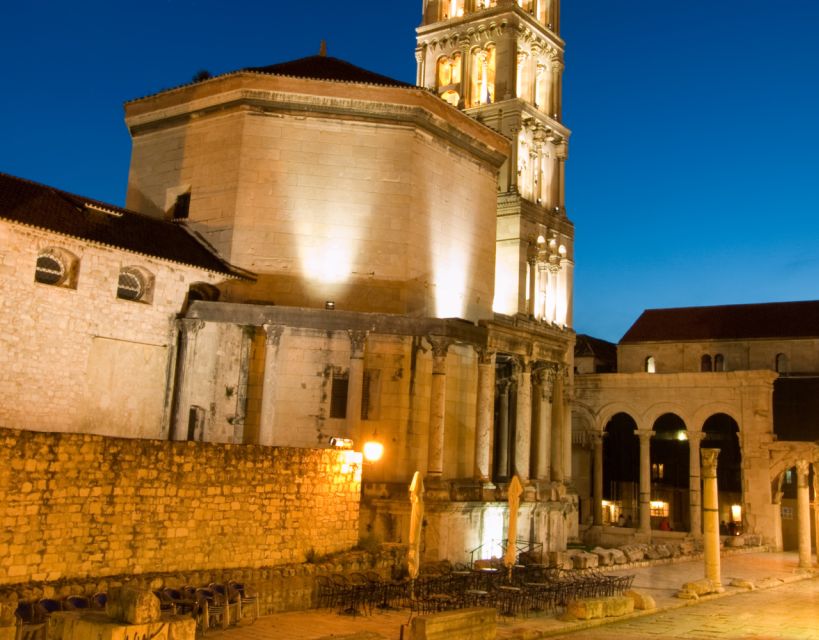
The Cathedral of St. Duje shows how the city’s religious story continued after the Roman period. Its presence within the old palace area makes the contrast especially striking: imperial Roman planning and Christian worship share the same compact urban setting.
The cathedral is one of the tour’s named highlights, but the available information does not promise an interior visit or a separate admission. You should therefore expect to see and discuss it as part of the walking route, not assume that the guide will take the group inside.
That distinction matters when you compare tours. This experience is designed as a broad old-city introduction. It covers several major points rather than spending a long time at one building. I like that variety for a first evening in Split, but you may prefer a longer, cathedral-focused visit if religious art or architecture is your main interest.
What the one-hour format really gives you
The advertised duration is one hour, while the description also refers to a 70-minute walk. In practical terms, plan for a short tour of roughly an hour, with the exact timing depending on the start time and pace.
That is enough to cover the key sights and learn the basic story of the palace. It is not enough to explore every corner, pause for extended questions, or give equal attention to the Roman, medieval, and modern layers of Split.
One rating made this point clearly: the area and period covered are too large for a one-hour tour, and a longer option focused only on the palace might be better. I agree with that assessment. Think of this walk as an orientation, not a final word.
The fast pace can also affect how much you take in. One English-speaking group found that the Croatian guide spoke too quickly, which made parts difficult to follow. If you need slower delivery, ask the guide to repeat or clarify a point. The tour is offered in English, but individual speaking styles will vary.
Is $21 good value in Split?
At $21 per person, this is a fair price for a licensed local guide and a compact introduction to one of Croatia’s major historical sites. You are paying for interpretation and direction, not transport, food, entrance extras, or a long specialist lecture.
The value is strongest if you have just arrived in Split. A short guided walk can help you recognize the palace’s main spaces, understand the city’s layout, and decide where to return later. It can save you from wandering past important details without realizing their importance.
The value is less certain if you already know the palace well or want an in-depth archaeological tour. In that case, the short format may feel rushed, especially when the route includes several different sites.
A 4.7 rating from 37 ratings suggests a strong overall reception, with particularly good marks for clear explanations, local knowledge, historical detail, and engaging delivery. The lower score shows the risk: guide enthusiasm and speaking speed can shape the experience. At this price, the risk is limited, but it is still worth knowing.
Who should book this evening tour?
I would recommend it to first-time visitors who want a quick introduction to Split without giving up a full day. It also suits couples looking for a cooler evening activity and anyone who prefers a guided walk before exploring independently.
Families and older visitors may appreciate the short length, though the tour still involves walking through the old city. The information provided does not give a route difficulty rating or accessibility details, so ask before booking if those points are important to you.
History fans can enjoy the range of stops, but should keep expectations in check. You will get Roman, religious, and city context, yet not a long academic treatment of any one subject.
If you want a relaxed stroll with plenty of time for photographs, this may feel hurried. If you want to cover the main sights in a compact window, the pace is useful.
Smart ways to get more from the walk
Arrive at the large red Split sign with a few minutes to spare. The old center can be confusing, and starting calmly will help you settle into the tour.
Wear comfortable shoes. The route runs through old streets and palace spaces, and the experience is entirely on foot. Evening temperatures are usually the reason to choose this departure, but the stone surfaces still call for practical footwear.
Listen closely at Peristyle Square and in the cellars. Those stops give you the clearest sense of both the palace’s public image and its underlying structure. If the guide moves quickly, ask for a brief repeat rather than letting an important detail pass.
I would also use the tour as a map for the next day. Note the places you want to revisit, then return on your own with more time. That approach makes the short format feel like a useful first chapter instead of an incomplete full visit.
Free cancellation is available up to 24 hours before the start for a full refund, and you can reserve now and pay later. Those terms are useful if your schedule in Split may change.
Should you book it?
Book this tour if you want an affordable evening orientation to Diocletian’s Palace, especially in hot weather. The combination of Peristyle Square, the cellars, St. Jupiter’s Temple, and St. Duje Cathedral gives you a solid first picture of Split’s old center.
Skip it if you want a long, slow study of the palace or need guaranteed slow-paced commentary. The one-hour limit is the key weakness, and guide delivery may vary.
For most first-time visitors, I see it as good-value preparation for exploring Split on your own. Go in expecting a brisk introduction, not an exhaustive tour, and the experience should fit that role well.
FAQ
Where does the tour meet?
The meeting point is next to the large red sign marked Split.
How long does the walking tour last?
The listed duration is one hour. The description also refers to a 70-minute walk, so plan for a tour of roughly one hour.
What language is the tour offered in?
The live tour guide speaks English.
What sights are included?
The route includes Diocletian’s Palace, Peristyle Square, the underground cellars, the Temple of St. Jupiter, and the Cathedral of St. Duje.
Is a guide included?
Yes. A professional licensed guide is included.
What does the tour cost?
The price is $21 per person.
Is the tour held in the evening?
Yes. It is an evening walking tour, designed to help you avoid the strongest summer heat and enjoy the old city in a calmer setting.
Can I cancel for a full refund?
Yes. You can cancel up to 24 hours in advance for a full refund.
Can I reserve now and pay later?
Yes. The activity allows you to reserve your place and pay later.
Just added around Split
- From Trogir, Seget, Okrug: Krka Waterfalls & Šibenik Culture Tour★ 5.0 · 10 reviews
- Krka Waterfalls & Primošten from Trogir, Seget, Čiovo & Kaštela★ 5.0 · 18 reviews
- Island Hopping Boat Excursion with Lunch (Trogir,Blue Lagoon, Šolta)★ 3.5 · 6 reviews
- From Split & Trogir: ATV Quad Tour on Island Čiovo★ 5.0 · 21 reviews
- Slatine – Island Hopping Excursion (Trogir/Blue Lagoon/Shipwreck)★ 4.0 · 24 reviews
- Split: Blue Lagoon Boat Trip with Lunch, Wine and Snorkeling★ 5.0 · 3 reviews
- Split Sunset Stand Up Paddle Tour★ 5.0 · 16 reviews
- Split: Sunset Guided Kayaking Tour★ 4.8 · 71 reviews
Split Tours, compared.

Krka Waterfalls Trip with Boat Cruise and Swimming
Read our review →

Blue cave, Mamma Mia and Hvar, 5 islands speedboat tour
Read our review →
Blue Cave, Mamma Mia, Hvar and 5 Island Tour
Read our review →
Blue Lagoon & 3 Islands Cruise with Lunch from Split
Read our review →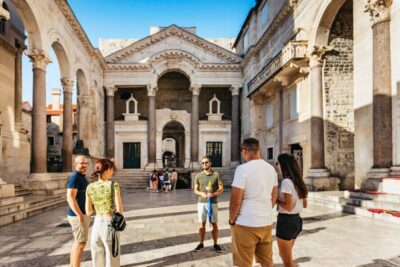

Blue Lagoon Boat Party with DJs, Shots & After Party
Read our review →Browse the lists this tour appears in