
Reviewed · ZAGREB TOURS
Zagreb: Communism and Croatian Homeland War Tour
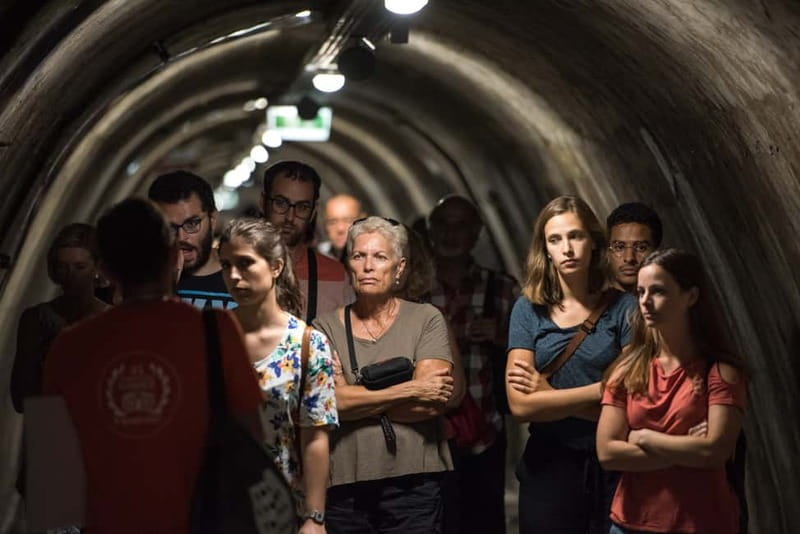
Zagreb’s recent past is easiest to grasp underground. This 2.5-hour walk takes you from Ban Jelačić Square into WWII tunnels and an authentic basement shelter used during the air raids of the 1990s. Along the way, your guide explains communist Yugoslavia, its collapse, and Croatia’s fight for independence.
I like the tour’s mix of public history and personal stories, especially when guides such as Darko and Ivana connect major events with family experiences. I also like the final video presentation, which gives the complicated Homeland War a clear visual frame. The main drawback is that this is a serious history tour, not a light sightseeing stroll, and the tunnel and basement sections are not suitable for people with mobility impairments.
Key points to know before booking
- WWII tunnels beneath central Zagreb: See an underground site used to present Croatia and Zagreb’s 20th-century story.
- An authentic 1990s air-raid shelter: Finish in a basement where local people sought safety during attacks on Zagreb.
- A difficult subject handled through stories and context: Guides explain communism, the breakup of Yugoslavia, and independence from several angles.
- Guides with different strengths: Darko is praised for humor and clear explanations, while Ivana is noted for personal family stories and a historian’s perspective.
- A central meeting point: Start and finish in front of the horse statue at Ban Jelačić Square.
- Good value for history-minded visitors: At $44 per person, the price includes the guide, both underground visits, and the multimedia presentation.
Why this Zagreb tour is different from a standard city walk
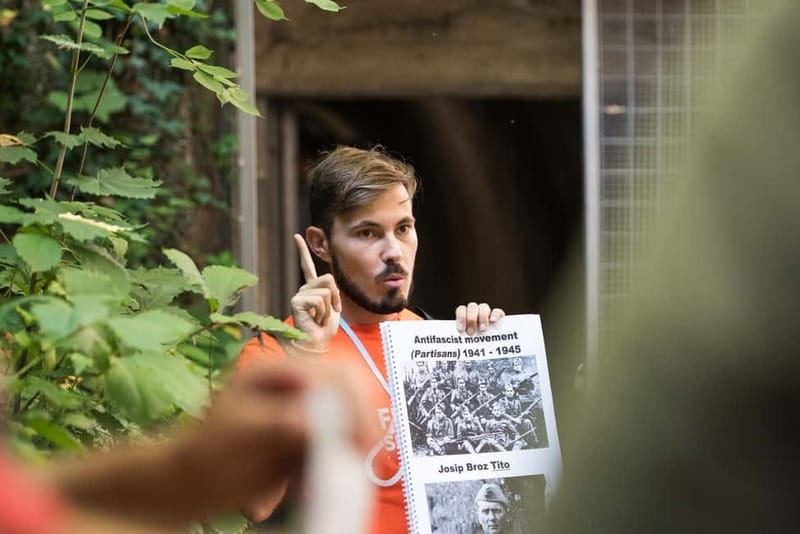
Many Zagreb walking tours focus on the old town, churches, markets, and grand squares. This one uses the city center as a starting point for a more recent and more difficult story. You are not simply looking at old buildings. You are trying to understand how people lived through communism, the breakup of Yugoslavia, and the Croatian Homeland War.
That recent focus matters. Croatia’s independence is not distant medieval history. The war took place in the 1990s, within living memory, and several guides bring a personal connection to the subject. Ivana, for example, has shared family experiences from the Yugoslav and wartime years. Darko has been praised for combining maps, photographs, humor, and first-hand perspective without turning the tour into a lecture.
I like that mix. A map can show borders and troop movements, but a personal story helps you understand what those events meant in an ordinary home. The strongest guides also make room for more than one national viewpoint. Ivanka, described as a Croatian historian, was especially careful to point out that visitors should seek Slovenian, Serbian, and other perspectives as well.
You should still expect a Croatian-centered tour. That is natural for a walk based in Zagreb and focused on Croatia’s road to independence. If you want a full account of every side of the Yugoslav wars, this is a starting point rather than a complete course.
A few more Zagreb half-days to weigh up
- From Zagreb: Plitvice & Rastoke Guided Day Trip with Ticket
★ 4.9 · 2,955 reviews - Zagreb: Rastoke & Plitvice Lakes Guided Tour with Ticket
★ 4.9 · 1,897 reviews - Communism & Croatian Homeland War Tour
★ 5.0 · 1,355 reviews
Meeting at Ban Jelačić Square
The tour begins in front of the horse statue at Ban Jelačić Square, Zagreb’s main square. This is a sensible meeting place because it is central and easy to identify. The activity ends at the same location, so you do not need to arrange transport back from a distant neighborhood.
The square also gives your guide a useful opening point. From here, you can begin thinking about Zagreb as a capital shaped by different political systems. The tour then moves through central streets and stops for guided explanations, sightseeing, and photographs before reaching the underground sites.
The walking portion is spread across several stops rather than being one long march. The published timing lists guided sections of about 20 minutes, 15 minutes, and 30 minutes, followed by roughly an hour at the final underground location. That structure gives you time to listen, ask questions, and absorb the material.
Wear comfortable shoes. The tour is only 2.5 hours, but it includes walking and underground areas. Large bags and luggage are not allowed, and pets are not permitted. Children must be accompanied by an adult, and unaccompanied minors cannot join.
The first story: Zagreb under communist Yugoslavia
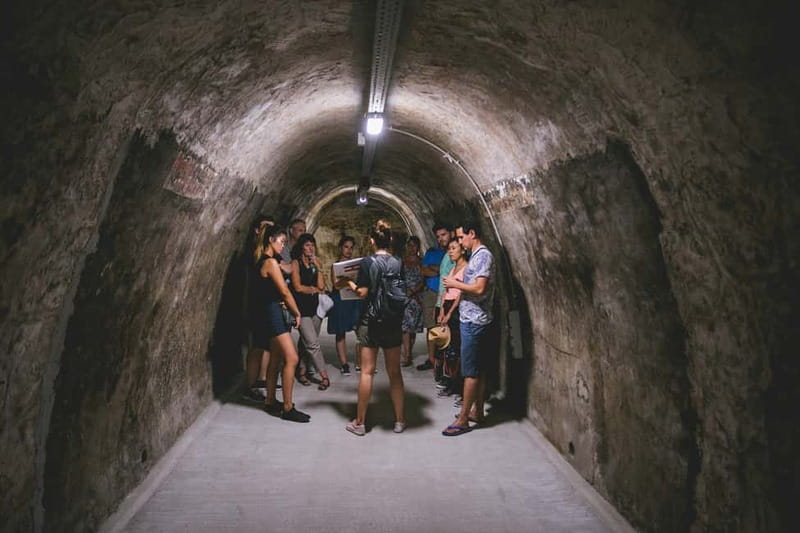
The early part of the tour sets up the political world that existed after World War II. Your guide discusses life during the communist era in Zagreb and explains the place of Yugoslavia within 20th-century Croatian history.
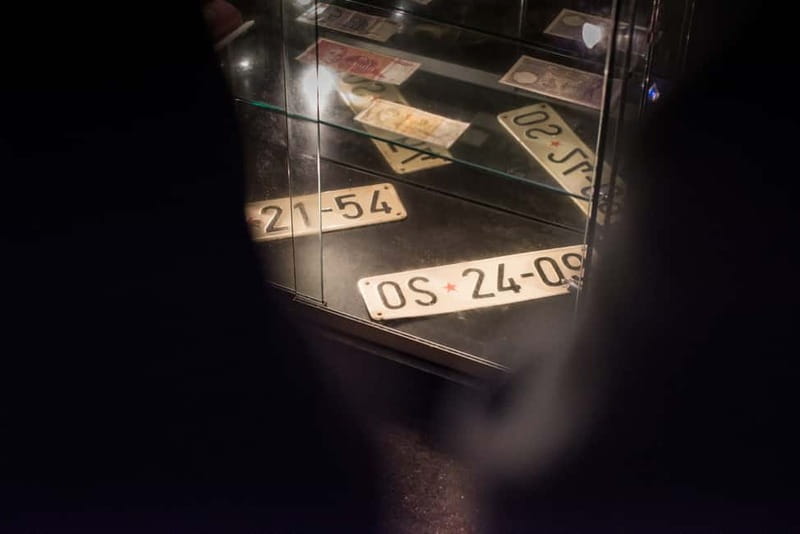
This section is valuable because the word communism can mean very different things depending on the country being discussed. Yugoslavia followed its own path, and a good guide helps you avoid treating it as a simple copy of the Soviet Union. The tour places almost 50 years of communist Yugoslavia between World War II and the collapse of communism in Croatia.
You will likely hear about how political change affected everyday life, public identity, and the relationship between the different parts of Yugoslavia. The supplied information does not promise a set list of monuments or interiors during this part of the walk, so the exact stops may vary. The reliable feature is the historical explanation provided by the local guide.
This is where the guide’s style makes a real difference. Darko has been praised for a strong speaking voice that carries over city noise and for keeping an after-lunch group alert. Vid is described as funny, energetic, and good at asking questions. Diana and Ivana have also been praised for clear, engaging explanations.
You are not just collecting dates here. You are building the background needed to understand why the federation began to break apart and why independence became such a powerful issue in Croatia.
Entering the WWII underground tunnels
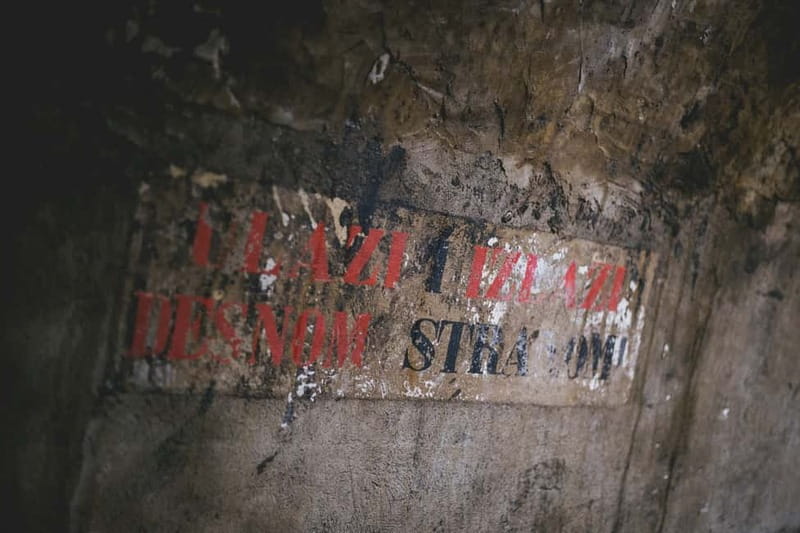
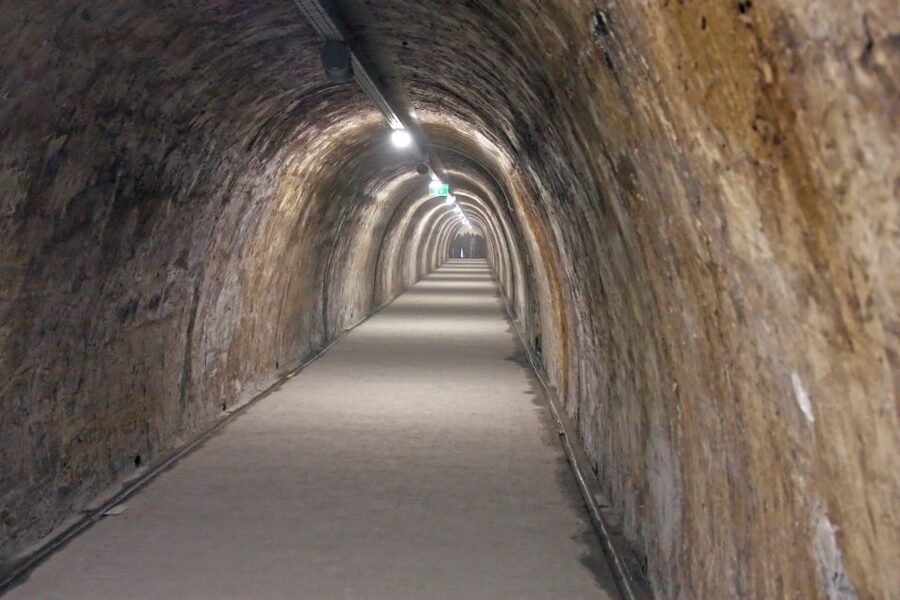
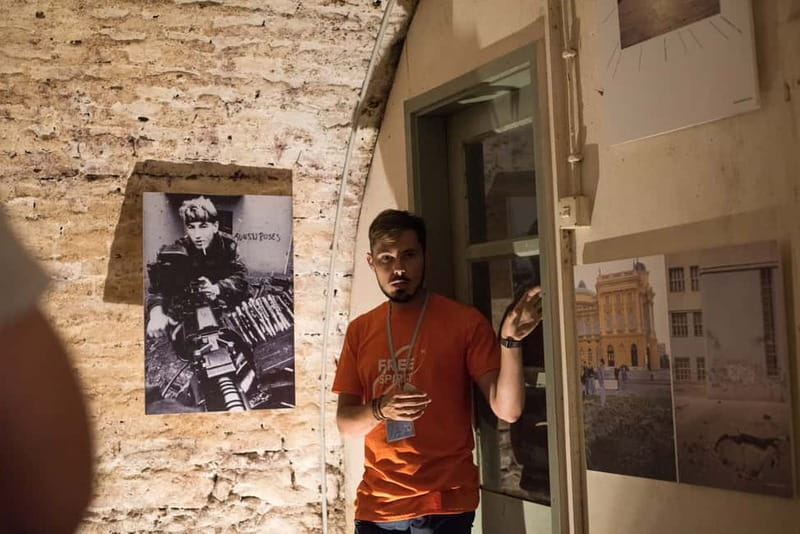
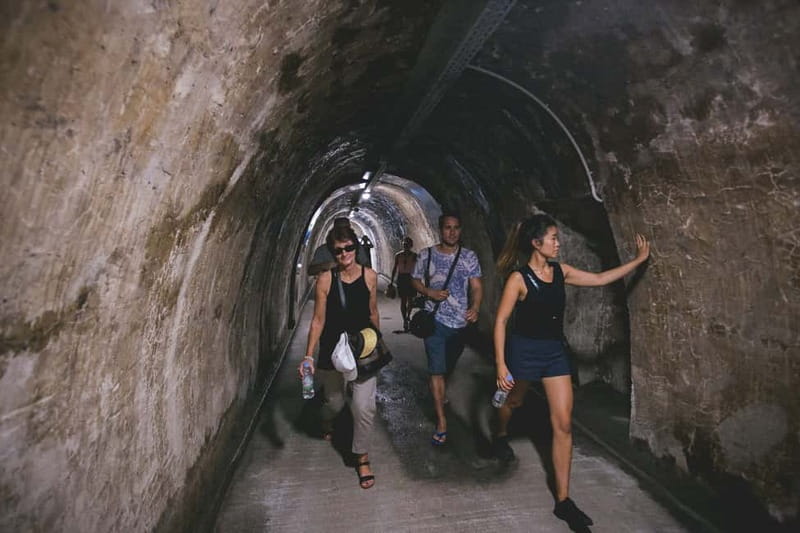
The first major underground visit takes place in World War II tunnels. The site is used to present Zagreb and Croatia through the 20th century, including World War II, communist Yugoslavia, the fall of communism, and the Homeland War.
That makes the tunnel more than a quick photo stop. The physical setting helps connect several periods that can otherwise feel like separate textbook chapters. Going below the modern city gives the discussion a fitting sense of place, especially when the subject turns to war and civil defense.
The tunnel visit is listed as one of the tour’s central features, but there is an important limitation. The tunnels are not included when events are taking place there. If the tunnel space is being used for an event, that portion may not be available, so check the conditions for your chosen date.
The information provided does not specify every tunnel feature or promise a particular exhibition layout. You should think of this stop mainly as a guided historical setting, not as a large museum visit with hours of independent browsing.
Same stretch of coast, a completely different day out:
- Best of Zagreb with the WW2 Tunnels
★ 5.0 · 973 reviews - Plitvice Lakes with Ticket & Rastoke Guided Tour from Zagreb
★ 5.0 · 966 reviews - Zagreb: Small Group Walking Tour City Center and WW2 Tunnels
★ 4.9 · 895 reviews - Zagreb: Skip-the-Ticket-Line Museum of Broken Relationships
★ 4.5 · 847 reviews
The street-level story of the Homeland War
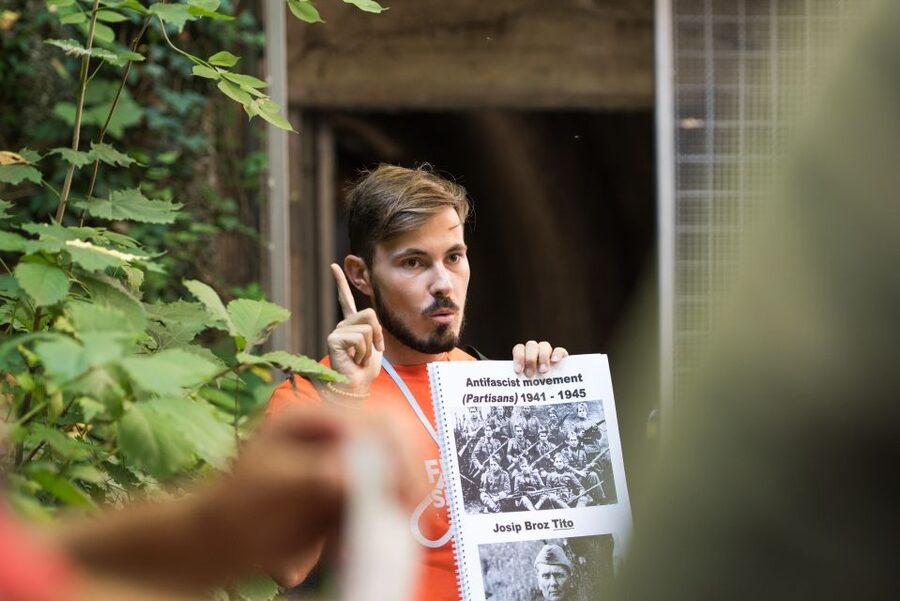
After the communist period and the breakup of Yugoslavia enter the discussion, the tour turns to the Croatian Homeland War. Your guide explains the turbulent years surrounding Croatia’s fight for independence and helps connect national events with what happened in Zagreb.
The best part of a guided walk on this subject is the chance to ask about terms, dates, and viewpoints as they arise. History from the 1990s can be politically charged, and a guide who explains several sides is more useful than one who simply repeats a national slogan.
The tour’s strongest accounts appear to come from guides who combine formal study with family memories. Ivana has been praised for being open about her own family’s complicated wartime experience. Other guides have spoken about growing up during the wars of the 1990s. Those details can make the subject more immediate, but they also mean the tone may vary from one guide to another.
I would choose this tour early in a Zagreb visit if you want the rest of Croatia to make more sense. It can give you a frame for later conversations, museum visits, and trips outside the capital. At the same time, do not book it expecting cheerful entertainment. The guide may use humor to keep the group focused, but the subject includes fear, displacement, violence, and political division.
The basement shelter and final video
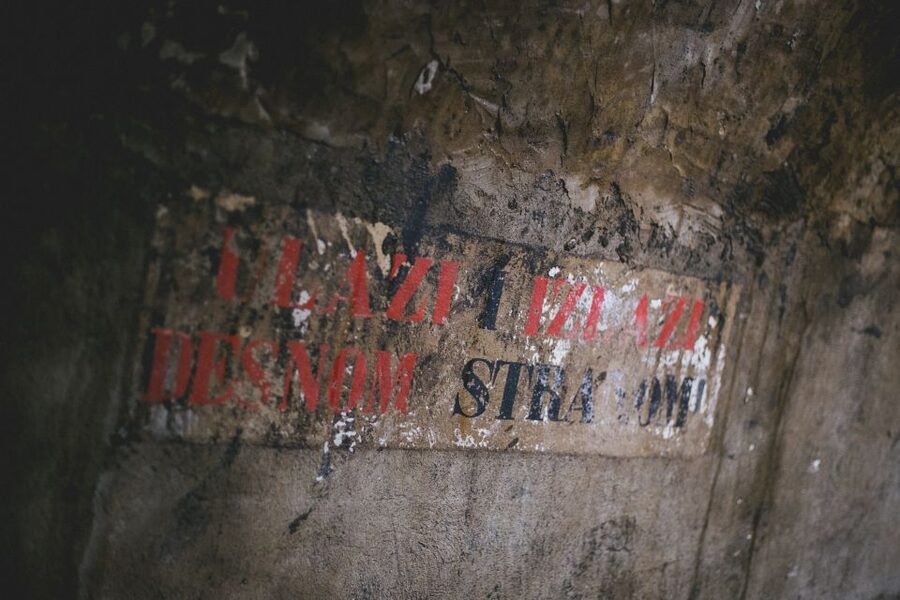
The tour finishes in an authentic basement used by local people as a shelter during air raids on Zagreb in the 1990s. This is the most personal stop because it shifts the story from government decisions and military events to the experience of seeking safety below an ordinary building.
A real shelter can communicate scale in a way that a photograph cannot. You can consider the practical reality of families spending time underground while attacks took place above them. The tour does not promise a reconstructed performance or actors. Its value comes from the place itself and the explanation that accompanies it.
The final Homeland War multimedia presentation adds another layer. A video can help organize the names, events, and turning points discussed during the walk. It is especially useful if you arrive with only a vague understanding of the breakup of Yugoslavia.
I like the decision to end here rather than at a scenic square. The tour finishes with the human cost of the conflict still in view. That gives the whole experience a clear emotional shape, though some people may find the ending heavy.
How the guides shape the experience
The guide is the most important variable on this tour. The subject covers several decades, and the group needs someone who can explain political change without drowning you in names and dates.
Darko has been praised for a strong voice, vivid storytelling, personal experience, maps, pictures, and a well-used final video. Several comments also describe him as funny and articulate. Vid is noted for his energy, wit, and interactive style, while Diana is described as eloquent and well versed in Slavic history.
Ivana receives especially strong praise for combining passion, clarity, and personal family stories. Ivanka is described as a historian who took care to acknowledge the limits of a Croatian point of view. Didi is praised for being friendly, lively, and well informed.
You cannot necessarily choose a particular guide when booking, so treat these names as examples of the team rather than a guarantee. Still, the repeated emphasis on storytelling, clarity, and personal connection tells you what the tour is designed to do. It aims to make a difficult history understandable and human.
The tour is offered in English and Spanish. If your guide is using maps, photographs, and video, pay attention to how much detail works for you. Some people will want every political turn explained. Others may prefer a shorter overview. The format appears to include questions and interaction, which helps, but the subject remains dense.
Is $44 a fair price?
The cost is $44 per person. For 2.5 hours, that is more than a basic free city walk, but the comparison is not quite fair. You are paying for a specialist subject, a local guide, access to two underground locations, and a multimedia presentation.
I consider the price reasonable if you care about modern Croatian history. The WWII tunnel and wartime shelter give you physical places that would be difficult to interpret on your own. The guide also saves you from piecing together the fall of Yugoslavia from disconnected plaques and online summaries.
The value is lower if you mainly want Zagreb’s famous architecture or a broad introduction to the city. This tour is narrow by design. It does not promise a full old-town tour, a food experience, or a scenic overview.
The reserve-now-and-pay-later option is useful if your schedule is still changing, and free cancellation is available up to 24 hours before the activity for a full refund. Check the available starting times when you book, since the exact schedule is not fixed in the information provided.
Who should book this experience
I would recommend this tour to you if you enjoy political history, oral history, museums, or visits to places with a direct connection to ordinary life. It is also a good choice if you know little about Yugoslavia and want a clear introduction before visiting other parts of Croatia or the former Yugoslav region.
Families can join if children are accompanied by an adult, but consider the subject and the length. One eight-year-old was able to take in a surprising amount, though the child became restless near the end. That sounds fair: 2.5 hours of serious history can be a lot for a young child.
The tour is not suitable for wheelchair users or people with mobility impairments. Pets and large bags are not allowed. If tunnels, stairs, uneven surfaces, or basement access are difficult for you, choose a different Zagreb activity.
You should also be comfortable hearing a national history that may not match every account from Serbia, Slovenia, Bosnia and Herzegovina, or other parts of the former Yugoslavia. The tour can acknowledge different viewpoints, but it remains rooted in Croatia.
Final verdict: a strong choice for modern Croatian history
I would book this tour if I wanted to understand why Zagreb looks and feels the way it does today. The WWII tunnels create a physical link to the past, the basement shelter brings the 1990s close, and the guide’s stories connect political events with family life.
Its main strengths are the subject, the underground locations, the final video, and the quality of guides such as Darko, Ivana, Vid, and Diana. Its limits are just as clear: the topic is serious, the walking areas are not accessible to everyone, and the exact guide and tunnel access may depend on the date.
For a visitor who wants only a light introduction to Zagreb, choose a general city walk instead. For you, if the fall of Yugoslavia and Croatia’s independence are the questions you came to the region with, this $44 tour offers a focused and worthwhile answer.
FAQ
Where does the tour start?
The tour starts in front of the horse statue at Ban Jelačić Square, Zagreb’s main square.
Where does the tour end?
The activity ends back at the meeting point at Ban Jelačić Square.
How long does the tour last?
The walking tour lasts 2.5 hours.
What languages are available?
The tour is offered in English and Spanish.
What is included in the price?
The price includes a walking tour with a local guide, a Croatian Homeland War multimedia presentation, a visit to a basement used as a shelter in the 1990s, and a visit to a WWII tunnel.
Will I visit the WWII underground tunnels?
Yes, the tour includes a visit to the WWII underground tunnels, except when events are taking place in the tunnels.
Will I see an actual wartime shelter?
Yes. The tour visits an authentic basement used by local people as a shelter during air raids on Zagreb in the 1990s.
Is the tour suitable for wheelchair users?
No. The activity is not suitable for wheelchair users or people with mobility impairments.
Can I bring luggage or a large bag?
No. Luggage and large bags are not allowed on the tour.
Can I cancel for a refund?
You can cancel up to 24 hours in advance for a full refund. A reserve-now-and-pay-later option is also available.
Just added around Zagreb
- Toast to the Morning After: Zagreb Museum of Hangovers Visit★ 4.0 · 39 reviews
- From Split: Transfer to Zagreb with Stop at Plitvice Lakes★ 4.6 · 44 reviews
- Severin na Kupi: Canoeing and Kayaking on the Kupa River★ 4.6 · 22 reviews
- Rafting/Kayaking adventure river Kupa★ 4.4 · 21 reviews
- Private Walking Tour of Zagreb★ 4.9 · 5 reviews
- Plitvice Lakes National Park – 2hr Inspiration Buggy Tour★ 5.0 · 3 reviews
- Jump into Zagreb: Walking Tour with local guide★ 4.8 · 3 reviews
- From Zagreb: Varazdin Baroque Town & Trakoscan Castle★ 4.9 · 38 reviews
Zagreb Tours, compared.
Plitvice & Rastoke Guided Day Trip with Ticket
Read our review →
Rastoke & Plitvice Lakes Guided Tour with Ticket
Read our review →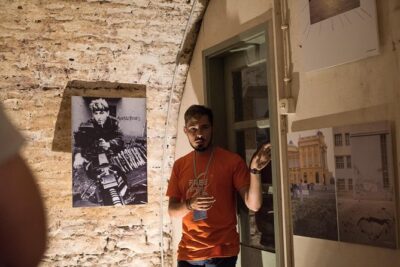

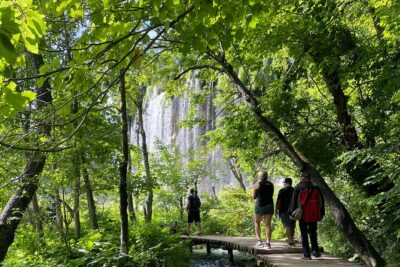
Plitvice Lakes with Ticket & Rastoke Guided Tour from Zagreb
Read our review →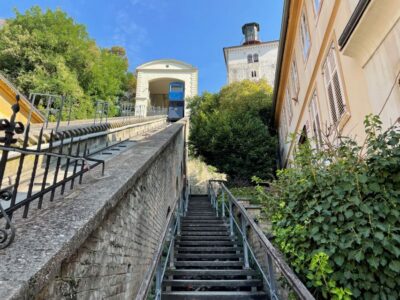
Small Group Walking Tour City Center and WW2 Tunnels
Read our review →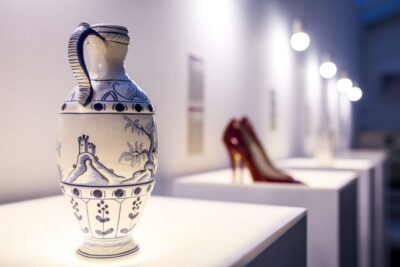
Skip-the-Ticket-Line Museum of Broken Relationships
Read our review →
Browse the lists this tour appears in