
Reviewed · ZAGREB TOURS
Classic Zagreb Bike Tour
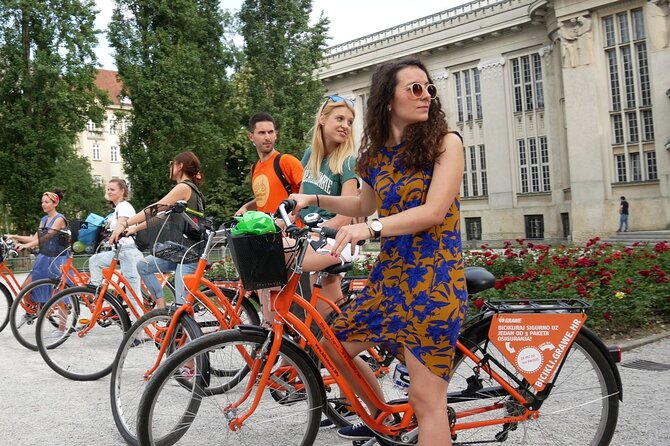
Zagreb’s old center is compact, but its story is spread across hills, squares, market lanes, and grand Lower Town avenues. This three-hour bike tour lets you cover that ground without spending the whole morning on foot, with guides such as Filip, Iva, Eva, Željka, and Sandro adding local stories, humor, and restaurant tips along the way.
I like the route’s mix of Upper Town landmarks and Lower Town parks, and I like the included café stop, which gives the outing an easy, social rhythm. The main caution is equipment and traffic: most rides are gentle, but cobblestones, pedestrians, trams, and one steeper hill call for confident cycling and a quick check of your bike and helmet before setting off.
Key points to know before you book
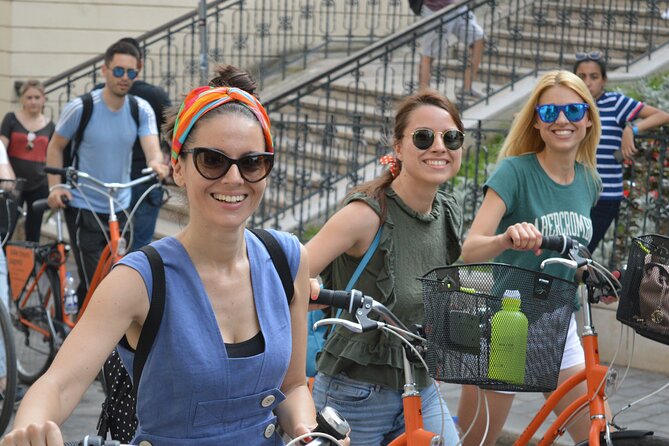
- A broad Zagreb overview: See the Cathedral, Dolac Market, Stone Gate, St. Mark’s Church, the National Theatre, and the Lower Town squares in one outing.
- A relaxed pace: The route is largely flat, with frequent stops and only one notable uphill section.
- A useful local break: Coffee, a refreshing drink, or ice cream is included, but alcoholic drinks are not.
- Small-group format: The advertised maximum is 12 people, allowing the guide to answer questions and adjust the pace.
- Good for families who cycle confidently: One family completed the ride with three 10-year-olds, and the guide kept children involved with questions.
- Check the gear: Most comments describe comfortable bikes, but some riders reported older bicycles, worn helmets, or poor fit for shorter cyclists.
Why a bike is a smart way to meet Zagreb
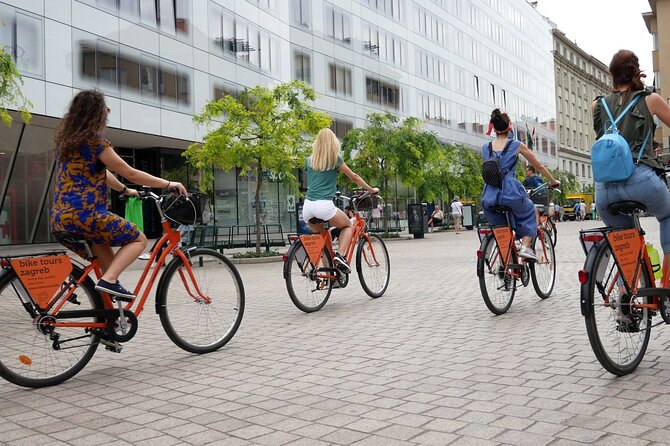
Zagreb is a city where a bike earns its keep. The historic center is walkable, but the Cathedral, Upper Town, National Theatre, King Tomislav Square, and Zrinjevac are spread across enough ground that walking between every stop can eat up a good part of your day.
This is not a hard cycling workout. The route is described as relaxed and mostly flat, with much of the riding on pedestrian areas, pavements, or gravel paths. You will still need to steer carefully around people, buses, trams, and uneven cobblestones. One hill can be walked if needed, and several riders found the pace comfortable even without regular cycling practice.
The guide’s role matters here. A good Zagreb bike tour is not just a list of buildings. It connects Kaptol with Gradec, explains why the Stone Gate still draws people, and helps you understand how the Upper and Lower Town fit together. Filip is often praised for mixing facts with comedy and answering questions. Iva, Eva, Željka, and Sandro are also named as warm, engaging guides who tailor the commentary to the group.
The tour begins and ends at Jurišićeva ul. 19. It is offered in English, uses a mobile ticket, and includes the bicycle, helmet, local guide, a drink or ice cream break, and a photo from the tour.
More bike days around Zagreb:
- Zagreb Highlights Bike Tour
★ 5.0 · 208 reviews - Zagreb: 2.5-Hour Highlights Bike Tour
★ 4.8 · 93 reviews - Best of Zagreb: 4-Hour Cycling Tour
★ 4.9 · 13 reviews
From Zagreb Cathedral to the city’s market heart
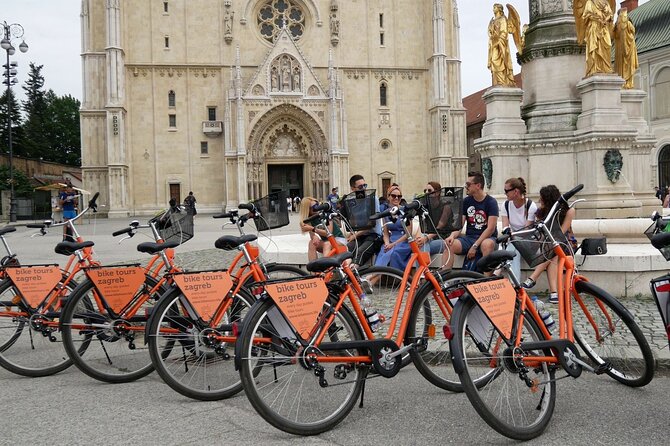
The opening stop is the Cathedral of Zagreb, where the city’s story reaches back to 1093. Hungarian King Ladislav founded the Diocese of Zagreb in the area now called Kaptol and raised the church to cathedral status.
You get about 10 minutes here, enough for an outside orientation and an explanation of why Kaptol became one of the city’s key historic areas. The tour does not include an admission ticket because there is no paid entry listed. If seeing the interior matters to you, plan to return on your own later rather than expecting a long visit during the ride.
From the Cathedral, the route moves to Dolac Market, often called Zagreb’s belly. This is the city’s largest farmers market, and it gives the tour a welcome change of pace from formal churches and civic buildings.
The stop lasts about 10 minutes. That is enough to point out the market’s role in daily life, but not enough for a serious food shop or leisurely browse. I would treat it as a first look, then come back independently if you want to inspect produce, sample local goods, or take your time with photographs.
Tkalciceva Street and the old border at Bloody Bridge
Tkalciceva Street is one of central Zagreb’s main café and nightlife streets today. Its past was considerably less polished. From the late 19th century into the 1930s, it served as Zagreb’s equivalent of Amsterdam’s red-light district.
The guide spends about 15 minutes here, using the street to show how Zagreb’s social life has changed. This is the sort of detail that makes a short city tour useful. You are not just looking at a pleasant pedestrian street. You are learning how its role shifted over time.
Next comes Krvavi Most, or Bloody Bridge. The name recalls the old divide between Gradec and Kaptol, separated by the Medveščak stream. Residents of the two settlements clashed often enough for this border to earn a grim nickname.
There is no bridge to cross in the old medieval sense today, but the stop helps you picture Zagreb before the modern center was stitched together. The 10-minute visit is brief, so listen closely as the guide explains the rivalry and points out how the city grew around it.
The Stone Gate and St. Mark’s Church
The Stone Gate, listed in the tour information as Petrini Pyli, is one of the most meaningful stops. The gate has housed a shrine to Our Lady of the Stone Gate for centuries, and she is regarded as Zagreb’s patron saint.
This is a place where the tour moves beyond architecture. You will see how a surviving medieval gateway became a living place of devotion. The stop lasts about 10 minutes, and the guide’s explanation gives the site context that can be easy to miss if you pass through alone.
St. Mark’s Church follows, with about 15 minutes to take in one of Zagreb’s best-known symbols. The church is among the city’s oldest buildings and appears in the 1334 Kaptol Statute’s list of parish churches.
The colorful tiled roof is the obvious visual draw, but the setting in the Upper Town is just as important. This is where the old political and religious center of Zagreb feels most concentrated. The route gives you time to hear the background, take photographs, and catch your breath before continuing.
Be aware that the Upper Town includes uneven surfaces and some uphill riding. The route is not presented as strenuous, but this is the section where cycling confidence matters most. If a slope feels uncomfortable, walking the bike is a sensible choice, not a failure.
A few more Zagreb half-days to weigh up
- From Zagreb: Plitvice & Rastoke Guided Day Trip with Ticket
★ 4.9 · 2,955 reviews - Zagreb: Rastoke & Plitvice Lakes Guided Tour with Ticket
★ 4.9 · 1,897 reviews - Communism & Croatian Homeland War Tour
★ 5.0 · 1,355 reviews - Best of Zagreb with the WW2 Tunnels
★ 5.0 · 973 reviews
The funicular and the link between two Zagrebs
The Zagreb funicular dates from 1892 and is considered the city’s oldest passenger public transport. The tour includes a 15-minute stop, but the admission ticket is not included.
That distinction matters. You may see the funicular and hear its story without riding it, or you may choose to pay separately if the group’s timing allows. Since the activity returns to its starting point and the tour is paced around several stops, do not assume there will be time for a separate ride unless the guide confirms it.
The funicular is also a useful symbol of Zagreb’s layout. It links the Upper Town with the Lower Town, where the architecture becomes more formal and the streets open into planned squares and parks. The bike makes that transition efficiently, without requiring you to retrace the same route on foot.
The National Theatre and Lower Town squares
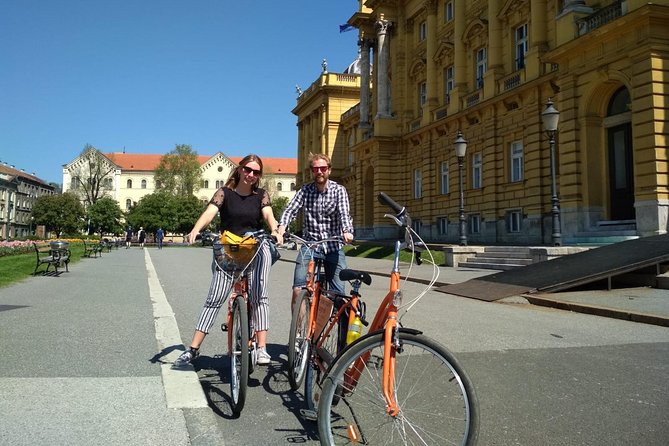
The Croatian National Theatre in Zagreb was founded in 1860. Its creation fulfilled a long-held goal of the Illyrian movement and of figures such as Dimitri Demeter, who wanted the Croatian people to have a theatre in their own language.
The 20-minute stop is one of the longer pauses on the route. That gives the guide room to explain the theatre’s cultural importance rather than treating it as another grand façade. You can expect an exterior visit and commentary, not a performance or museum admission.
The ride then continues to King Tomislav Square. Tomislav ruled as Croatia’s first king from 925 to 928, after previously governing the Croatian principality. The square offers a broad, open setting and a chance to see how the Lower Town differs from the tightly packed Upper Town.
Zrinjevac receives about 20 minutes, making it another substantial stop. In 1876, Zagreb adopted an urban plan for the Lower Town, including the idea of connecting its squares into one larger framework. Zrinjevac helps you see that plan in physical form.
This is one of the tour’s strongest sections for first-time visitors. The Upper Town gives you medieval lanes and old civic landmarks. The Lower Town gives you parks, ordered avenues, and the sense of a city expanding into a more modern urban center.
Coffee, ice cream, and the human side of the tour
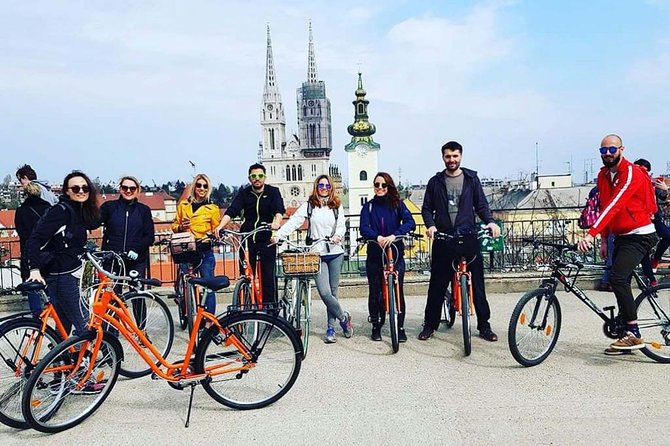
The included break is simple but well judged. You can stop for coffee, a cold drink, or ice cream, with the choice making the tour easier for different ages and tastes. Alcoholic drinks are not included.
I like this pause because it breaks up the sightseeing. You can ask the guide about restaurants, local food, sports, or places to visit later. Several guides are praised for giving practical recommendations, and one family specifically found the restaurant suggestions helpful.
The break also gives you a chance to check how the group is feeling. The advertised maximum is 12 people, which is small enough for personal attention but not necessarily private. The experience can feel friendly and informal, yet it still depends on everyone keeping together and following the guide’s directions.
Bikes, helmets, and road comfort
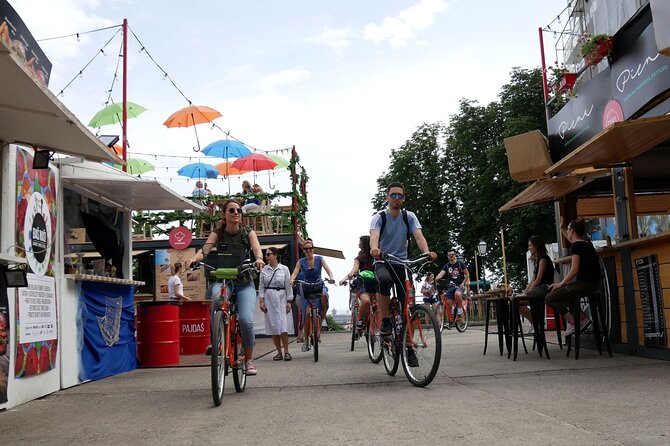
The equipment is the tour’s main area of uncertainty. Some riders describe the bikes as comfortable, including eight-speed models, and one rider received a replacement quickly after hitting a bump. Others found the bicycles older or in need of attention. A few raised concerns about helmet condition, missing kickstands, brake checks, and limited options for shorter women.
One especially serious complaint involved a bicycle said to have a missing brake. The operator rejected that account and stated that bikes are checked before departure and that the guide would not begin with an unsafe bicycle. Since the accounts conflict, the practical advice is straightforward: inspect both brakes, the tires, the saddle, and the helmet before leaving the meeting point. Ask for a replacement immediately if anything feels wrong.
The route also requires more than basic balance. You may ride near pedestrians, trams, and buses, and one rider noted that the group spent much of the route in first gear because of busy areas. Cobblestones add bumps, especially for anyone not used to city cycling.
This is a good choice for a confident casual cyclist. It is less suitable if you rarely ride a bike, feel uneasy in crowded streets, or need a very small frame. Children can do well if they ride confidently, but the provided information does not indicate that child seats, small bikes, or other special equipment are available.
How much value do you get for $54.44?
At $54.44 per person, this is not the cheapest way to see Zagreb. The value comes from combining bicycle use, a helmet, an English-speaking local guide, a refreshment stop, and a photo in one three-hour experience.
You are also paying for efficiency. In the same morning, you can cover Kaptol, Gradec, the Upper Town, the Lower Town, and several major squares. A self-guided walk can cost less, but you would need to research the history, plan the route, find the correct turns, and arrange your own coffee stop. The guide handles that work.
The tour is especially good value early in your stay. You get a city orientation, practical food suggestions, and a list of places worth revisiting. It is less useful if you want long interior visits at churches, museums, or the theatre. This is an overview by bicycle, not a series of extended admissions.
The average booking lead time is 38 days, so advance planning may be sensible during busy periods. Confirmation is provided at booking, and free cancellation is available up to 24 hours before the start time. Changes or cancellations inside that 24-hour window are not accepted for a refund.
Who will enjoy this Zagreb ride most?
I would recommend it to first-time visitors who want a quick sense of Zagreb’s shape and character. You will see more than on a short walking route, while still stopping often enough to hear the stories.
It also suits couples, small groups, and families with confident young cyclists. The relaxed pace and ice cream option help, and guides such as Filip have used questions and humor to keep children involved.
The tour is less suitable for anyone seeking a private ride, a museum-focused experience, or a completely traffic-free route. It is also not the right pick if you need guaranteed specialist bicycle sizing or pristine equipment. Service animals are allowed, the meeting point is near public transportation, and most people can participate, but the ride still calls for comfort on uneven streets and around city traffic.
Should you book the Classic Zagreb Bike Tour?
Book it if you want a well-paced introduction to Zagreb that covers the city’s main historic zones in about three hours. The route is broad, the café or ice cream break adds welcome ease, and the strongest guides bring the city’s past to life with humor and useful local advice.
Before departure, check the bike and helmet carefully. If you are a shorter cyclist, ask about frame size. If the equipment is sound and you are comfortable riding in a city, the tour offers a practical way to get your bearings fast and decide where to spend the rest of your Zagreb stay.
FAQ
How long does the Classic Zagreb Bike Tour last?
The tour lasts approximately three hours and ends back at the meeting point.
Where does the tour begin?
It begins at Jurišićeva ul. 19, 10000 Zagreb, Croatia.
Where does the tour finish?
The activity ends back at the starting meeting point.
What language is the tour offered in?
The tour is offered in English.
What is included in the price?
The price includes use of a bicycle, a helmet, a local guide, coffee, a refreshing drink or ice cream during the break, and a photo from the tour.
Are alcoholic drinks included?
No. Alcoholic drinks are not included.
How many people can join the tour?
The maximum group size is 12 people.
Does the funicular ride cost extra?
Yes. The funicular stop is included in the route, but its admission ticket is not included.
Can children participate?
Most people can participate, and one family completed the ride with three 10-year-olds. Children should be able to ride a bicycle confidently. The provided information does not specify special child bikes or seats.
What is the cancellation policy?
You can cancel up to 24 hours before the experience start time for a full refund. Cancellations or changes made less than 24 hours before the start time are not accepted for a refund.
Just added around Zagreb
- Toast to the Morning After: Zagreb Museum of Hangovers Visit★ 4.0 · 39 reviews
- From Split: Transfer to Zagreb with Stop at Plitvice Lakes★ 4.6 · 44 reviews
- Severin na Kupi: Canoeing and Kayaking on the Kupa River★ 4.6 · 22 reviews
- Rafting/Kayaking adventure river Kupa★ 4.4 · 21 reviews
- Private Walking Tour of Zagreb★ 4.9 · 5 reviews
- Plitvice Lakes National Park – 2hr Inspiration Buggy Tour★ 5.0 · 3 reviews
- Jump into Zagreb: Walking Tour with local guide★ 4.8 · 3 reviews
- From Zagreb: Varazdin Baroque Town & Trakoscan Castle★ 4.9 · 38 reviews
Zagreb Tours, compared.
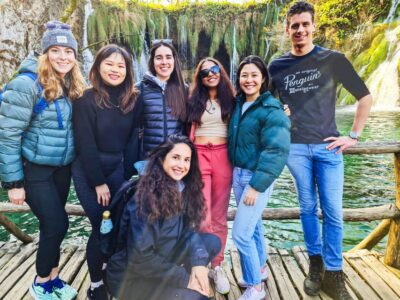
Plitvice & Rastoke Guided Day Trip with Ticket
Read our review →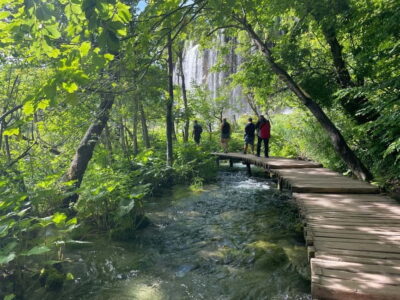
Rastoke & Plitvice Lakes Guided Tour with Ticket
Read our review →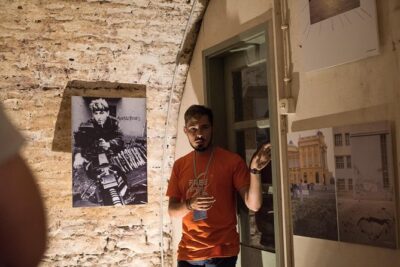
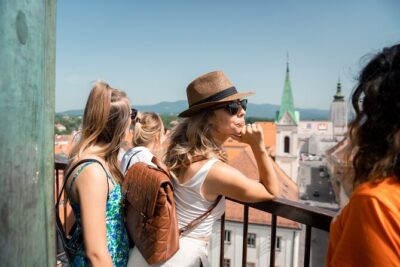
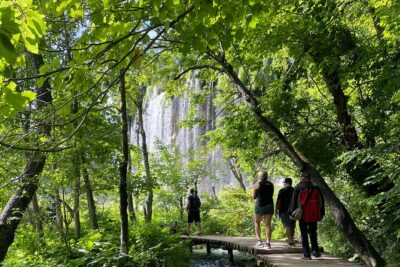
Plitvice Lakes with Ticket & Rastoke Guided Tour from Zagreb
Read our review →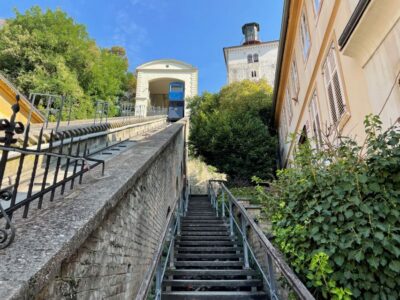
Small Group Walking Tour City Center and WW2 Tunnels
Read our review →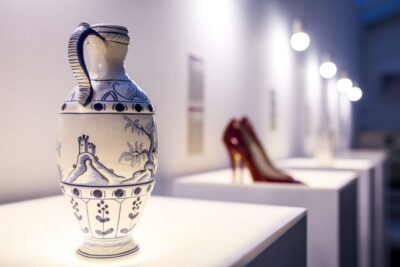
Skip-the-Ticket-Line Museum of Broken Relationships
Read our review →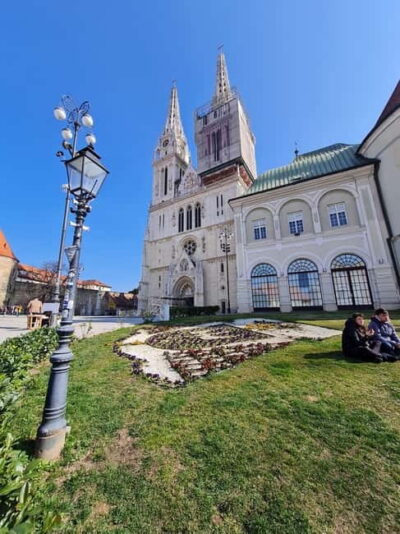
Browse the lists this tour appears in