
Reviewed · DUBROVNIK TOURS
Croatian Traditional Cuisine: Peka Cooking Lesson
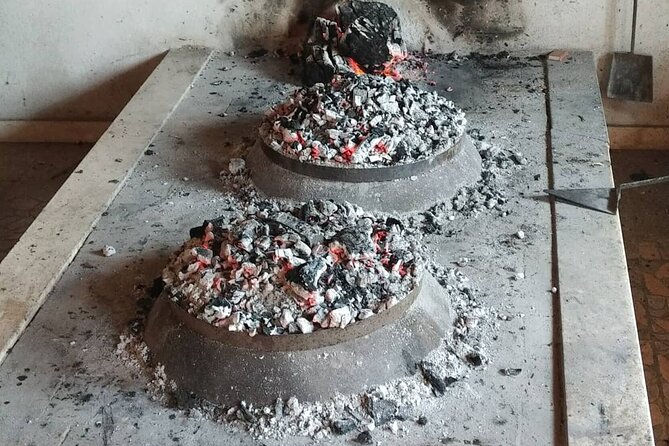
Peka is not just lunch. It is a slow fire cooking method in which meat, potatoes, and vegetables cook beneath a heavy bell-shaped lid covered with hot coals. In Mokošica, Florio shows you how the process works, then serves the smoky, tender result with homemade wine and other local foods. I like the chance to see a real Croatian household tradition rather than sit in a standard restaurant. I also like the small private format, capped at eight people, which should make conversation with Florio and his family easy.
The main consideration is logistics. The description mentions hotel pickup, yet the practical details say private transportation and transfers are not included, with the meeting point at Ul. za Belendinovo 3 in Mokošica. Confirm this before paying, especially if you do not have a car. The four-hour visit is also a meal and demonstration more than a formal, hands-on cooking school.
Key points to know before booking
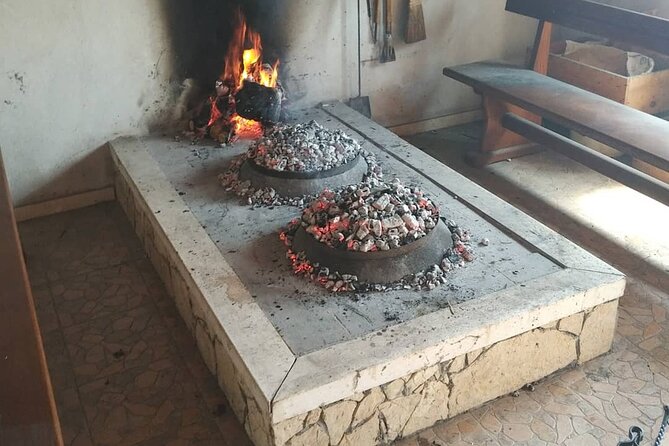
- Peka cooks beneath a bell-shaped lid: Meat and vegetables are placed under a metal, cast-iron, or earthenware dome and covered with hot coals.
- Florio hosts the visit at OPG Vukojević: This is a private activity in Mokošica, not a large restaurant tour.
- The meal includes homemade wine: Bread, cheese, olive oil, prosciutto, grappa, and local products may also be part of the welcome and meal.
- The setting is personal and rural: You visit a home-based operation and meet Florio’s family, with food and Croatian life forming much of the conversation.
- Transport needs careful checking: The meeting point is in Mokošica, and the supplied details conflict on hotel transfers.
- Book early for a small-group date: The activity is often reserved well ahead, requires at least two people, and allows no more than eight.
Peka begins with fire, not a kitchen counter
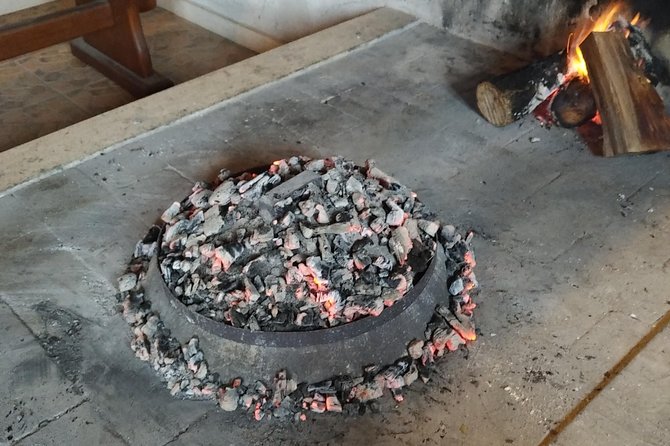
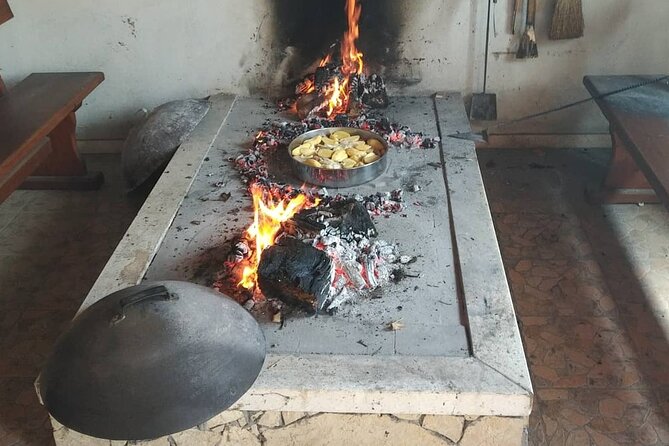
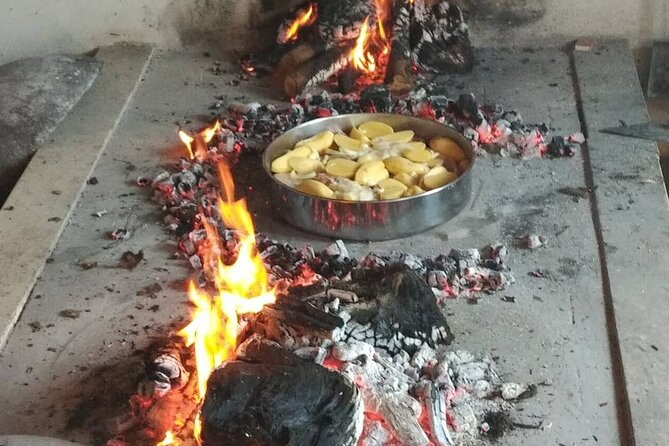
Peka is one of those dishes that looks simple until you see the work behind it. A fire is prepared, food goes into a fireproof pot or onto a stone slab, and a domed lid is set over the top. Hot coals are then placed on the lid, turning the bell into an oven.
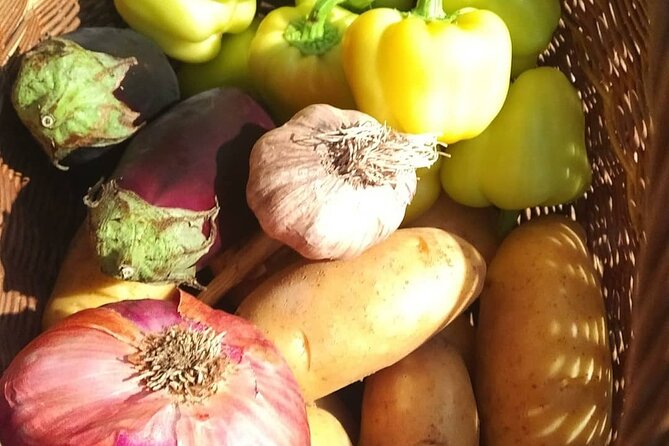
The usual ingredients are veal, lamb, or yearling beef, covered with potatoes and other vegetables. The method gives the food time to soften and take on the flavor of the fire. You do not get the quick rhythm of a modern cooking class. Instead, you watch a traditional process unfold, then sit down to eat what has been cooking.
That pace is part of the appeal. I like that the meal gives you a reason to slow down and talk. This is also a good choice if you want food to open a door into local life, since the visit includes discussion of Croatian food, home production, and everyday customs.
More cooking classes in Dubrovnik:
- Traditional Cooking Class in Dubrovnik Countryside
★ 5.0 · 168 reviews - Traditional Dalmatian Cooking Class from Dubrovnik
★ 5.0 · 49 reviews - Authentic Garden to Table Cooking Class in Dubrovnik Countryside
★ 5.0 · 17 reviews
Meeting Florio in Mokošica
The activity takes place at OPG Vukojević in the village of Mokošica, at Ul. za Belendinovo 3, 20236 Mokošica. The stated start time is 9:00 am, and the full visit lasts about four hours. It is offered in English and is limited to your own group.
Florio is the host you should expect to meet. His role seems to stretch well beyond placing a dish over a fire. He explains the peka method, talks about the ingredients, and shares information about Croatian food and life. His family may also be present, helping create the feel of a visit to a private home rather than a polished cooking studio.
That distinction matters. If you want to practice knife skills, prepare several courses, and leave with written recipes, this may not be the right format. You are primarily there to watch the peka being made, learn why the method works, and enjoy the meal. If you prefer an informal host, local conversation, and food made in a family setting, the format is much more appealing.
Watching meat and vegetables cook under the bell
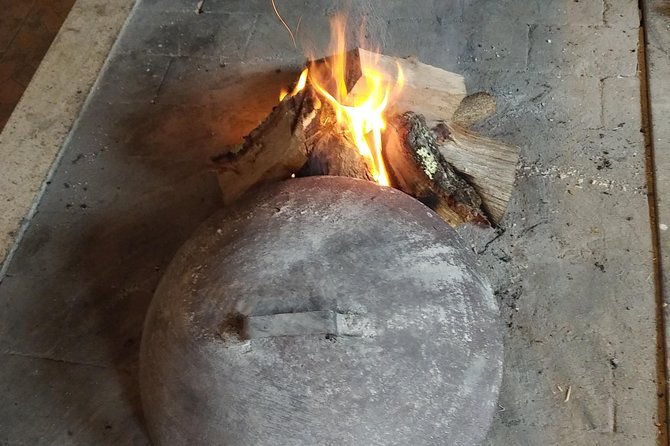
The main demonstration centers on the peka itself. The lid can be made from metal or cast iron, although traditional cooks may prefer earthenware. Its cupola shape gives the dish its name and creates a covered cooking chamber over the food.
The meal can be cooked in a fireproof pot under the coals or directly on a stone slab. The supplied details describe an outdoor fireplace, oak fire, hot bricks, and an iron bell cooking pot. Those details help you understand why this is not simply a roast placed in an oven. The heat comes from below and above, and timing depends on the fire, the coals, and the cook’s judgment.
You will likely spend part of the morning watching the fire and the preparation while Florio explains what is happening. The attraction is seeing a method that requires experience rather than pressing a button or following a short recipe. The drawback is that the cooking period may feel passive if you expect constant participation.
The food itself is hearty. Potatoes and vegetables absorb the juices from the meat, while the covered cooking method keeps the dish tender. Ask about the exact meat being served when you book, particularly if you have dietary limits. A vegetarian option is available if requested in advance.
Homemade bread, cheese, oil, and local drinks
The meal is not limited to the peka pot. The food served around it is part of the visit’s character. Homemade bread, cheese, and olive oil are specifically associated with the experience, and homemade prosciutto and other home-produced items may also appear.
Homemade wine is included. The description points to local red miljas wine as a fitting partner for peka, so this is a meal built around Croatian flavors rather than a generic lunch with a token regional dish. Grappa is also provided, and Florio has offered a bottle to take home to a visitor who especially enjoyed it. That is not a guaranteed part of every booking, but it suggests the generous, personal tone of the hosting.
You can also buy some of the homemade wine and olive oil to take home. Treat those purchases as optional extras, not part of the $162.47 price. They may appeal if you want a practical souvenir, but the main value is the meal and time with the host.
The alcohol deserves a practical note. Wine and grappa are part of the experience, so anyone driving should plan carefully. If you are driving yourself, decide in advance how you will handle the tasting and return journey.
More hands-on workshops in Dubrovnik:
- Dubrovnik: Local Wine, Dine and Design Workshop
★ 4.8 · 10 reviews - Local Paint and Wine Workshop: A Unique Creative Experience
★ 5.0 · 6 reviews - Rock Climbing Lesson in Dubrovnik
★ 5.0 · 5 reviews - Pula: SUP Yoga Classes at Morning & Sunset
★ 5.0 · 10 reviews
More than a cooking demonstration
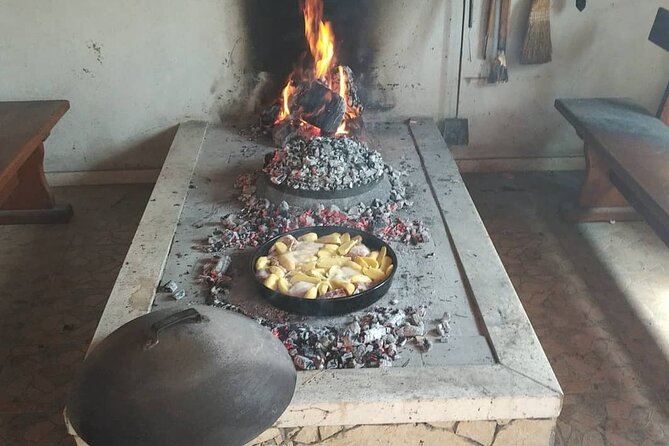
The strongest part of this visit may be everything around the peka. Florio makes his own products and talks about the food grown and prepared in the area. The setting has been described as feeling like a visit to a friend’s home, with his wife and family helping with the welcome.
That can make the morning feel personal in a way that a commercial cooking studio cannot match. You are not simply shown a dish and sent away. You have time to ask about ingredients, cooking methods, wine, olive oil, and Croatian customs. The meal becomes a conversation as much as a lesson.
The surrounding area can add another layer. One account describes an out-of-the-way setting in the hills near Dubrovnik, scenic views, a converted railway station, and old wartime bunkers along the route. These details may depend on your exact arrival and transport arrangements, so do not treat them as a guaranteed sightseeing itinerary. Still, they show why the trip can feel separate from the busy center of Dubrovnik.
This is a useful choice when you have already seen the Old Town and want a different side of the region. It takes you to Mokošica and focuses on home cooking, fire, family, and rural surroundings rather than monuments.
What $162.47 buys you
At $162.47 per person, this is not a cheap lunch. You are paying for a private, four-hour visit, a hosted cooking demonstration, the meal, homemade wine, and the chance to spend time with a local family. For two people, the cost is easier to justify if you value personal hosting and food culture more than a simple restaurant reservation.
The small group helps explain the price. A maximum of eight people means Florio can speak with your party rather than manage a busload. Since the activity is private, only your group participates. That is especially useful if you have dietary needs, want to ask many questions, or prefer not to share a long table with strangers.
The value is weaker if your only goal is to taste peka. Dubrovnik restaurants may offer the dish without the transport questions or four-hour commitment. You should book this activity for the setting and the human contact as much as for the food.
The included lunch and wine do make the price more reasonable, but private transport is not included in the detailed inclusions. Since another part of the description mentions hotel pickup and drop-off, ask the operator exactly what is provided from your hotel or apartment. Do not assume the transfer is covered until you receive a clear answer.
The transport question you should settle first
The practical meeting point is Mokošica, and the activity ends back there. The experience is near public transportation, but the supplied information does not explain the exact route, travel time, or cost from Dubrovnik.
There is conflicting information about transfers. The highlights say you get picked up and dropped off at your hotel, while the additional details exclude private transportation and transfers to and from the site. One account describes Florio coming out and driving the visitor’s car through narrow roads, which suggests he may sometimes help with difficult access. That is a useful possibility, not a promise.
Contact the provider before booking and ask three direct questions:
- Is hotel or apartment pickup included in your booking?
- If not, how should you reach Ul. za Belendinovo 3?
- If you drive, are the final roads narrow and can Florio assist with arrival?
This matters more than it might seem. A morning cooking class that starts at 9:00 am requires a firm departure plan. If you rely on public transport, check the connection yourself because no detailed transfer schedule is supplied.
Timing, group size, and dietary needs
The activity lasts about four hours, so allow most of the morning and part of the early afternoon. Lunch is included for visits from April 1 through October 30, 2026. The cooking class starting at 9:30 am is available only at lunchtime during that period, so confirm the exact start time when reserving.
At least two people are required, and each booking can include no more than eight. Because it is private, you do not need to worry about being placed with a large group. Solo visitors cannot book this particular format unless they join another arrangement that meets the minimum, and no such arrangement is described here.
The minimum age is 18. A vegetarian meal is available, but you must request it when booking. The standard peka centers on meat and vegetables, with veal, lamb, or yearling beef listed as typical choices. If you avoid particular meats, alcohol, or dairy, ask what can be changed before you confirm.
Confirmation is sent within 48 hours, subject to availability. Since the activity is often booked about 87 days ahead, I would not leave this until the last day of your Dubrovnik stay, especially if your dates are fixed.
Who will enjoy this most
I would choose this for a couple, family group, or small party that wants a relaxed food experience outside Dubrovnik’s center. It suits people who enjoy talking with a host, tasting homemade products, and learning how one traditional dish fits into local life.
It is also a good pick for food-focused visitors who have already sampled restaurant cooking and want a method they cannot easily see from a dining room table. The fire, coals, bell lid, and long cooking time give the meal a clear sense of place.
I would hesitate if you need a tightly scheduled excursion, guaranteed hotel transport, or a formal class with extensive hands-on work. The hospitality appears to be a major part of the visit, but that also means the pace is informal. You should be comfortable with a morning shaped by the host, the fire, and the meal.
Should you book the Mokošica peka experience?
Book it if you want more than a plate of Croatian food. The best reasons are Florio’s personal hosting, the private group size, the traditional fire cooking, homemade wine, and the chance to see local food production in a family setting.
Skip it if you only want a quick lunch or if the transport uncertainty is too much trouble. Before paying, confirm pickup, the exact start time, and the meat or vegetarian menu. Also remember that the booking is non-refundable and cannot be changed after purchase.
For the right visitor, the $162.47 price buys a slow, generous morning that connects the food to the people who make it. For a visitor seeking a standard cooking school, it may feel less hands-on than expected. Know which kind of experience you want, and this becomes a much easier decision.
FAQ
Where does the peka cooking experience take place?
It takes place at OPG Vukojević in Mokošica, Croatia. The stated meeting point is Ul. za Belendinovo 3, 20236 Mokošica.
How long does the activity last?
The experience lasts approximately four hours.
What time does the experience start?
The listed start time is 9:00 am. For the cooking class offered from April 1 through October 30, 2026, the 9:30 am cooking-class start is available only at lunchtime.
Is transportation from Dubrovnik included?
The information is inconsistent. The highlights mention hotel pickup and drop-off, while the detailed inclusions exclude private transportation and transfers to and from the location. Confirm the arrangement with the provider before booking.
What food is included?
Lunch is included for visits from April 1 through October 30, 2026. The meal centers on peka, typically meat and vegetables, and homemade wine is included.
Is a vegetarian option available?
Yes. You must request the vegetarian option when booking.
How many people can join?
A minimum of two people is required, and a maximum of eight people can be included in one booking. The activity is private for your group.
Is there a minimum age?
Yes. Participants must be at least 18 years old.
Can I cancel or change the booking?
No. The experience is non-refundable and cannot be changed for any reason after booking.
Just added around Dubrovnik
- Full- Day Private Speedboat Tour in Dubrovnik on Elaphiti Islands★ 5.0 · 21 reviews
- Wine Lover’s Tour of Peljesac Peninsula★ 5.0 · 150 reviews
- Wine tour peninsula Pelješac★ 5.0 · 3 reviews
- Elaphiti Islands Private Dubrovnik Boat Unique Experience★ 5.0 · 10 reviews
- Dubrovnik at War 1991-1992 Private Walking Tour★ 5.0 · 4 reviews
- PRIVATE Wine Tour to Konavle country side★ 5.0 · 11 reviews
- Walls of Liberty: A Self-Guided Audio Tour of Dubrovnik★ 3.5 · 3 reviews
- Parasailing in Cavtat★ 5.0 · 62 reviews
Dubrovnik Tours, compared.
Blue Cave Small-Group Boat Tour from Dubrovnik
Read our review →
Full-Day Dubrovnik Elaphite Islands Cruise with Lunch and Drinks
Read our review →
Epic Game of Thrones Tour + Lokrum & Saver Option
Read our review →
The Original Game of Thrones Tour & Lokrum Option
Read our review →
Dubrovnik Game of Thrones Tour & Optional Lokrum Island Visit
Read our review →
Elaphite Island Cruise w/ Drinks & Optional Lunch
Read our review →Browse the lists this tour appears in