
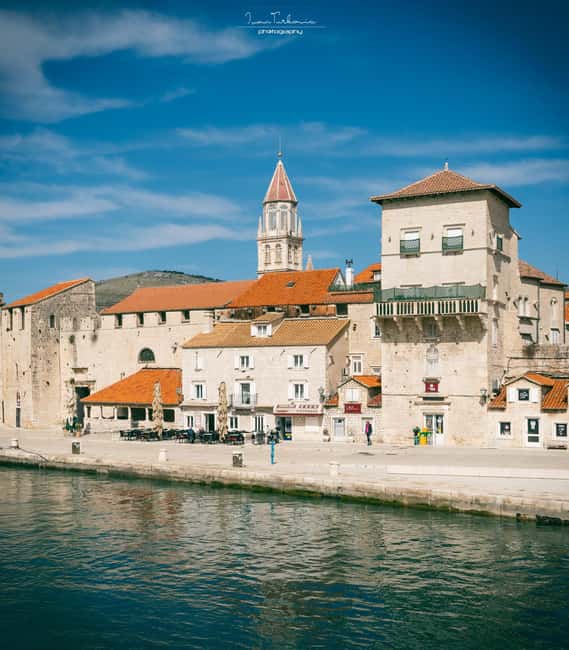
Reviewed · TROGIR TOURS
Discover Trogir: Guided Walking Tour of a Medieval Gem
Trogir’s best sights sit close together, and this 90-minute walking tour gives you a clear path through them without wasting time. You’ll pass beneath the old town gate, thread through narrow stone streets, see St. Lawrence Cathedral, and finish with the Adriatic waterfront and views toward Kamerlengo Fortress.
I like the way the tour mixes major monuments with smaller stories about everyday life. I also like the local touch: guides including Anna and Daniela explain Trogir’s past with warmth, and one guide, a native of the town, shared personal connections to its history. The main consideration is pace. Ninety minutes is enough for a strong introduction, but not a long, unhurried look at every church, palace, or fortress.
Key points
- St. Lawrence Cathedral gives the walk its finest architectural stop, with Gothic and Renaissance details to study.
- Trogir’s compact old town makes this a useful first visit, especially if you want orientation before exploring alone.
- Kamerlengo Fortress adds a broader view of the Adriatic and a sense of Trogir’s defensive past.
- Local guides such as Anna and Daniela add personal stories, not just dates and names.
- The 90-minute length works well for a morning, an afternoon between plans, or a port stop.
- Wheelchair accessibility and flexible booking terms make the tour easier to fit into varied travel plans.
Entering Trogir through the old town gate
The walk begins with one of Trogir’s most effective introductions: the ancient town gate. Passing through it changes the feel of the visit at once. Outside, you are in a modern Croatian coastal town. Inside, you enter a tight medieval center shaped by stone walls, narrow lanes, palaces, churches, and small squares.
I like guided walks in places such as Trogir because the streets can look simple at first glance. A local guide helps you notice how the old town was built and why its buildings sit so close together. You are not just crossing from one attraction to the next. You are learning how the town developed from its Roman beginnings through its medieval period and later chapters.
The gate also gives your guide a natural place to explain Trogir’s defensive role. Ancient walls and restricted entrances were practical features, not decoration. That context helps the rest of the walk make sense, especially when you later reach Kamerlengo Fortress.
Expect stone underfoot and a route through narrow streets. The activity is listed as wheelchair accessible, though the old town’s historic paving and tight lanes may still make comfort dependent on the exact route and your mobility needs. If that matters to you, confirm the meeting point and route before booking.
More walking tours in Trogir:
- Trogir: City Highlights Guided Walking Tour
★ 4.9 · 199 reviews - Private Trogir walking tour with LOCAL guide
★ 4.8 · 23 reviews - Dubrovnik: Old Town Walking Tour
★ 4.8 · 5,174 reviews
Reading Trogir’s past in its narrow streets
The old town is the heart of this experience. Its compact layout lets you see several layers of Dalmatian history during one short walk. Roman origins, medieval power, religious influence, and daily life all appear in the buildings around you.
A guide is particularly useful here because the most meaningful details may not be the largest ones. You might pass an old palace and hear who used it, then turn into a quiet lane where the guide explains how people lived in earlier centuries. The strongest part of the experience is likely to be this blend of broad history and small human stories.
That approach came through in the guiding style associated with this tour. Daniela has been praised for explaining not only the city’s past, but also little stories about daily life then and now. Other guides have been described as friendly, patient, and attentive to the group’s comfort, including checking that everyone was doing well and had water.
Those details matter. Trogir can be busy, especially in the warmer months, and a guide who keeps an eye on the group makes a short walk feel more relaxed. English is the stated tour language, so you should be comfortable following a live explanation in English.
The old town section is also a good reason to take the tour early in your stay. Once you understand the main street pattern and key landmarks, you can return on your own to browse, eat, photograph details, or revisit a church without constantly checking a map.
St. Lawrence Cathedral and its layered design
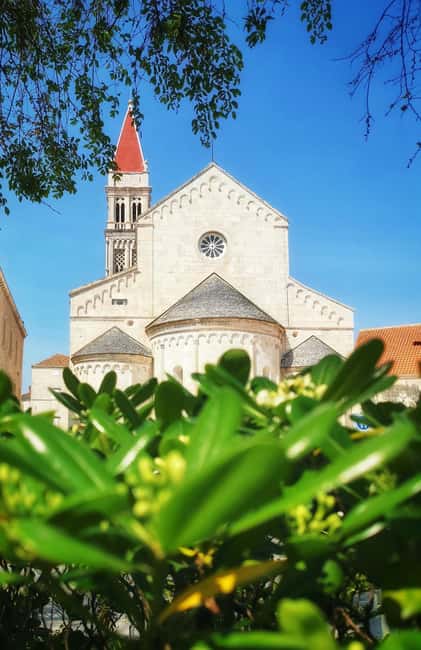
St. Lawrence Cathedral is the architectural centerpiece of the walk. The cathedral combines Gothic and Renaissance work, giving you more than one style to look for as you study the stonework and structure.
You will get more from this stop with a guide than by simply taking photographs outside. Ask your guide to point out the details that show the change in building styles. Gothic forms tend to draw the eye upward, while Renaissance influence brings a different sense of balance and order. Even if you are not an architecture specialist, comparing those elements gives you a useful way to read the building.
The cathedral also shows why Trogir earned UNESCO World Heritage status. The designation is not just a badge for the town. It reflects the concentration of historic buildings and the way the old center preserves a long sequence of European and Adriatic history in a small area.
The tour description emphasizes the cathedral’s intricate details, but the visit is still part of a larger walk rather than a dedicated cathedral study. If you want extensive information about every sculpture, chapel, or interior feature, you may need more time afterward. For a first look, though, it is a strong anchor.
I would pay attention to how your guide connects the cathedral to the town around it. Religious buildings were never isolated from civic life. Their size, position, and decoration tell you something about the importance of Trogir during its medieval high point.
Kamerlengo Fortress and the Adriatic outlook
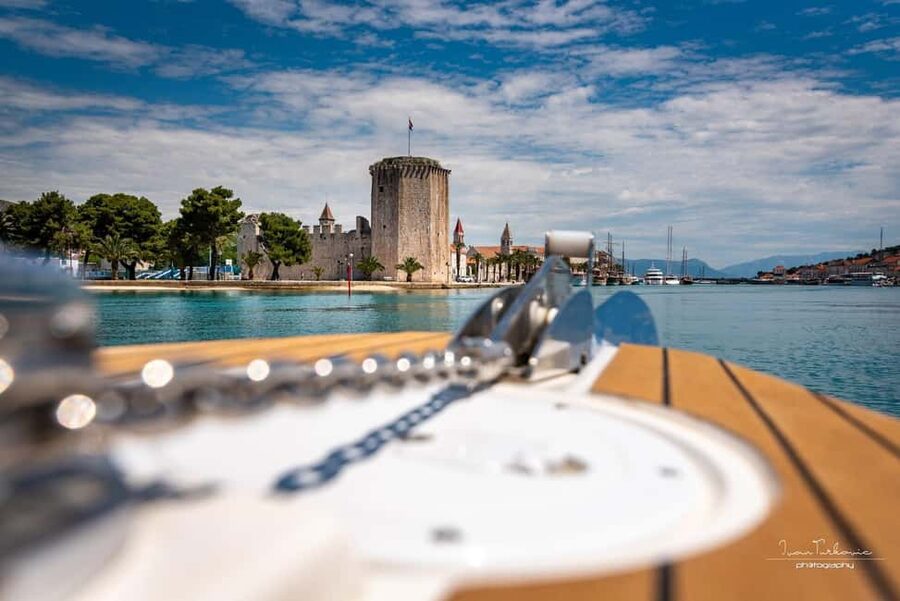
Kamerlengo Fortress adds a different mood to the tour. The cathedral shows artistic and religious ambition. The fortress points to defense, control, and the need to protect a coastal town.
The fortress is described as part of the experience and offers panoramic views of the Adriatic Sea. That makes it a useful change of pace after the enclosed streets. You get a broader sense of Trogir’s position and can look beyond the old town toward the water.
I like this contrast. A walking tour that stays only among churches and lanes can feel flat after a while. Kamerlengo gives you space, height, and a visual reminder that Trogir’s past was tied to the sea.
The available information does not confirm how long the group spends inside the fortress or whether every departure includes extensive interior access. Treat it as an important exterior and viewpoint stop within the route, not as a full fortress tour. Your guide can explain what you are seeing and place it in the wider story of the town.
Bring water, especially in summer. A recent guide was praised for checking that the group had enough to drink, but you should still carry your own bottle. The tour lasts only 90 minutes, yet the stone streets and warm Dalmatian sun can make a short walk feel more demanding than the clock suggests.
A few more Trogir half-days to weigh up
- Blue cave, Mama Mia and Hvar, 5 island speedboat tour from Trogir
★ 5.0 · 2,861 reviews - From Trogir: Three Islands Half-Day Speedboat Tour
★ 4.8 · 804 reviews - From Trogir or Split: Full-Day Blue Cave & Hvar Island Tour
★ 4.7 · 413 reviews - Half Day Speedboat Tour to Three Islands from Trogir
★ 5.0 · 401 reviews
The waterfront promenade as a fitting finish
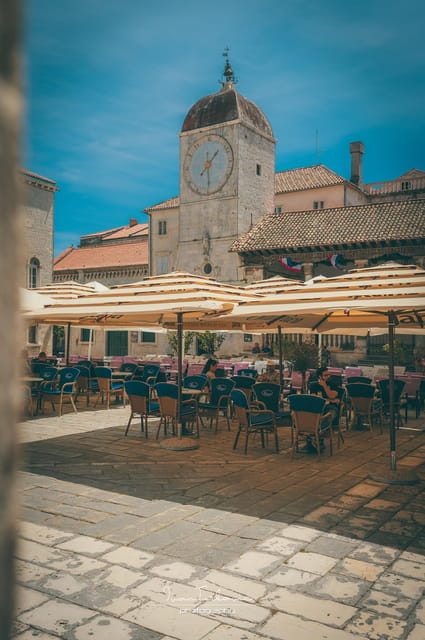
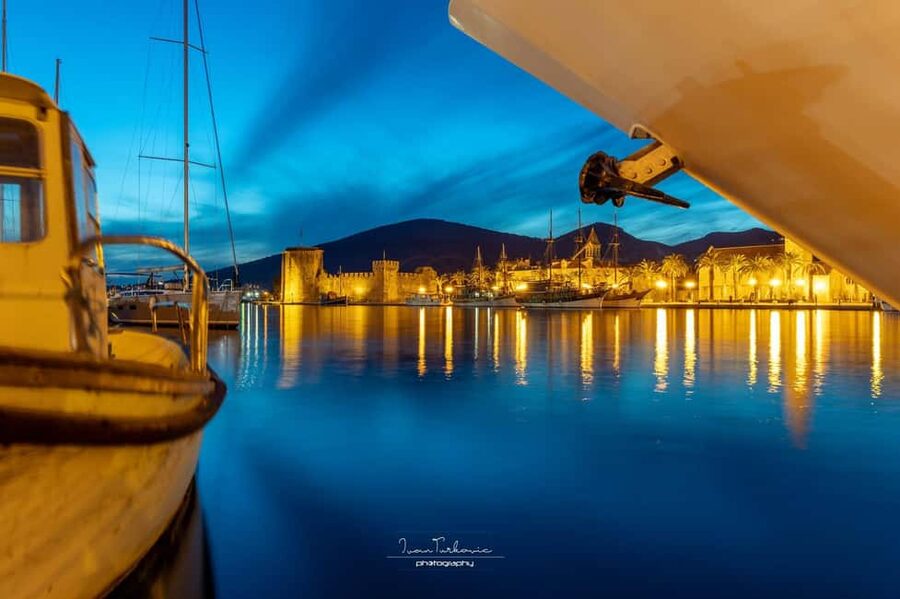
The waterfront provides a pleasant final stretch. After the close lanes of the old town, the promenade opens the view and gives you time to see Trogir from a different angle.
This is where the town’s coastal setting becomes most obvious. Boats, sea views, historic walls, and the outline of the old center come together in a setting made for a slow look. The walk is described as leisurely here, so the waterfront should feel less like another checklist stop and more like a chance to absorb the town.
I find waterfront endings useful because they leave you oriented. You know where the old center meets the water, where to return for photographs, and which direction to take if you want to continue exploring after the guide says goodbye.
The promenade is also a practical place to decide what to do next. You might return to the cathedral, explore more lanes, visit a café, or spend time near the fortress. The tour does not try to fill an entire day, and that is a strength for visitors who want guidance without surrendering their whole schedule.
What the guide adds to a short tour
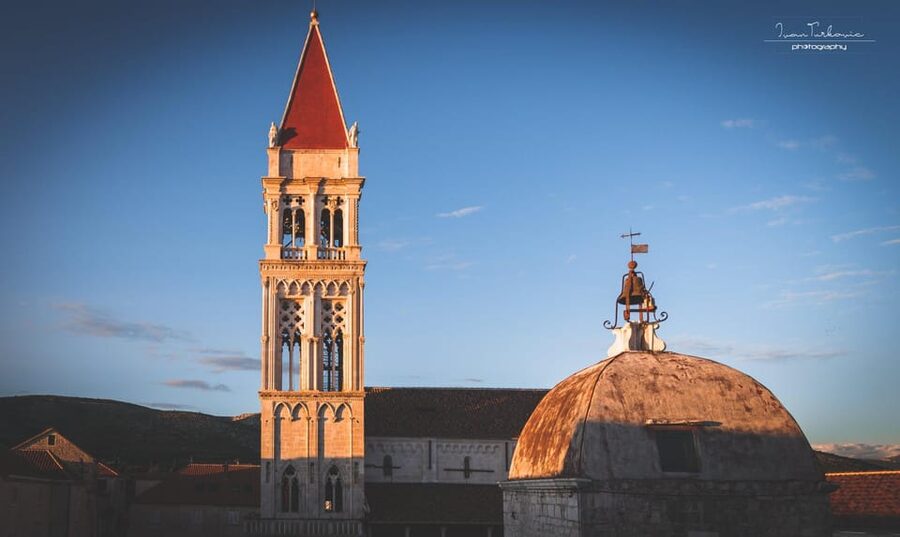
The quality of this experience rests heavily on the guide. The route itself is valuable, but Trogir’s streets and monuments can be seen without a tour. You are paying for interpretation, local context, and a smoother introduction.
The strongest guiding traits connected with this experience are warmth, clear explanations, patience, and attention to the group. Anna has been singled out for her explanations of the beautiful sites. Daniela has been associated with the everyday stories that make the past easier to picture. A guide from Trogir can also give the town a personal voice that a standard audio guide cannot match.
That does not mean every departure will feel identical. Live tours vary with the guide, group size, weather, and the questions people ask. Still, the repeated pattern is clear: this is intended to be a personal, conversational walk rather than a dry recital of dates.
I would ask questions as you go. Find out how Trogir changed from Roman settlement to medieval center, which buildings had civic importance, and how the town’s position on the coast shaped its fortunes. The guide’s answers may become the most memorable part of the walk.
The stated language is English. If you need another language, this experience is not presented as a multilingual tour, so you should not book it expecting French, German, Danish, or another language.
Is $17 a fair price for 90 minutes?
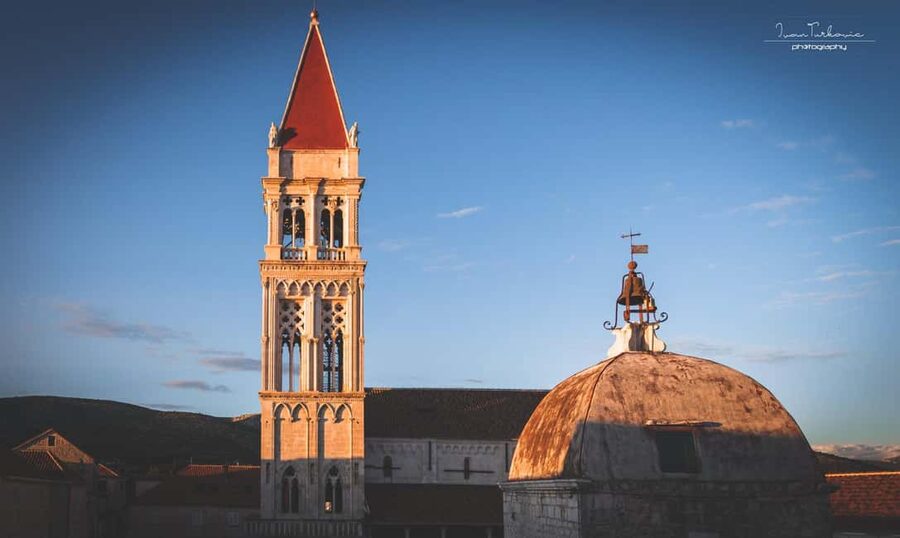
At $17 per person, this tour offers solid value if you want a guided introduction rather than a full-day program. The price includes a local guide, and the route covers Trogir’s main historic areas, cathedral, fortress viewpoint, gate, and waterfront.
The value comes from concentration. You are not paying for transportation, meals, or a large bundle of admissions. You are paying for 90 minutes of explanation in a town where the main sights are close together. That keeps the cost modest and lets you spend the rest of the day as you choose.
It may be less appealing if you already know Trogir well or prefer to wander without a schedule. You might also want a longer specialist visit if architecture is your main interest. For a first visit, though, $17 is a reasonable price for a focused orientation.
The tour also has practical flexibility. You can reserve now and pay later, and cancellation is free up to 24 hours before the start for a full refund. Those terms are useful if your Croatian plans are still shifting.
Who will get the most from this Trogir walk?
I would recommend this tour to a first-time visitor who wants the town explained in plain English. It suits couples, families, solo visitors, and anyone who prefers a local voice to a guidebook paragraph.
It is especially useful if you have only a short window in Trogir. The route brings together the old town, cathedral, gate, fortress, and waterfront in one compact introduction. Afterward, you can decide which places deserve a closer look.
History and architecture fans will appreciate the cathedral, ancient walls, palaces, and Roman-to-medieval timeline. You do not need specialist knowledge to enjoy them. The guide’s job is to show you what matters and explain why.
The tour may also suit people who dislike large, impersonal sightseeing groups. Group size is not specified, so you should not assume a private or guaranteed small-group experience. Still, the guiding style described for this activity places real value on personal attention and checking that everyone is keeping up.
Wheelchair users can consider it because the activity is marked wheelchair accessible. Since Trogir is a historic stone town, confirm the precise route if surface conditions or narrow passages are important for you.
How to make the most of the 90 minutes
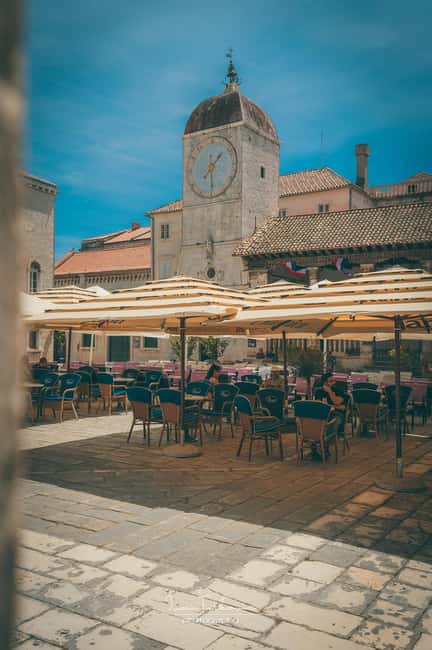
I would arrive ready to walk, with comfortable shoes and water. The route is short in clock time but takes place in a historic center with stone paving and narrow streets.
Try to avoid treating the tour as a photo race. Take pictures, but keep your attention on the explanations around the cathedral, fortress, and old lanes. A small detail about daily life can give you a better feel for Trogir than another quick photograph of a façade.
If you are sensitive to heat, choose the coolest available start time. The activity page asks you to check availability for starting times, so you can fit it around the day rather than assuming a fixed departure.
I would also leave open time after the walk. Ninety minutes gives you a framework, not a complete visit. The waterfront and old town are worth revisiting at your own pace once you know what you are looking at.
Should you book the Trogir Walking Tour?
Book it if you want a short, affordable introduction led by an English-speaking local guide. The combination of St. Lawrence Cathedral, the old town, the ancient gate, Kamerlengo Fortress, and the waterfront covers the essential shape of Trogir without taking over your day.
I especially like the reported guiding style linked with Anna, Daniela, and other local guides: clear history, personal warmth, and small stories about ordinary life. That is the right mix for a town where the atmosphere matters as much as the monuments.
Skip it if you want a long architectural inspection, a private tour, or guaranteed access details for every fortress and cathedral interior. For most first-time visitors, though, $17 buys a sensible first look at one of Dalmatia’s most rewarding historic towns.
FAQ
Where does the tour take place?
The tour takes place in Trogir, in Dalmatia, Croatia.
How long does the Trogir Walking Tour last?
The tour lasts 90 minutes.
What language is the tour conducted in?
The live tour guide speaks English, and English is the stated tour language.
What sights are included?
The route includes St. Lawrence Cathedral, Trogir’s old town, the ancient town gate, the waterfront promenade, and Kamerlengo Fortress.
Is Kamerlengo Fortress part of the tour?
Yes. The experience includes exploration of Kamerlengo Fortress, which offers panoramic views of the Adriatic Sea.
Is the activity wheelchair accessible?
Yes, the activity is listed as wheelchair accessible.
What is included in the price?
A local guide is included. The price is listed as $17 per person.
Can I cancel for a full refund?
Yes. You can cancel up to 24 hours in advance for a full refund.
Can I reserve now and pay later?
Yes. You can reserve your place and pay later, which allows more flexibility while arranging your plans.
Just added around Trogir
- Split and Salona Cultural Heritage Day Tour from Trogir★ 4.0 · 3 reviews
- Split: Private tour to Salona, Vitturi castle and Trogir★ 5.0 · 6 reviews
- Split and Trogir private tour *ideal for cruise ship guests*★ 5.0 · 3 reviews
- Private Trogir walking tour with LOCAL guide★ 4.8 · 23 reviews
- Private tour from Split area: Trogir and Krka National Park★ 5.0 · 7 reviews
- From Trogir Day sailing (private tour)★ 5.0 · 4 reviews
- From Trogir: 3 islands half day tour with Blue Lagoon★ 4.9 · 26 reviews
- From Trogir, Seget & Okrug: Krka Waterfalls & Swimming★ 4.8 · 25 reviews
Trogir Tours, compared.
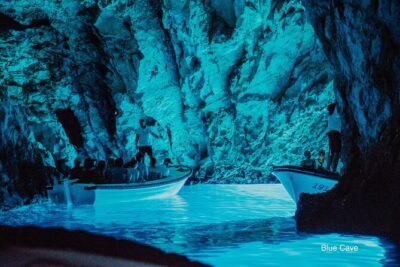
Blue cave, Mama Mia and Hvar, 5 island speedboat tour from Trogir
Read our review →
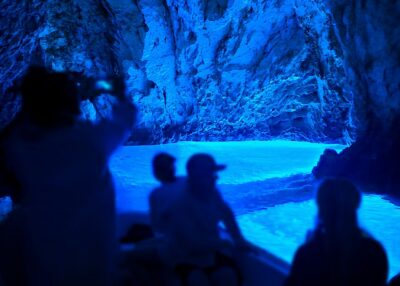

Half Day Speedboat Tour to Three Islands from Trogir
Read our review →
Blue Lagoon & Šolta Island from Trogir LUNCH & DRINKS INCLUDED
Read our review →
Trogir, Žedno: Čiovo Island 100% Off-Road Quad ATV Tour
Read our review →
Zagreb to Split Group Transfer with Plitvice Lakes guided Tour
Read our review →Browse the lists this tour appears in