
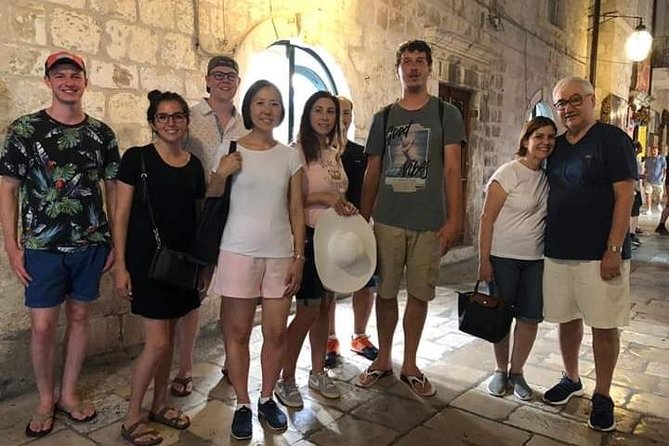
Reviewed · DUBROVNIK TOURS
Dubrovnik By Night Walking Tour
Dubrovnik changes character after sunset. The stone glows under street lamps, the worst heat has eased, and the Old Town feels calmer as you move from Pile Bay along Stradun. I like the cooler evening timing and the way this walk connects grand sights with everyday stories about local life, old social rules, and medieval Ragusa.
I also like the personal touch offered by guides such as Anne-Femica, Mihaela, Petra, Roko, Ines, and Goran. Several guides have added modern Croatian life, the 1991 war, local customs, and useful restaurant or bar tips to the historic tour. The main consideration is its length: 90 minutes gives you a strong introduction, but not a full tour of every corner or a long walk around the city.
Key points to know before you book
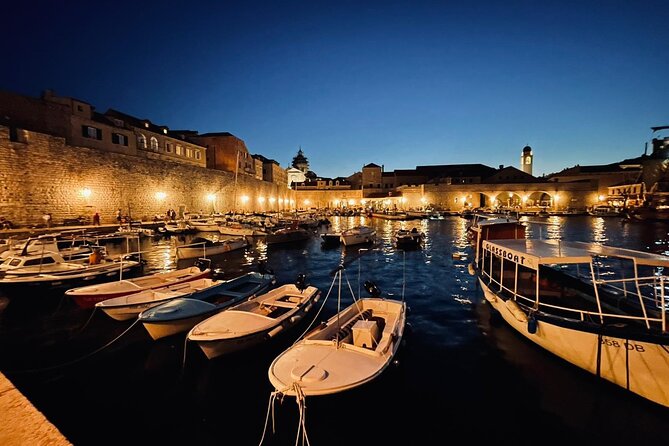
- Pile Bay sets the scene: Begin outside the Old Town with views toward Lovrjenac and stories about its role in Dubrovnik’s defenses.
- Stradun is the central thread: Walk the polished main street, then turn into smaller lanes and hear how the city worked beyond its grand facades.
- The Jesuit Stairs provide a memorable stop: Their dramatic design makes them one of the evening’s best photo points.
- Luza Square brings the city’s symbols together: See Orlando’s Column and the surrounding historic buildings under soft night lighting.
- The cathedral adds medieval depth: The route includes Dubrovnik’s Old Town cathedral and the stories tied to the city’s faith and civic life.
- Good value for a first look: At $23 per person, it is a sensible introduction, especially if you have only one day in Dubrovnik.
Why Dubrovnik works so well after sunset
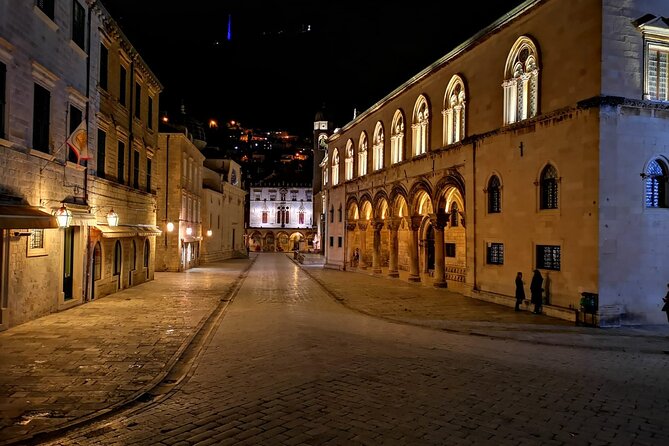
Dubrovnik is famous for its walls, red roofs, sea views, and polished limestone streets. In daylight, those sights can feel grand but busy. At night, the city becomes easier to read. Street lamps pick out arches, stairways, carved stone, and church fronts without the hard glare of the midday sun.
The evening timing also matters in Dalmatia. Summer heat can make a historic-center walk tiring, especially on sloping lanes and stone steps. Tours have been offered at times such as 8 p.m., and the later start is a smart choice when available. You get a more comfortable walk and a better chance to enjoy the Old Town without the thickest daytime crowds.
I would not book this tour only for photographs, but the lighting is a real bonus. Stradun gleams, the Jesuit Stairs feel more theatrical, and the old buildings take on a softer look. Live music from nearby venues may provide a relaxed background as you pass through the streets, though the exact atmosphere will change from evening to evening.
The tour has a 4.8 rating from 208 reviews, which fits its main strength: it is a short, friendly introduction rather than a demanding historical lecture. The best guides keep the pace conversational and leave room for questions.
More walking tours in Dubrovnik:
- Dubrovnik: Old Town Walking Tour
★ 4.8 · 5,174 reviews - Dubrovnik Discovery Old Town Walking Tour
★ 5.0 · 4,458 reviews - Dubrovnik: Game of Thrones Walking Tour
★ 5.0 · 1,732 reviews
Meeting at Pile Bay and Lovrjenac
The meeting point is Pile Square, outside the Old Town, by the Amerling Fountain and next to Dubravka restaurant. Look for the blue umbrella marked with the local provider’s logo. This is a useful starting point because Pile is one of Dubrovnik’s main gateways, and you do not need to enter the Old Town first to find the group.
Your guide begins with Pile Bay and stories about Lovrjenac, the fortress rising above the water. The fort is one of the city’s key defensive sites, and this opening helps explain why Dubrovnik developed as a fortified maritime republic. You get a sense of the city’s position before moving into its streets.
This first section is also a good place to ask practical questions. If you are taking the tour on your first evening, ask your guide about the layout of the Old Town, places to stop for a drink, and areas you may want to revisit. Several guides have offered useful local suggestions during the walk, making the tour more than a string of dates and names.
The group then heads toward the Old Town. Exact group size can vary. Some departures have been small, with only four or six people, while other walks have handled larger groups. A small group makes it easier to ask questions and stop for pictures. In a larger group, stay near the guide so you can hear the explanations clearly.
Stradun, Dubrovnik’s polished main street
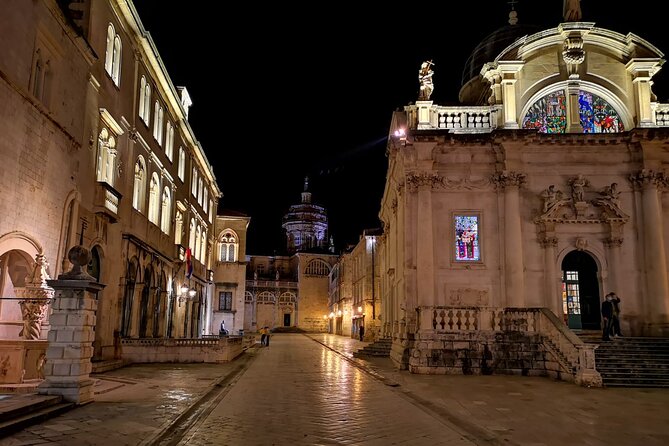
Inside the Old Town, the route reaches Stradun, also called Placa. This is Dubrovnik’s best-known street and the main east-west route through the historic center. Its broad, pale stone surface is lined with historic buildings, shops, cafés, and side passages.
Stradun is easy to admire, but the guide gives it meaning. You hear how the street functions as the city’s public spine and how Dubrovnik’s social life has long centered on shared spaces. The walk also touches on local behavior and class divisions, subjects that help you see beyond the postcard view.
I like this part because it gives you a useful framework for the rest of your stay. After the tour, you will recognize Stradun as more than a pretty thoroughfare. It becomes the route that links squares, churches, narrow lanes, and daily city life.
The drawback is that you will not spend a long time in every side street. The tour is designed as a broad overview, so the guide must keep moving. If you want detailed architecture at every doorway or a full account of each building, you will need a longer specialist tour or time to explore independently.
Still, the pace appears deliberately relaxed. Guides such as Mihaela and Petra have been praised for explaining history without rushing, while Anne-Femica has allowed time for photos and questions. That balance is especially helpful if you are traveling with children or if your group includes people with different interests.
The Jesuit Stairs and the Old Town’s side lanes
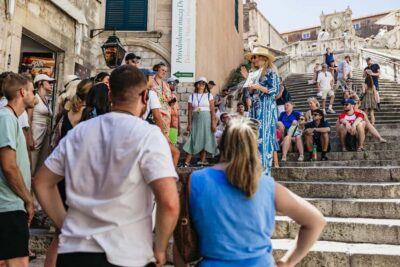
One of the most striking stops is the Jesuit Stairs. The staircase rises in a sweeping curve and creates a strong visual link between the lower street and the church area above. At night, the stone and shadows make the stairs especially atmospheric.
Your guide will explain the importance of the area, but the exact amount of detail can depend on the person leading your walk. Some guides focus more on architecture and religious history. Others connect the location to local customs, city life, and Game of Thrones filming lore.
That last subject may appear during the tour, but you do not need to know the show to enjoy the route. Game of Thrones fans may recognize a few settings, while people who have never watched it can still appreciate the real history and architecture. The strongest guides keep the television references as an extra rather than the main event.
The side streets near Stradun are another useful part of the route. These lanes reveal a quieter Dubrovnik, with small bars and places where you might stop for a drink later. You are not promised a bar visit or a tasting, so think of this as an introduction to the evening scene rather than a nightlife tour.
The lanes can also be uneven and stair-filled. Wear shoes that feel secure on smooth stone, and do not expect a completely flat walk. The tour is only 90 minutes, but Dubrovnik’s streets can make a short walk feel more active than the time suggests.
More evenings out in Dubrovnik:
- Dubrovnik: Sea Kayaking&Snorkelling Guided Day/Sunset Tours
★ 4.8 · 1,554 reviews - Dubrovnik: City Walls Early Morning or Sunset Walking Tour
★ 4.8 · 1,523 reviews - Sunset Sea Kayaking and Wine Dubrovnik
★ 5.0 · 949 reviews - Dubrovnik: Sunset Zip Line Experience Followed by Wine
★ 4.9 · 921 reviews
Luza Square and Orlando’s Column
The route continues to Luza Square, one of the Old Town’s most important gathering points. Here, Orlando’s Column provides a clear symbol of Dubrovnik’s civic identity and links the square to the city’s medieval past.
This is the sort of stop where a good guide makes a big difference. A quick look at a column is easy. A story about what it represented, who used the square, and how public life worked in Ragusa gives the monument a reason to matter.
The tour’s historical approach is not limited to famous rulers or military events. Guides have connected Dubrovnik’s past with the history of visitors’ own countries, showing where regional events overlapped. That can make a short explanation feel more personal and easier to remember.
The square is also a natural pause for photographs. The lighting can be beautiful, but the Old Town remains an active public place, so you may share the area with people dining, walking, or enjoying evening music. The night setting reduces some of the daytime pressure, but it does not turn Dubrovnik into an empty museum.
The medieval cathedral and stories of modern Dubrovnik
The walk includes the medieval cathedral in the Old Town. Its presence adds another layer to Dubrovnik’s story, showing how religion, public life, art, and politics have occupied the same compact streets for centuries.
Your guide will point out the cathedral and place it within the wider route. Since the tour is a walking experience rather than an interior-focused church visit, do not expect a long examination of every artwork or a guaranteed extended stop inside. The value comes from seeing the cathedral in context, alongside the squares and streets that shaped the city.
The most useful part of the tour may be the bridge between past and present. Guides have discussed how locals treat the Old Town today, as well as what it was like to live through the war that began in 1991. Anne-Femica, in particular, has shared firsthand memories of that period. These personal details give you a better understanding of Dubrovnik as a lived-in city, not just a historic setting.
That modern angle is important. Dubrovnik can feel like a preserved stage set, especially at night when the lights soften the stone. Listening to a local guide talk about resident life, tourism, and recent events brings the city back into the present.
The guides shape the experience
The provider uses licensed local English-speaking guides, and the personality of your guide will affect the evening. Names associated with recent departures include Anne-Femica, Mihaela, Petra, Roko, Ines, Daniela, Makayla, and Goran.
The strongest pattern is clear: guides are praised for warmth, humor, local perspective, and the ability to explain a lot without overloading the group. That last point matters. Dubrovnik has many layers, and a guide who tries to cover every date can turn a pleasant night walk into a history exam.
Anne-Femica has been noted for mixing history, present-day life, personal stories, and playful interaction with children. Mihaela has been described as relaxed and conversational, with useful local suggestions. Petra has brought clear enthusiasm for Croatian culture, while Goran has built his walks around detailed stories and humor.
Guide assignments can change, so you should not book on the assumption that one specific person will lead your departure. Still, the range of praised guides suggests a strong local team. You can expect the walk to be shaped by the guide’s interests, questions from the group, and the night’s pace.
Is $23 good value for 90 minutes?
At $23 per person, this tour offers fair value if you want orientation and context. You see several major locations, hear local stories, and finish with a better sense of how the Old Town fits together. A private guide would cost much more, while exploring alone would give you the sights without the connections between them.
The value is strongest for three types of visitors:
- First-time visitors: Take it early in your stay so the rest of Dubrovnik makes more sense.
- Short-stay visitors: If you have only one day, this gives you a compact overview without using half your day.
- Summer visitors: An evening walk avoids the worst heat and offers a calmer look at the city.
It is less suitable if you want to walk the city walls, visit interiors in depth, or cover a large area. One person specifically wanted more walking to see more of Dubrovnik. That is a fair limitation. This is a guided introduction through central sights, not a full Old Town survey.
The booking terms add flexibility. You can cancel up to 24 hours before the tour for a full refund, and you can reserve now while paying later. Check the available start times before booking, since the evening schedule changes by date.
Tips for getting the most from the walk
Arrive at Pile Square with a few minutes to spare. The blue umbrella and Amerling Fountain make the meeting point easier to identify, but the area can still be busy around tour departure times.
Bring water, especially in the warmer months, and wear shoes with a good grip. The route uses stone streets and includes stairs. You may also want a small amount of cash if you plan to tip your guide. One participant wished they had brought cash for this purpose.
Keep your camera ready, but do not let it take over the walk. The best moments may be the explanations between major stops, such as a story about local behavior, a comment about the war, or a guide’s suggestion for a quiet drink later.
If you have children, tell the guide at the start. Anne-Femica has been particularly good at keeping children involved, but any guide can adjust the storytelling when they know what your group needs.
Finally, treat Game of Thrones references as optional seasoning. Fans will enjoy the filming connections, but the walk is still worthwhile for its history, architecture, and local perspective.
Who should book this Dubrovnik night tour?
I would book it as an early evening introduction, especially on your first day. The route covers Pile Bay, Lovrjenac, Stradun, the Jesuit Stairs, Luza Square, Orlando’s Column, and the cathedral, giving you a useful map of the Old Town in a short time.
You should book if you value a friendly guide, local stories, manageable timing, and a cooler alternative to daytime sightseeing. You should skip it if your priority is the city walls, museum interiors, or a long architectural study.
For $23, the tour delivers a lot in 90 minutes. Its real strength is not the number of sights. It is the way a local guide can turn a beautiful night walk into a clearer picture of Dubrovnik’s past and present.
FAQ
How long is the Dubrovnik By Night Walking Tour?
The tour lasts 90 minutes.
How much does the tour cost?
The listed price is $23 per person.
Where does the tour meet?
Meet at Pile Square by the Amerling Fountain, outside the Old Town and next to Dubravka restaurant. Look for the blue umbrella with the local tour provider logo.
What language is the tour offered in?
The tour is conducted in English by a live, licensed local guide.
What sights are included?
The route includes Pile Bay, views and stories about Lovrjenac, Stradun, the Jesuit Stairs, Luza Square, Orlando’s Column, and the medieval cathedral in the Old Town.
Can I cancel the booking?
You can cancel up to 24 hours in advance for a full refund. You can also reserve now and pay later.
Just added around Dubrovnik
- Full- Day Private Speedboat Tour in Dubrovnik on Elaphiti Islands★ 5.0 · 21 reviews
- Elaphiti Islands Private Dubrovnik Boat Unique Experience★ 5.0 · 10 reviews
- Wine Lover’s Tour of Peljesac Peninsula★ 5.0 · 150 reviews
- Wine tour peninsula Pelješac★ 5.0 · 3 reviews
- Dubrovnik at War 1991-1992 Private Walking Tour★ 5.0 · 4 reviews
- PRIVATE Wine Tour to Konavle country side★ 5.0 · 11 reviews
- Walls of Liberty: A Self-Guided Audio Tour of Dubrovnik★ 3.5 · 3 reviews
- Parasailing in Cavtat★ 5.0 · 62 reviews
Dubrovnik Tours, compared.

Blue Cave Small-Group Boat Tour from Dubrovnik
Read our review →
Full-Day Dubrovnik Elaphite Islands Cruise with Lunch and Drinks
Read our review →
Epic Game of Thrones Tour + Lokrum & Saver Option
Read our review →
The Original Game of Thrones Tour & Lokrum Option
Read our review →
Dubrovnik Game of Thrones Tour & Optional Lokrum Island Visit
Read our review →
Elaphite Island Cruise w/ Drinks & Optional Lunch
Read our review →Browse the lists this tour appears in