
Reviewed · SPLIT TOURS
Split: 1.5-Hour Walking Tour and Diocletian’s Palace
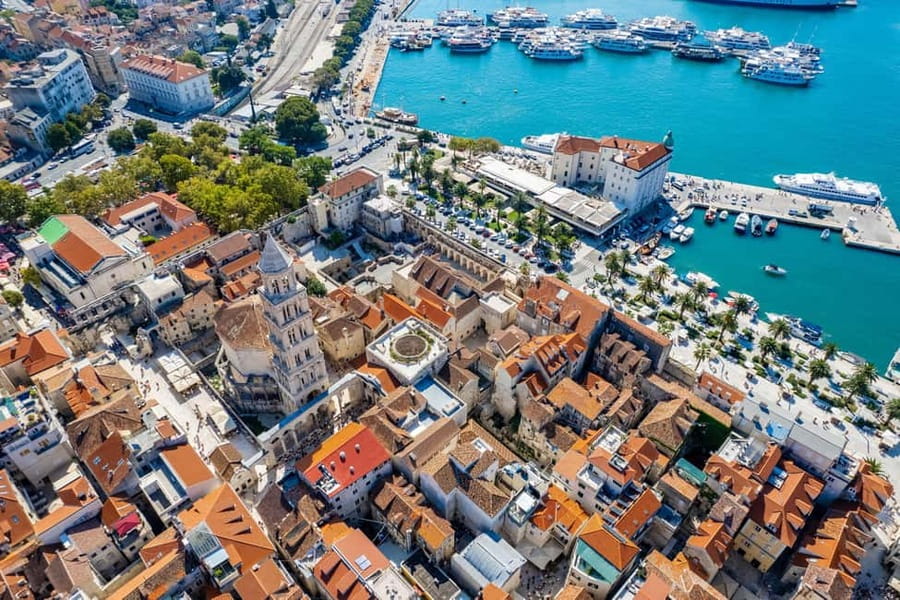
Split’s old town is not a museum behind ropes. It is a living Roman palace, with laundry above ancient walls, cafés tucked into imperial rooms, and locals cutting through streets laid out nearly 1,700 years ago. This 90-minute to two-hour walking tour gives you a useful first look at that remarkable mix.
I like the route for two reasons: it covers the palace’s major gates, courtyards, cellars, and waterfront without wasting time, and the guides add everyday Split, including food tips, local opinions, and shortcuts through the old town. The main drawback is the uneven, stone-paved route, which can be hard for anyone with limited mobility. Entrance fees are not included, so budget a little extra if you want to enter paid sights.
Key points at a glance
- Roman palace beneath a modern city: Walk through Diocletian’s Palace, including its cellars and the central Peristyle.
- A strong first-day orientation: The route links the Golden Gate, People’s Square, Fruit Square, Riva, and the palace core.
- Local guidance matters here: Guides including Ana, Sandra, Ivan, Jelena, and Sandra have added personal stories, restaurant advice, and practical tips.
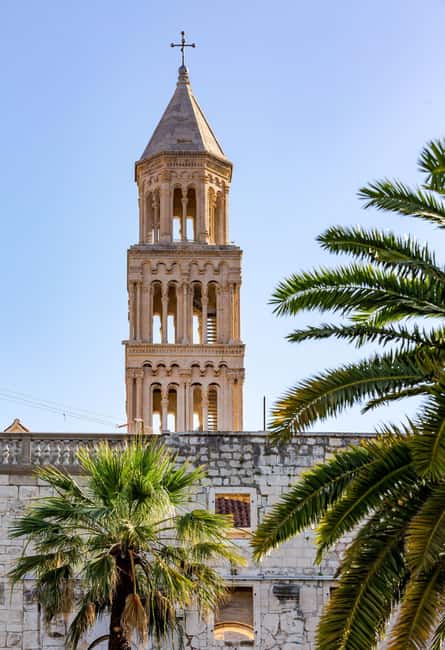
- The cathedral occupies an imperial tomb: Saint Domnius Cathedral was formed from Diocletian’s Roman mausoleum.
- Best in cooler hours: The 8 a.m. and 6 p.m. departures were singled out as more comfortable than hot, crowded midday walks.
- Plan for stone streets: Comfortable shoes are essential, and the tour is not recommended for people with mobility impairments.
Why Diocletian’s Palace makes a good walking tour
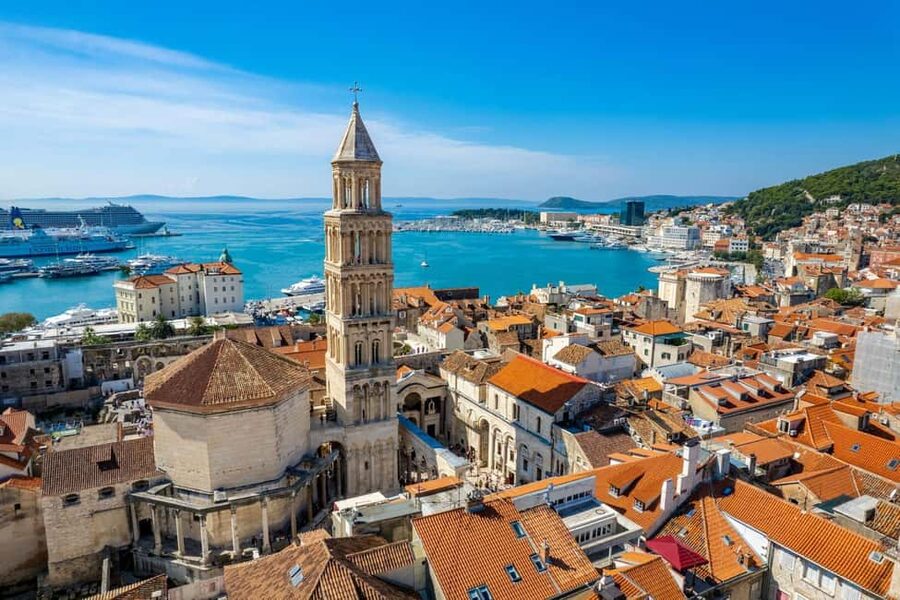
The palace is the reason to visit Split, but it is easy to misunderstand if you simply wander in alone. It was built for Roman Emperor Diocletian at the turn of the fourth century AD, yet the old town around you is not frozen in that period. Roman columns sit beside medieval homes, later Venetian work, Austro-Hungarian façades, and 20th-century buildings.
A guide helps you read the layers. You begin at the South Gate, the palace’s waterfront-facing entrance, then move toward the cellars and the main square. From there, the route spreads through the palace and the surrounding old town, making the city’s growth easier to follow.
I especially like this kind of introduction because Split rewards orientation. The lanes can feel confusing at first, but after walking from the Golden Gate to the Riva and back through the palace, you have a mental map. Several guides have also pointed out shortcuts and places worth returning to, which is practical if you have only a day in town.
The tour lasts long enough to explain the major sights without turning into an all-day history lecture. One hour and a half is a sensible length for a walking tour in warm weather. Some outings run closer to two hours, depending on the group and the guide’s pace.
More walking tours in Split:
- Split: Old Town and Diocletian Palace Walking Tour
★ 4.9 · 4,727 reviews - Walking Tour of Split and Diocletian’s Palace
★ 5.0 · 2,588 reviews - Krka Waterfalls tour with Trogir Walking tour and Krka panoramic boat cruise
★ 5.0 · 1,659 reviews
From the Golden Gate to the palace heart
The Golden Gate is one of the most impressive entry points into the old town. It gives you an immediate sense of the palace as a fortified imperial complex, rather than a single monument. Your guide explains how the gate fits into the original Roman plan and how the city later grew around it.
The route also pauses near the Game of Thrones Museum. The stop is brief, about five minutes, and the focus remains on sightseeing rather than a museum visit. If you enjoy the series, this is a useful extra layer, especially since Split and Diocletian’s Palace were used as filming locations. Guides have sometimes added filming details even when those stories were not the main subject of the walk.
From here, the tour heads into the maze of central streets. This is where Split begins to feel like a town rather than an archaeological site. You may see modern businesses operating inside old stone buildings, along with cafés and daily local life taking place beside Roman remains.
People’s Square and Fruit Square
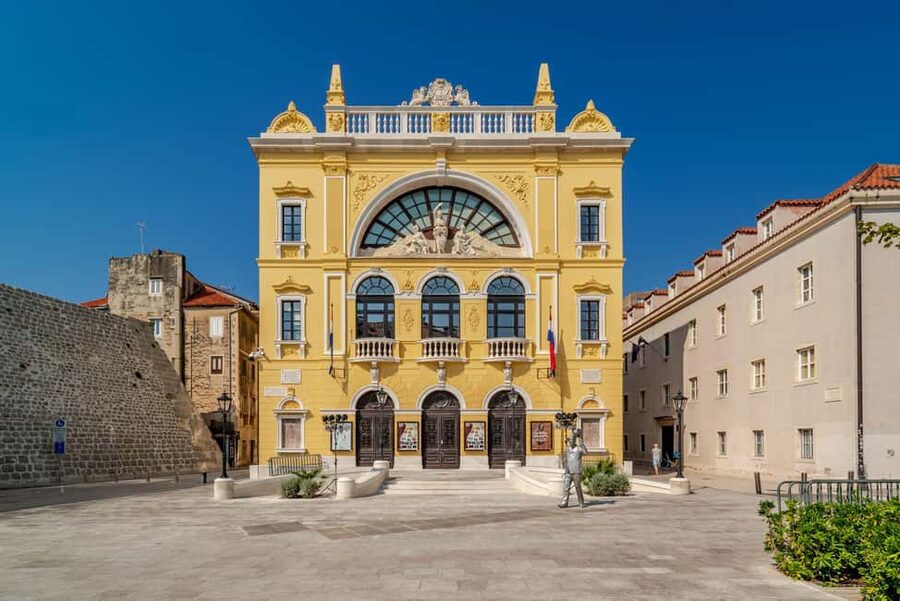
People’s Square is a good place to see how later periods shaped Split. The square sits outside the most enclosed sections of the palace and brings together architectural details from different eras. Your guide uses the buildings and street plan to explain how the Roman settlement expanded into a medieval and modern city.
The short stop at Fruit Square, or Voćni Trg, adds another piece of local history. It marks the site of an old fruit market and is one of the places where you can sense Split’s trading and social life. This is not just a quick list of dates. The better guides connect the square to how residents used the city, where people met, and how public spaces changed over time.
I would pay attention here to practical advice from your guide. Ana, Sandra, Ivan, Jelena, Iva, and other guides have been praised for recommending local taverns, authentic food, viewpoints, and activities for later. That advice can be more useful than another paragraph about Roman emperors, especially if you are deciding where to eat after the tour.
The tour is offered in English and Spanish. If a group includes both languages, the pace can be a little less smooth. One such experience was described as good rather than ideal because the group was divided between English and Spanish speakers. If you have a choice of departure or language, select the option that best matches your needs.
The Riva and views toward Marjan Hill
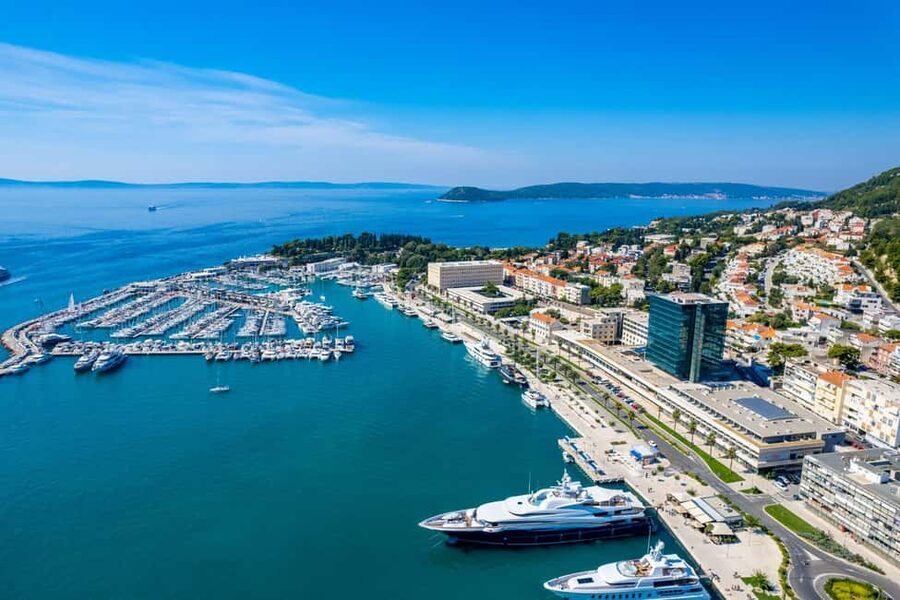
The route continues to the Riva, Split’s waterfront promenade. This is a welcome change after the narrow old-town lanes. You get a broader view toward Marjan Hill and a chance to understand Split’s relationship with the sea.
The Riva is also a useful orientation point. From here, you can see how close the old town is to the water and why the palace was placed where it was. Your guide may discuss the port and its current role, as one guide did while explaining both the old city and modern Split.
I like this stop because it keeps the tour from becoming too focused on stones and emperors. Split is a coastal city where history, work, cafés, ferries, and local routines overlap. The promenade gives you a quick look at that present-day side.
The timing matters. A morning walk can be more comfortable before the heat and larger crowds arrive. An 8 a.m. start was specifically recommended for getting through the old town more easily. The 6 p.m. departure was also praised as a cooler option with fewer people around. Check the available start times when booking, since they can vary by date.
A few more Split half-days to weigh up
- Split: Krka Waterfalls Trip with Boat Cruise and Swimming
★ 4.8 · 10,519 reviews - From Split: Krka Waterfalls, Food & Wine Tasting Tour
★ 5.0 · 9,326 reviews - Blue cave, Mamma Mia and Hvar, 5 islands speedboat tour
★ 5.0 · 7,150 reviews - From Split: Krka Waterfalls, Food & Wine Tasting Tour
★ 4.9 · 6,598 reviews
Entering Diocletian’s Palace and its cellars
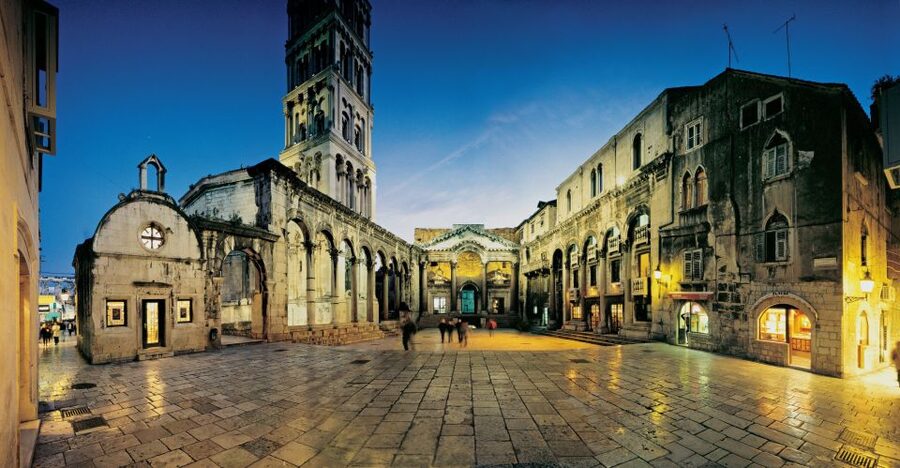
The palace section is the core of the experience. Diocletian built the complex as a retirement residence, but the surviving structure is far more than a private home. Its walls, gates, courtyards, temples, mausoleum, and underground spaces form the framework of modern Split.
The cellars are particularly useful because they preserve the shape of the Roman palace below today’s streets. As you walk through them, the layout above becomes easier to understand. You are not simply looking at old stone. You are seeing the lower structure that helped support the imperial residence.
The tour includes a visit to the Roman-era cellars, but entrance fees are listed separately from the guide service. Ask your guide or the activity provider exactly which paid areas are covered by your chosen booking before you arrive. This is the one part of the tour where the advertised route and extra admission costs deserve close attention.
The palace is also a place where the past and present sit side by side. You may turn from a Roman wall into a narrow lane lined with modern shops or step around locals using the same routes that visitors use. A guide can point out the difference between original Roman work, later rebuilding, and more recent additions.
Peristyle, the sphinx, and Saint Domnius Cathedral

The Peristyle is the palace’s great central square and one of the most memorable stops. It was designed as a ceremonial space, and its proportions still give it a strong sense of order. The tour explains its role in the palace and highlights the black granite Egyptian sphinx that remains near the square.
That sphinx is a striking reminder that Roman power reached far beyond Dalmatia. It also makes the Peristyle easy to remember: imperial architecture, Egyptian sculpture, and medieval and modern Split all meet in one compact place.
Nearby, the Cathedral of Saint Domnius occupies what was originally Diocletian’s mausoleum. The tour presents it as the oldest Catholic church in the world, and the building’s Roman origin is what makes it so unusual. You are looking at a Christian cathedral formed from an imperial Roman tomb.
The stop is guided sightseeing rather than a promise that every interior area or tower admission is included. Since entrance fees are not part of the listed price, confirm what you can enter during the walk and what requires a separate ticket. If seeing the cathedral interior is a priority, allow time and money for that separately.
The itinerary also includes the Vestibul, a round Roman entrance space near the Peristyle. It is a good photo stop and helps explain how visitors once moved from the palace’s public areas into more private sections. The curved form and stonework make it one of the easier places to appreciate without a long explanation.
How the guides shape the experience
The strongest part of this tour is the human explanation. Guides such as Sandra, Ana, Ivan, Jelena, and Iva have been praised for clear storytelling, warmth, humor, and strong knowledge of Split and Croatia. That combination matters because the palace can otherwise become a blur of dates and names.
Sandra has been described as especially passionate about the city’s past, with anecdotes that make the old town easier to picture. Ana has offered personal views about Croatian life and practical advice on where to eat and what to skip. Ivan has been noted for a relaxed manner and for helping people when the heat became difficult. Jelena has been praised for making the facts easy to follow and fun.
The exact guide depends on the departure, so do not book on the assumption that one particular person will lead your group. What you can reasonably expect is a live guide in English or Spanish, with the chance to ask questions and get advice tailored to your stay.
The personal angle is valuable here. You learn not only who built the palace, but how Split functions now. Some guides have discussed the port, local relationships, food, current life, and the country’s recent past. That is the difference between seeing Split as a Roman ruin and understanding it as a Croatian city built around an ancient core.
Price, timing, and what you receive
At about $41 per person, this is not the cheapest way to walk around Split. You are paying for a live guide and a structured route through a major historic center, not for transportation, food, or a bundle of entry tickets.
I think the price can be fair if you are visiting for the first time, have limited time, or want the palace explained in context. A guide can save you from wandering past important details and can help you decide which sights deserve a return visit. The restaurant and viewpoint suggestions also add value if you use them during the rest of your stay.
The value is weaker if you prefer to explore at your own pace or already know Roman architecture well. The walk is fairly short, and one four-star assessment wished for a longer version with more time inside the cathedral and Jupiter’s Temple. This is best viewed as an orientation tour, not a full archaeological study.
The booking terms are flexible: you can cancel up to 24 hours ahead for a full refund, and you can reserve now and pay later. The meeting point can vary by the option selected, with South Tours Travel Agency listed as a starting and return location for the standard route. Check your confirmation carefully before setting out.
Comfort, heat, and stone streets
Wear comfortable walking shoes. The route crosses old stone streets and includes palace passages, squares, waterfront pavement, and steps or uneven surfaces may occur along the historic route. The activity is officially not recommended for people with mobility impairments.
That warning should be taken seriously, but the route may not be impossible for every person with a mobility concern. One guide adapted a route for a wheelchair user, showing that local help can sometimes make a difference. Still, you should contact the provider before booking rather than assume the standard walk will work for you.
Heat is another practical issue. Split’s stone streets can feel hot, and shade is not guaranteed at every stop. Choose an early or evening time if available, carry water, and tell your guide if you need a slower pace. A previous guide responded helpfully when a participant struggled in the heat, but it is better to plan ahead.
Small groups are especially useful in the narrow palace lanes. Several experiences had only a few people, which made it easier to ask questions and move through historic areas without fuss. Group size is not specified as a fixed feature, so treat a small group as a possibility rather than a promise.
Who should book this Split walking tour?
I would recommend it to first-time visitors, cruise passengers with a short stay, couples, and anyone who wants a clear introduction before exploring alone. It is also a good fit if you enjoy history but prefer stories and local context to a long formal lecture.
Families with older children may appreciate the short length and the mix of Roman remains, city streets, the waterfront, and Game of Thrones references. People who want extensive indoor sightseeing, a cathedral tour, or a detailed study of every temple should choose a longer or more specialized experience.
If you are visiting Split for only one day, take this early if possible. You will learn the route, identify the palace’s main sights, and finish with useful ideas for food and later walks. If your schedule allows more time, use the tour as a first chapter, then return to the cathedral, cellars, or other paid sights at your own pace.
Should you book it?
Book this tour if you want a well-paced introduction to Split’s Roman core and value a local guide who can explain both ancient buildings and modern Croatian life. The strongest elements are the palace cellars, Peristyle, cathedral mausoleum, Riva views, and practical advice from guides such as Ana, Sandra, Ivan, and Jelena.
Skip it if you dislike guided walks, need a fully accessible route, or want every entrance included in the price. For most first visits, though, $41 is a reasonable fee for getting your bearings in a complicated old town, especially if you choose the cooler morning or evening departure.
FAQ
How long does the Split walking tour last?
The tour lasts between 90 minutes and two hours. The exact length can depend on the selected start time, guide, and pace of the group.
What language is the tour offered in?
Live tours are offered in English and Spanish. Check the available language when selecting your booking option.
Where does the tour start?
The starting point can vary depending on the option booked. South Tours Travel Agency is listed as a starting location for the standard route, and the tour returns there.
Does the tour include the Diocletian’s Palace cellars?
The route includes a visit to the Roman-era palace cellars. Entrance fees are not included in the activity price, so confirm any required admission cost before visiting.
Is Saint Domnius Cathedral included?
The itinerary includes guided sightseeing at the Cathedral of Saint Domnius. Entrance fees are not included, so admission to paid interior areas may require an additional fee.
Is the tour suitable for people with limited mobility?
The tour is not recommended for people with mobility impairments. Comfortable walking shoes are advised, and the historic route may be difficult because of old stone surfaces.
Are food and drinks included?
No. Food and beverages are not included in the tour price.
Can I cancel the booking?
You can cancel up to 24 hours in advance for a full refund. The reserve-now, pay-later option is also available, subject to the selected booking terms.
Just added around Split
- From Trogir, Seget, Okrug: Krka Waterfalls & Šibenik Culture Tour★ 5.0 · 10 reviews
- Krka Waterfalls & Primošten from Trogir, Seget, Čiovo & Kaštela★ 5.0 · 18 reviews
- Island Hopping Boat Excursion with Lunch (Trogir,Blue Lagoon, Šolta)★ 3.5 · 6 reviews
- From Split & Trogir: ATV Quad Tour on Island Čiovo★ 5.0 · 21 reviews
- Slatine – Island Hopping Excursion (Trogir/Blue Lagoon/Shipwreck)★ 4.0 · 24 reviews
- Split: Blue Lagoon Boat Trip with Lunch, Wine and Snorkeling★ 5.0 · 3 reviews
- Split Sunset Stand Up Paddle Tour★ 5.0 · 16 reviews
- Split: Sunset Guided Kayaking Tour★ 4.8 · 71 reviews
Split Tours, compared.

Krka Waterfalls Trip with Boat Cruise and Swimming
Read our review →

Blue cave, Mamma Mia and Hvar, 5 islands speedboat tour
Read our review →
Blue Cave, Mamma Mia, Hvar and 5 Island Tour
Read our review →
Blue Lagoon & 3 Islands Cruise with Lunch from Split
Read our review →

Blue Lagoon Boat Party with DJs, Shots & After Party
Read our review →Browse the lists this tour appears in