
Reviewed · SPLIT TOURS
Split and Diocletian’s Palace walking tour with a local guid
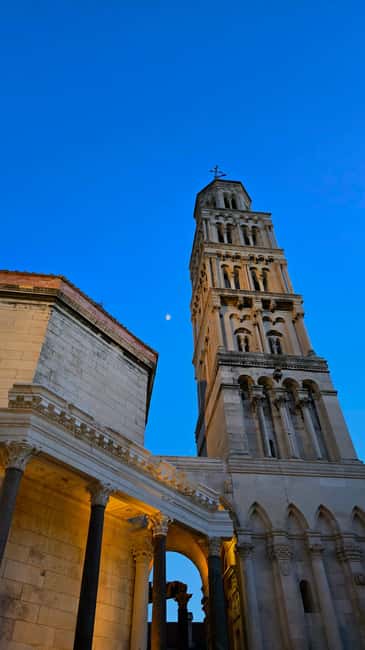
Diocletian’s Palace is not a dusty ruin outside town. It is the heart of Split, where Roman walls, medieval lanes, cafés, shops, and daily life all share the same stones. This 75-minute walking tour gives you a quick, guided way to make sense of that wonderfully tangled center.
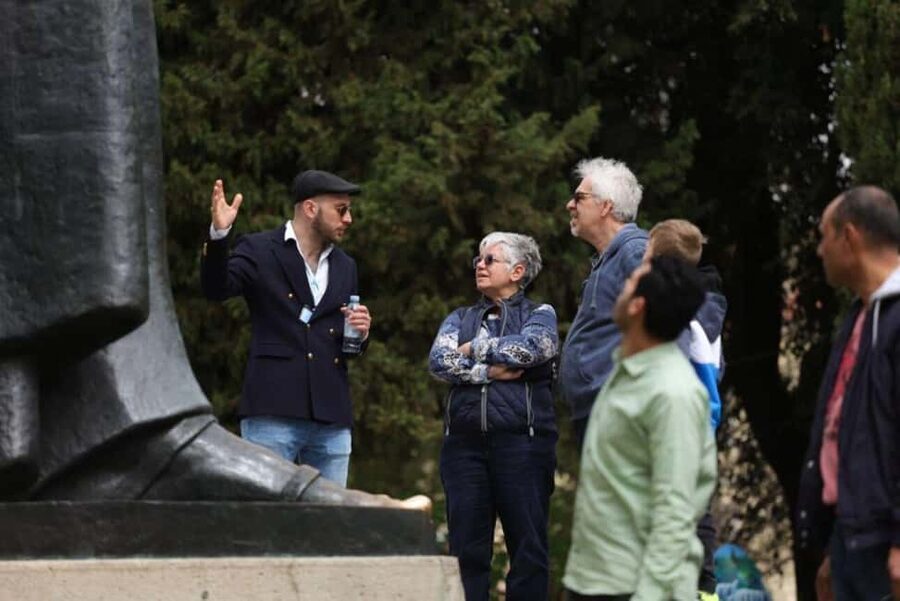
I like the local guides, especially Tomislav, Tom, and Toma, who are praised for clear explanations, patience, and strong language skills. I also like the early morning option, when the palace grounds can be pleasantly quiet. The main drawback is that the price does not cover entry to the Cathedral of Saint Domnius, the Temple of Jupiter, museums, or other paid sites.
Key points to know before you book
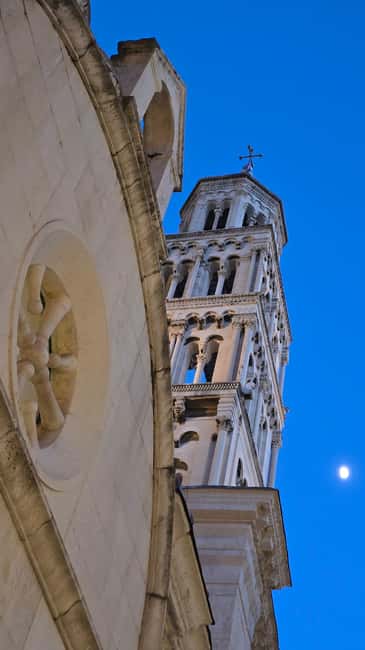
- Roman palace in a living city: You walk through streets that still serve as part of Split’s everyday center, not through an isolated archaeological park.
- A focused 75-minute tour: The short format works well for first-time orientation, but it leaves little room for long museum visits or extended stops.
- Strong local guiding: Tomislav, Tom, and Toma are noted for calm, detailed explanations and tours in German or Italian, as well as English and Spanish.
- Best before the day heats up: Morning departures can mean less foot traffic inside the palace complex and more comfortable walking.
- Paid sights cost extra: The tour explains the setting, but Cathedral of Saint Domnius, the Temple of Jupiter, and museums are not included.
- Simple meeting point: Meet at the southern seaside entrance from the Riva, at Obala hrvatskog narodnog preporoda 22.
Why Diocletian’s Palace is more than a monument
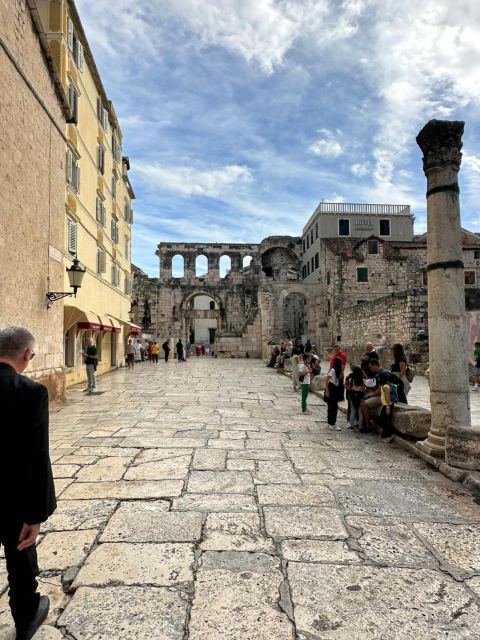
The name can be misleading. Diocletian’s Palace is not one grand building waiting behind a gate. It is a large Roman complex folded into Split’s old town, with walls, passageways, courtyards, cellars, churches, shops, homes, and small squares.
That makes a guided walk useful. On your own, you may notice old stone and attractive alleys, but it is easy to miss which parts belonged to the emperor’s residence, which served military purposes, and how the Roman plan shaped the modern city.
The tour places you inside roughly 1,700 years of change. Emperor Diocletian built the palace as a retirement residence, and later generations altered, reused, and built into it. You are not simply looking at the past. You are walking through a city that kept using the old structure.
I like this kind of setting because it gives history a practical scale. A Roman wall is easier to understand when it forms the edge of a modern street. A palace passage feels less remote when people still use it to reach shops and homes.
More walking tours in Split:
- Split: Old Town and Diocletian Palace Walking Tour
★ 4.9 · 4,727 reviews - Walking Tour of Split and Diocletian’s Palace
★ 5.0 · 2,588 reviews - Krka Waterfalls tour with Trogir Walking tour and Krka panoramic boat cruise
★ 5.0 · 1,659 reviews
Starting at the southern entrance on the Riva
The meeting point is at the southern seaside entrance to the palace cellars, just off Split’s Riva promenade. Use the address Obala hrvatskog narodnog preporoda 22 when searching for directions.
This is a sensible place to begin. The Riva is one of Split’s main reference points, and the waterfront makes it easier to orient yourself before entering the old center. Look for the entrance from the promenade to the Cellars of Diocletian’s Palace, where the guide will be waiting.
Give yourself enough time to find the exact entrance. The palace has several gates and openings, and the meeting point is not simply any spot along the waterfront. If you arrive early, use the Riva to get your bearings, but stay close to the southern entrance.
The tour includes a local guide, a walking tour, and a free Wi-Fi hotspot. Hotel pick-up is listed as available, though the central meeting point remains the key arrangement to understand before booking.
Entering the cellars and the emperor’s palace
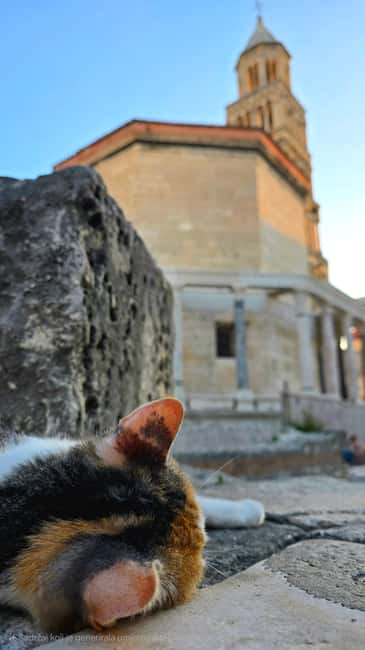
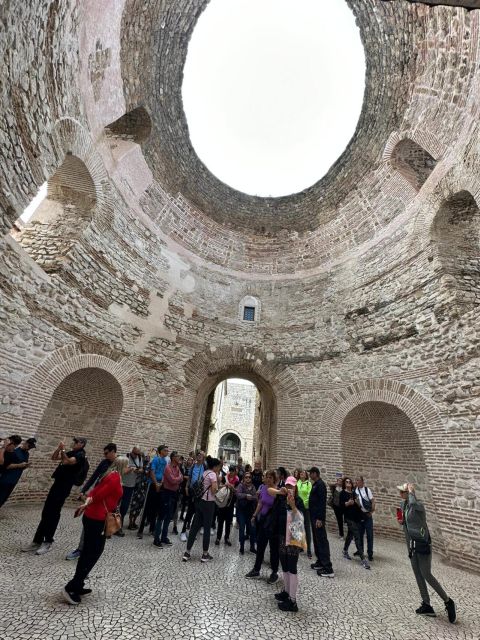
The southern entrance leads toward the palace cellars, an important part of the complex and a natural introduction to the Roman plan. The cellars help you see how the upper palace was supported and how the site was organized from the waterfront inward.
Expect the guide to use this opening section to explain Diocletian’s connection to Split and the purpose of the palace. The main value here is not just seeing old masonry. It is learning how the palace functioned as a residence, fortified complex, and place linked to the sea.
Because this is a walking tour rather than an admission package, do not assume that every cellar area is included as a paid museum visit. The supplied details specifically say that no admission tickets are included, and no entry to museums or paid sites is part of the tour.
That distinction matters. You can get the story and see the public areas with the guide, then decide if you want to return later for an indoor visit. If you want to keep spending under control, the tour still gives you a useful overview without bundling extra ticket costs into the $47 price.
Following Roman lines through Split’s old center
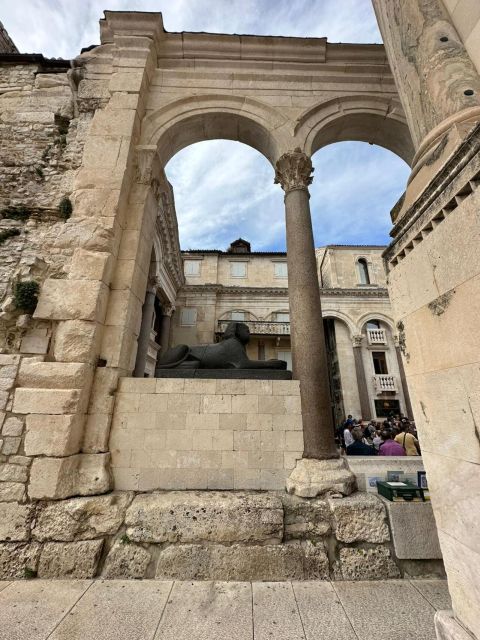
After the southern entrance, the walk continues through the old palace area and central streets of Split. The guide brings together architecture, local customs, and daily life, so you are not limited to a list of emperors and construction dates.
This is where the tour earns its keep for first-time visitors. The old center can feel like a maze, and without context you might wander from one attractive corner to another without understanding the layout. A guide helps connect the streets and squares to the palace that came before them.
You can expect a mix of broad routes and narrower lanes, with stops in charming squares and areas near local markets. The exact order may vary by guide and conditions, but the stated focus is the palace, the old town, Split’s culture, and local life.
Do not expect a slow photography tour. Seventy-five minutes is enough for an overview, not for lingering at every doorway. You will get more from it if you listen for the big structural clues: how Roman planning survives, how later buildings fit into the complex, and how Split grew around the old palace.
A few more Split half-days to weigh up
- Split: Krka Waterfalls Trip with Boat Cruise and Swimming
★ 4.8 · 10,519 reviews - From Split: Krka Waterfalls, Food & Wine Tasting Tour
★ 5.0 · 9,326 reviews - Blue cave, Mamma Mia and Hvar, 5 islands speedboat tour
★ 5.0 · 7,150 reviews - From Split: Krka Waterfalls, Food & Wine Tasting Tour
★ 4.9 · 6,598 reviews
The Cathedral of Saint Domnius and Temple of Jupiter
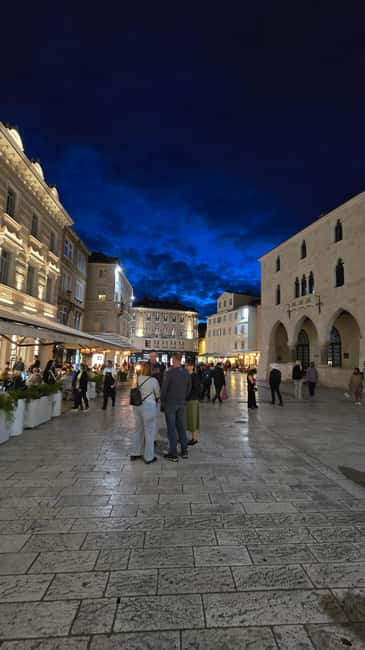
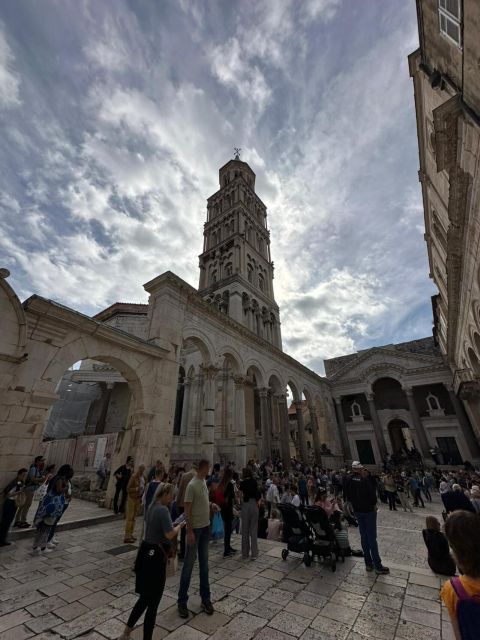
Two famous places associated with the palace are the Cathedral of Saint Domnius and the Temple of Jupiter. Both are relevant to understanding the site, but their admission is not included.
The tour can help you place these buildings within the wider story, but you will need to pay separately if you want to go inside. Museums and other paid sites also require their own tickets.
That setup is neither a major flaw nor a hidden bargain. It keeps the walking tour price clear, but you should budget extra if your aim is a full archaeological visit. At $47 per person, you are paying for the guide and the structured walk, not a package of entrances.
I would treat the tour as a first look, then choose your paid visits with better information. This is often more sensible than buying several tickets before you know which parts matter most to you.
What makes the local guides useful
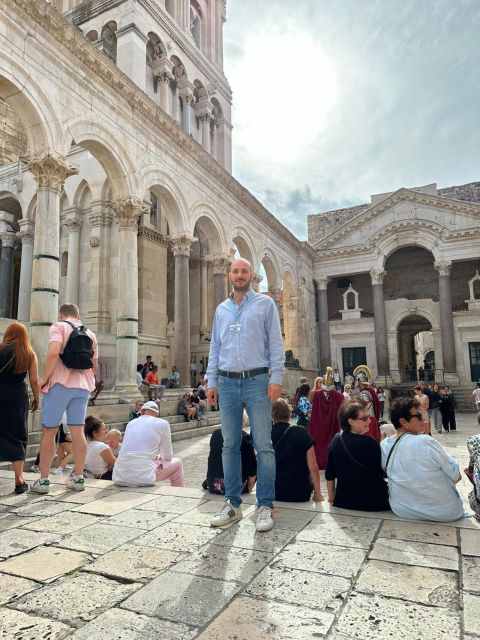
The most praised part of this experience is the guiding. Tomislav is described as especially strong in German, with detailed explanations and a calm manner. Tom and Toma are also named in connection with friendly, clear tours, including German and Italian.
That language range is valuable in a place where Roman names, Croatian terms, and complicated layers of history can otherwise blur together. The tour is offered in English, German, Italian, or Spanish, so choose the language in which you can best follow a fast-moving explanation.
The guides are also praised for answering individual questions. That matters because Split’s old town invites curiosity. You may want to know why a Roman wall has a modern doorway, how a former palace space became part of the city, or which details are original and which belong to later periods.
I would not book this as a silent walk with a guide who simply points at buildings. The attraction is the explanation. If you enjoy asking questions, the personal style described for Tomislav and Toma should suit you well.
Morning timing and summer comfort
The early morning departure deserves special attention. Split can become hot and crowded during the main part of the day, especially in summer. An early start offers two practical benefits: cooler walking and less foot traffic in the palace area.
The quieter setting can also make it easier to hear the guide. Narrow lanes and stone walls can turn a group explanation into a muddle when many people are moving through at once. A morning tour gives you a better chance to look up, pause, and follow the story without constant interruptions.
You should still bring a sun hat and wear comfortable clothes. The tour is on foot, and the surfaces and routes of an old city are not designed like a modern, level museum.
The activity is suitable for all ages, but it is not suitable for wheelchair users. That restriction is important because the old palace includes historic streets and access points that may not work for wheelchairs.
Is 75 minutes long enough?
Seventy-five minutes is a useful middle ground. It is longer than a quick orientation stroll, but short enough to fit into a busy Split schedule, including a day before or after a cruise, when time may be limited.
You can expect a brisk overview of the palace, old streets, squares, markets, architecture, and local traditions. The guide has enough time to explain the main story and answer some questions, but not enough time to cover every corner in detail.
If you want a full day of archaeology, several museum interiors, or a slow photography walk, this will feel too short. If you want to understand the city before exploring on your own, the length works well.
I especially like the format for your first morning in Split. After the walk, you can return to places that caught your interest, visit paid sites separately, or use the guide’s orientation to explore without simply guessing where you are.
What the $47 price really buys you
At $47 per person, this is not the cheapest way to walk around Split. The value depends on how much you want from the visit.
You are paying for a licensed local guide, a set route, explanations in one of four languages, and a clearer reading of a complex historic center. You are not paying for food, drinks, museum tickets, the Cathedral, or the Temple of Jupiter.
For a person who would otherwise wander without understanding the palace, the fee can be reasonable. The site is large, layered, and easy to misread. A good guide saves time and gives meaning to details you might otherwise pass without noticing.
For a budget-minded visitor who enjoys researching before arriving, a self-guided walk may cost less. The tour makes more sense if you value conversation, local perspective, and a fast introduction rather than simply reaching the main landmarks.
The free Wi-Fi hotspot is a small extra, but it may help you check maps or stay connected while moving through the center. I would see it as convenient rather than a reason to book.
Who will enjoy this Split walking tour?
This tour fits you best if you:
- Want a clear introduction to Diocletian’s Palace on your first visit.
- Enjoy Roman history but also want to see modern Split at work.
- Prefer a local guide to a written guidebook.
- Need a tour in English, German, Italian, or Spanish.
- Have about 75 minutes and want to keep the rest of the day open.
- Like asking questions about architecture, customs, and local life.
- Are comfortable walking on historic city routes.
It is less suitable if you need wheelchair access, want a long museum visit, or expect admission to every major sight to be included.
Families can book it because the activity is suitable for all ages. Still, the short format works best when everyone is ready to walk and listen for most of the 75 minutes.
Practical tips for a better visit
Book a morning time if you can. The quieter palace grounds and cooler temperatures improve the experience, especially in warmer months.
Use the exact meeting address and look for the southern seaside entrance from the Riva. Do not wait at a random point along the promenade, since the palace has several entrances.
Wear comfortable clothes and bring a sun hat. Food and drinks are not included, so plan those separately before or after the walk.
If you want to enter the Cathedral of Saint Domnius, the Temple of Jupiter, or a museum, set aside money for separate admission. The guide can give you the wider setting, but the tour fee does not cover those tickets.
You can cancel up to 24 hours before the activity for a full refund. The reserve now and pay later option also lets you hold a place without paying at the time of booking.
Should you book this tour?
Book it if you want a short, local-led introduction to Split’s Roman core and prefer understanding the old streets instead of simply photographing them. The strongest reasons are the setting, the useful morning timing, and guides such as Tomislav and Toma, who can explain the city in several languages and answer questions patiently.
Skip it if you want a ticketed archaeological tour with museum entry included, or if you prefer exploring entirely at your own pace. For most first-time visitors with 75 minutes to spare, this is a practical way to get oriented before returning to the palace on your own.
FAQ
Where does the tour meet?
The meeting point is at the southern seaside entrance from the Riva promenade to the Cellars of Diocletian’s Palace. Search for Obala hrvatskog narodnog preporoda 22.
How long does the walking tour last?
The tour lasts 75 minutes.
Which languages are available?
The live tour is available in English, German, Italian, and Spanish.
Are admission tickets included?
No. The tour does not include admission to museums, the Cathedral of Saint Domnius, the Temple of Jupiter, or other paid sites.
Is the tour suitable for all ages?
Yes, the activity is suitable for all ages. It is not suitable for wheelchair users.
What should I bring?
Bring a sun hat and wear comfortable clothes. Food and drinks are not included unless specifically stated.
Can I cancel my booking?
Yes. You can cancel up to 24 hours in advance for a full refund. You can also reserve now and pay later.
Just added around Split
- From Trogir, Seget, Okrug: Krka Waterfalls & Šibenik Culture Tour★ 5.0 · 10 reviews
- Krka Waterfalls & Primošten from Trogir, Seget, Čiovo & Kaštela★ 5.0 · 18 reviews
- Island Hopping Boat Excursion with Lunch (Trogir,Blue Lagoon, Šolta)★ 3.5 · 6 reviews
- From Split & Trogir: ATV Quad Tour on Island Čiovo★ 5.0 · 21 reviews
- Slatine – Island Hopping Excursion (Trogir/Blue Lagoon/Shipwreck)★ 4.0 · 24 reviews
- Split: Blue Lagoon Boat Trip with Lunch, Wine and Snorkeling★ 5.0 · 3 reviews
- Split Sunset Stand Up Paddle Tour★ 5.0 · 16 reviews
- Split: Sunset Guided Kayaking Tour★ 4.8 · 71 reviews
Split Tours, compared.

Krka Waterfalls Trip with Boat Cruise and Swimming
Read our review →

Blue cave, Mamma Mia and Hvar, 5 islands speedboat tour
Read our review →
Blue Cave, Mamma Mia, Hvar and 5 Island Tour
Read our review →
Blue Lagoon & 3 Islands Cruise with Lunch from Split
Read our review →

Blue Lagoon Boat Party with DJs, Shots & After Party
Read our review →Browse the lists this tour appears in