
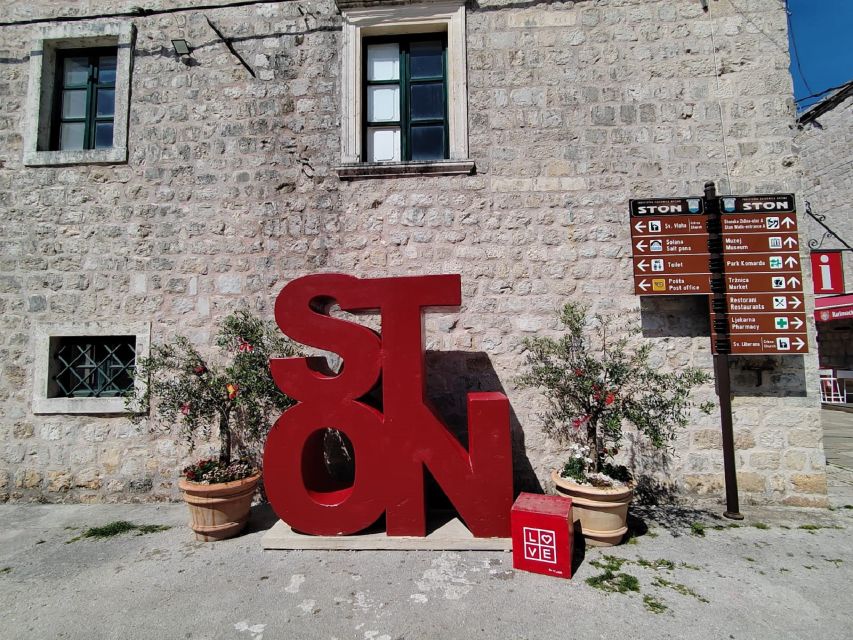
Reviewed · DUBROVNIK TOURS
Ston private walking tour with the walls and saltworks visit
Ston’s best feature is its unusual pairing of massive medieval walls and working salt pans. In two hours, you walk through the old town, climb above the rooftops and sea, then touch salt crystals at one of the Mediterranean’s oldest saltworks. It gives you both a clear view and a hands-on look at how Ston made its living.
I like the way the tour connects the town’s defenses with its salt production. I also like the practical guiding style reported for Mia, who answers questions, offers local tips, and adjusted the start time on a hot day for a family of six. The main drawback is simple: this is not a gentle stroll. Steep climbs, heat, and uneven surfaces make it a poor fit for anyone with limited mobility.
Key points to know before you book
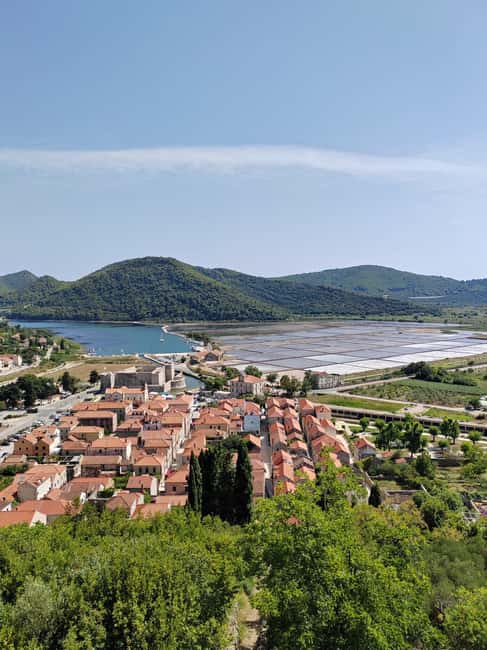
- Two major sights in two hours: You visit Ston’s old town, walls, fortresses, and saltworks in one compact tour.
- The walls are the physical highlight: Climb the 14th-century fortifications for views over the town, salt pans, sea, and surrounding green hills.
- The saltworks are still active: You can see traditional salt production and feel salt crystals on your fingers.
- Mia may be your guide: She is praised for clear explanations, friendly conversation, flexibility, and useful local advice.
- The price includes admissions: At $66 per person, your local licensed guide, wall entry, and saltworks entry are covered.
- Bring protection from the sun: A hat, sunscreen, and comfortable shoes are essential, especially for the wall climb.
Why Ston works so well as a short walking tour
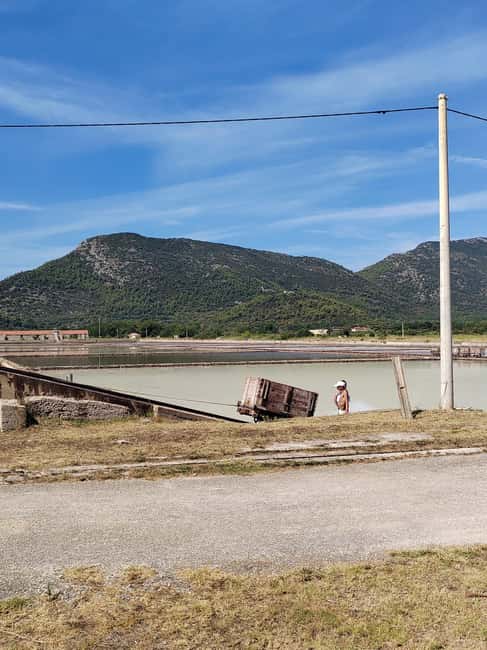
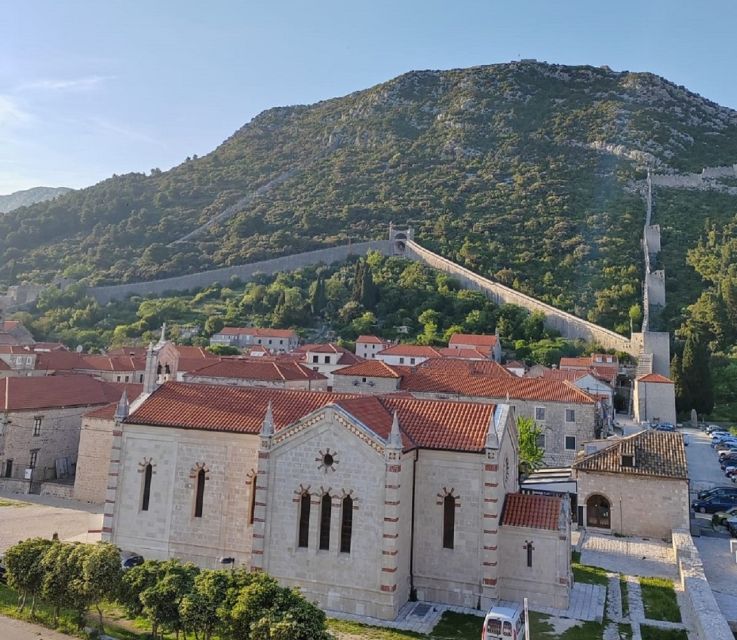
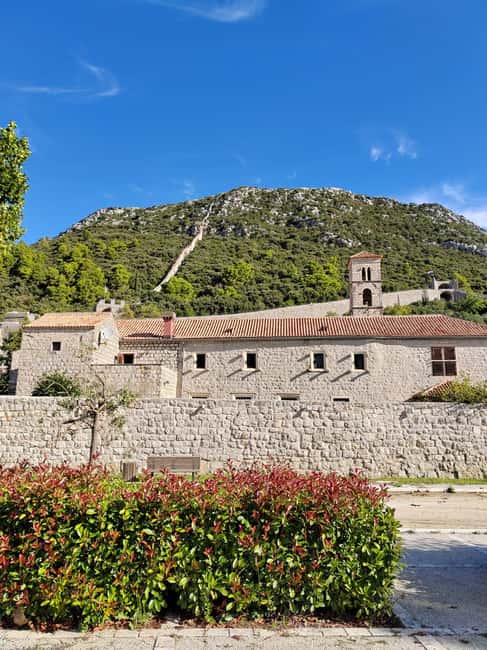
Ston is a small place with a surprisingly large story. Its position beside salt pans made it valuable, and its walls protected that value. The town’s fortifications stretch across the hills between Ston and nearby Mali Ston, creating one of the most striking defensive systems on the Adriatic.
You do not need a full day to get a strong impression of the place. This tour uses its two-hour length well by combining streets, fortresses, walls, and salt production instead of spending the entire time on one monument.
I like this format if you are staying elsewhere in Dalmatia and want a focused visit. You get an introduction from a local guide rather than simply walking in, taking a few photos, and leaving without understanding why the town was built where it was.
The pace also gives the experience a useful balance. The old town provides a level-ground introduction, the central fortress adds the first serious climb, the saltworks changes the subject from defense to industry, and the city walls finish with the broadest views.
More walking tours in Dubrovnik:
- Dubrovnik: Old Town Walking Tour
★ 4.8 · 5,174 reviews - Dubrovnik Discovery Old Town Walking Tour
★ 5.0 · 4,458 reviews - Dubrovnik: Game of Thrones Walking Tour
★ 5.0 · 1,732 reviews
Beginning in Ston’s medieval town
The tour starts with a guided walk around the old town. The precise meeting point can vary with the option booked, so check your confirmation carefully before setting out.
This first section helps you get your bearings. Your guide points out the main parts of Ston and explains how the town fits with the walls and salt pans. That context matters because the walls are not an isolated attraction. They were part of a larger plan to protect a valuable source of salt and control access through the area.
Expect this portion to be more about orientation and explanation than dramatic scenery. You walk through the medieval setting before heading uphill, which gives you a chance to settle into the tour and ask questions.
Mia is the guide named in the available feedback. If she leads your visit, you can expect an English-language tour with plenty of room for questions. Her approach appears especially useful for people who prefer a conversation rather than a memorized speech. She is also described as friendly and easygoing, a helpful trait when the day is hot or your group needs a little flexibility.
The town walk is a good place to ask about the walls, the saltworks, and the relationship between Ston and its surrounding area. I would use this time to pace yourself. The hardest part comes later, so there is no prize for rushing through the first streets.
Climbing the central fortress above the salt pans

After the town, the route continues toward the central fortress overlooking the sea and salt pans. This is where the tour becomes more physical and where Ston’s defensive design starts to make sense from above.
From the higher ground, you can look back toward the town and see how the fortifications relate to the natural setting. You also get a view of the salt pans, the sea, and the green hills around Ston. The combination is more useful than a view alone because it shows why the town’s position mattered.
The climb requires comfortable shoes. You should also bring a hat and sunscreen, since the information provided for the tour specifically warns you to prepare for sun exposure. On a hot day, the stone surfaces can make the climb feel harder than the short duration suggests.
This is not a wheelchair-accessible visit, and it is not suitable for people with mobility impairments. That limitation applies to the physical nature of the fortresses and walls, not simply to the length of the walk.
I like the central fortress stop because it gives you a preview of the final wall climb. You see the town from a higher point, then continue to the saltworks before finishing with the full wall experience. The only caution is that the route can feel demanding if you arrive unprepared or try to keep a fast pace.
Seeing salt made the old-fashioned way
The saltworks visit gives the tour its most unusual detail. Ston’s salt production is still active, and the process continues to rely on natural methods associated with the old Roman approach.
Your guide explains how salt is produced naturally in the pans. You also get to feel salt crystals on your fingers, which turns an abstract explanation into something direct and memorable. This small physical detail is one of the reasons the saltworks adds real value to the tour.
Many historic sites are presented as finished monuments. Here, you are looking at a working place. The salt pans are not just part of Ston’s past. They help you understand the town’s economic purpose and why so much effort went into protecting it.
The saltworks also provides a break from climbing. You leave the higher stone fortifications and spend time learning how the sun and water contribute to salt production. The tour then returns to the walls, so this is not a long pause from the main theme. It is the link between Ston’s natural resources and its military defenses.
I would not expect a large industrial facility or a modern museum-style display. The appeal is the traditional process, the active salt pans, and the chance to see the material up close. If you enjoy working cultural sites more than polished exhibits, this part should be especially satisfying.
A few more Dubrovnik half-days to weigh up
- Blue Cave Small-Group Boat Tour from Dubrovnik
★ 5.0 · 9,360 reviews - Full-Day Dubrovnik Elaphite Islands Cruise with Lunch and Drinks
★ 5.0 · 8,823 reviews - Dubrovnik: Epic Game of Thrones Tour + Lokrum & Saver Option
★ 4.9 · 5,995 reviews - Dubrovnik: Elaphiti Islands Full-Day Cruise with Lunch
★ 5.0 · 5,938 reviews
Walking Ston’s 14th-century walls
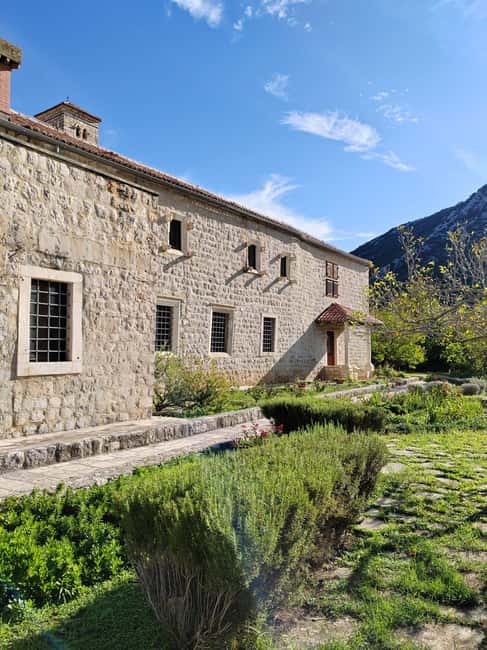
The final major part of the tour is the climb along Ston’s 14th-century city walls. These fortifications are the headline sight, and the route gives you the best chance to understand their scale.
Ston is frequently described as having some of the largest fortification walls in the world, while the tour materials also present them as the largest walls in Europe. The exact comparison depends on how walls and connected fortification systems are counted, but the practical point is clear: these are unusually extensive medieval defenses.
As you climb, you pass old medieval fortresses and gain changing views over Ston. The scene includes the town, the salt pans, the sea, and the hills around it. This is the part to appreciate slowly, especially if you want photographs or need to catch your breath.
The walls are also the tour’s main physical challenge. Comfortable shoes are not optional here. Sandals with poor grip, formal shoes, or anything that makes uneven ground difficult would work against you.
I like finishing on the walls because the earlier stops prepare you for what you see. You have already heard about the town and salt production, and you have looked down from the central fortress. By the time you reach the walls, the view has a clear purpose instead of being just a scenic backdrop.
What the $66 price includes
At $66 per person, this is not the cheapest way to walk around Ston. The price makes more sense when you count what is included: a local licensed guide, sightseeing in the medieval town, entry to the city walls, and entry to the saltworks.
You are paying for the explanation as much as the admissions. Without a guide, you can still see the town and walls, but you may not connect the fortifications to the salt industry as clearly. The saltworks visit is also a useful addition because it gives the tour something beyond the standard wall climb.
The value is strongest if you want a compact, organized introduction. Two hours is enough to cover the main attractions without taking over your day, and the included tickets mean you do not have to arrange the two principal paid stops separately.
The value is weaker if you only want a casual walk through town or prefer to explore at your own speed. The set route and guided format are designed for people who want context and a clear sequence.
Items you purchase during the experience are not included. The tour ends back at the meeting point, and the exact starting point may vary according to the option you choose.
Who will enjoy this Ston experience most
I would recommend this tour to you if you like history that is tied to real places and practical details. The walls show how Ston was defended, while the saltworks shows what the town was defending.
It also suits visitors who want a short activity with several distinct stops. You do not need to commit to a full-day program, yet you still get a town walk, a fortress climb, a working saltworks, and a wall route.
Families and adult groups can do well with this format, provided everyone is comfortable with the climb. Mia’s flexibility with a six-adult family on a very hot day suggests that communication with the guide can help when conditions are difficult, though you should still prepare for the heat rather than count on a later start.
I would think twice if you have trouble walking uphill, use a wheelchair, or dislike exposed stone paths. The tour is officially not suitable for people with mobility impairments or wheelchair users. It is also not the right pick if you want a cool indoor activity.
English is the listed tour language. If you need another language, this experience may not meet your needs.
How to prepare for the two-hour route
Wear shoes that feel secure on uneven ground. The walls and fortress climbs are the reason for this advice, and comfort will affect how much you enjoy the views.
Bring a hat and sunscreen. One of the strongest practical details from the experience is the guide’s consideration on a very hot day, but your own sun protection remains essential.
Allow yourself enough time to reach the meeting point. Since the start location can vary by booking option, read the booking details rather than assuming the tour begins at one obvious town landmark.
You can reserve now and pay later, which is useful if your Dalmatian plans are still changing. Cancellation is available up to 24 hours before the tour for a full refund, giving you some protection if your schedule shifts.
What makes the guiding important
A local guide changes the tone of this visit. The walls are easy to admire, but the salt pans explain why the walls were worth building and maintaining. A guide can connect those pieces while you are standing in the places themselves.
Mia receives particular praise for detailed explanations, quick answers, a warm welcome, and helpful local tips. She is also described as easygoing rather than rigid. That matters on a walking tour with a climb, where the best experience depends on a pace your group can manage.
You should still ask questions. The first part of the route is the best time to clarify what you are seeing, while the fortress and wall sections are better for taking in the views and watching your footing.
The tour is offered in English, so you should be comfortable following spoken explanations in that language.
Should you book the Ston walls and saltworks tour?
Book it if you want the clearest two-hour introduction to Ston, especially if you value a local guide and want both the famous walls and the working saltworks. The $66 price is reasonable when the admissions and licensed guide are included, and the itinerary covers more than a basic town walk.
Skip it if you need a flat route, want complete independence, or have no interest in climbing medieval fortifications. For everyone else, the combination of salt crystals in your hand and wide views from the walls gives this short Dalmatian experience a strong sense of place.
FAQ
How long does the Ston walking tour last?
The guided experience lasts two hours and includes the old town, city walls, and saltworks.
What attractions are included?
The tour includes sightseeing in the medieval town of Ston, entry to the city walls, and entry to the saltworks.
Is a guide included?
Yes. The experience includes a local licensed guide.
What language is the tour offered in?
The listed tour language is English.
Is the saltworks still operating?
Yes. The saltworks is still working and uses natural production methods associated with the old Roman way of making salt.
Will I be able to touch the salt?
Yes. The tour includes the chance to feel salt crystals on your fingers.
Is this tour suitable for wheelchair users?
No. The experience is not suitable for wheelchair users or people with mobility impairments.
What should I bring?
Bring a hat, sunscreen, and comfortable shoes. These are particularly important for the outdoor wall and fortress climbs.
What is the cancellation policy?
You can cancel up to 24 hours in advance for a full refund. You can also reserve the tour and pay later.
Just added around Dubrovnik
- Full- Day Private Speedboat Tour in Dubrovnik on Elaphiti Islands★ 5.0 · 21 reviews
- Wine Lover’s Tour of Peljesac Peninsula★ 5.0 · 150 reviews
- Wine tour peninsula Pelješac★ 5.0 · 3 reviews
- Elaphiti Islands Private Dubrovnik Boat Unique Experience★ 5.0 · 10 reviews
- Dubrovnik at War 1991-1992 Private Walking Tour★ 5.0 · 4 reviews
- PRIVATE Wine Tour to Konavle country side★ 5.0 · 11 reviews
- Walls of Liberty: A Self-Guided Audio Tour of Dubrovnik★ 3.5 · 3 reviews
- Parasailing in Cavtat★ 5.0 · 62 reviews
Dubrovnik Tours, compared.

Blue Cave Small-Group Boat Tour from Dubrovnik
Read our review →
Full-Day Dubrovnik Elaphite Islands Cruise with Lunch and Drinks
Read our review →
Epic Game of Thrones Tour + Lokrum & Saver Option
Read our review →


The Original Game of Thrones Tour & Lokrum Option
Read our review →
Dubrovnik Game of Thrones Tour & Optional Lokrum Island Visit
Read our review →
Elaphite Island Cruise w/ Drinks & Optional Lunch
Read our review →Browse the lists this tour appears in