
Reviewed · ZAGREB TOURS
Private Walking Tour of Zagreb
Zagreb’s story gets especially interesting underground, where this walk takes you through a WW2 tunnel before climbing into the medieval Upper Town. Above ground, you’ll see the cathedral, Dolac Market, Stone Gate, and the city’s most familiar postcard view, all within a compact central route.
I like the private format, which lets your guide keep a calm pace and point out details that are easy to miss in a large group. I also like the mix of grand sights and daily Zagreb life, from the market and café culture on Tkalciceva Street to local customs and stories about witchcraft.
The main consideration is the route’s stairs, slopes, and steady walking. The funicular is also closed for renovation until March 2026, so you should expect to walk between the Lower and Upper Towns rather than ride this historic little railway.
Key points to know before you book
- A private 150-minute walk gives you a more personal pace than a standard group tour.
- The WW2 tunnel adds an unusual underground stop to the usual Zagreb sightseeing route.
- Petra may guide your walk, offering clear historical background and local insight in English.
- Dolac Market and Tkalciceva Street show Zagreb as a working city, not just a collection of monuments.
- Upper Town highlights include Strossmayer Promenade, Lotrscak Tower, Saint Mark’s Church, and Stone Gate.
- The funicular is closed until March 2026, so plan for the walk uphill and downhill.
Why this private Zagreb walk works so well
Zagreb is easy to explore on foot, but its story is spread across several connected areas. The Lower Town has broad streets, parks, public buildings, markets, and cafés. Above it, Gradec keeps the narrow lanes, churches, gates, and lookout points of a medieval settlement.
This tour connects those pieces in one continuous walk. You are not simply ticking off sights. You are moving through the city in the same general order that its history developed, from the central parks and main square toward the cathedral, market, old streets, and hilltop town.
The private setup matters. At $76 per person, this is not the cheapest way to see Zagreb, especially if you are traveling alone. But for a couple, family, or small group, the price buys a guide focused on your party rather than a crowd. You can ask questions as they arise, slow down when a story catches your attention, and keep the pace comfortable.
That last point is useful on this route. One verified booking described the walk as calm enough for a pregnant companion to manage the stairs and slopes. That does not mean the route is flat or effortless, but it suggests that the guide can adjust the pace when needed.
More walking tours in Zagreb:
- Zagreb: Small Group Walking Tour City Center and WW2 Tunnels
★ 4.9 · 895 reviews - Zagreb: City and WWII Tunnels Walking Tour
★ 4.9 · 845 reviews - Walking tour of Zagreb
★ 5.0 · 383 reviews
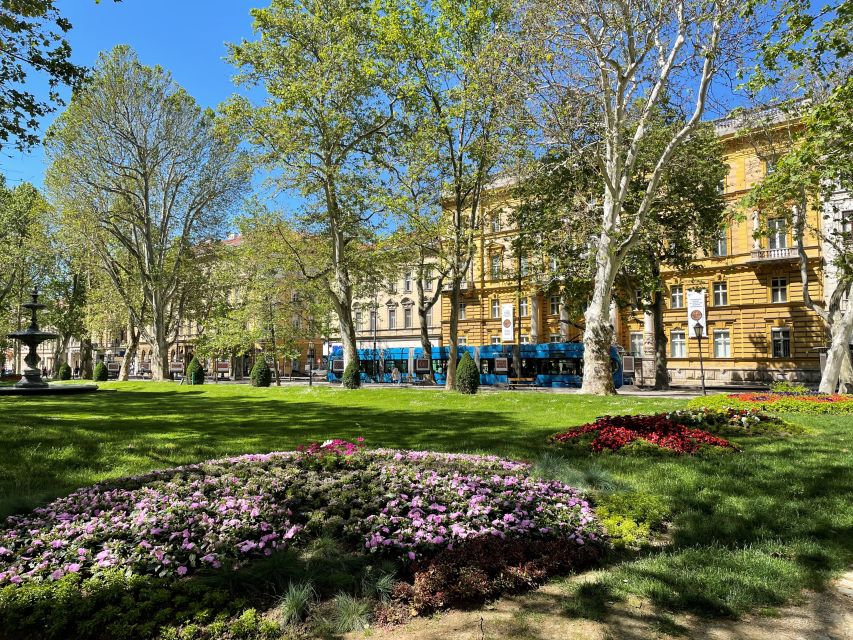
Starting among the trees at Zrinjevac
The meeting point is in Zrinjevac Park, at Trg Nikola Subic Zrinski 2, beside the small meteorological station on the north side of the park. Look for the display showing the temperature and barometric pressure.
Zrinjevac is a pleasant place to begin because it gives you a quick sense of Zagreb’s Lower Town. The park is part of the central green area and leads naturally toward the city’s main square. Starting here also helps you get your bearings before the route turns toward older neighborhoods.
If you are staying in a centrally located hotel or hostel, pickup and drop-off are included. Still, confirm the arrangement when booking, since the stated meeting point remains Zrinjevac Park.
Your guide introduces the origins of Zagreb and explains how the Croatian capital developed from two medieval settlements. That context makes the later walk through Gradec much easier to understand. Without it, the city can feel like a pleasant mix of parks, churches, and old lanes with no clear connection.
Ban Jelacic Square and the story behind Zagreb
From Zrinjevac, the walk continues to Ban Jelacic Square, the city’s main gathering place. This is the natural center of modern Zagreb and a useful place to connect the city’s past with its present.
Here you learn how Zagreb got its name and how the two medieval settlements eventually formed one capital. The tour does not treat the square as a quick photo stop. Instead, it uses the setting to explain how Zagreb grew around its older hilltop communities.
I find this kind of introduction more useful than a list of dates. You get a simple framework for the rest of the walk: the Lower Town below, the medieval Upper Town above, and the streets and landmarks that tie the two together.
The square is also where the tour ends, so you finish in a convenient spot for lunch, a café, or further independent sightseeing. You will not be left on a remote street after the final stop.
Zagreb Cathedral, repairs, and centuries of trouble
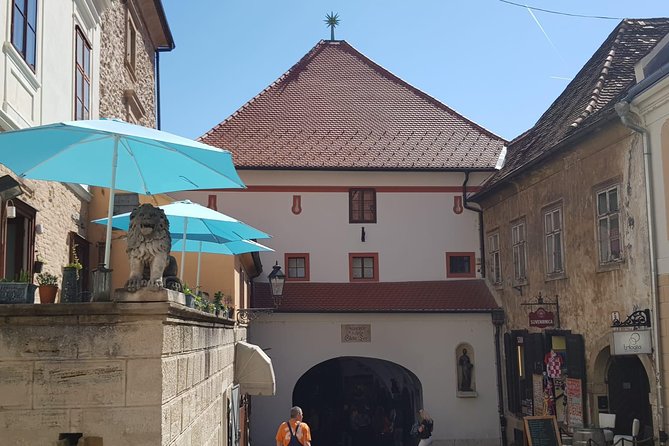
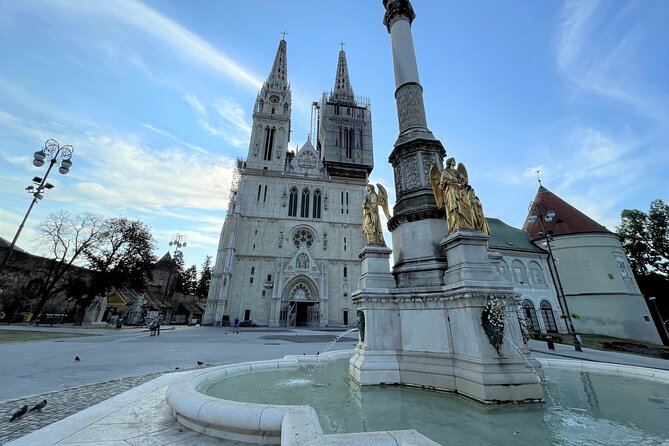
Next comes the Cathedral of the Assumption of the Blessed Virgin Mary, one of Zagreb’s key landmarks. Your guide covers its origins, the difficulties it has endured, and its renovation.
That renovation story is important because the cathedral has faced serious damage over time. The tour presents the building not just as an impressive church, but as a place shaped by earthquakes, repairs, and changing periods in the city’s past.
You should allow for the possibility that renovation work affects what you can see on the day. The exact condition of a historic building can change, and the value here is partly in hearing how Zagreb has worked to preserve one of its central symbols.
The cathedral gives the walk a change of scale. After the open park and square, you are looking at a building tied to the city’s religious and civic identity. Your guide helps explain why it matters rather than asking you to admire the façade without context.
A few more Zagreb half-days to weigh up
- From Zagreb: Plitvice & Rastoke Guided Day Trip with Ticket
★ 4.9 · 2,955 reviews - Zagreb: Rastoke & Plitvice Lakes Guided Tour with Ticket
★ 4.9 · 1,897 reviews - Communism & Croatian Homeland War Tour
★ 5.0 · 1,355 reviews - Best of Zagreb with the WW2 Tunnels
★ 5.0 · 973 reviews
Dolac Market, Zagreb’s everyday center
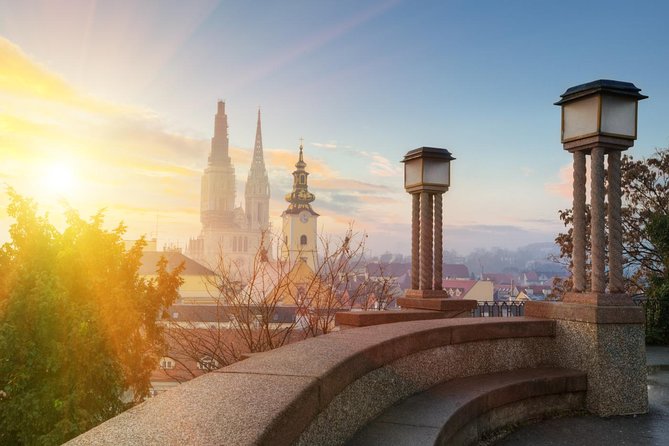
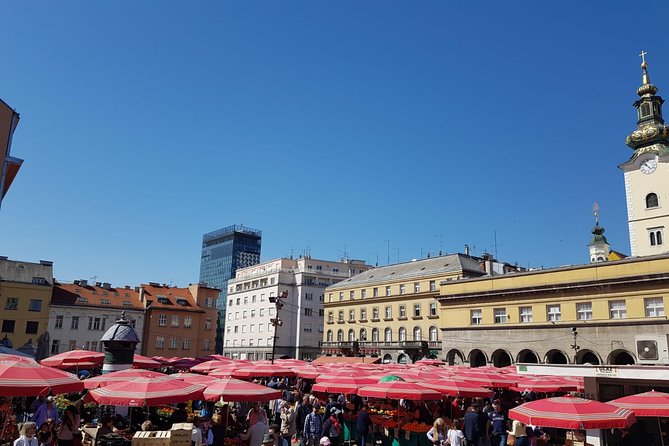
Dolac Market is often called the belly of Zagreb, and the nickname tells you what makes it worthwhile. This is a working market, tied to daily shopping and local routines rather than only sightseeing.
The market helps balance the monuments on the route. You get a look at the practical side of city life, with the central square and cathedral nearby but the atmosphere more grounded in food, errands, and regular neighborhood habits.
Market conditions vary by day and time, so you should not expect a fixed display. What you can count on is the chance to see one of the city’s best-known public spaces and hear why it plays such a central role in Zagreb life.
I like this stop because it gives the tour some texture. A cathedral can tell you about faith and architecture. A market shows you how a city feeds itself and spends an ordinary morning.
Tkalciceva Street and the local art of lingering
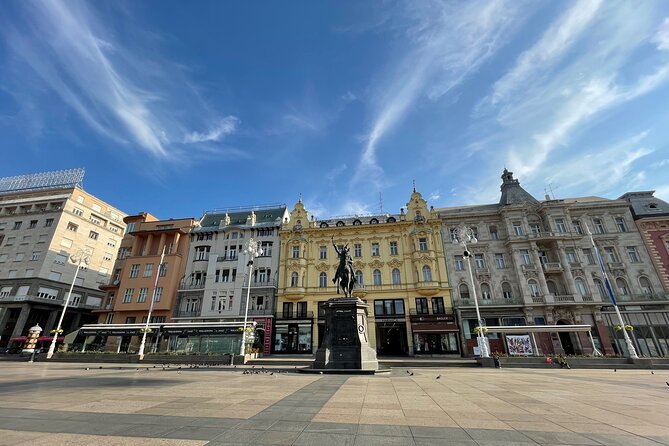
Tkalciceva Street follows with a very different mood. It is known as Zagreb’s bar street, with a steady flow of people and places to stop for a drink or meal.
Your guide talks about the local philosophy of lounging and other everyday habits. That may sound like a small subject, but it is one of the more useful parts of the walk. Zagreb is not a city you understand only through churches and towers. You also need to notice how people use public space and how much social life happens around cafés.
The street is a good place to ask your guide for practical advice about returning later. Since the tour ends at the main square, you can easily come back to Tkalciceva after the walk if you want to sit down and watch the city pass.
Because this is a popular bar area, it may feel busy at times. That is part of its appeal, but it can also make conversation harder if the street is crowded. A private tour helps because your guide can keep close to your group instead of trying to manage dozens of people.
Inside the WW2 tunnel
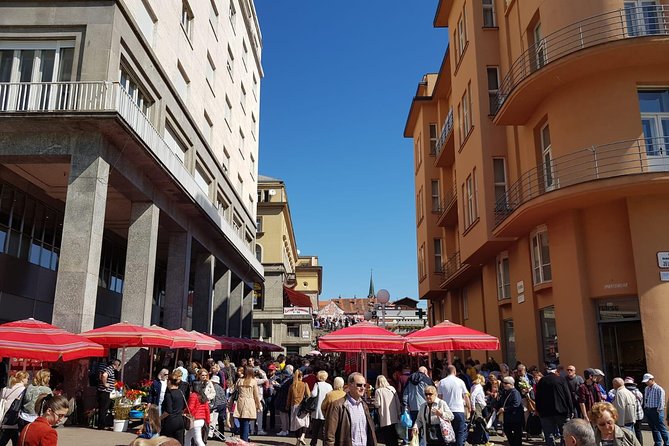
The WW2 tunnel is the route’s most unusual stop. Many first-time visitors expect Zagreb sightseeing to focus on squares, churches, and hilltop views. This underground passage adds a more serious and less polished part of the city’s story.
You should not expect a long museum visit or a full military history program. The tunnel is a short, focused part of the walking route. Its value comes from changing your sense of place. You leave the open street and enter a space connected with wartime Zagreb, then return to the city above.
This is also a good reason to choose a guide rather than walk the center alone. A tunnel can be easy to pass by or misunderstand without context. Your guide explains why it matters and places it within the broader story of the capital.
If enclosed spaces are uncomfortable for you, keep this stop in mind before booking. The supplied tour details do not specify the tunnel’s length or interior conditions, so you may want to ask the provider for current information.
Climbing to Gradec without the funicular
From the Lower Town, the route heads toward Gradec, one of the two medieval settlements that formed Zagreb. A short stroll from the Upper Town is the city funicular, an old form of public transport that has carried Zagreb residents for more than 135 years.
There is an important current catch: the funicular is closed for renovation until March 2026. You should not book this walk expecting a funicular ride. The tour includes the area and the historic context, but you will need to walk the connecting route.
That makes footwear and pacing worth considering. The route includes stairs and slopes, though a previous booking found the pace manageable even with a pregnant companion. Comfortable shoes will make the walk more pleasant, especially if you are taking the tour soon after arriving in Zagreb and still adjusting to the city’s hills.
The closure is not a reason to reject the tour, but it does change one small part of the experience. You lose a charming ride and gain a little more walking through the city’s old connection between the lower and upper sections.
Strossmayer Promenade and Zagreb’s rooftops
In Gradec, the Strossmayer Promenade provides one of the strongest views on the route. It is a good place to look across Zagreb’s rooftops and understand how the city spreads below the Upper Town.
This is where the tour shifts from street-level detail to a wider view. After hearing about markets, cafés, and city gates, you can see the relationship between the old hilltop settlement and the newer sections of Zagreb.
The promenade is also a natural pause point. You can take photographs, catch your breath, and ask your guide to identify parts of the city. The tour details describe it as the best spot for panoramic views of Zagreb rooftops, so keep your camera ready here.
Weather will affect the experience. On a clear day, the view should be one of the walk’s highlights. In poor weather, the route still works, but this stop will have less visual impact.
Lotrscak Tower and Saint Mark’s Church
Lotrscak Tower is one of the Upper Town’s defining landmarks. Your guide explains its place in the old defensive town and helps connect it with the streets and gates around it.
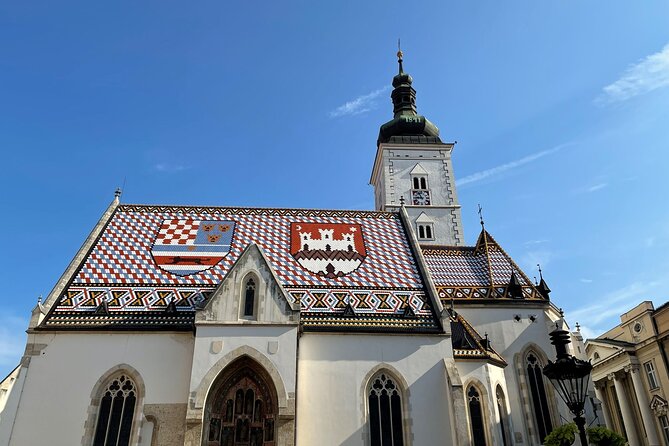
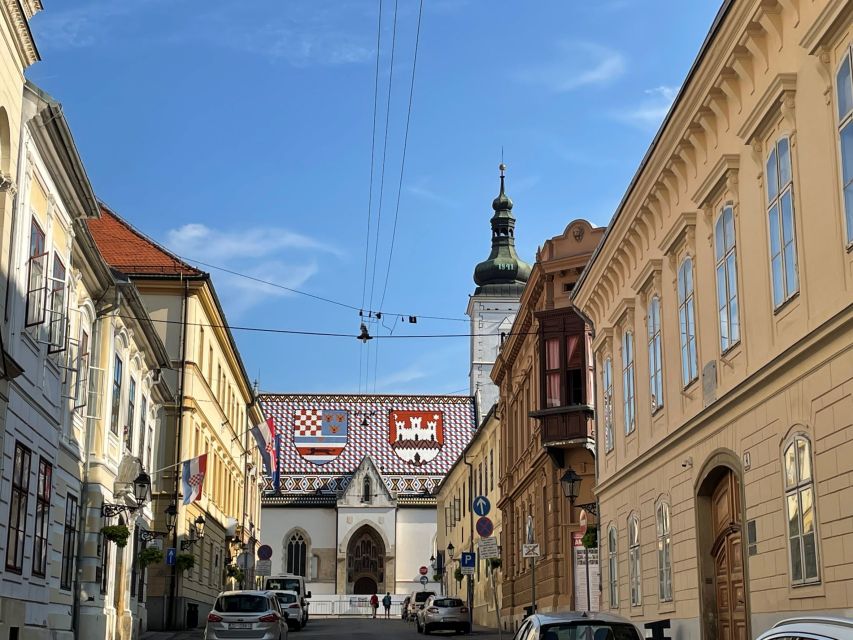
Nearby Saint Mark’s Church has Zagreb’s most recognizable roof. Its colorful tiled design appears on the postcard most often sent from the city, making it one of those sights you will probably see in photographs before you arrive.
The church is more than a picture stop. It represents the character of Gradec, where compact medieval streets and important civic buildings sit close together. The private format gives your guide room to explain the roof, the church, and the surrounding Upper Town without rushing your group through a standard script.
Access inside buildings can vary, and the provided details do not promise an interior visit to the church. Plan on seeing the exterior and hearing its story unless your guide confirms otherwise.
The old pharmacy and Stone Gate
The walk then descends toward Zagreb’s oldest pharmacy, dating from the 14th century. This is a small but memorable detail because it shows how long the old town has served practical needs, not just religious or political ones.
Stone Gate is the last surviving gate from the old city walls. Passing through it gives you a clear sense of where the fortified Upper Town once began and ended.
Inside the gate is a small chapel with a miraculous image of Our Lady, the patron saint of Zagreb. This remains a place of devotion, so treat it as a quiet religious space rather than just another photo opportunity.
Stone Gate is one of the tour’s best examples of Zagreb layering old and new in a small area. You move from a medieval defensive structure to a living chapel, then back into ordinary city streets.
Witchcraft stories and details you might miss
After the main old-town sights, your guide adds stories about witchcraft and points out less obvious details around the city. This is a useful change of tone after the formal history of the cathedral, tower, and church.
The tour description does not list every story or location, which is sensible. These details depend on the guide and the precise route. With Petra, the tour is conducted in English, and her approach has been described as clear, informed, and full of historical insight.
This section is where the private format can pay off most. You can ask about a strange detail, a local belief, or a street feature instead of simply moving on with a large group. I would listen closely and take quick notes, since these are the stories least likely to appear in a basic city map.
Is $76 per person good value?
At $76 per person, this is a mid-range private city tour rather than a budget walk. The value depends heavily on your group size.
For one person, the cost is harder to justify unless you strongly prefer private guiding. For two or more people, the price can make good sense because you are sharing the guide while getting a route tailored to your pace and questions.
You are paying for 150 minutes, an English-speaking licensed local guide, hotel pickup and drop-off from centrally located hotels or hostels, and a route covering many of Zagreb’s main sights. You are also getting the tunnel, Upper Town stories, local customs, and a clear introduction to the city’s layout.
The tour received a 4.9 rating from five verified bookings, including praise for its calm pace, broad coverage, and strong historical explanations. That is a small sample, so I would not treat the rating as a guarantee. Still, the consistent strengths point to the experience’s real purpose: a well-paced orientation with a personal guide.
Free cancellation is available up to 24 hours before the start for a full refund, and you can reserve now and pay later. Those terms are useful if your Zagreb plans are still moving around.
Who should book this Zagreb walk?
I would choose this tour if you have limited time in Zagreb and want the city’s main sights explained in one sitting. It is especially useful on your first day, when you need a map in your head before exploring independently.
It also suits couples, families, and small private groups who dislike crowded walking tours. The route is history-focused but not stuck in the past, thanks to the market, bar street, local habits, and witchcraft stories.
You should think twice if you want a museum-heavy visit, a long stop inside the cathedral, or a ride on the funicular. Those are not the focus here, and the funicular is closed until March 2026.
Allow 150 minutes, wear comfortable shoes, and be ready for stairs and slopes. Start at the Zrinjevac meteorological station, or confirm central hotel pickup in advance.
Should you book it?
Book this private Zagreb tour if you want a strong first look at the capital without the rush of a large group. The best parts are the clear route from Lower Town to Gradec, the WW2 tunnel, the everyday feel of Dolac and Tkalciceva, and the chance to ask a local guide your own questions.
For a couple or small group, $76 per person is reasonable for a licensed guide and two and a half hours of focused sightseeing. I would skip it only if you prefer exploring alone, need a completely flat route, or want a tour built around interiors rather than streets and viewpoints.
FAQ
How long does the Private Walking Tour of Zagreb last?
The tour lasts 150 minutes, or two and a half hours.
What language is the tour conducted in?
The live tour guide speaks English. Petra is one guide associated with the experience.
Is this a private group tour?
Yes. The experience is operated as a private group rather than a shared walking tour.
Where does the tour meet?
The meeting point is Trg Nikola Subic Zrinski 2 in Zrinjevac Park, next to the meteorological station on the north side of the park.
Is hotel pickup included?
Pickup and drop-off are included for centrally located hotels and hostels.
Does the tour include a funicular ride?
No ride should be expected while the funicular is closed for renovation until March 2026. The route includes the historic funicular area, but you should expect to walk the connection to the Upper Town.
Can I cancel for a full refund?
Yes. You can cancel up to 24 hours in advance for a full refund. You can also reserve now and pay later.
Just added around Zagreb
- Toast to the Morning After: Zagreb Museum of Hangovers Visit★ 4.0 · 39 reviews
- From Split: Transfer to Zagreb with Stop at Plitvice Lakes★ 4.6 · 44 reviews
- Severin na Kupi: Canoeing and Kayaking on the Kupa River★ 4.6 · 22 reviews
- Rafting/Kayaking adventure river Kupa★ 4.4 · 21 reviews
- Plitvice Lakes National Park – 2hr Inspiration Buggy Tour★ 5.0 · 3 reviews
- Jump into Zagreb: Walking Tour with local guide★ 4.8 · 3 reviews
- From Zagreb: Varazdin Baroque Town & Trakoscan Castle★ 4.9 · 38 reviews
- From Zagreb to Plitvice Lakes and Rastoke – Private day tour★ 5.0 · 4 reviews
Zagreb Tours, compared.
Plitvice & Rastoke Guided Day Trip with Ticket
Read our review →
Rastoke & Plitvice Lakes Guided Tour with Ticket
Read our review →

Plitvice Lakes with Ticket & Rastoke Guided Tour from Zagreb
Read our review →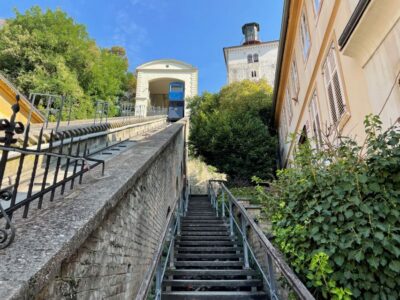
Small Group Walking Tour City Center and WW2 Tunnels
Read our review →
Skip-the-Ticket-Line Museum of Broken Relationships
Read our review →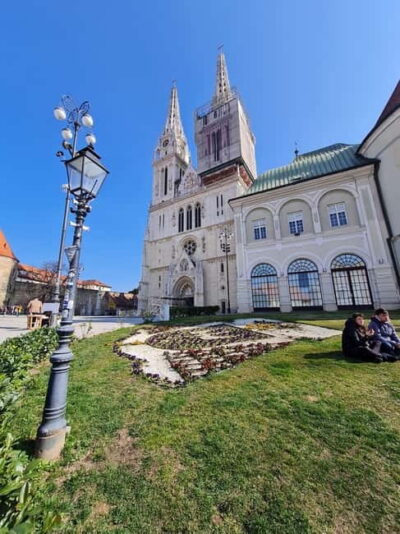
Browse the lists this tour appears in