
Reviewed · ZAGREB TOURS
Exclusive old Zagreb walking tour
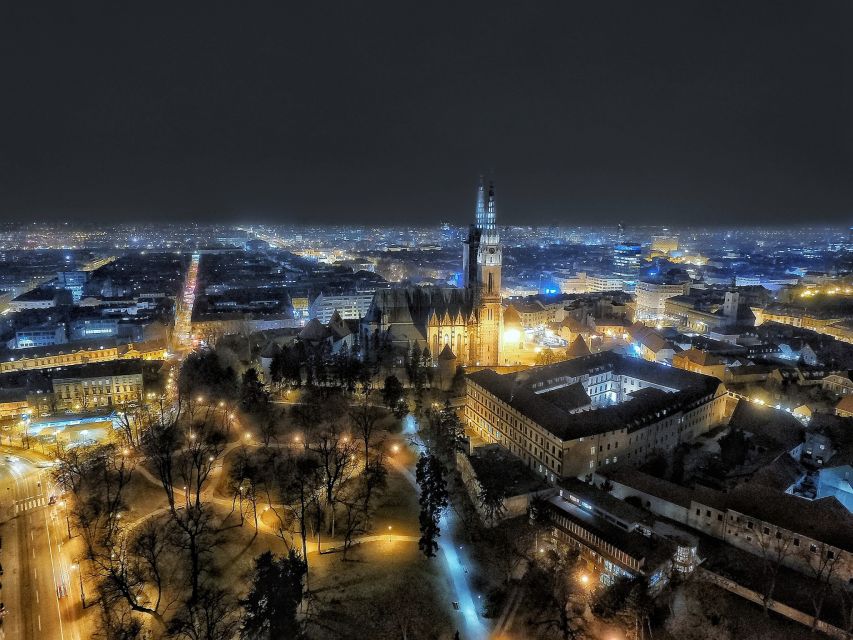
Zagreb makes the most sense when you see its two old centers together. This evening walk links cathedral-side Kaptol with hilltop Gradec, then finishes among cafés and pubs near Flower Square. Along the way, Domagoj explains how the city grew, changed, and still works today.
I like the personal feel of this tour and its useful route. You get major sights such as Zagreb Cathedral, Dolac Market, St Mark’s Square, and Lotrščak Tower, while also hearing about local food, museums, transport, current affairs, and daily life. The biggest consideration is pace: 90 minutes is efficient, but it leaves little time for long interior visits or extended photo stops.
- Evening route through old Zagreb: See the city when its squares and streets take on a different mood.
- Kaptol and Gradec in one walk: Understand the two historic areas that helped form modern Zagreb.
- Domagoj’s personal approach: Expect an English-language tour shaped around questions and conversation.
- Strong photo opportunities: Reach the Gradec lookout and the viewpoint beneath Lotrščak Tower.
- Good first-day orientation: The route helps you decide where to return for museums, meals, cafés, and further exploring.
- Wheelchair accessible: The activity is listed as accessible, though the historic upper town still deserves a quick check for your personal needs.
Why this short Zagreb walk works
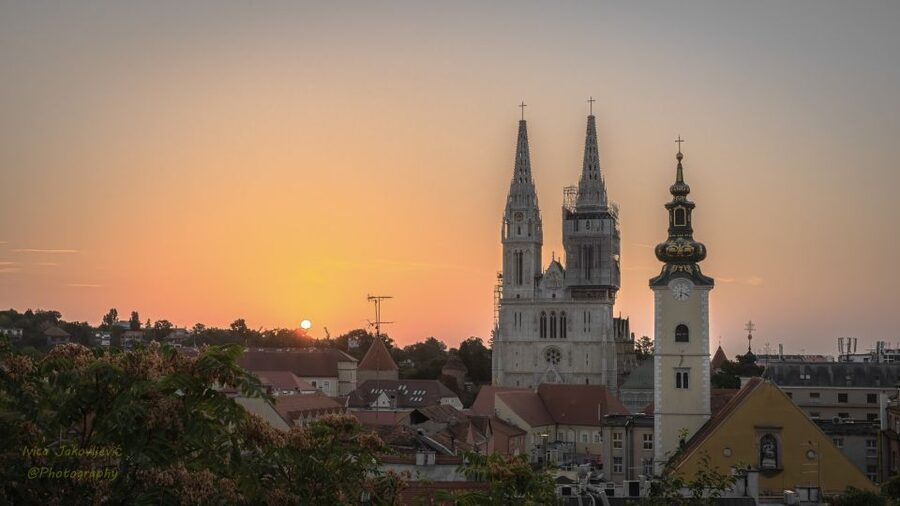
This is a city-orientation tour rather than a single monument visit. In an hour and a half, you move from King Tomislav Square through the lower city, into Kaptol, across the old market area, up toward Gradec, and back down toward Ilica Street and Flower Square.
That route gives you a useful mental map. Zagreb can seem scattered at first, with grand Austro-Hungarian avenues below and narrow medieval streets above. Domagoj’s explanations connect those pieces, so later walks feel less like a collection of unrelated buildings.
The tour also has a clear local angle. It covers architecture and national history, but it is not limited to dates and names. Domagoj has been praised for discussing present-day Croatia, everyday life, places to eat and drink, museums, public transport, and things worth seeing after the walk.
I would book this near the beginning of a Zagreb stay. You will still see the main sights, but the larger benefit is knowing where to return when you have more time.
Starting at King Tomislav Square
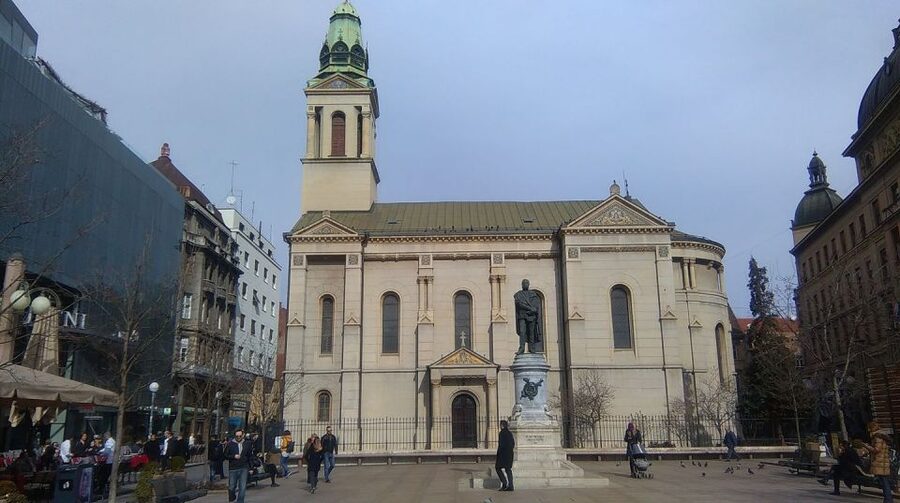
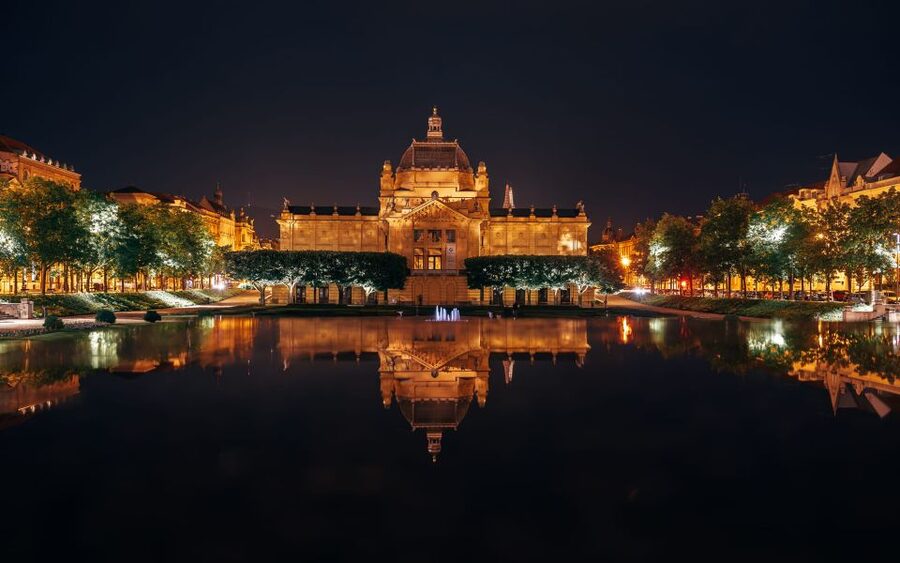
The meeting point is King Tomislav Square, one of the city’s broad central spaces. Beginning here gives the tour a calm opening before it moves toward the busier center.
From here, the walk proceeds to Nikola Zrinjski Square. These connected green squares help you read Zagreb’s lower city, where spacious public areas and formal buildings create a very different feel from the compact old town above.
Because the tour begins in the evening, the light and atmosphere should suit photography, especially as the route later reaches higher viewpoints. The exact starting time depends on availability, so check the schedule when booking.
The early section is also useful for getting your bearings around central Zagreb. If you arrive by train or are staying near the center, King Tomislav Square is a practical place to begin a first look at the city.
More walking tours in Zagreb:
- Zagreb: Small Group Walking Tour City Center and WW2 Tunnels
★ 4.9 · 895 reviews - Zagreb: City and WWII Tunnels Walking Tour
★ 4.9 · 845 reviews - Walking tour of Zagreb
★ 5.0 · 383 reviews
Ban Jelačić Square and Zagreb’s city center
The next major stop is Ban Jelačić Square, Zagreb’s main square. This is the point where the city’s central streets, public transport, shopping areas, and old-town routes come together.
Expect Domagoj to place the square within the wider story of Zagreb rather than treating it as a quick photo stop. He covers local history, art, culture, and architecture, with explanations designed to show how the city developed.
This is where the guide’s conversational style matters. The tour allows questions, and several people specifically valued the chance to ask about both historical subjects and modern Croatian life. If you are curious about how Zagreb functions today, use this part of the walk to ask directly.
Ban Jelačić Square can also be a useful reference point for the rest of your stay. You can return here to find routes toward the upper town, Dolac, Ilica Street, and other central areas.
Kaptol, Zagreb Cathedral, and Dolac Market
From the main square, the route continues toward Zagreb Cathedral and old Zagreb Kaptol. Kaptol is closely tied to the Zagreb Archdiocese, and its religious importance helps explain why this part of the city developed as a separate center from Gradec.
The cathedral is one of the route’s key landmarks. You should expect an exterior visit and historical explanation rather than a long, guaranteed interior tour. Conditions at religious buildings can vary, and the 90-minute format favors seeing several sites instead of lingering at one.
Next comes Dolac Market, the city’s open-air market. A market tells you something a formal monument cannot: what people buy, eat, and recognize as part of daily Zagreb. Since this is an evening tour, the market may not have the same activity as during its main trading hours, but its location and role still make it an important stop.
I like this pairing of cathedral and market. One represents institutional history, the other everyday city life. Together, they give you a fuller sense of Kaptol than either stop would provide alone.
Opatovina and the route into Gradec
The walk then passes through Opatovina before moving toward Gradec. This section helps explain the old city as a collection of connected areas rather than one single medieval quarter.
Gradec sits on the slope of Medvednica and, together with Kaptol, formed the basis of today’s Zagreb. You will hear how these two old centers relate to each other, which is one of the most useful ideas on the entire tour.
The route rises toward the old upper town, so wear comfortable shoes. The activity is listed as wheelchair accessible, and one parent specifically found the route suitable for a stroller. Still, Zagreb’s historic streets, slopes, and older paving can feel different from modern sidewalks, so anyone with particular mobility needs should confirm the route details before reserving.
This part of the walk is less about checking off monuments and more about understanding the city’s shape. Once you grasp the relationship between Kaptol and Gradec, Zagreb’s upper town becomes easier to explore on your own.
A few more Zagreb half-days to weigh up
- From Zagreb: Plitvice & Rastoke Guided Day Trip with Ticket
★ 4.9 · 2,955 reviews - Zagreb: Rastoke & Plitvice Lakes Guided Tour with Ticket
★ 4.9 · 1,897 reviews - Communism & Croatian Homeland War Tour
★ 5.0 · 1,355 reviews - Best of Zagreb with the WW2 Tunnels
★ 5.0 · 973 reviews
Kamenita Vrata, a surviving old gate
Kamenita Vrata is one of the most memorable stops. It is a preserved old city gate, built in the shape of a rectangular tower, and one of the best-preserved monuments from old Zagreb.
The gate is more than a piece of defensive architecture. It marks the transition into the old town and carries religious meaning as well. Domagoj’s historical explanation helps you notice why this modest-looking structure matters.
This is a good place to slow down briefly, look at the construction, and ask questions. It is also a reminder that Zagreb’s most meaningful places are not always its largest buildings.
The practical limit is time. You may not spend long inside or around the gate, especially if the group is moving toward St Mark’s Square. If you want detailed architectural study, make a note to return independently.
St Mark’s Square and the upper town
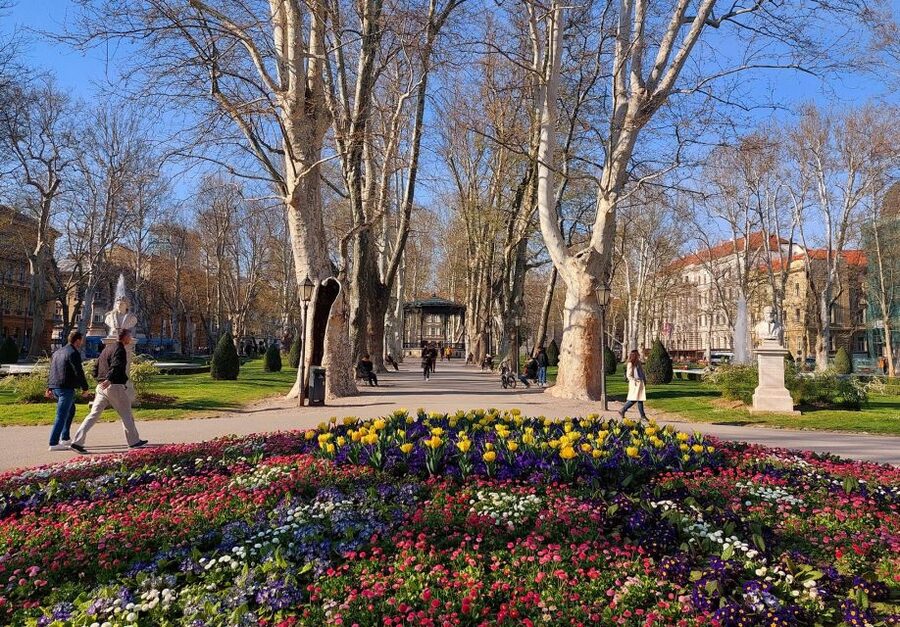
From Kamenita Vrata, the tour reaches St Mark’s Square, the political and architectural heart of the upper town. Here you see the city council, Parliament, museums, churches, and other historic buildings gathered around one compact space.
The square is especially useful for understanding Croatia as a country, not just Zagreb as a city. Its public buildings connect the capital’s local story with national government and political life.
The Museum of Broken Relationships is also included in the route. It is one of Zagreb’s best-known museums, but this walk does not replace a museum visit. You will see where it is and hear how it fits into the upper town, then you can decide if you want to return for the full collection.
This is one of the tour’s strongest sections for first-time visitors. You get important buildings, unusual cultural stops, and a clear sense of how compact the upper town is. The trade-off is that several sights arrive close together, so keep listening even when you are busy taking photographs.
Gradec lookout and the view below Lotrščak Tower
The itinerary continues to the Gradec lookout and then along the Strossmayer promenade. The route reaches a Zagreb viewpoint beneath ancient Lotrščak Tower, where you can take photographs of the city at night.
This is the visual payoff of the walk. Seeing Zagreb from above helps you connect the lower squares, the upper town, and the wider city. Evening light should add atmosphere, though the quality of the view depends on weather and visibility.
Lotrščak Tower also gives the tour a strong historical marker. Its location and age help explain the defensive role of Gradec and the importance of the upper town’s position.
Bring a phone or camera, but do not plan on a long private photo session. A 90-minute route has to keep moving, and the guide still needs to explain the setting. If night photography matters to you, arrive with your camera ready and use the stop efficiently.
The funicular, Ilica Street, and Zagreb’s social center
The walk follows the line of Zagreb’s funicular toward Ilica Street. The funicular is a distinctive part of the city’s transport system, and following its route gives you a practical connection between the upper and lower parts of Zagreb.
Ilica is the longest street in Zagreb and one of the city’s main urban corridors. By this point, the tour shifts from medieval landmarks toward the everyday central city.
The route then includes the Zagreb Octogone, a distinctive passage in the center. This is the kind of detail that can be easy to miss when exploring alone, especially if you are focused on major squares and churches.
The final stop is Flower Square, a popular meeting area for Zagreb’s younger crowd, with pubs and evening social life nearby. Ending here makes sense. You finish not in a quiet historical quarter, but in a place where you can continue the night with a drink or meal.
Domagoj’s food and drink suggestions are useful at this point. Ask for recommendations that fit your plans, and use the ending location to continue exploring on your own.
What Domagoj adds to the walk
The guide is Domagoj, and the strongest praise for this experience centers on his command of Croatian and Zagreb history, clear English, good humor, and willingness to answer questions.
That combination matters. A guide can recite dates without helping you understand a place. Here, the aim is to explain the city’s complicated past and connect it with present-day Croatia. Several people found that approach especially helpful for making sense of Zagreb in a short time.
The tour is also described as relaxed and personal, without an overcrowded group. Group size can affect how easy it is to hear the guide and ask questions, although the exact number is not specified.
You should expect a guide-led conversation rather than a rigid script. Domagoj has offered tips on museums, transport, places to eat, and areas worth returning to. I would keep a notes app open if you like collecting practical recommendations.
Price, timing, and overall value
The price is $35 per person for 90 minutes. That is fair if you want a focused introduction to central Zagreb with an English-speaking local guide, especially when the tour helps you plan the rest of your stay.
The value is less convincing if you want long visits inside museums or churches. This is a walking overview, not a ticketed attraction package, and the included value comes from the route, explanations, questions, and local suggestions.
The evening timing is a plus for people who prefer cooler conditions and want to see Zagreb after dark. It also places the final part of the walk near Flower Square, where you can continue your evening.
You can cancel up to 24 hours before the tour for a full refund, and the reserve-now, pay-later option keeps your plans flexible. The activity is offered in English and is listed as wheelchair accessible.
Who should book this Zagreb tour?
I would recommend it to first-time visitors who want a clear introduction without spending half a day on a walking tour. It also suits solo visitors and couples who value conversation, questions, and practical advice more than a large, highly scripted group.
Families may find the route useful too. The stroller-friendly experience described by one parent is encouraging, though you should still confirm suitability for your own wheelchair or stroller because the upper town has historic streets and slopes.
History fans will appreciate the coverage of Kaptol, Gradec, Kamenita Vrata, St Mark’s Square, and Lotrščak Tower. Food-focused visitors will benefit from the market stop and the chance to ask about local places to eat and drink.
I would choose a different experience if your main goal is a slow museum visit, a dedicated food tasting, or a tour focused only on Zagreb’s interiors. This walk gives you the city’s framework first.
Should you book the Exclusive Old Zagreb Walking Tour?
Book it if you want to understand Zagreb quickly, see the old city in evening light, and get practical ideas for the rest of your stay. The route covers a lot, and Domagoj’s personal approach appears best suited to people who enjoy asking questions and hearing both historical and current context.
Skip it if you dislike uphill walking, need long stops at each monument, or want entrance tickets included. For $35, the tour offers solid value as a compact city introduction, especially on your first evening in Zagreb.
FAQ
Where does the Exclusive Old Zagreb Walking Tour begin?
The tour begins at King Tomislav Square in Zagreb.
How long does the walking tour last?
The tour lasts 90 minutes.
What time of day does the tour take place?
The meeting takes place during evening hours. Starting times depend on availability when you book.
What language is the tour offered in?
The live guided tour is offered in English.
Who is the guide?
The guide is Domagoj, from Domagoj Tours.
Is the walking tour wheelchair accessible?
Yes. The activity is listed as wheelchair accessible.
What major sights are included?
The route includes King Tomislav Square, Nikola Zrinjski Square, Ban Jelačić Square, Zagreb Cathedral, Kaptol, Dolac Market, Opatovina, Gradec, Kamenita Vrata, St Mark’s Square, the Gradec lookout, Strossmayer Walk, Lotrščak Tower, Ilica Street, the Zagreb Octogone, and Flower Square.
Does the tour include the Museum of Broken Relationships?
The route takes you past the Museum of Broken Relationships in St Mark’s Square. The supplied tour details do not state that museum admission is included.
How much does the tour cost?
The listed price is $35 per person. You can reserve now and pay later, and cancellation is free up to 24 hours in advance for a full refund.
Just added around Zagreb
- Toast to the Morning After: Zagreb Museum of Hangovers Visit★ 4.0 · 39 reviews
- From Split: Transfer to Zagreb with Stop at Plitvice Lakes★ 4.6 · 44 reviews
- Severin na Kupi: Canoeing and Kayaking on the Kupa River★ 4.6 · 22 reviews
- Rafting/Kayaking adventure river Kupa★ 4.4 · 21 reviews
- Private Walking Tour of Zagreb★ 4.9 · 5 reviews
- Plitvice Lakes National Park – 2hr Inspiration Buggy Tour★ 5.0 · 3 reviews
- Jump into Zagreb: Walking Tour with local guide★ 4.8 · 3 reviews
- From Zagreb: Varazdin Baroque Town & Trakoscan Castle★ 4.9 · 38 reviews
Zagreb Tours, compared.
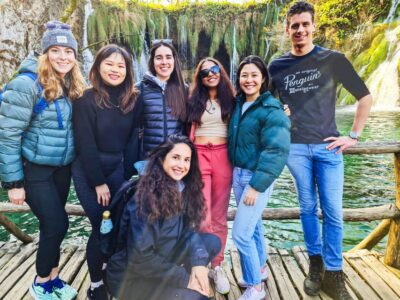
Plitvice & Rastoke Guided Day Trip with Ticket
Read our review →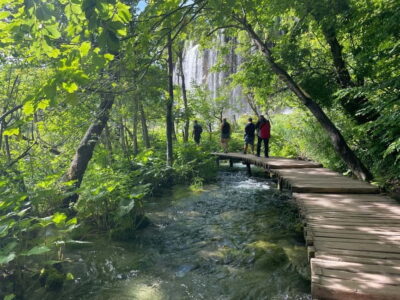
Rastoke & Plitvice Lakes Guided Tour with Ticket
Read our review →

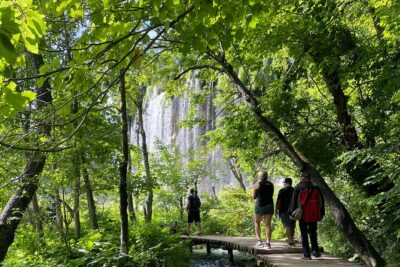
Plitvice Lakes with Ticket & Rastoke Guided Tour from Zagreb
Read our review →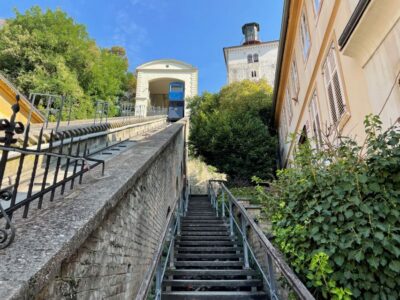
Small Group Walking Tour City Center and WW2 Tunnels
Read our review →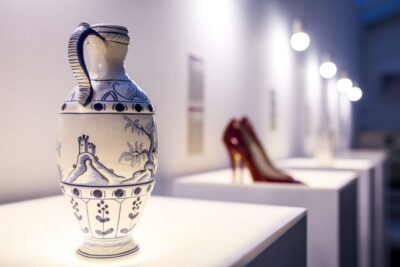
Skip-the-Ticket-Line Museum of Broken Relationships
Read our review →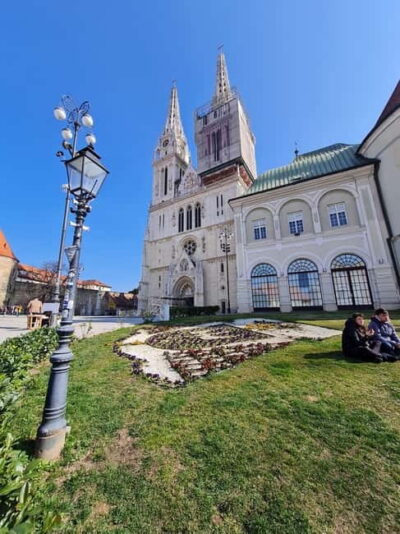
Browse the lists this tour appears in