
Reviewed · KORCULA TOURS
Half-Day Cooking Workshop Gastronomy in Korcula
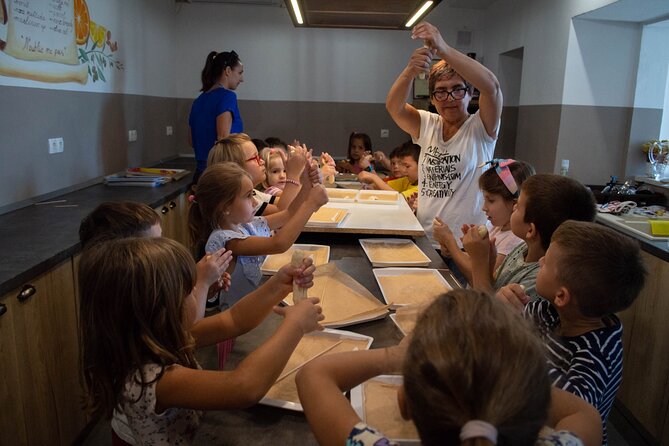
The best part of this Korčula cooking class is that you do not simply watch a chef work. You roll the pasta, prepare the toppings, bake the traditional cake, and sit down to eat what you made. Sanja Protić and her family teach in a modern kitchen at their home above Blato, with views across the town.
I like the small group limit of 12, which gives you a real chance to work at the counter instead of standing behind a crowd. I also like the local focus: garden produce, family olive oil, homemade juices, local wine, and Lumblija, a cake tied to Blato and a recipe said to be about 200 years old.
The main consideration is the trip from Korčula Town. Blato is about 50 minutes away by bus, and the workshop itself lasts around four hours, so this is not a quick add-on between beach time and dinner. The price is $95.31 per person, a fair amount if you value instruction and a full meal, but less appealing if you only want a short tasting.
Key points to know before booking
- Make Žrnovski makaruni by hand: Learn the local method for shaping Korčula-style pasta before eating it with meat or tomato sauce.
- Meet in Blato, then ride to the kitchen: Pickup can be arranged from the Blato bus station, where you can also leave a car.
- Taste a rare island specialty: Lumblija is a traditional cake with a recipe dating back roughly 200 years.
- Cook with Sanja and her family: Sanja, Gabrielle, Amelie, and Anastasia have all helped lead the friendly, hands-on lessons.
- Expect family-friendly teaching: Children have been included at every stage, and the kitchen has worked with special diets when told in advance.
- Plan time after lunch: The workshop ends back at the starting point, leaving you free to explore Blato and visit the Blato 1902 d.d. tasting room.
Why this Blato cooking class is worth the trip from Korčula
Korčula Town gets most of the island’s attention, but Blato gives you a different setting. This inland town feels tied to working kitchens, family recipes, local produce, and everyday island life rather than only the waterfront holiday scene.
The workshop begins at 1 Ul. 22 in Blato, with pickup available at the bus station in the town center. If you drive, you can leave your car near the station, but remember that street and parking-lot spaces require a paid parking slip displayed on the dashboard.
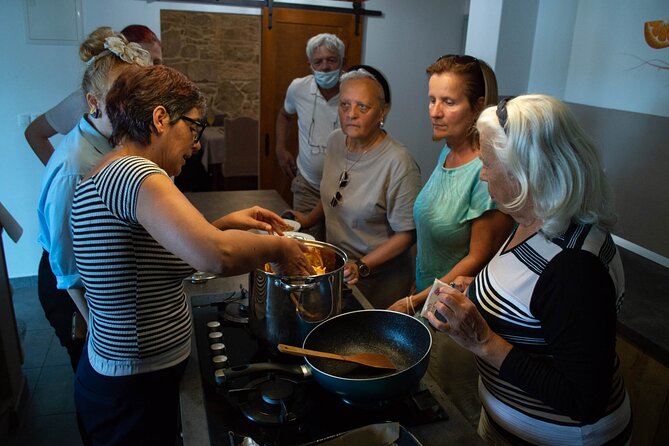
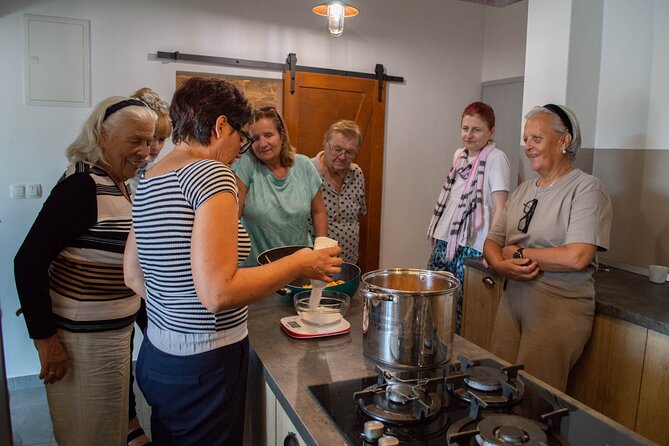
From the bus station, the cooking location is a short drive away. The kitchen is in the basement of Sanja’s home in the hills above Blato. It is described as modern and commercial-grade, so you get a practical cooking area rather than a staged restaurant demonstration. The setting also gives you a special view over town while you work.
The travel time matters. From Korčula Town, the bus journey takes about 50 minutes, according to the detailed account of the day. Add the pickup and return trip, and the class occupies a good part of your day. I would treat the ride as part of the outing, not as an inconvenience to squeeze around other plans.
More cooking classes in Korcula:
- Truffle hunting & cooking tour
★ 5.0 · 257 reviews - Traditional Cooking Class in Dubrovnik Countryside
★ 5.0 · 168 reviews - Traditional Dalmatian Cooking Class from Dubrovnik
★ 5.0 · 49 reviews
Starting with bruschetta and island produce
The cooking usually begins with a starter based on bruschetta, or grilled bread topped with vegetables, meat, or fish. The exact topping depends on what is fresh and on the preferences of the group, so you should not expect one fixed version every time.
The class has also included a spread described as Croatian-style hummus. Homemade juices, candied lemon and orange peels, and small snacks may appear while you are working. These extras turn the first part of the class into a relaxed introduction rather than a rush to complete the menu.
I like this flexible approach because it reflects how many home cooks actually prepare food. The ingredient list follows the day’s supply instead of forcing local produce into a fixed recipe. At the same time, the changing starter means you should book this for the method and setting, not for one guaranteed bruschetta topping.
Fresh tomatoes, lemon, basil, and other ingredients have come from Sanja’s garden. That detail gives the lesson a useful sense of place. You are not only hearing that Korčula has good produce, you are handling ingredients grown close to the kitchen and using them in the meal.
Rolling Žrnovski makaruni by hand
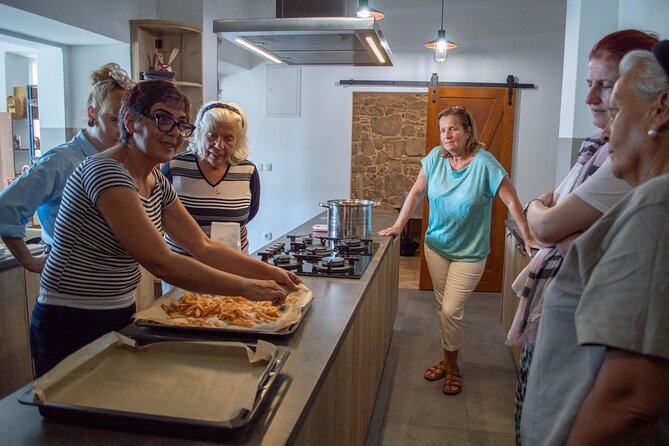
The main lesson is Žrnovski makaruni, a traditional pasta from the Korčula area. You prepare the dough and learn how to roll the pasta into its distinctive shape, then serve it with a meat or tomato sauce.
This is the part I would expect to remember most clearly. Handmade pasta gives the class a job that is simple enough for children but still satisfying for adults. You can see how the shape is made, try it yourself, and then taste the difference between your small batch and the finished meal.
Sanja and her family are patient teachers. The class has included children at every stage, and one family’s 11-year-old birthday celebration centered on the pasta lesson. Teenagers also took part without needing much prompting, which says something useful about the pace and hands-on nature of the workshop.
The pasta is not just a tourist prop. Sanja’s kitchen has produced large quantities for hotels in Dubrovnik and Split, and the family sells olive oil made from their own production. Her cooking work has a serious professional side, even though the class itself feels personal and informal.
You should still expect a home-style class rather than a formal culinary school course. The instruction centers on traditional methods and cooking by feel, not precise restaurant measurement or a printed technical curriculum. That is part of the charm, but cooks who want exact weights, timed drills, and professional certification may find it too loose.
Lumblija, the cake with a 200-year-old recipe
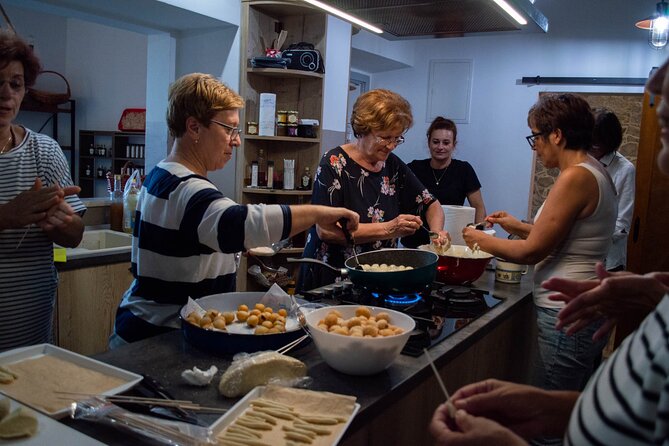
Dessert is Lumblija, a traditional cake associated with Blato. Its recipe is about 200 years old, and the cake is linked to the period of Napoleon’s occupation of Korčula.
This gives the dessert more weight than a standard final course. You are learning a local food with a story and a place in the island’s past. The preparation also helps explain why food traditions survive: a recipe becomes a marker of home, family, and town.
Sanja is one of the few cooks in Croatia permitted to sell Lumblija cakes for official gifts at diplomatic events. That is a distinctive detail, and it makes the workshop especially worthwhile for anyone interested in regional baking.
Do not expect a pastry lesson built around decorative finishing. The attraction is the recipe, the ingredients, and the chance to make a local specialty with someone who has spent years producing it. You will get more from this part if you are curious about old family foods than if you are seeking a modern dessert class.
More hands-on workshops in Korcula:
- Authentic Garden to Table Cooking Class in Dubrovnik Countryside
★ 5.0 · 17 reviews - Croatian Traditional Cuisine: Peka Cooking Lesson
★ 5.0 · 10 reviews - Pula: SUP Yoga Classes at Morning & Sunset
★ 5.0 · 10 reviews - Dubrovnik: Local Wine, Dine and Design Workshop
★ 4.8 · 10 reviews
Eating the meal with Korčula wine
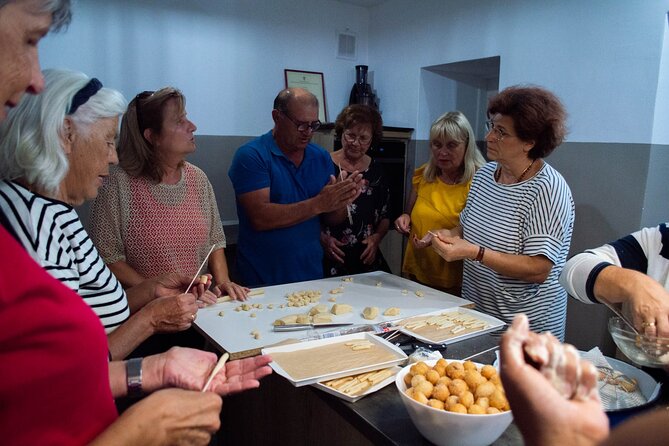
After the preparation, everyone sits down to eat the meal. The planned menu includes bruschetta, Žrnovski makaruni, Lumblija, and wine from small local producers.
The shared meal is an important part of the value. At $95.31, you are not paying only for a plate of pasta. You are paying for roughly four hours of instruction, transportation from the Blato meeting point to the home kitchen, ingredients, conversation, and a meal with local wine.
Portions can be generous. One family found that hungry teenagers needed extra pasta, and Sanja prepared more. That is not a promise of unlimited food, but it does suggest a flexible host who pays attention to the table rather than treating the final meal as a fixed serving.
The atmosphere is informal and family-like. Sanja and her daughters have been described as warm, patient, and fun to work with. The meal may stretch into a balcony conversation, and the walk back down toward the bus station can be part of the memory of the day.
If you do not drink alcohol, the cooking remains the main event, but the included wine is part of the stated offering. Tell the provider about dietary needs before you go. Special diets have been accommodated, but no exact substitutions are listed, so advance notice matters.
Timing, pickup, and the Blato setting
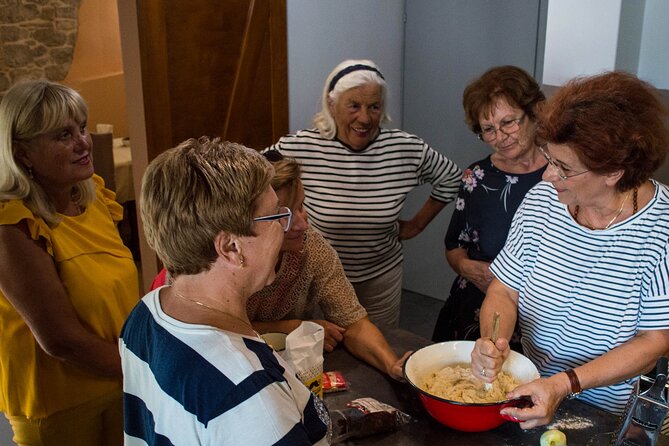
The workshop starts and ends at the stated meeting point in Blato. Pickup is offered from the bus station in the center of town, where you can leave your car. The class does not end in Korčula Town, so arrange your return before you set out.
The four-hour duration is approximate. In one detailed account, the cooking finished around 3 p.m., leaving nearly two hours for walking around Blato afterward. Your exact timing may vary with the group size, the menu, and how much time everyone spends at the table.
A maximum of 12 people keeps the class small enough for direct help. Still, 12 cooks around one kitchen can feel active, especially during pasta shaping. Families should find the format manageable, while couples and solo participants should be prepared to share the work surface and meal with others.
The workshop is offered in English. Service animals are allowed. Booking confirmation is sent within 48 hours, subject to availability, and the activity requires a minimum number of participants. If that minimum is not reached and the provider cancels, you will be offered another date or experience, or a full refund.
The strict cancellation rule deserves attention: once booked, the experience is non-refundable and cannot be changed for any reason. I would book only after your Korčula schedule and transport plans are firm.
What to do in Blato after the class
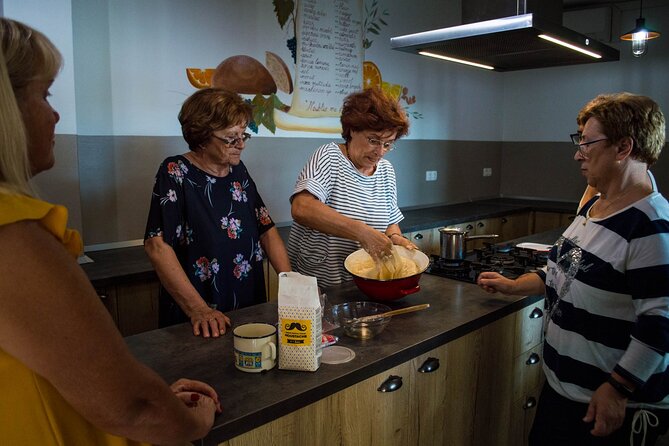
The cooking day can easily fill more than the four-hour class. If you have time afterward, walk around Blato instead of heading straight back to Korčula Town.
A useful stop is the Blato 1902 d.d. tasting room, suggested as a place for wine tasting. You can also browse the town’s shops before returning to the bus station. These stops are not part of the cooking workshop, so plan them as your own extra time.
This is one reason the class works best as a half-day outing rather than a quick meal activity. The workshop introduces you to Blato, and the free time afterward lets you see a little more of the town at your own pace.
Who will enjoy this class most
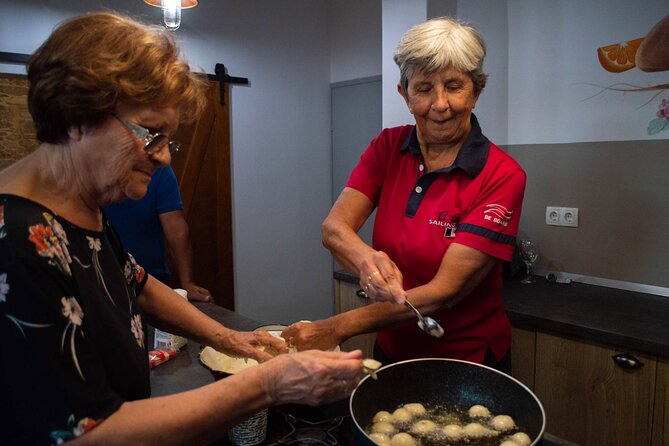
I would recommend this workshop to families, couples, food-focused visitors, and anyone who wants a closer look at Korčula beyond the old-town streets. Children have been welcomed into the cooking at each stage, and the birthday example shows how easily the class can become a special family activity.
It is also a good match for people who collect recipes while traveling. The handmade pasta is practical enough to recreate at home, and Lumblija gives you a less familiar Korčula specialty to remember. You leave with cooking skills, tastes, and a story about the island’s food traditions.
The class may not suit you if you want a polished restaurant meal with no participation. You will handle ingredients, shape pasta, and take part in the work. It may also feel like too much of a time commitment if your schedule is built around beaches, boat trips, or a short stay in Korčula Town.
The English-language format helps, but cooking by feel can be less exact than some visitors expect. If you prefer recipes with precise measurements and formal instruction, ask about the teaching style before booking.
Is the $95.31 price good value?
For four hours, the price is reasonable if you make full use of the class. You get a guided cooking session, ingredients, a complete meal, local wine, and transport from the Blato bus station to the kitchen and back.
The value improves for families because children are actively involved rather than simply waiting for adults to finish. It also improves for anyone who would otherwise pay separately for lunch, wine tasting, and a short cultural activity.
The price is less compelling if you judge it against an ordinary restaurant meal. You can eat pasta more cheaply elsewhere. Here, the point is the process: learning Žrnovski makaruni, preparing a heritage cake, meeting Sanja’s family, and eating in a private hillside setting.
I would also factor in your transport costs from Korčula Town. The bus trip takes about 50 minutes each way, and the activity returns you to Blato rather than Korčula. The outing is good value when you want a full local day, but less so when you have only a few free hours.
Should you book the Korčula gastronomy workshop?
Book it if you want to cook, not just eat. Sanja Protić and her family offer a personal lesson built around three strong local dishes, with especially memorable moments in the pasta-making and Lumblija preparation.
I would give it priority on a family itinerary, for a birthday, or for anyone who likes returning home with a recipe rather than another photograph. Leave time for Blato after the class, and make sure your transport and cancellation plans are settled before paying.
Skip it if you are seeking a fast activity in Korčula Town or a highly formal culinary course. For everyone else, the combination of hands-on work, local ingredients, family teaching, and a shared meal makes the trip to Blato worthwhile.
FAQ
Where does the cooking workshop take place?
The meeting point is at 1 Ul. 22, 20271, Blato, Croatia. The cooking takes place at the provider’s home in the hills above Blato.
Is pickup available?
Yes. Pickup can be arranged at the bus station in central Blato. You can leave your car there, but paid parking requires displaying the parking slip on your dashboard.
How long does the workshop last?
The activity lasts approximately four hours. The exact schedule may vary, and the class ends back at the meeting point in Blato.
What food will I prepare?
The sample menu includes bruschetta, Žrnovski makaruni with meat or tomato sauce, and Lumblija, a traditional cake with a recipe dating back about 200 years.
Is wine included?
Yes. The meal is served with local wine from small Korčula producers.
Is the workshop offered in English?
Yes. The workshop is offered in English.
How many people can join?
The group has a maximum of 12 participants. The activity also requires a minimum number of participants to operate.
Can dietary requirements be accommodated?
Special diet requirements can be worked with, but you should tell the provider in advance so suitable arrangements can be considered.
More Half-Day in Korcula
- Half-Day Boat Tour Korcula Archipelago
★ 5.0 · 105 reviews - From Korcula Town: Local Wine & Sightseeing Half-Day Tour
★ 4.5 · 62 reviews - Lumbarda: Half-Day Kayaking and History with Wine delight
★ 5.0 · 49 reviews - Half-Day Bike Tour in Lumbarda with Wine Tasting
★ 5.0 · 31 reviews
Just added around Korcula
- Island Stupe / Moro Beach Transfer★ 4.0 · 5 reviews
- Korčula for Early Risers and Coffee Lovers Private Walking Tour★ 4.5 · 3 reviews
- 1 Hour Private Walking Tour in Korcula★ 5.0 · 64 reviews
- Korcula 3 Islands Tour – Badija – Vrnik – Stupe (shared tour)★ 4.5 · 39 reviews
- Island Badija – Yellow Taxi Cat★ 3.5 · 6 reviews
- Wine & Sightseeing Tour Korcula★ 4.5 · 99 reviews
- Boat discovery: private one-day Korčula adventure★ 5.0 · 9 reviews
- Private Winemaking of the Island of Korčula★ 5.0 · 4 reviews
Korcula Tours, compared.
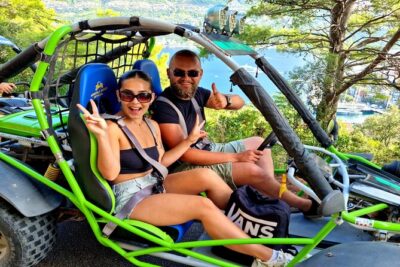
Korcula Buggy (Official) Safari Tour -Local Food & Wine Tasting-
Read our review →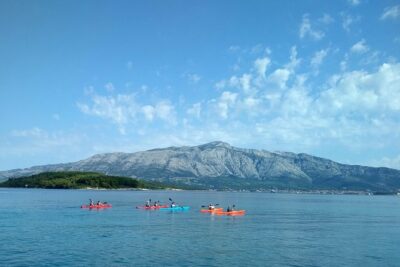
Bits of History – Half day kayak Tour with Wine delight
Read our review →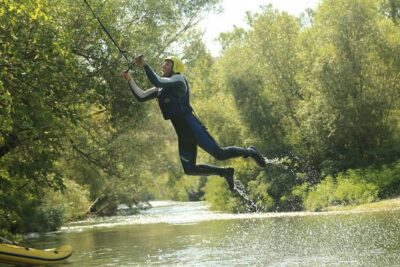
Multi Adventure Experience – Rafting with elements of canyoning
Read our review →
Korčula 3 ISLAND CATAMARAN TOUR Badija – Vrnik – Stupe
Read our review →
Korcula Bike & Wine Tour | Wine Tasting in Lumbarda
Read our review →Browse the lists this tour appears in