
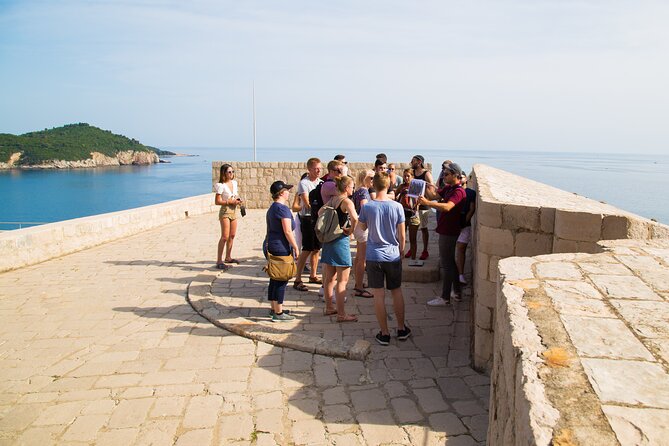
Reviewed · DUBROVNIK TOURS
Private Dubrovnik City Walls Walking Experience
Dubrovnik’s city walls are the place to understand the town. From the stone ramparts, you see the red roofs, the sea, the harbor, and the fortress system that protected the old republic. This private two-hour walk gives you a guide to connect those views with Dubrovnik’s story, instead of leaving you to circle the walls on your own.
I like the personal pace, especially in hot weather, and I like that the route covers the major defensive towers rather than stopping at a few postcard views. Guides Edi and Josip have been singled out for clear explanations, humor, and a knack for making the city’s long story manageable. The main drawback is the extra €40 city walls ticket, plus the steep, sometimes demanding walking.
Key points to know before you book
- Meet at Onofrio’s Large Fountain: Your guide begins with the Republic of Ragusa and the city’s defensive strategy.
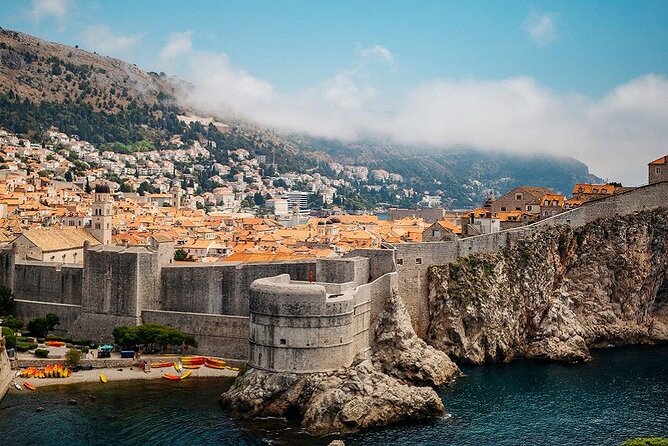
- See the main fortifications: The circuit includes Minčeta, Bokar, St John’s Fortress, and views toward Revelin Fortress.
- Private means flexible: Only your group participates, so the guide can adjust the pace and explanations.
- Plan for real exercise: The walls involve sustained walking and can be difficult if you have walking limitations.
- Budget for the entrance fee: The advertised tour price is $129.40 per person, but the €40 city walls ticket is separate.
- English-language guiding: The experience is offered in English with a licensed guide.
Starting beside Onofrio’s Large Fountain
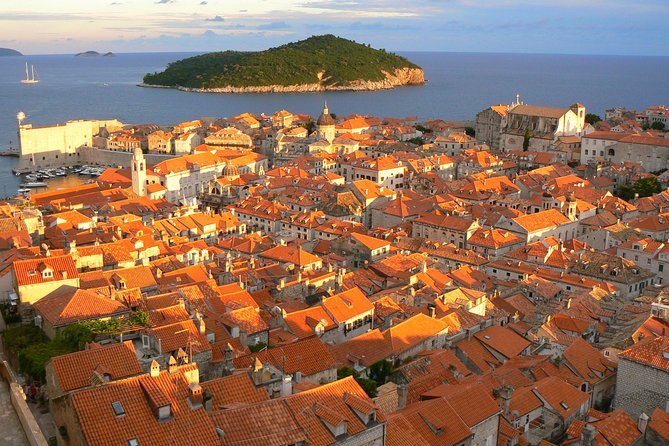
The meeting point is Dubrovnik’s historic Large Onofrio’s Fountain on Placa, the main street through the Old Town. This is a useful place to begin because you are already near the wall access point and one of the city’s best-known landmarks.
Your private licensed guide uses the opening minutes to explain the Republic of Ragusa, Dubrovnik’s former name and political identity. The key idea is that these walls were not decoration. They were a working defense system, shaped by the town’s position on the Adriatic and its need to protect both the landward and seaward approaches.
That short introduction matters. Without it, a walk around the walls can become a string of attractive views and unfamiliar tower names. With it, the fortifications begin to make sense as a planned ring of towers, gates, and strong points.
The fountain stop itself takes about five minutes and has no separate admission charge. After meeting your guide, you move directly toward the city walls.
More ways to walk the city walls:
- Dubrovnik: City Walls Early Morning or Sunset Walking Tour
★ 4.8 · 1,523 reviews - Dubrovnik: Ancient City Walls & Wars Walking Tour
★ 5.0 · 1,270 reviews - Dubrovnik Combo: Old Town & Ancient City Walls
★ 5.0 · 1,019 reviews
The wall circuit takes most of the two hours
The main walk lasts about one hour and 55 minutes, making this a compact tour but not a light stroll. You circle the Old Town above the streets, with regular changes in direction and plenty of stone underfoot.
I would wear comfortable shoes with a good grip. The route is challenging for people with walking difficulties, and the heat can make the physical effort feel greater than the two-hour duration suggests. One guide adjusted the pace to suit the weather and the group, which is one of the practical benefits of booking a private activity.
You will want to look beyond the most obvious photo stops. The walls let you compare Dubrovnik’s two faces: the tightly packed Old Town on one side and the open Adriatic views on the other. The guide’s job is to point out how the defensive structures worked together and to explain what you are seeing before the next tower catches your eye.
Since only your group takes part, you can ask for more detail on military design, Dubrovnik’s diplomacy, or the city’s more recent past. You can also ask the guide to slow down for photographs or to keep moving if your group is eager to cover the full circuit.
Minčeta Fortress, the highest point on the walls
Minčeta Fortress occupies the highest northwestern part of the fortifications. Its large circular tower is one of the most imposing structures on the route, with a heavy battlement supported by stone brackets.
The first tower here was smaller and quadrangular. It was built in 1319 by Nikifor Ranjina, then later developed into the major round fortress you see today. This makes Minčeta a good stop for understanding how Dubrovnik’s defenses changed over time.
The height gives you a strong view over the Old Town and the surrounding area. It also gives you a sense of the wall’s practical purpose. From this position, defenders could watch approaches to the city and control a large section of the fortification line.
This is one of the places where the route can feel strenuous. You have already been walking, and the high sections and stone surfaces require care. Take your time with your footing, especially if the day is warm.
Bokar Fortress and the western approach
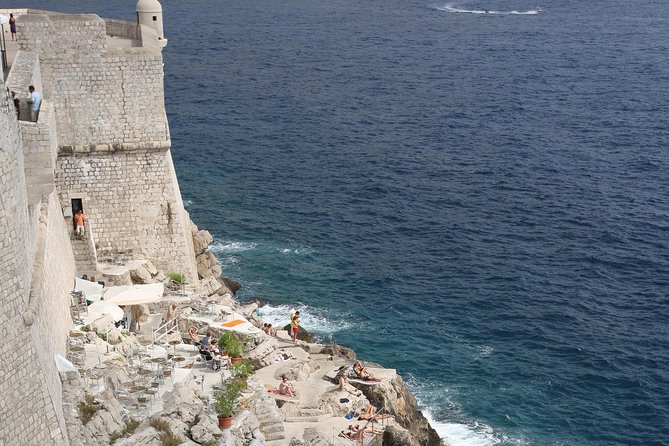
Bokar Fortress protects the western sea approach and the land route toward Dubrovnik. Its semicircular, two-story form was designed by the Florentine architect Michelozzo di Bartolomeo Michelozzi.
Bokar helps explain why the walls are more than a single barrier. Different towers were built to cover different threats. A fortress facing the sea had a separate role from one guarding a gate or watching the landward side.
The shape is easy to appreciate from the walls, where you can see how the structure projects from the defensive line. Your guide can place it within the wider system, so the individual tower does not seem isolated from the rest of the circuit.
This section also offers some of the tour’s most appealing contrasts: thick stone defense works beside broad sea views, with the compact Old Town behind you. If you enjoy architecture, military design, or city planning, Bokar gives the guide plenty to explain without turning the walk into a lecture.
More walking tours in Dubrovnik:
- Dubrovnik: Old Town Walking Tour
★ 4.8 · 5,174 reviews - Dubrovnik Discovery Old Town Walking Tour
★ 5.0 · 4,458 reviews - Dubrovnik: Game of Thrones Walking Tour
★ 5.0 · 1,732 reviews - Dubrovnik Old Town History Walking Tour
★ 5.0 · 1,684 reviews
St John’s Fortress guards the harbor side

The Fortress of St John, also called Sveti Ivan or Mulo Tower, is another major part of Dubrovnik’s medieval defense network. Its towers date from the 14th century, while the main structure belongs to the 16th century.
Its location is important because it helped protect the harbor side of the city. Along with the other fortifications, it shows how Dubrovnik defended several points at once: the land approaches, the sea, the gates, and the working harbor.
The mixed dates are useful clues. Dubrovnik’s walls were not built once and forgotten. They were strengthened and adapted as military needs changed. A guide can make that process easier to follow, particularly if you are not familiar with fortress architecture.
This is also a good point to consider the tour’s balance. You are not simply being led from one famous view to another. The walk links the structures to the city’s political survival, including its diplomacy and its ability to remain an independent republic.
Revelin Fortress from the eastern side
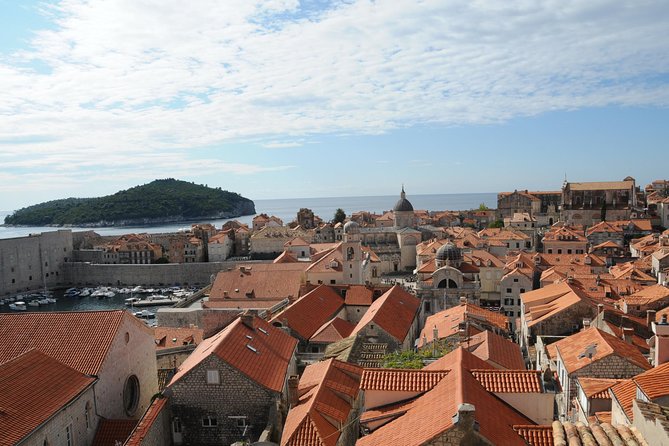
The route includes a view toward Revelin Fortress, the eastern stronghold that protected the land entrance to the city. It reinforces the importance of the Ploče side and the eastern approach.
Revelin is one more piece in the defensive puzzle. From the walls, you can see how the eastern side needed its own protection, just as the western side required Bokar and the harbor had St John’s Fortress.
The tour’s focus is the city wall circuit, so this is presented as a fortress view rather than a separate extended visit. That is worth knowing if you want a detailed interior tour of every fortification. You are getting the wider defensive story and the key exterior viewpoints within a short time.
The history goes beyond medieval stone
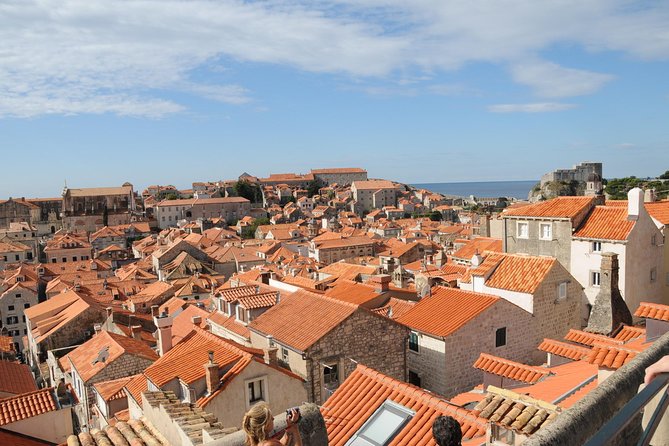
The walk is strongest when it connects military structures with Dubrovnik’s broader story. The city developed as the independent Republic of Ragusa, and its diplomacy helped it protect its interests among larger powers.
You can expect the guide to cover the city’s beginnings, its period as an independent republic, and its diplomatic methods. The historical range also reaches the Yugoslavian war, giving you a more complete introduction to Dubrovnik than a purely medieval tour would provide.
One account of the walk also included a short guided look at the main street after the wall circuit, with an explanation of how the Old Town changed after a major earthquake during the Baroque period. Because the stated tour route centers on the walls, I would treat this as a possible closing orientation rather than a guaranteed separate sightseeing section.
That broader context is valuable. Dubrovnik can look like a perfectly preserved stone stage, especially when you first arrive. The guide helps you see the city as a place that changed, rebuilt, negotiated, and adapted.
What a private guide adds
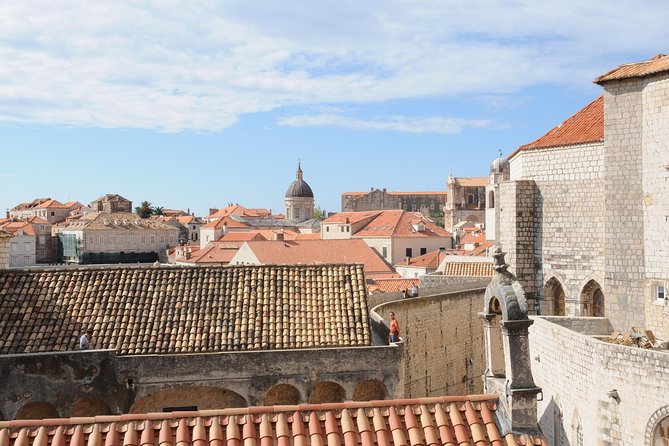
A private format is the main reason to choose this experience over a larger group walk. You are not tied to another group’s pace, questions, or photo stops. If your party includes people with different energy levels, the guide can respond to that.
The strongest guide feedback centers on personal attention. Edi has been praised for remembering a great deal of Dubrovnik’s story while keeping the walk at the group’s pace. Josip has been described as well-informed, funny, and good at offering useful insights.
Those details point to the kind of guiding you can expect: not just dates and names, but a more conversational explanation of why the walls were built and how the city developed. Still, guides can vary, and the booking information does not promise Edi or Josip specifically. You receive a licensed English-speaking guide, but you should not book solely on the hope of getting one named individual.
The private format also helps in the heat. Dubrovnik’s stone absorbs sunlight, and the walls offer limited relief in some sections. A group that wants to stop, ask questions, and take photographs can do so without holding up a large party.
Price, ticket cost, and overall value
The tour price is $129.40 per person. That is before the €40 city walls admission fee, which is not included. For a private activity, the total cost can become substantial, particularly for one or two people.
The value improves when several people share the guide, since group discounts are available and only your party participates. A family or small group that wants a private pace may find the added cost worthwhile. Solo visitors and couples should compare the total with a standard group wall walk.
You are paying for more than entry. The price includes a licensed English-speaking guide, a planned route, and private attention for about two hours. You are not paying for transport, since the meeting and ending points are in or beside the Old Town, and the experience does not list refreshments or any other extras.
The separate €40 ticket is the cost that can catch people off guard. Include it in your budget from the start. If you already plan to walk the walls independently, the private guiding fee may not make sense. If you want the fortifications explained as you go and prefer not to manage the route yourself, the added cost has a clearer purpose.
Timing, meeting point, and physical demands
The tour starts at Big Onofrio’s Fountain, at Placa b.b. in Dubrovnik’s Old Town. It ends at Poljana Paska Miličevića, also in the Old Town area. The route is therefore convenient if you are already exploring central Dubrovnik.
The total duration is about two hours. That is long enough for a meaningful circuit but short enough to fit around another Old Town visit. The walk does not require you to give up an entire day, though the physical effort may leave you ready for a quieter afternoon.
You need a moderate level of physical fitness. Walking difficulties can make the wall route especially hard, and comfortable shoes are essential. Service animals are allowed, and the starting point is near public transportation.
The booking confirmation arrives at the time of booking. Free cancellation is available if you cancel at least 24 hours before the local start time. Changes or cancellations made inside that 24-hour window are not accepted for a refund.
Who will get the most from this walk
I would choose this tour if you want your first visit to Dubrovnik’s Old Town to have a clear shape. The walls give you a strong orientation, and the guide adds the political, military, and modern context that can be easy to miss while sightseeing alone.
It suits:
- Small families or friend groups that want a private pace
- First-time visitors who want to understand Dubrovnik quickly
- History and fortress enthusiasts
- People who prefer an English-speaking guide
- Groups visiting in hot weather that may need flexible walking speed
- Anyone who wants a short guided activity rather than a full-day tour
I would think twice if you dislike sustained walking, have trouble with uneven stone surfaces, or mainly want unstructured time for photographs. The route is not gentle, and the entrance ticket adds a meaningful extra cost.
The experience also works well as an opening activity because it gives you a map in your head. Afterward, the main street, gates, harbor, and fortresses should feel less like separate sights and more like parts of one compact city.
Should you book the Dubrovnik walls experience?
Book it if you want the city walls explained by a private guide and you value flexible pacing more than the lowest possible price. The combination of Minčeta, Bokar, St John’s Fortress, Revelin views, and the larger story of Ragusa makes this a solid introduction to Dubrovnik.
Before booking, be clear about two points: the €40 wall entrance fee is extra, and the walk is physically demanding. If those fit your budget and ability, the private format gives you a focused two-hour look at the city’s most important structure, with room for questions and photographs along the way.
FAQ
How long does the Private Dubrovnik City Walls Walking Experience last?
The experience lasts approximately two hours. About five minutes are spent at Onofrio’s Large Fountain, followed by roughly one hour and 55 minutes on the city walls.
Where does the tour begin?
It begins at Dubrovnik’s Big Onofrio’s Fountain on Placa b.b. in the Old Town. The meeting point is near the city wall access point.
Where does the tour end?
The stated end point is Poljana Paska Miličevića bb in Dubrovnik.
Is the city walls entrance ticket included?
No. The city walls ticket is not included and is listed as €40 per person.
Is this a private tour?
Yes. Only your group participates in the activity, and group discounts are available.
What language is the tour offered in?
The tour is offered in English with a licensed English-speaking guide.
Is the walk suitable for people with walking difficulties?
The walk may be challenging for people with walking difficulties and requires a moderate level of physical fitness. Comfortable shoes are recommended.
Just added around Dubrovnik
- Full- Day Private Speedboat Tour in Dubrovnik on Elaphiti Islands★ 5.0 · 21 reviews
- Wine Lover’s Tour of Peljesac Peninsula★ 5.0 · 150 reviews
- Wine tour peninsula Pelješac★ 5.0 · 3 reviews
- Elaphiti Islands Private Dubrovnik Boat Unique Experience★ 5.0 · 10 reviews
- Dubrovnik at War 1991-1992 Private Walking Tour★ 5.0 · 4 reviews
- PRIVATE Wine Tour to Konavle country side★ 5.0 · 11 reviews
- Walls of Liberty: A Self-Guided Audio Tour of Dubrovnik★ 3.5 · 3 reviews
- Parasailing in Cavtat★ 5.0 · 62 reviews
Dubrovnik Tours, compared.

Blue Cave Small-Group Boat Tour from Dubrovnik
Read our review →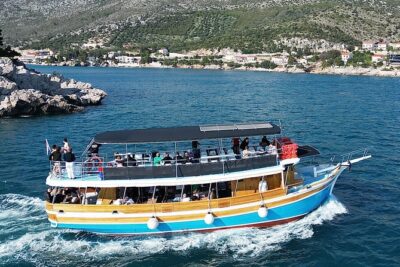
Full-Day Dubrovnik Elaphite Islands Cruise with Lunch and Drinks
Read our review →
Epic Game of Thrones Tour + Lokrum & Saver Option
Read our review →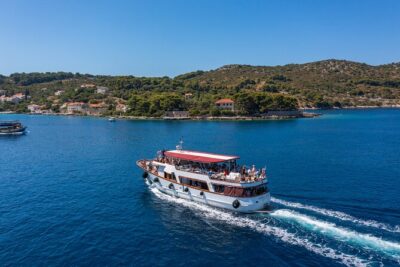

The Original Game of Thrones Tour & Lokrum Option
Read our review →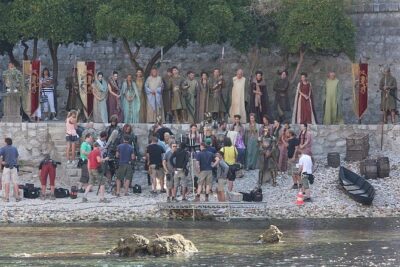
Dubrovnik Game of Thrones Tour & Optional Lokrum Island Visit
Read our review →
Elaphite Island Cruise w/ Drinks & Optional Lunch
Read our review →Browse the lists this tour appears in