
Reviewed · PULA TOURS
Pula Roman Heritage Walking Tour
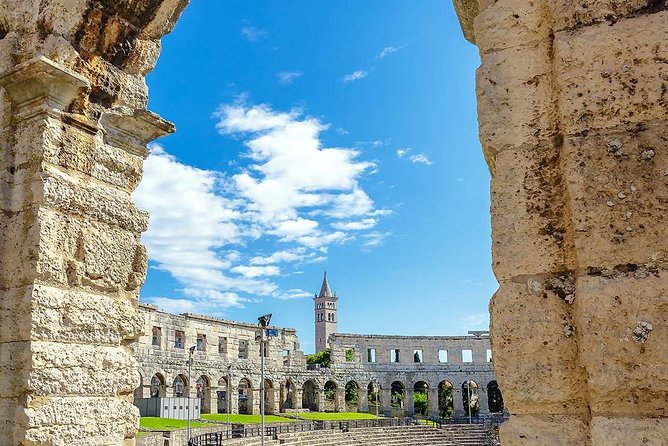
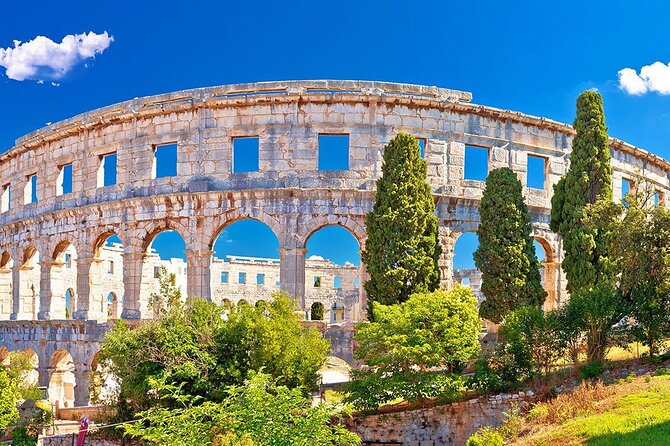
Pula’s Roman Arena is the star here, and this two-hour walk gives you more than a quick photo stop. You’ll see where gladiators fought, visit the Temple of Augustus, and climb to the remains of the Small Roman Theatre while a local guide explains how Roman Pula worked.
I like the small maximum group of 15 and the choice of morning or afternoon departure. I also like the personal touch: guides including Dina, Jadranka, and Maslinka have tailored walks to their guests’ interests, sometimes spending longer than the planned two hours.
The main consideration is the $107.06 price per person, which is high for a short walking tour. The value depends on whether you want context and conversation, rather than simply seeing the sights on your own. The tour also needs at least two full-price adults to operate.
Key points at a glance
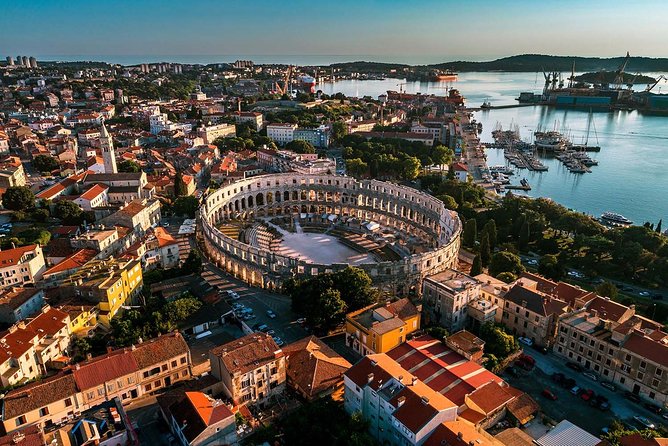
- Roman Arena entrance included: Spend time inside Pula’s best-known ancient monument, with access to exhibits below ground.
- Three important Roman sites: The route links the Arena, Temple of Augustus, and Small Roman Theatre.
- Local guides shape the walk: Dina, Jadranka, and Maslinka have all led tours, with an emphasis on history, culture, and your interests.
- Coffee or tea included: The break adds a relaxed pause to a compact sightseeing walk.
- Morning or afternoon timing: You can fit the tour around other plans in Pula.
- Small group size: The experience is limited to 15 people and may operate with only your own family or party.
Why Pula’s Roman story works well on foot
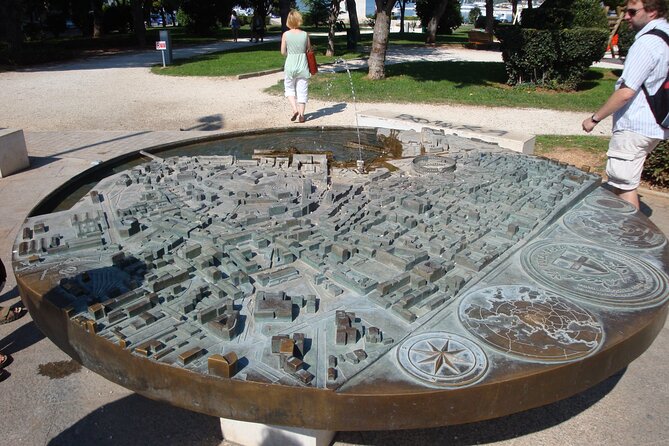
Pula is easy to underestimate. Many people come for the Arena, take a few pictures, and move on. That misses the point. The Roman remains are spread through the city, so a walking tour helps you connect the large monument with the smaller pieces around it.
This experience focuses on the Roman period, but the guides also bring in the wider story of Pula and the surrounding region. That matters because the Arena was not an isolated building. It belonged to a working Roman city, with temples, gates, streets, theaters, and public life.
You begin at Pula Arena on Flavijevska Street. The route then moves through the central area and up toward the Small Roman Theatre. Expect a mix of major ruins and less imposing remains. The large sites make an immediate impression, while the smaller stops become more meaningful after your guide explains what once occupied the area.
The tour lasts about two hours, though the actual pace can vary. Jadranka and Maslinka are both described as spending much longer than planned when the conversation and questions kept flowing. That can be a benefit if you enjoy a flexible tour, but it may matter if you have a tight schedule afterward.
More history-led days in Pula:
- Pula: Historic Walking Tour with Local Guide & City Views
★ 4.8 · 143 reviews - Pula: Historic Sites Guided Walking Tour
★ 4.8 · 78 reviews - Olive Oil Guided Tasting and History in Pula
★ 4.5 · 34 reviews
Entering Pula Arena and its underground exhibits
The Arena gets about 15 minutes on the planned route, with admission included. That may sound brief for such a major sight, but the tour is designed to cover several Roman locations rather than spend the entire morning inside one monument.
Your guide explains the building’s role as an amphitheater where Roman gladiators fought. You’ll also hear how it was built and used, giving the stone structure a human purpose instead of leaving it as a dramatic shell.
The underground exhibits add another layer. They help explain the working side of the Arena and the systems that supported public spectacles. The exact depth of the visit can depend on the guide and the group’s questions, but the below-ground area is one of the most useful parts for anyone who wants more than a quick exterior view.
I would pay close attention here to the connection between architecture and entertainment. The Arena was built for crowds, performance, and spectacle. A local guide can point out what photographs do not show easily, including how the monument fits into Pula’s wider Roman setting.
The 15-minute stop is also the clearest limitation of the itinerary. If the Arena is your main reason for booking, you may want extra independent time before or after the walk. The tour gives you a guided introduction, not an extended study visit focused only on the amphitheater.
The Temple of Augustus and Pula’s civic center
The next listed stop is the Temple of Augustus, with about 10 minutes set aside. Admission is free. The temple was dedicated to the goddess Roma and to Emperor Augustus, which tells you something important about Roman public life: religion, political power, and civic identity were closely linked.
This is a short stop, but it helps balance the Arena. The amphitheater shows mass entertainment. The temple points to ceremony, authority, and the official face of the city.
You’ll benefit most if you listen for the guide’s explanation of what the temple meant to people in Roman Pula. The building itself is compact compared with the Arena, so context does much of the work. Without that context, you might look, take a picture, and keep walking.
The free admission keeps the tour’s included costs simple. The Arena ticket is covered, while the Temple of Augustus and Small Roman Theatre do not require an additional ticket according to the tour details. That makes the price easier to assess, since you are paying mainly for the guide’s time, planning, and interpretation.
The Small Roman Theatre on Zaro hill

The Small Roman Theatre is a 10-minute stop on the hillside of Zaro. It was once an amphitheater outside the city walls, and its remains offer a different view of Roman Pula.
Do not expect the same visual impact as the Arena. The ruins are smaller and less complete. Their value comes from showing that Roman public entertainment extended beyond one grand building. Your guide can help you picture how the site functioned and why its position outside the old walls mattered.
This stop also adds a little variety to the walk. You are not simply moving between polished central landmarks. You are seeing fragments and learning how archaeologists and historians read them. That can be especially useful if you are interested in the process of reconstructing the past from partial remains.
The hillside setting may be worth noting if you prefer a completely flat route. The supplied details do not describe the amount of climbing, so you should be prepared for some uphill walking toward Zaro. Most people can participate, and the tour is near public transportation, but anyone with mobility concerns should confirm the route directly before booking.
More walking tours in Pula:
- Pula walking tour
★ 5.0 · 96 reviews - Pula Essentials Walking Tour
★ 4.8 · 64 reviews - Pula Essentials Walking Tour
★ 5.0 · 62 reviews - Pula Food Walking Tour
★ 4.5 · 22 reviews
Coffee, conversation, and the value of a local guide
Coffee or tea is included, giving the walk a natural pause. This is more than a small refreshment if you use the break to ask questions. A good history tour should leave room for conversation, especially in a place where the visible remains only tell part of the story.
The strongest feature of this experience is the guide’s role. Dina is described as professional, friendly, attentive, and willing to offer useful advice about onward travel in the area. Jadranka is described as tailoring the walk to a family’s interests and explaining Pula’s history and culture without making the group feel rushed. Maslinka is also praised for her historical knowledge and for extending the tour when the discussion continued.
Those details suggest a tour that can feel personal, especially when the group is small. One family of five had a private-feeling experience, with the guide asking what interested them before shaping the visit. That is a real advantage over a large group where every stop follows a fixed script.
You should still keep your expectations practical. The guide is the central value, and the quality of your experience may depend on who leads the walk and how well your interests match the discussion. The available guide names are Dina, Jadranka, and Maslinka, but you are not promised a particular person in the information provided.
The tour is offered in English. If you want a short introduction to Pula before exploring on your own, the language choice and local perspective make sense. If you already know Roman archaeology well, you may find the $107.06 cost harder to justify unless you particularly value personal questions and local advice.
Is $107.06 a fair price for two hours?

At $107.06 per person, this is not a budget sightseeing walk. You are paying a premium for a local guide, a planned route, Arena admission, a coffee or tea stop, and a small group capped at 15 people.
The price makes more sense for a couple, family, or small group that wants a focused introduction without spending time researching the Roman sites alone. It also becomes more attractive if your guide extends the tour, as happened on several occasions, though you should not book on the assumption that extra time is guaranteed.
For a solo visitor, the cost is harder to defend. The tour requires at least two full-price adult bookings to operate, so it is not designed as a guaranteed solo activity. If you are already comfortable reading site information and navigating Pula independently, you could see the three locations for less.
Admission details also help put the price in context. The Arena ticket is included, while the Temple of Augustus and Small Roman Theatre are free. The bulk of the fee therefore covers the guide’s knowledge, time, and ability to connect the sites.
I would consider it good value when you want explanation more than speed. I would consider it poor value if you only want entrance access or a quick orientation.
Who will get the most from this walk?
This tour suits first-time visitors who want to understand Pula’s Roman core in a short period. It is also a good fit for families, since the route combines a dramatic arena with stories about gladiators, temples, theaters, and city life.
History fans will appreciate the chance to ask questions and compare the three sites. The tour is also useful at the beginning of a Pula stay, since a guide can help you get oriented and may offer practical advice for the next day of travel.
The small-group format should appeal to anyone who dislikes moving through a large crowd. A group of 15 is still large enough for shared discussion, but small enough that you can usually hear the guide and ask a question without interrupting the whole experience.
You may want to skip it if your schedule allows only a very quick photo stop at the Arena, or if you prefer to explore at your own pace. The route is compact, but the guide-led format means you will follow a planned sequence and spend time listening at each location.
Choose the morning if you want the rest of the day free for independent sightseeing. Choose the afternoon if you prefer a slower start or want to use the walk as an introduction after arriving in Pula.
Practical details before you book
The meeting point is Pula Arena, Flavijevska ul., 52100 Pula. The walk ends back at the same meeting point, so plan your onward route from there rather than expecting hotel transport.
Hotel pickup and drop-off are not included. The meeting point is near public transportation, which should make arrival easier, but you need to arrange your own way there.
The dress code is smart casual. Service animals are allowed, and most people can participate. Since the route includes a hill toward the Small Roman Theatre, confirm the walking details if you have mobility concerns.
A mobile ticket is provided, and confirmation arrives at booking. The maximum group size is 15 people. The tour requires at least two full-price adults, and if that minimum is not reached, you will be offered another date or experience, or receive a full refund.
Free cancellation is available up to 24 hours before the local start time. Canceling or changing the booking less than 24 hours ahead does not qualify for a refund.
Should you book the Pula Roman Heritage Walking Tour?
Book it if you want the Roman sites to make sense as a connected story, not just a series of old stones. The Arena, Temple of Augustus, and Small Roman Theatre cover different parts of civic life, and a good local guide can tie them together in a way a quick self-guided visit may not.
The best reason to choose this tour is the personal guide style. Dina, Jadranka, and Maslinka are described as friendly, organized, and willing to shape the walk around individual interests. That makes the small group size especially useful.
Think twice if $107.06 feels high for two hours, or if you plan to spend most of your time inside the Arena. In that case, use the tour as a short orientation and allow extra time on your own at Pula’s main monument.
For a first visit, a family, or anyone who wants history explained in plain English, I would book it, provided the price fits your budget and you can commit to the meeting point and cancellation terms.
FAQ
How long does the Pula Roman Heritage Walking Tour last?
The tour lasts approximately two hours. Some guides may spend longer if the group’s questions and interests lead to an extended conversation.
What language is the tour offered in?
The tour is offered in English.
Where does the tour begin?
It begins at Pula Arena on Flavijevska ul., 52100 Pula, Croatia.
Where does the tour end?
The activity ends back at the Pula Arena meeting point.
Is admission to Pula Arena included?
Yes. Admission to Pula Arena is included in the tour price.
Do the other Roman sites require paid admission?
Admission to the Temple of Augustus and the Small Roman Theatre is listed as free.
Is hotel pickup included?
No. Hotel pickup and drop-off are not included.
What is the maximum group size?
The tour has a maximum of 15 people.
Can I cancel for a full refund?
Yes. You can cancel at least 24 hours before the experience start time for a full refund. Cancellations or changes made less than 24 hours before the start time are not refunded or accepted.
Just added around Pula
- Kamenjak Nature Park: Kayak Tour with Snorkeling & Cave Exploring★ 5.0 · 15 reviews
- Dolphin & Sunset tour with Brijuni panorama★ 5.0 · 119 reviews
- Transfer Pula – Poreč★ 5.0 · 5 reviews
- Clear Kayak Glow Night Tour★ 5.0 · 69 reviews
- Pula / Pješčana Uvala: Sunset SUP Tour – Explore & Chill★ 5.0 · 16 reviews
- Kayaking to Island Saint Jerolim with snorkeling activitie★ 4.5 · 26 reviews
- 1.5-hour Clear Kayak Rentals: Explore Verudela Cave & Islands★ 5.0 · 39 reviews
- Scuba Diving for Beginners in Pula★ 5.0 · 29 reviews
Pula Tours, compared.
Kamenjak 5h boat trip with lunch & drinks on Sandra Boat
Read our review →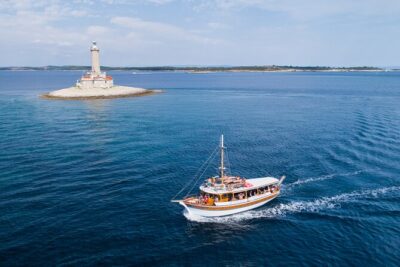
Full-Day Boat Tour of the Medulin Archipelago from Medulin
Read our review →
3hours all inclusive Sunset&Dolphin Tour from Medulin on Sandra
Read our review →
Dolphin Watching & Sunset Boat Tour With Dinner and Drinks
Read our review →
Kayaking,Snorkeling, Cliff jumping Tour with Wetsuit
Read our review →
BOAT & KAYAK! Sea Adventure – Snorkeling & Cliff Jumps
Read our review →
National Park Brijuni Island Visit & Dolphin Cruise
Read our review →Browse the lists this tour appears in