
Reviewed · PULA TOURS
Olive Oil Guided Tasting and History in Pula
The most revealing part of this Pula experience is not the first taste of olive oil, but the side-by-side comparison that follows. You learn why one oil smells fresh and grassy while another tastes flat or carries faults, then test your new skills with a surprise dessert pairing. I like the Roman production displays and the clear link between old methods and olive oil made today. I also like that the guide explains polyphenols rather than treating tasting as a simple snack stop.
The main drawback is scale. The museum is small, and its layout may feel a little odd or less interactive than you expect. Still, the tasting carries the visit, especially if you want practical help judging extra virgin olive oil at home.
Key points to know before you book
- Roman roots and modern methods: See how olive oil was made and exported in Istria during Roman times, then watch short films about traditional and current production.
- A useful side-by-side tasting: Compare high-quality Istrian oils with the sort of oil commonly bought in a supermarket.
- A lesson in defects and health: Learn to identify positive and negative oil qualities and understand why polyphenols matter.
- A sweet finish: The tasting ends with a surprise dessert paired with extra virgin olive oil.
- Compact, small-group format: The experience lasts about 90 minutes and allows up to 20 people.
- Easy central visit: Meet at Istarska ul. 30 in Pula, with the experience ending at the same address.
Inside the House of Istrian Olive Oil in Pula
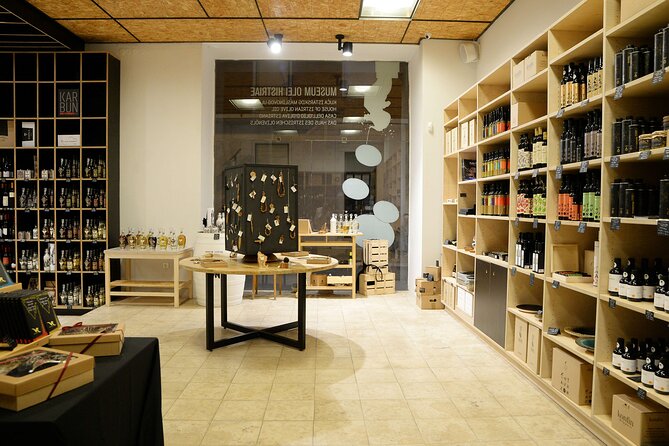
This is a food lesson wrapped in a small museum visit. You arrive at the House of Istrian Olive Oil, at Istarska ul. 30, and begin with the exhibition before moving into the tasting room. The order works well: first you get the setting and background, then you learn how to use your nose and palate.
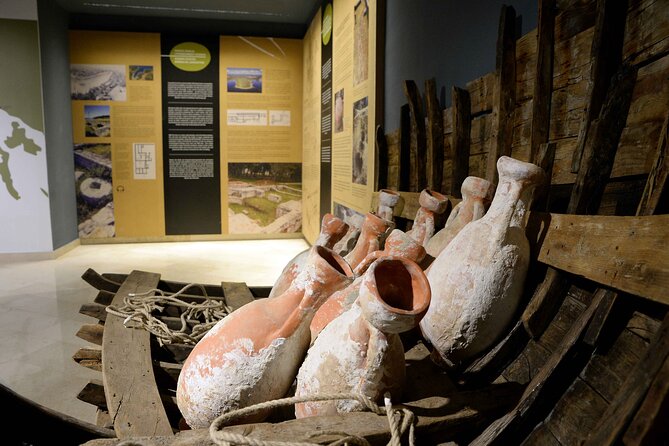
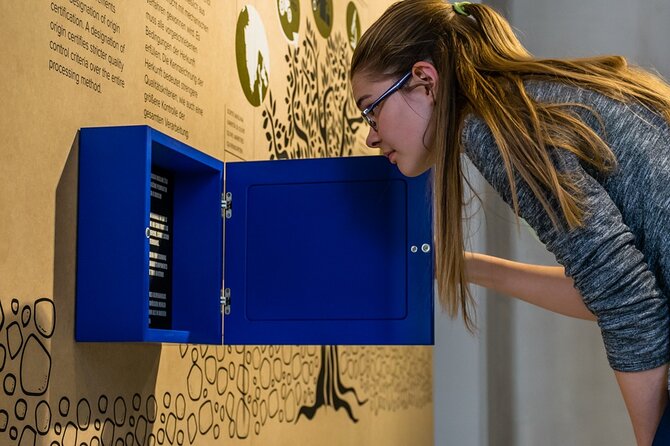
The exhibition focuses on Istria’s long olive oil tradition. You see how Romans in the region made olive oil, along with information about where and how it was exported. That detail gives the product a wider story. Olive oil was not simply a kitchen staple sitting in a local pantry. It was processed, traded, and moved beyond Istria long before modern labels and tasting awards.
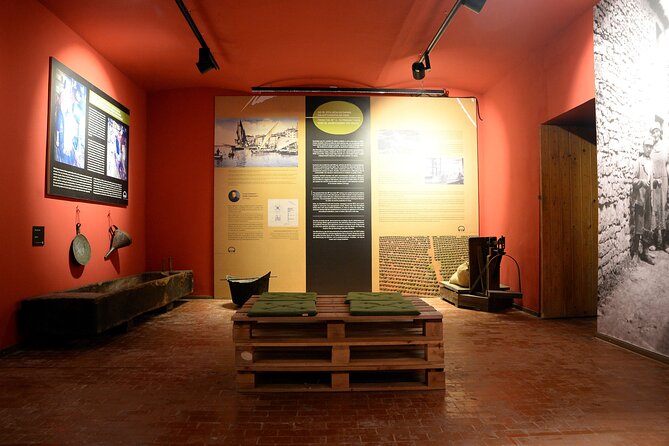
The museum itself is not large. You should set your expectations accordingly. One section of the visit may feel more like a compact display than a full museum, and the layout has been described as somewhat unusual. If you want a major archaeological collection or a hands-on attraction, this will feel limited.
I see the small size as less of a problem if you treat the exhibition as an introduction rather than the main event. The real value comes when the guide connects what you have just seen with the oil in your glass.
More food tours in Pula:
- Paladini: Truffle Hunting Tour with 3-Course Tasting Menu
★ 4.9 · 102 reviews - Istria: Guided Tour of Inner Istria with Food Tasting
★ 5.0 · 67 reviews - Pula: House of Istrian Olive Oil Museum and Guided Tasting
★ 4.9 · 35 reviews
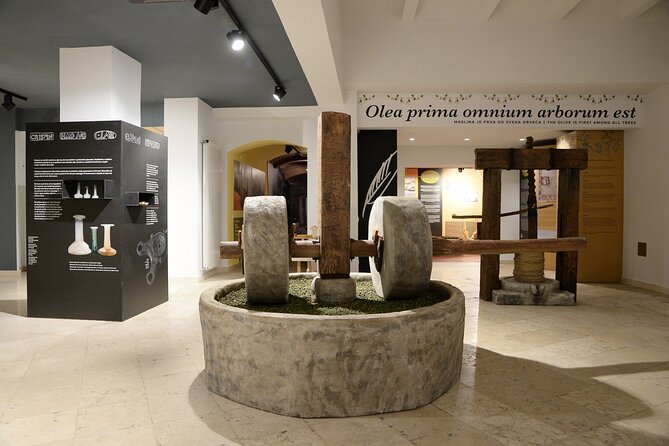
Roman presses, short films, and modern production
Two short films add another layer to the exhibition. One looks at traditional processing, while the other explains how olive oil is made today. These films help bridge the gap between Roman-era production and the modern bottle you buy in a shop.
That comparison matters because production methods affect taste. The experience does not ask you to admire olive oil as an abstract symbol of Istria. It shows you that handling, processing, and storage all have a role in the final flavor.
The films also keep the history portion from becoming too text-heavy. The exhibition has been described as informative but not especially interactive, so the films and guide’s explanation do important work. You will get more from this part if you listen for the reasons behind the methods, not just the dates or equipment.
If your schedule is tight, you do not need to reserve half a day. The full visit takes about one to one and a half hours, depending on your interests and the pace of discussion. That makes it easy to fit before lunch, after sightseeing, or into a short stop in Pula.
Learning to taste olive oil properly
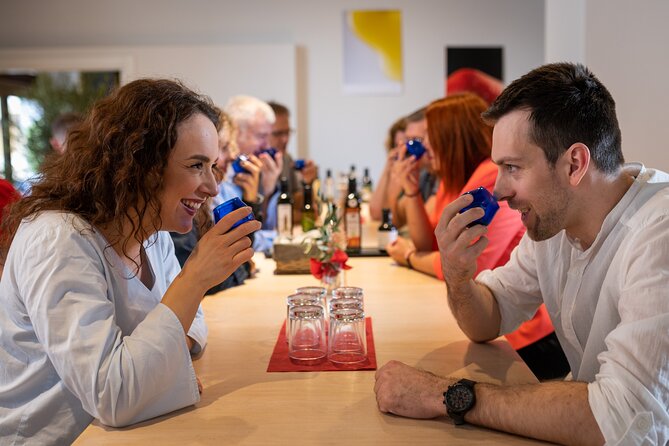
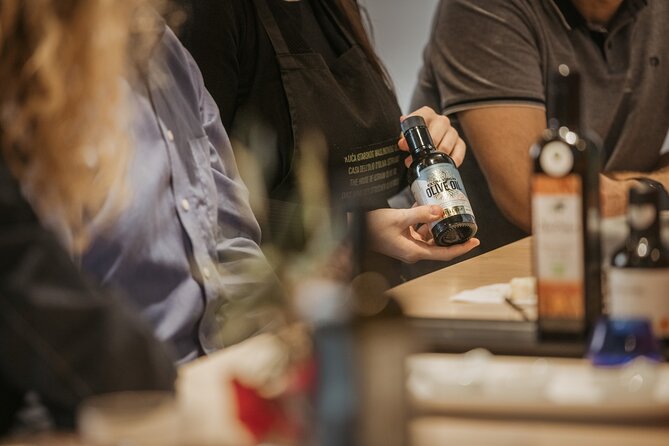
The tasting room is where the visit earns its keep. Instead of simply pouring oil onto bread and asking you to pick a favorite, the guide leads you through sensory analysis. You use smell and taste to look for both good and bad qualities.
High-quality Istrian olive oils are tasted alongside an oil of the kind commonly bought in a supermarket. This is a smart setup. Without a comparison, it is hard to understand what makes one oil better than another. With both in front of you, differences in freshness, aroma, bitterness, and finish become easier to notice.
The lesson is not about pretending to be a professional taster. It is about giving you a useful vocabulary and a few practical instincts. You learn to recognize positive attributes, then spot faults that can signal poor quality or mishandling.
The guide also answers questions during the tasting. That matters because olive oil labels can be confusing, especially when bottles use terms such as extra virgin. The experience should leave you more cautious about reading the front label alone.
One useful point is that bitterness is not automatically a flaw. A peppery or bitter note can be part of a fresh, high-quality oil. The guide’s role is to help you separate those desirable traits from unpleasant defects. The supplied details do not promise a formal certification course, so think of this as a clear introduction rather than professional training.
Why the supermarket comparison matters
The supermarket sample gives the tasting a practical edge. You are not only sampling a prized local product. You are also asking how it differs from the everyday bottle that may already be in your kitchen.
This makes the experience useful for anyone who cooks. You can start thinking about olive oil as an ingredient with different flavors, not just a generic cooking liquid. Some oils may suit savory dishes, while others may work better when their aroma is allowed to come through.
The comparison also helps you question the phrase extra virgin. One visitor left the experience saying they would think more carefully about what extra virgin means. That is exactly the kind of result a good food tour should provide: not a shopping list, but better judgment.
You should not expect the tasting to tell you that every supermarket oil is poor or every expensive oil is excellent. The point is to use your senses and understand quality markers. Price, packaging, and a familiar label do not replace freshness and sound production.
More history-led days in Pula:
- Pula: Historic Walking Tour with Local Guide & City Views
★ 4.8 · 143 reviews - Pula: Historic Sites Guided Walking Tour
★ 4.8 · 78 reviews - Pula Roman Heritage Walking Tour
★ 5.0 · 12 reviews - Dubrovnik Old Town History Walking Tour
★ 5.0 · 1,684 reviews
Polyphenols and the health discussion

The guide explains why polyphenols are important for health. This adds useful context, but keep the claim in proportion. The experience introduces the subject as part of olive oil education. It is not presented as a medical consultation or nutrition program.
For me, this section helps explain why the tasting pays attention to bitterness and pungency. Those sensations are not merely quirks of the oil. They can be connected to compounds that affect both flavor and interest in the bottle.
The lesson also keeps the tasting from becoming too narrow. You are considering history, production, sensory quality, and food use in one visit. That combination gives the hour and a half a clear shape.
The surprise dessert pairing
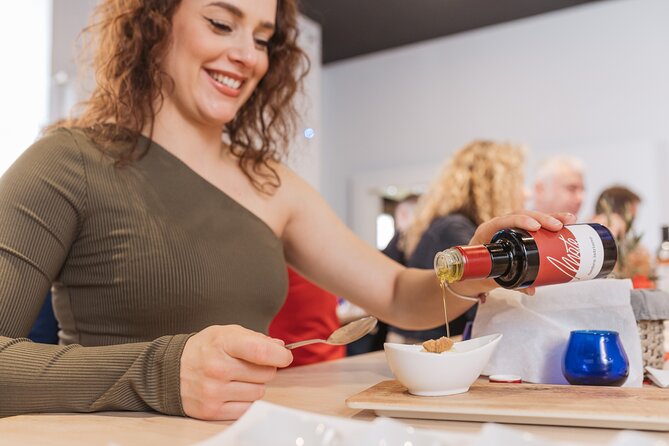
The final course is a surprise dessert paired with high-quality extra virgin olive oil. This is an unexpected way to finish, particularly if you think of olive oil only as something for salads, bread, or frying.
A sweet pairing lets you notice the oil from a different angle. The dessert is not just a small treat at the end. It shows how aroma, fruitiness, pepper, and texture can work with sweet food.
Because the exact dessert is not specified, you should expect an element of surprise rather than a fixed menu item. That is helpful for curious eaters, but less so if you need to plan around a specific dish or dietary restriction. Only the dessert pairing is listed, so ask the provider directly if you have food concerns that affect participation.
This final taste also gives the guide a chance to show that extra virgin olive oil belongs at the table in more ways than one. You may not copy the pairing at home, but you will probably think differently about what olive oil can do.
The guide makes the compact museum work
The guide is central to the quality of this experience. The exhibition alone may feel small and somewhat awkwardly arranged, but the tasting depends on explanation, comparison, and questions.
You should expect an expert-led session rather than a self-guided museum stroll. The guide explains how to taste, points out positive and negative traits, and discusses polyphenols. Strong communication matters here because the difference between a useful lesson and a string of samples comes down to how clearly the information is presented.
The available details do not provide a guide’s name, so I cannot promise a particular host. What you can count on is an English-language experience and a format designed around direct explanation.
The group can include up to 20 people. That is still small enough for a focused activity, though the experience may feel less personal when it fills to capacity. If you prefer very quiet, one-on-one tasting, a full group of 20 may not be ideal. If you like asking questions and hearing other people react to unfamiliar flavors, the group format should work well.
Price, timing, and what you receive
At $36.04 per person, this is not the cheapest way to spend an hour in Pula, but the fee includes more than a single tasting pour. You get the exhibition, two short films, guided sensory analysis, a comparison with supermarket oil, discussion of quality and polyphenols, snacks, and the dessert pairing.
The value depends on your interests. If you already know olive oil well and want a long technical workshop, the 90-minute format may feel basic. If you are starting from scratch, the combination of history and tasting gives you a useful introduction without taking up most of your day.
The short duration is a real advantage in Pula. You can fit it around other sightseeing, and the meeting point is near public transportation. The activity begins and ends at Istarska ul. 30, so there is no separate transfer to arrange.
It is offered in English and uses a mobile ticket. Opening hours are Monday through Saturday, 10:00 a.m. to 6:00 p.m., for the stated operating period. The experience is often reserved about 23 days ahead, so booking earlier makes sense if your Pula dates are fixed.
Who will enjoy this olive oil experience most
I would choose this for food-focused visitors who want more than a restaurant meal. It suits you especially well if you enjoy learning how local products are made, asking questions, and comparing flavors.
It is also a good choice if you are traveling with someone who does not know much about olive oil. The guide starts with basic context, then gives you a direct way to compare oils. You do not need prior tasting experience.
History fans may enjoy the Roman material, but this is not primarily an ancient-history tour. The exhibition provides context, while the tasting takes center stage. If you want detailed archaeology, choose a longer museum visit instead.
The compact format can work for many types of visitors. Most people can participate, and service animals are allowed. The supplied information does not list detailed accessibility features, so contact the provider if you need specific arrangements.
A few practical cautions before booking
Give yourself enough time to reach Istarska ul. 30, even though the location is near public transportation. Your mobile ticket can be used for entry, and confirmation arrives when you book.
The full experience may last closer to an hour or closer to 90 minutes depending on your interests and questions. Do not schedule another activity with no time between them if you want to take part without watching the clock.
Cancellation is flexible up to 24 hours before the start time, when you can receive a full refund. Changes or cancellations made less than 24 hours ahead are not accepted for a refund, and the cut-off follows local time.
The museum portion may disappoint you if you expect a large, highly interactive display. Go for the blend of exhibition and guided tasting, not for a major museum visit by itself.
Should you book it?
Book this experience if you want a concise, English-language introduction to Istrian olive oil and Croatian food culture. The strongest reasons are the side-by-side tasting, the practical discussion of quality, and the unusual dessert pairing.
Skip it if you dislike tasting-focused activities or want a large museum with many objects and interactive displays. At $36.04, the value is best for people who will use what they learn, perhaps by choosing better oil at home or paying closer attention to aroma and freshness.
For most food-focused visitors with 90 minutes in Pula, I think it is a sensible choice. The museum is modest, but the guide-led tasting gives the visit purpose and makes the local product easier to understand.
FAQ
Where does the olive oil experience begin?
It begins at the House of Istrian Olive Oil, Istarska ul. 30, 52100, Pula, Croatia.
Where does the activity end?
The activity ends back at the meeting point at Istarska ul. 30.
How long does the experience last?
It lasts approximately one to one and a half hours. The exact length depends on your interests and questions.
What language is the tour offered in?
The experience is offered in English.
How many people can join the group?
The maximum group size is 20 participants.
What food and drinks are included?
Olive oil tasting and snacks are included. The experience also finishes with a surprise dessert paired with high-quality extra virgin olive oil.
Can I cancel for a full refund?
Yes. You can cancel at least 24 hours before the local start time for a full refund. Cancellations or changes made less than 24 hours before the start time are not refunded or accepted.
Just added around Pula
- Kamenjak Nature Park: Kayak Tour with Snorkeling & Cave Exploring★ 5.0 · 15 reviews
- Dolphin & Sunset tour with Brijuni panorama★ 5.0 · 119 reviews
- Transfer Pula – Poreč★ 5.0 · 5 reviews
- Clear Kayak Glow Night Tour★ 5.0 · 69 reviews
- Pula / Pješčana Uvala: Sunset SUP Tour – Explore & Chill★ 5.0 · 16 reviews
- Kayaking to Island Saint Jerolim with snorkeling activitie★ 4.5 · 26 reviews
- Pula Kayak Tour-Cliff jumping,snorkeling& free GoPro pictures★ 5.0 · 94 reviews
- 1.5-hour Clear Kayak Rentals: Explore Verudela Cave & Islands★ 5.0 · 39 reviews
Pula Tours, compared.
Kamenjak 5h boat trip with lunch & drinks on Sandra Boat
Read our review →
Full-Day Boat Tour of the Medulin Archipelago from Medulin
Read our review →
3hours all inclusive Sunset&Dolphin Tour from Medulin on Sandra
Read our review →
Dolphin Watching & Sunset Boat Tour With Dinner and Drinks
Read our review →
Kayaking,Snorkeling, Cliff jumping Tour with Wetsuit
Read our review →
BOAT & KAYAK! Sea Adventure – Snorkeling & Cliff Jumps
Read our review →
National Park Brijuni Island Visit & Dolphin Cruise
Read our review →Browse the lists this tour appears in