
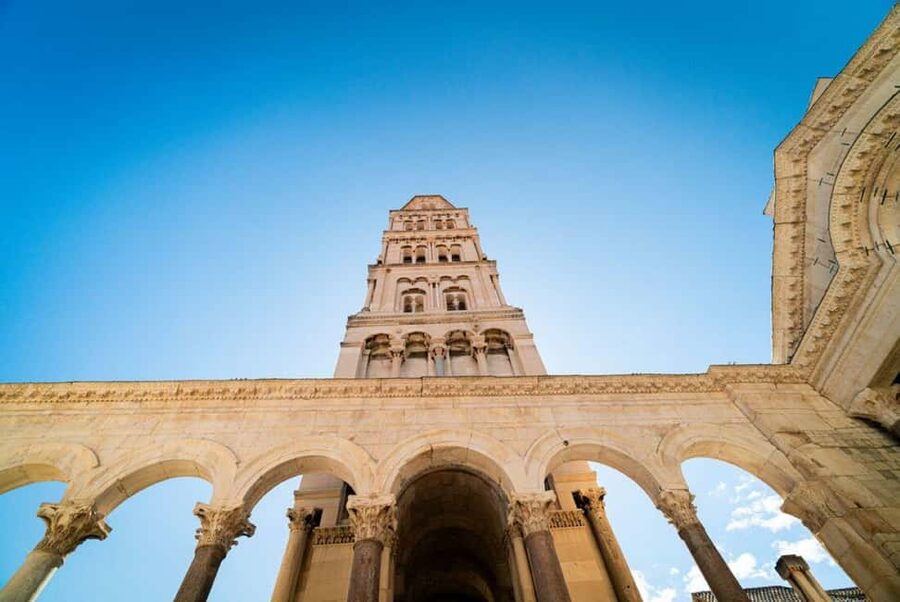
Reviewed · SPLIT TOURS
Split: Private Roman History & Market Tour
Split’s Roman palace is not a quiet ruin behind a fence. It is the city center, home to residents, cafés, shops, and daily life. This private tour connects the palace walls with the Green Market, where seasonal food and local buying habits make ancient Split feel immediate.
I like the mix of Roman sights and ordinary Dalmatian life, and I like that the guide is from Split rather than simply reading dates from a script. The two-hour length is easy to fit into a busy visit. The main drawback is the price: at $280 per person, it is a serious expense for a short tour, especially since major museum, cathedral, cellar, and bell tower admissions are extra.
Key points at a glance
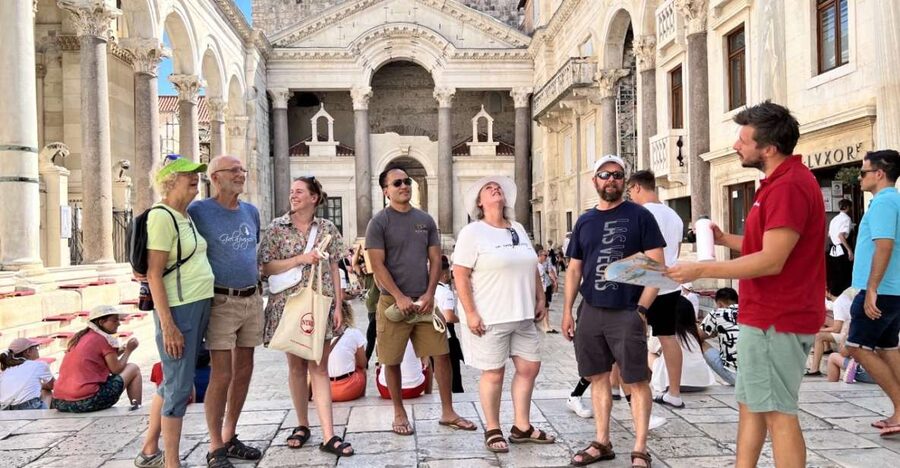
- A palace that is still a neighborhood: Walk through Diocletian’s Palace as a living part of Split, not a detached archaeological site.
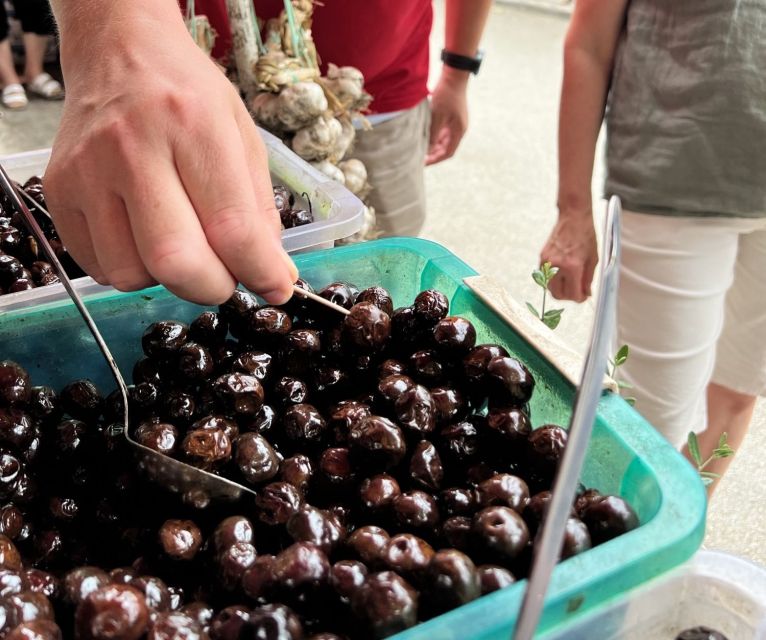
- Green Market tastings: Try seasonal fruit, vegetables, olive oil, rakija, cheese, or dried figs while learning how locals shop.
- Stories beyond Roman emperors: Hear about Illyrian-era customs, Dalmatian food traditions, Hajduk, and Gregory of Nin.
- Private and family-friendly: Your group has a local English-speaking guide, and children under six join free.
- A focused two-hour route: See the main palace spaces, then finish on the Riva with suggestions for cafés and evening food.
- Carbon-neutral operation: The tour is run by a B Corp certified company committed to lower-impact travel.
Why Split’s palace feels different
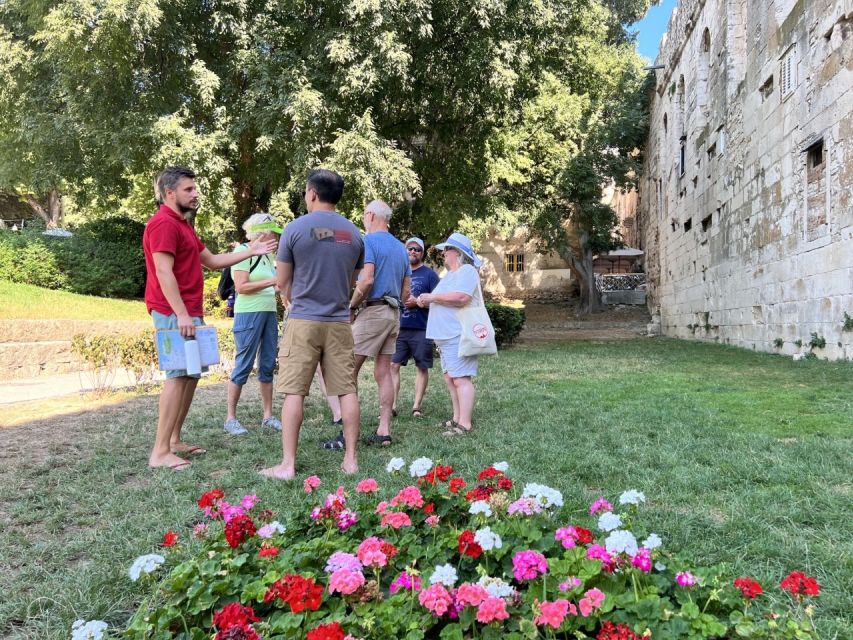
Diocletian’s Palace was built for the Roman emperor Diocletian, but the story did not end when the emperor left the stage. More than 1,700 years later, the palace area remains part of everyday Split. Medieval buildings occupy Roman foundations, modern homes sit beside ancient stone, and narrow streets lead to squares where people still meet.
That makes a local guide especially useful. A guide raised in Split can explain not only what a column or gate once meant, but also how people use these spaces now. The tour is designed around that connection between imperial history and local identity.
You begin at the start of the Riva promenade, near the iron city map and model of Split. This is a practical meeting point because the Riva is easy to find and sits right beside the old town. Look for the mock-up map rather than expecting a large tour office or monument.
The tone is proudly local. Splićani are famously attached to their city, and the introduction makes that clear with a little humor: show respect for Split, and you are likely to receive a warm welcome. That local pride helps explain why the tour spends time on food, football, customs, and small city symbols rather than treating Split as a collection of Roman stones.
More market mornings in Split:
- Split: Historical & Gastro Treasures Tour with Green Market
★ 4.9 · 144 reviews
Green Market: the tastiest first stop
The Green Market is one of the smartest parts of the route. Before you spend much time on emperors and palace architecture, you get a look at how food still shapes social life in Dalmatia.
Your guide introduces you to local vendors and explains how people shop here. The exact tasting selection depends on the season, but it can include fruit, vegetables, olive oil, rakija, cheese, and dried figs. This is not presented as a formal cooking class or a large meal. Think of it as a small sample of the foods that carry local meaning.
The market also gives you useful context for the familiar phrase that the way to a Dalmatian’s heart is through the stomach. Food is not simply fuel in this region. It is tied to hospitality, family habits, religious customs, and the rhythm of the seasons.
I particularly like this stop because it gives you something to notice later. After tasting olive oil or dried figs, you may pay more attention to food on restaurant menus and in shops. You also get a better sense of what is seasonal rather than assuming every item reflects local farming year-round.
Keep your expectations measured. The included tastings are a food stop, not a full lunch. Additional food and drinks are not included, so plan another meal if you are hungry. One past booking described the food portion as very good, but the official inclusions make clear that the tasting should not replace a proper meal.
Entering Diocletian’s Palace through the Golden Gate
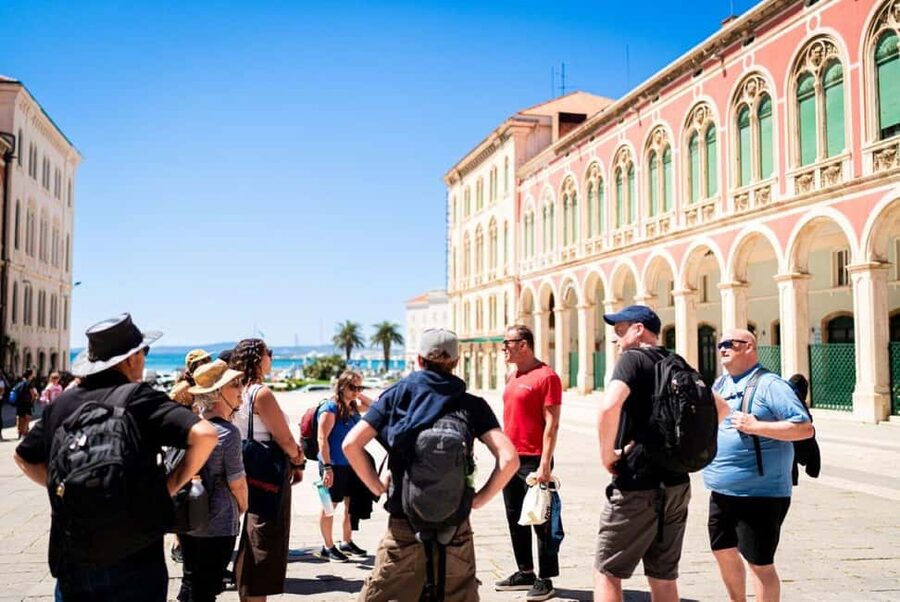
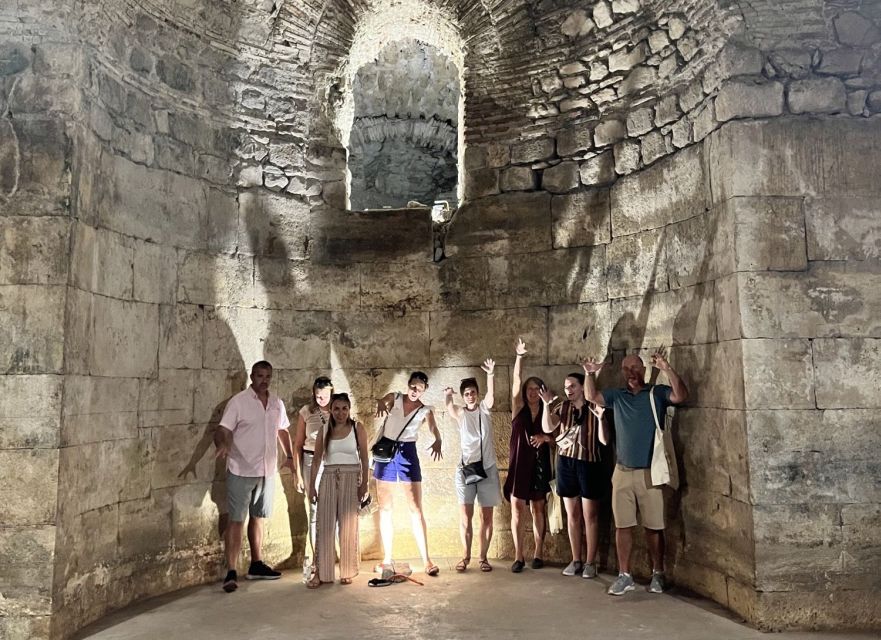
The palace visit includes the main square inside the walls, a private section of the palace, the Vestibule, and the Golden Gates. Together, these stops create a useful outline of Diocletian’s former home.
The Golden Gate was one of the main entrances into the palace. Walking through it helps you understand the palace as a planned Roman complex rather than a random collection of old buildings. The stone passage also shows how later generations adapted the site instead of preserving it as a frozen monument.
Inside, the route leads toward Peristil, the palace’s central square. This is one of the strongest visual moments of the tour. Roman columns, later construction, and the sounds of present-day Split meet in one compact space. You are not just looking at a preserved Roman court. You are standing in a place that has continued to serve the city in different forms.
The private section adds a more personal angle to the emperor’s residence. The guide tells stories about Diocletian’s habits and the secrets built into the palace walls, including why he loved salad and why a piece of the mythical White Stone is connected with happiness.
Those details may sound small beside the palace’s grand scale, but they are exactly what can make a short history tour stick. Dates and building plans give you structure. A story about an emperor’s preferred food gives you a human handle on the past.
Roman rituals and Dalmatian customs
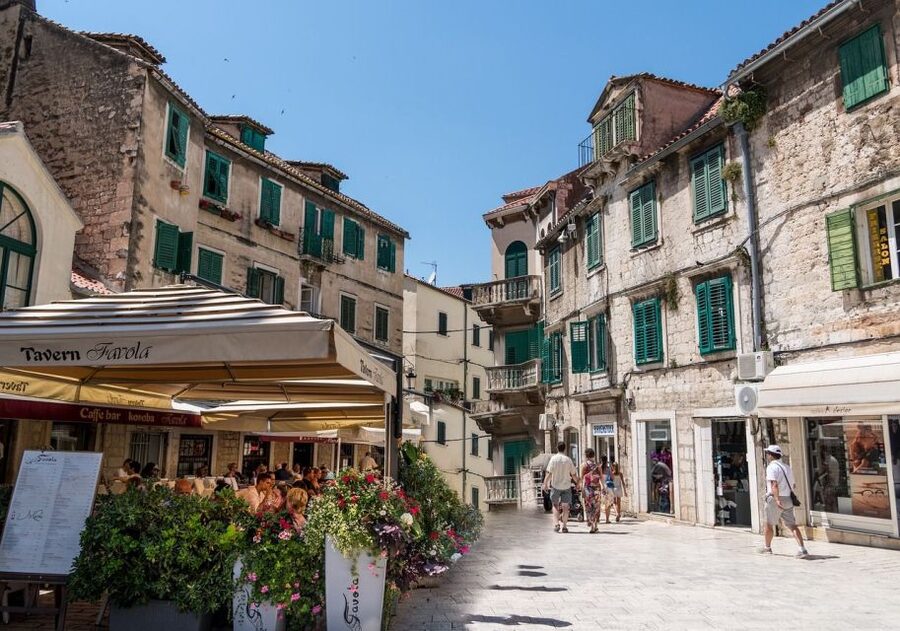
The tour also looks back beyond the Roman period, discussing rituals that Dalmatians still respect from Illyrian times. The information provided does not specify every ritual covered, so you should expect a guided introduction rather than a complete survey of ancient belief.
This part matters because Split’s identity is older than Diocletian. The palace is the most visible Roman layer, but local traditions did not begin with Rome and did not disappear after it. A good guide can help you see how customs change over time while retaining familiar ideas about food, luck, family, and community.
You will also hear about Hajduk, a name you see across Split, from the suburbs to the old town. The tour connects this local football identity to the city’s wider character. It is a useful reminder that Split is not only proud of its ancient past. People also care deeply about modern symbols and loyalties.
Another stop is the statue of Gregory of Nin, or Grgur Ninski. You can make a wish by touching the golden toe. It is a simple ritual, but it adds a playful moment to a route full of emperors, architecture, and dates. Your guide can point out why this figure matters and how this small act became part of a visit to Split.
Same stretch of coast, a completely different day out:
- Split: Krka Waterfalls Trip with Boat Cruise and Swimming
★ 4.8 · 10,519 reviews - From Split: Krka Waterfalls, Food & Wine Tasting Tour
★ 5.0 · 9,326 reviews - Blue cave, Mamma Mia and Hvar, 5 islands speedboat tour
★ 5.0 · 7,150 reviews - From Split: Krka Waterfalls, Food & Wine Tasting Tour
★ 4.9 · 6,598 reviews
A private format that changes the pace
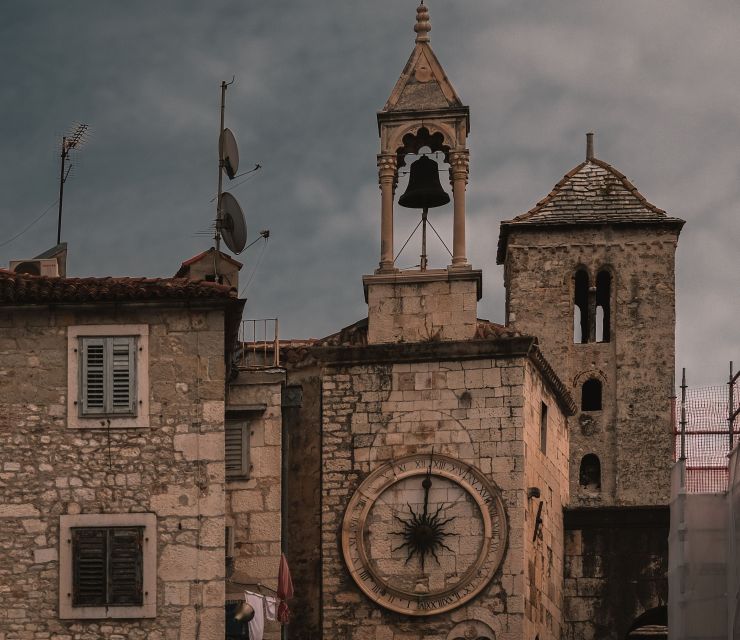
This is a private group tour, so the guide can adjust the pace and explanation to your interests. That matters in Split, where narrow streets and crowded palace passages can make a large group feel clumsy.
Past guides named Ted and Ivan received especially warm individual praise for their clear explanations and steady pacing. One French booking also highlighted a female guide who spoke excellent English, pointed out attractive corners of the city, and ended with a particularly enjoyable aperitif. The supplied details do not identify her by name, so you should not book expecting a specific guide.
A private format is most useful if you want to ask questions about local food, customs, or the city’s modern life. It also suits families, since children under six can join without a charge when you notify the operator in advance.
The two-hour schedule keeps the tour manageable, but it also sets a limit. You will get an introduction to the palace and the market, not a full archaeological study of every room. If your priority is the cathedral treasury, the palace cellars, the Temple of Jupiter, museums, or the bell tower, you will need to pay separately and visit those on your own or add another tour.
Ending on the Riva
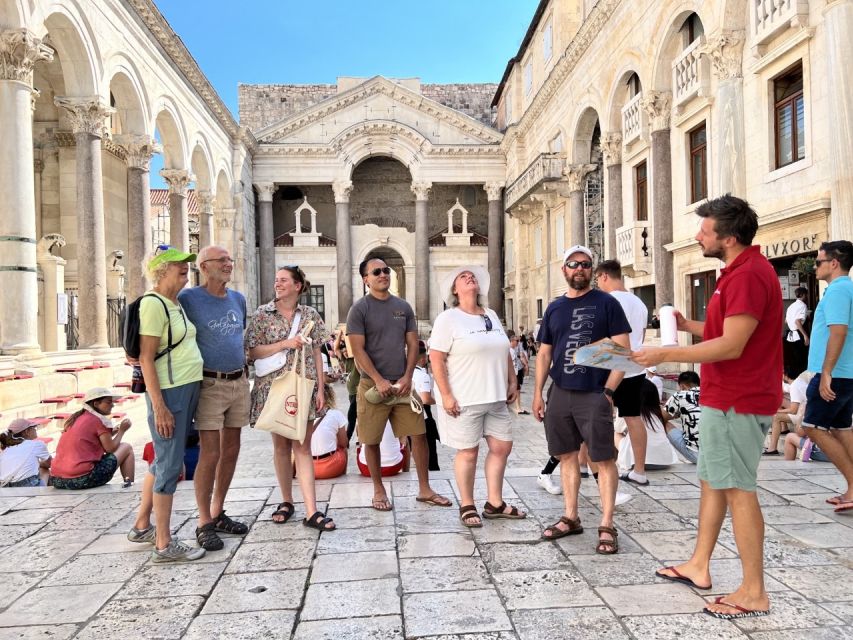
The route finishes on the Riva promenade, Split’s waterfront gathering place. This is a good ending because you leave the compact old town and regain an open sense of the city.
Your guide points out favorite coffee shops and places for Dalmatian food and evening entertainment. These suggestions may be more useful than another list of monuments. After a short tour, you still need to decide where to eat, where to have coffee, and how to spend the evening. Local advice can help you make those choices with more confidence.
The Riva is also a convenient place to continue exploring. You can stay near the water, walk back toward the palace, or use the advice from the guide to plan a later meal. The experience aims to leave you feeling well fed and oriented, much like an emperor after a comfortable day at home.
What the $280 price really buys
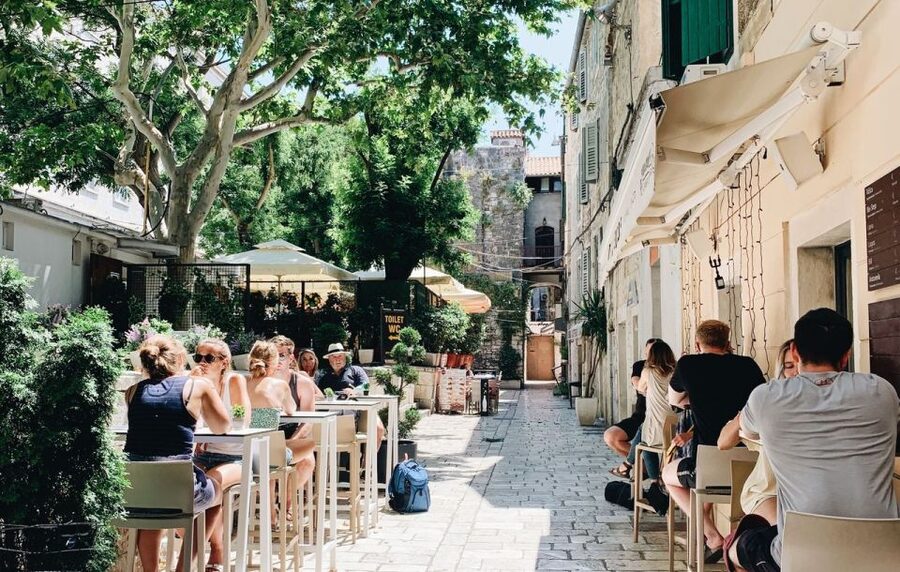
At $280 per person, this tour is not a budget introduction to Split. Its value rests in the private format, the local guide, the market tastings, and the way the stops are tied together.
If you are traveling alone or as a couple, the cost may feel hard to justify for two hours. If you are a larger private group, the price may make more sense when divided among the people in your booking. You are paying for personal attention and a tailored pace rather than simply for entry to a monument.
The price does not include admission to the cathedral in Diocletian’s former mausoleum, the palace underground, the bell tower, museums, or the Temple of Jupiter. Those exclusions are important. If you want to see the interiors of these places, budget for additional tickets.
The tastings add value, but they are modest samples. You are paying for explanation as much as for food. I would choose this tour for its combination of context and orientation, not as a cheap way to eat lunch.
Who will get the most from this tour
This experience suits you if you are visiting Split for the first time and want a quick but personal introduction. It is especially helpful if you enjoy history but also want to understand what local people eat, follow, and care about today.
It works well for:
- Couples who prefer a private guide to a large walking group
- Families looking for a child-friendly introduction
- Food-focused visitors who want market context and small tastings
- History fans who want Diocletian’s Palace explained in its city setting
- Short-stay visitors with only a few hours in Split
- People who value lower-impact tour operations
You may want something else if you need a long archaeological tour or want admission to every major palace site included. The route gives you a strong overview, but it does not cover all paid interiors.
Wear comfortable shoes, since the tour is on foot through old streets and palace passages. Meet at the iron city map near the start of the Riva, and allow time to find it before the scheduled start.
Carbon-neutral travel with a local focus
The tour is carbon neutral and operated by a B Corp certified company that presents travel as a force for good. That does not change the Roman stones or the food tastings, but it gives you a lower-impact option when comparing city tours.
The small private format also fits the setting. Diocletian’s Palace is a living neighborhood, and walking in a compact group is more respectful than moving through residential lanes with a large crowd. You still share the old town with other people, but the format encourages a quieter and more considerate visit.
The strongest environmental feature here is not a special wilderness activity. It is the simple choice to explore on foot, use local knowledge, and connect spending with local vendors and city life.
Should you book the Split Roman History and Market Tour?
Book it if you want Split explained by someone who knows the city from the inside, and if food, customs, and present-day local identity matter as much to you as Roman architecture. The market tastings, palace stories, Gregory of Nin, Hajduk, and Riva recommendations give the two hours a useful range.
Think twice if $280 per person feels too high for a short experience, or if you mainly want entry to the cathedral, palace cellars, museums, or bell tower. Those costs are separate.
For a first morning or first afternoon in Split, I see this as an orientation tour with personality. It will not cover everything, but it can help you understand why the palace is not merely an archaeological site. It is the city itself.
FAQ
How long does the tour last?
The tour lasts two hours.
Where does the tour meet?
The meeting point is at the beginning of the Riva promenade, near the mock-up city model and the iron map of Split.
Is the tour private?
Yes. The experience is organized as a private group tour.
What language is the tour offered in?
The tour is offered in English with a live English-speaking local guide.
What food tastings are included?
The Green Market stop can include tastings such as fruit, vegetables, olive oil, rakija, cheese, and dried figs. The exact selection can vary with the season.
Are major palace and museum admission fees included?
No. Admission to the cathedral in Diocletian’s former mausoleum, the palace underground, the bell tower, museums, and the Temple of Jupiter is not included.
Can children join the tour?
Yes. The tour is child-friendly, and children under six may join free of charge. You should inform the operator if you are bringing a child under six.
More Historical Tours in Split
- Walking Tour of Split with a ‘Magister’ of History
★ 5.0 · 1,122 reviews - Split Walking Tour with Professor of History
★ 5.0 · 926 reviews - Split: History and Heritage Walking Tour
★ 4.9 · 650 reviews - Split History and Gastro Small-Group Tour with Food and Drinks
★ 5.0 · 375 reviews
Just added around Split
- From Trogir, Seget, Okrug: Krka Waterfalls & Šibenik Culture Tour★ 5.0 · 10 reviews
- Krka Waterfalls & Primošten from Trogir, Seget, Čiovo & Kaštela★ 5.0 · 18 reviews
- Island Hopping Boat Excursion with Lunch (Trogir,Blue Lagoon, Šolta)★ 3.5 · 6 reviews
- From Split & Trogir: ATV Quad Tour on Island Čiovo★ 5.0 · 21 reviews
- Slatine – Island Hopping Excursion (Trogir/Blue Lagoon/Shipwreck)★ 4.0 · 24 reviews
- Split: Blue Lagoon Boat Trip with Lunch, Wine and Snorkeling★ 5.0 · 3 reviews
- Split Sunset Stand Up Paddle Tour★ 5.0 · 16 reviews
- Split: Sunset Guided Kayaking Tour★ 4.8 · 71 reviews
Split Tours, compared.

Krka Waterfalls Trip with Boat Cruise and Swimming
Read our review →
Blue cave, Mamma Mia and Hvar, 5 islands speedboat tour
Read our review →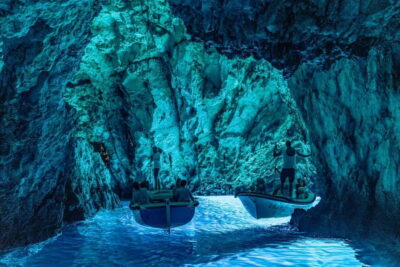
Blue Cave, Mamma Mia, Hvar and 5 Island Tour
Read our review →
Blue Lagoon & 3 Islands Cruise with Lunch from Split
Read our review →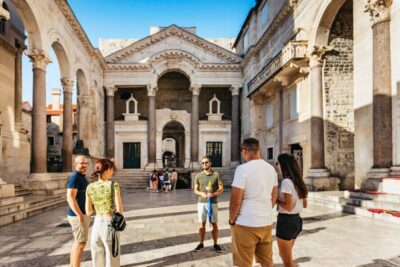

Blue Lagoon Boat Party with DJs, Shots & After Party
Read our review →Browse the lists this tour appears in