
Reviewed · SPLIT TOURS
SPLIT-PREMIUM Emperor’s Walking Tour for History Lovers + Museum
Diocletian’s Palace is not a quiet ruin outside Split. It is the city center, with homes, cafés, shops, church bells, and centuries of daily life packed inside Roman walls. This $30 walking tour helps you make sense of that unusual blend, tracing the palace, Old Town, and key squares with a local licensed guide.
I especially like the small maximum of 15 people, which makes it easier to ask questions and hear the guide in narrow streets. I also like the serious focus on Split’s past rather than a costumed show or a quick list of film locations. The main consideration is that the group tour is for adults only, and the €10 admission to Diocletian’s Cellars is extra.
Key points at a glance
- A Roman palace that became a living city: You walk through streets and squares still used by local residents.
- Local guides with personality: Joško, Joe, Joseph, and Daniela are praised for clear explanations, humor, and strong local knowledge.
- A small-group format: The tour has a maximum of 15 people, with group discounts available.
- A proper history lesson: The emphasis is on Emperor Diocletian, Dalmatia, Split, and the city’s changing centuries, not a costumed performance.
- Museum cost is separate: The best-preserved palace section, the Cellars, costs €10 per person if you enter.
- Useful for cruise passengers: The tour begins and ends on the Riva waterfront, within walking distance of the cruise port.
Why Diocletian’s Palace is the real star
The palace was built in 305 AD as the retirement residence of Roman Emperor Diocletian. That description can mislead you. This was not simply a country house where an emperor could sit in the sun. It was a fortified complex with grand ceremonial spaces, private quarters, temples, entrances, and working areas.
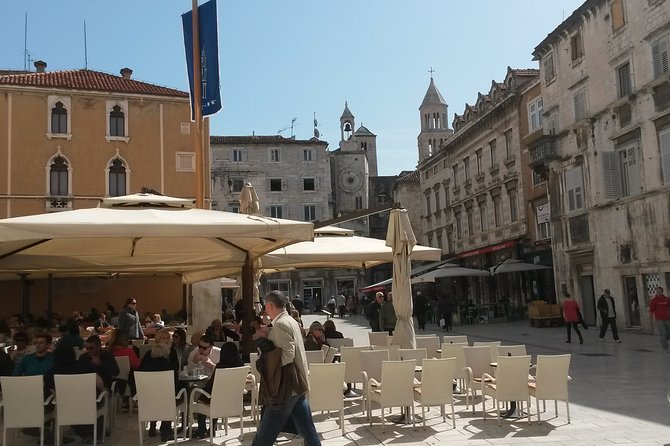
The striking part is how thoroughly later Split grew into the Roman structure. You are not walking around a fenced-off archaeological site with the modern city kept at a distance. You pass through old stone passages and busy squares while people go about their day. The palace is both a monument and a neighborhood.
That makes a guide unusually useful. Without one, you can admire the columns and weathered walls, but it is harder to understand how the spaces fit together or why the palace shaped Split’s growth. A strong guide can point out the Roman plan, explain later changes, and connect the palace to medieval Old Town.
The guides on this experience, including Joško, Joe, Joseph, and Daniela, are repeatedly praised for making the subject clear and entertaining. The best comments describe a good mix of facts, humor, personal stories, and time for questions. That combination matters because Roman architecture can become a blur of dates if it is presented without a human thread.
More museums and galleries in Split:
- Blue Lagoon & Underwater Museum from Split with Lunch & Drinks
★ 4.5 · 1,122 reviews - Split: Game of Thrones Museum Entrance Ticket
★ 3.8 · 385 reviews - Split: Klis Fortress GOT and Olive Museum Entry Tickets
★ 4.6 · 283 reviews
Starting on the Riva and entering the palace
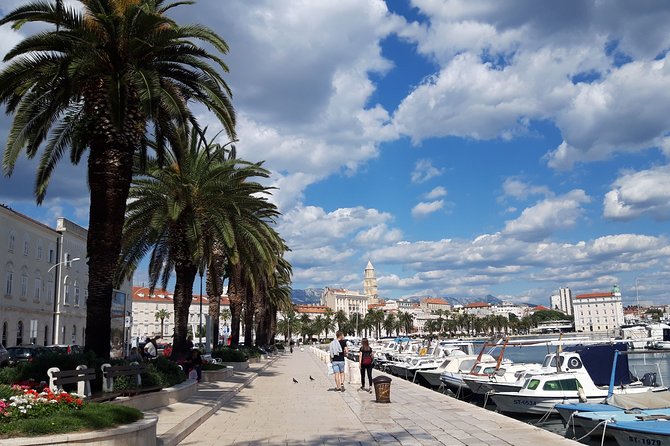
The meeting point is at Obala Hrvatskog narodnog preporoda 22, on Split’s Riva promenade. The tour starts and finishes near the waterfront Main Stage, so the location is practical if you arrive by cruise ship or are already spending time along the harbor.
The Riva is a sensible place to begin. It gives you an immediate view of Split’s modern social life before you turn inland toward the old walls. From here, your guide can establish the basic shape of the palace and explain how the waterfront related to the emperor’s private residence.
The itinerary includes a visit to the Vestibulum, the main entrance to the emperor’s private residence. This circular or domed entrance area helps explain the difference between public and private parts of the palace. It is one of those places where a guide’s explanation adds much more than a photograph alone.
You also visit the Peristyle, the ceremonial heart of Diocletian’s Palace. This square was designed to impress. Its columns, steps, and surrounding structures created a formal approach to the emperor’s mausoleum and apartments. Today it is one of Split’s most memorable gathering spaces, but the guide helps you picture the Roman ceremony that once took place here.
The Peristyle, cathedral, and Temple of Jupiter
The Cathedral of Saint Domnius is seen from the outside during the tour. Its position inside the palace is one of Split’s clearest examples of historical reuse. The building began as Diocletian’s mausoleum, then became a Christian cathedral. You do not receive admission to the cathedral as part of the tour, so plan extra time and money if you want to enter on your own.
The nearby Temple of Jupiter is also viewed from outside, with an optional interior visit not included in the tour price. This small temple is important because it shows the religious side of the Roman palace. The contrast between the former Roman temple and the later Christian buildings makes the palace feel less like one fixed monument and more like a place repeatedly adapted by new generations.
The tour does not promise entry to every monument. That is worth keeping clear when comparing it with other Split walking tours. You receive a guided overview of the major spaces, then you can decide which paid interiors deserve a separate visit.
The Peristyle, Vestibulum, cathedral, and Temple of Jupiter are close together, but a good explanation prevents them from running together in your memory. I would pay attention to how your guide describes the original purpose of each space, then note which places you want to revisit after the walk.
The Cellars: the one major extra expense
Diocletian’s Palace Substructures are described as the best-preserved part of the palace. They supported the rooms above and offer a strong sense of the original Roman layout. The walking tour includes the opportunity to visit them, but the admission fee is not included. The stated cost is €10 per person.
This is the museum portion of the experience, and it is the main extra cost to consider. At $30 for the guide, a small group, and roughly two hours of interpretation, the tour is fairly priced for someone who wants context. Once you add €10 for the Cellars, however, the total becomes less like a simple budget stroll and more like a guided introduction plus a museum visit.
I think the Cellars are worth considering if Roman construction interests you. They are also useful for understanding the palace above because the lower chambers preserve the arrangement of the imperial residence more clearly than some upper sections. Still, the tour format allows you to make your own choice. If you are watching your budget or have limited time, you can take the guided history and skip the paid interior.
The title includes a museum element, so do not assume every admission fee is covered. The Cellars cost extra, and the cathedral and Temple of Jupiter are not included as interior visits.
More history-led days in Split:
- Walking Tour of Split with a ‘Magister’ of History
★ 5.0 · 1,122 reviews - Split Walking Tour with Professor of History
★ 5.0 · 926 reviews - Split: History and Heritage Walking Tour
★ 4.9 · 650 reviews - Split History and Gastro Small-Group Tour with Food and Drinks
★ 5.0 · 375 reviews
Golden Gate and the palace’s northern edge

The Golden Gate was the principal and most impressive entrance into Diocletian’s Palace. It is a natural place to connect the emperor’s power with the practical design of the complex. Your guide can help you read the gate as both an architectural statement and a controlled entry point.
The route also includes the statue of Grgur Ninski, or Gregory of Nin, one of the important figures in Croatian history. The stop gives the tour a useful shift away from ancient Rome and toward Croatia’s medieval and national story. You will also learn about the statue itself, a familiar landmark in Split.
This is one reason the tour works better than a palace-only explanation. Split is not just Roman. The city’s identity formed through layers of Roman, medieval, Venetian, Croatian, and modern life. A guide who connects these periods gives you a much clearer sense of why the Old Town looks and feels the way it does.
The Golden Gate area can be busy, especially when cruise ships are in port. A group of 15 is still easier to manage than a very large crowd, but you should expect an active urban setting rather than a quiet museum visit.
Old Split, Fruit’s Square, and People’s Square
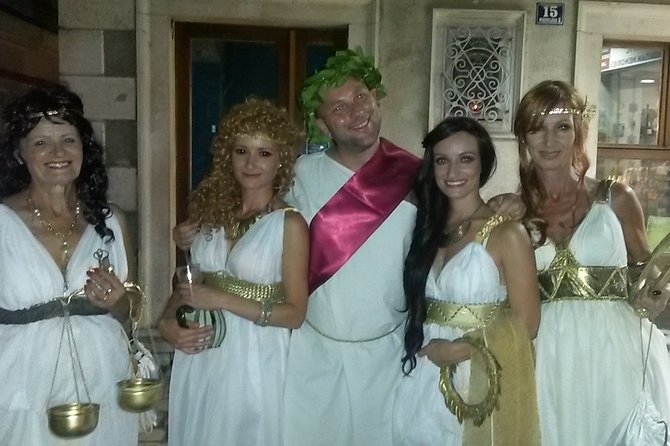
The tour continues through medieval Old Town, where the Roman plan gives way to later streets and public spaces. You visit Fruit’s Square, officially Trg Braće Radić, a former green market. The square is associated with Marko Marulić, often called the father of Croatian literature, and his statue gives the stop a cultural focus.
Narodni Trg, or People’s Square, is the largest and liveliest piazza in Old Town. This is a good point to notice how Split’s public life shifted over time. Roman ceremonial areas, medieval lanes, market spaces, and later civic buildings all sit within a fairly compact area.
The route is not simply a march from one famous object to another. Its value comes from seeing how the pieces relate. The old market, the main piazza, the palace entrances, and the waterfront are all part of the same walkable center. You gain a practical map of Split along with the historical background.
The City Clock is another brief stop. It is described as a 500-year-old, 24-hour clock, a small detail that helps show the city’s later character. Stops such as this do not need a long lecture, but they add texture to the larger story.
What the guides do well
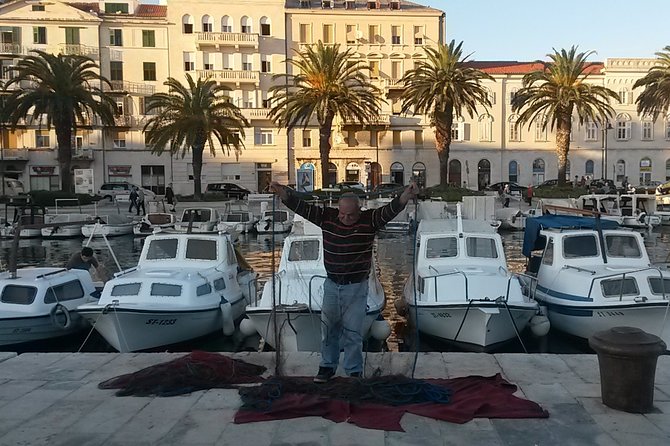
The strongest feature of this tour is the guide. Joško and Joe are praised for making complex history easy to follow, while Daniela is singled out for careful explanations, humor, and sensitivity toward a participant with limited mobility. Joseph is also described as a local who grew up in Split and brings a personal connection to the city.
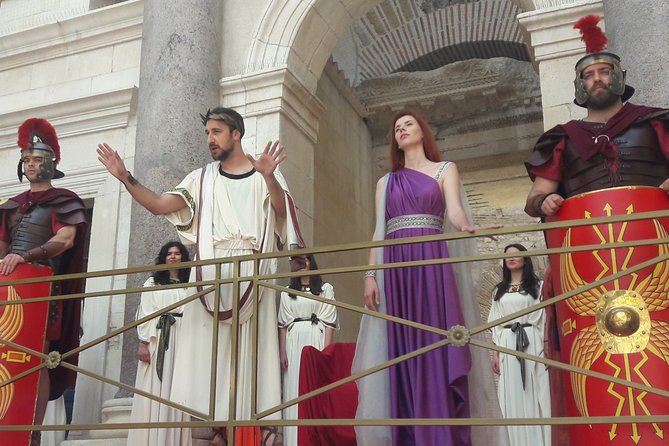
The guide style appears to be warm rather than theatrical. You should expect jokes, local recommendations, and answers to questions, but not a costumed Roman emperor or staged performance. The operator specifically says the experience does not include a costumed theater show or similar appearance.
That distinction is important. If you want a playful Game of Thrones tour, this is not the right choice. You will pass locations associated with the series, but the focus is real history, architecture, and Split’s development. You may need to identify filming spots yourself or research them separately.
The guides also seem willing to adapt. One guide helped a couple find a restaurant and explain a specific dietary need to the waiter. Other comments describe help with photographs and restaurant or bakery suggestions. These extras are not formal parts of the tour, but they can make a local guide especially useful during a short stay.
Timing, heat, and walking comfort
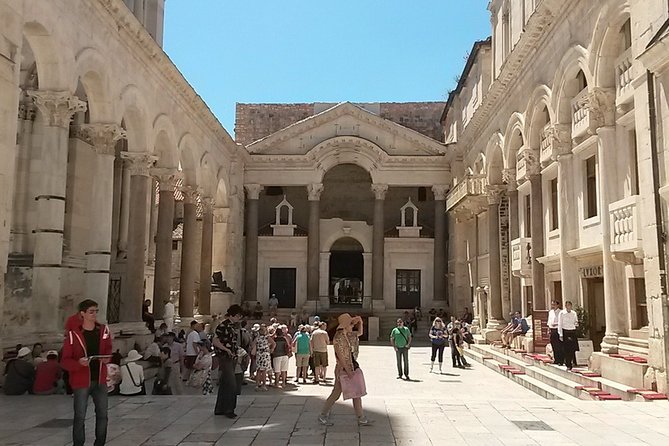
The advertised duration is about two hours, though the actual experience can run longer. Some tours have lasted around two and a half to three hours when the guide answered questions, adjusted the pace, or had a group with time constraints. If you have a ship departure or another fixed appointment, tell the guide at the beginning.
Split’s stone streets can be hot in summer. One particularly useful tip is to book an early start when possible, especially in August. The route is not described as strenuous, and most people can participate, but you should still expect steady walking over old streets and standing at several stops.
A guide has shown flexibility with mobility needs, but the standard tour is still a walking experience. If someone in your party needs a slower pace, mention it before or at the start. A private tour may be the better fit if you need a highly customized schedule.
The group tour is for adults only and is not recommended for anyone under 18. The private option is open to all ages. The maximum group size is 15, and at least four people are needed for the small-group departure to run. If the minimum is not met, the operator offers another date or experience, or a full refund.
Is $30 a fair price?
At $30 per person, this is a reasonable price for a licensed local guide and a focused walk through the most important parts of central Split. You are paying for interpretation, not transportation or a long list of admissions.
The value is strongest if this is your first visit. A local guide can help you understand why the palace is laid out as it is, how Roman buildings became medieval and modern spaces, and which interiors deserve another look. That orientation can save you time during the rest of your stay.
The price is less attractive if you only want quick photographs or plan to explore every paid site independently. The tour spends short periods at several stops, and not all interiors are included. Add the €10 Cellars fee if you want the museum portion.
Group discounts are available, and a private tour can be booked for all ages. The smaller group is a useful middle ground: more personal than a large city tour, but usually cheaper than a fully private guide.
Who should book this Split walking tour?
I would choose this tour for an adult who likes history, architecture, and local context. It suits cruise passengers who want a serious introduction close to the waterfront, as well as independent visitors who prefer to get their bearings before exploring alone.
It is also a good match for you if you enjoy asking questions. The small group and guide-led format leave more room for discussion than a large, tightly scripted walk. History fans will get the most from the Roman, medieval, and Croatian connections.
I would look elsewhere if your priority is Game of Thrones filming trivia, a costumed performance, extensive interior admissions, or a family tour for young children. The route is urban and historical, not an entertainment show.
Book for the morning during hot months if you can. Wear comfortable shoes, keep water handy, and leave some time afterward for the Cellars, cathedral, or Temple of Jupiter if you want to enter them.
Cancellation and booking details
You receive confirmation when you book, and free cancellation is available up to 24 hours before the local start time. Cancellations or changes within 24 hours are not refunded.
The tour depends on good weather and a minimum number of participants. If poor weather cancels the walk, or if the minimum group size is not reached, you are offered another date or experience, or a full refund.
Should you book it?
Book this tour if you want Split to make sense, not just look attractive. For $30, you get a compact route through Diocletian’s Palace, Old Split, the Riva, major squares, and key Roman and Croatian landmarks, with a local guide who can connect the stones to the people and events behind them.
The best reason to choose it is the clear historical focus and the chance to walk with guides such as Joško, Joe, Joseph, or Daniela. Just budget an additional €10 for the Cellars, remember that the group tour is adults only, and do not expect a Game of Thrones or costumed show. For a first visit and a genuine introduction to Split, it is a strong choice.
FAQ
How long does the Emperor’s Walking Tour last?
The advertised duration is approximately two hours. Depending on the group, questions, walking pace, and schedule, the experience may run longer.
Where does the tour start and finish?
It starts at Obala Hrvatskog narodnog preporoda 22 on Split’s Riva promenade, near the Main Stage. The tour finishes back at the meeting point.
Is admission to Diocletian’s Cellars included?
No. Admission to the Cellars costs €10 per person and is paid separately.
Is the tour suitable for children?
The group tour is for adults only and is not recommended for anyone under 18. A private tour is available for all ages.
Does the tour include a costumed Roman or theater performance?
No. The tour does not include a costumed theater show or similar appearance.
How many people can join the small-group tour?
The group tour requires at least four participants to run and has a maximum of 15 travelers.
More Walking Tours in Split
- Split: Old Town and Diocletian Palace Walking Tour
★ 4.9 · 4,727 reviews - Walking Tour of Split and Diocletian’s Palace
★ 5.0 · 2,588 reviews - Krka Waterfalls tour with Trogir Walking tour and Krka panoramic boat cruise
★ 5.0 · 1,659 reviews - Split & Diocletian’s Palace Walking Tour
★ 5.0 · 1,125 reviews
Just added around Split
- From Trogir, Seget, Okrug: Krka Waterfalls & Šibenik Culture Tour★ 5.0 · 10 reviews
- Krka Waterfalls & Primošten from Trogir, Seget, Čiovo & Kaštela★ 5.0 · 18 reviews
- Island Hopping Boat Excursion with Lunch (Trogir,Blue Lagoon, Šolta)★ 3.5 · 6 reviews
- From Split & Trogir: ATV Quad Tour on Island Čiovo★ 5.0 · 21 reviews
- Slatine – Island Hopping Excursion (Trogir/Blue Lagoon/Shipwreck)★ 4.0 · 24 reviews
- Split: Blue Lagoon Boat Trip with Lunch, Wine and Snorkeling★ 5.0 · 3 reviews
- Split Sunset Stand Up Paddle Tour★ 5.0 · 16 reviews
- Split: Sunset Guided Kayaking Tour★ 4.8 · 71 reviews
Split Tours, compared.

Krka Waterfalls Trip with Boat Cruise and Swimming
Read our review →

Blue cave, Mamma Mia and Hvar, 5 islands speedboat tour
Read our review →
Blue Cave, Mamma Mia, Hvar and 5 Island Tour
Read our review →
Blue Lagoon & 3 Islands Cruise with Lunch from Split
Read our review →

Blue Lagoon Boat Party with DJs, Shots & After Party
Read our review →Browse the lists this tour appears in