
Reviewed · SPLIT TOURS
Split: Private Walking Tour in the Historical Town Center
Split’s old town is not simply next to Diocletian’s Palace. It grew inside it. Roman walls became medieval streets, an emperor’s mausoleum became a cathedral, and ancient cellars now sit below homes, cafés, and shops. This private walk with Sanja gives you the useful big picture before you wander off on your own.
I like the private format, especially for a group of four or fewer, where it is easy to hear the guide and ask questions. I also like the way the tour connects architecture with political change, from Roman rule through Venetian, French, Austro-Hungarian, and Yugoslav periods.
The main drawback is the extra fee for the Palace Substructures, often called the Basements. The route is also not suitable for wheelchair users, and 105 minutes goes quickly in a place with this much to explain.
Key points at a glance
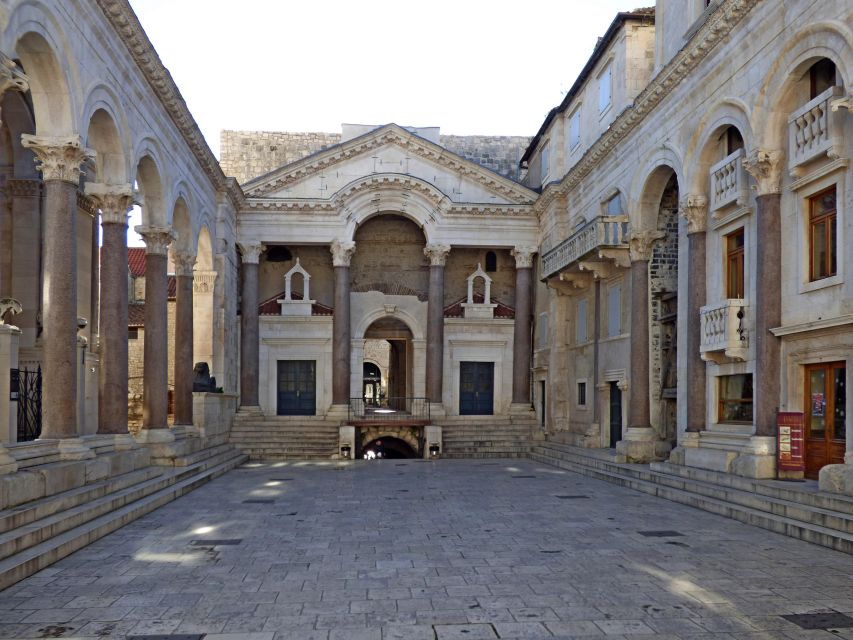
- Roman ruins inside a living town: Diocletian’s Palace is not a fenced-off monument. People still live and work inside its old walls.
- A private guide for up to 15 people: The $153 group price can be good value for families or small groups who want a focused introduction.
- Sanja’s language range: Tours are offered in English, Italian, French, and Spanish.
- The Palace Substructures cost extra: The underground level is part of the story, but its entrance fee is not included.
- A useful first-day orientation: You finish on the Riva with a clear sense of where to return for more exploring.
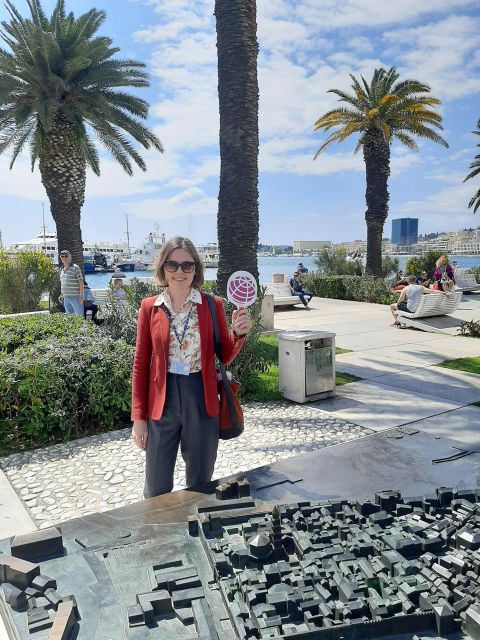
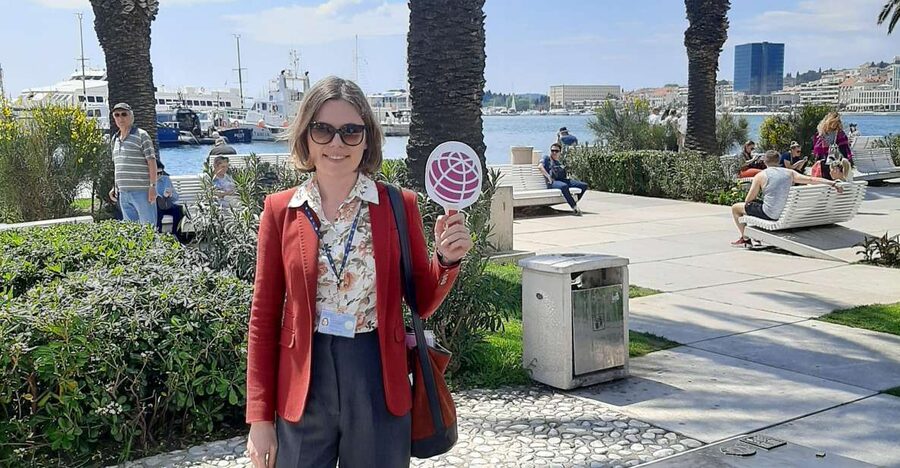
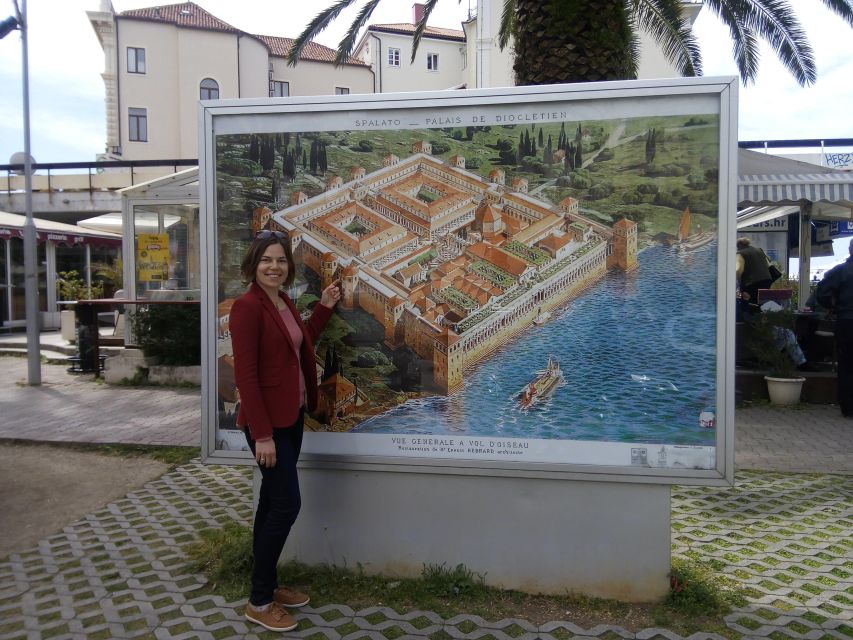
- An easy meeting point: The tour begins beside the bronze model of Split’s historic core, in front of the Palace’s south entrance.
Why Split’s Palace makes such a good walking tour
Diocletian’s Palace is the reason a guided walk helps. At first glance, Split’s center can feel like a maze of stone lanes, small squares, Roman columns, and later buildings. A guide shows you how the pieces fit together.
The palace was built in the fourth century for the Roman emperor Diocletian. It was both an imperial residence and a fortified complex. Over the centuries, people adapted the old structure instead of abandoning it. That is why a Roman gate can lead toward a medieval lane, while a noble family home fills a space that once served the emperor.
I like this kind of setting because the history is not locked behind glass. You walk through it on the way to a café, a shop, or another square. Sanja’s job is to point out the layers that you could easily miss on your own.
The private setup matters here. A large group can clog the narrow streets and make it hard to catch every sentence. With your own guide, you can ask about a carved detail, pause for a photograph, or request more explanation about a period that interests you.
More history-led days in Split:
- Walking Tour of Split with a ‘Magister’ of History
★ 5.0 · 1,122 reviews - Split Walking Tour with Professor of History
★ 5.0 · 926 reviews - Split: History and Heritage Walking Tour
★ 4.9 · 650 reviews
Meeting beside the bronze model on Riva
The starting point is on the Riva promenade, beside the bronze model of Split’s historic core. It sits by the sea, in front of the Palace’s south entrance. This is a practical place to meet because the model gives you an immediate map of the area before you enter it.
The guide uses the model to help you understand the shape of the old town. That small orientation can save time later. You begin to recognize the Palace walls, gates, central squares, and streets beyond the original Roman complex.
The tour lasts about 1 hour and 45 minutes. That is enough for a solid introduction, but not enough for long interior visits at every monument. You should expect a brisk walk with frequent stops rather than a slow museum-style tour.
Wear comfortable shoes. The route goes through old streets and squares, and the central part of Split rewards attention more than speed. You may want to schedule this early in your stay, since the route gives you useful clues for later independent exploring.
Inside the fourth-century Palace
The first major section focuses on Diocletian’s Palace, the oldest part of Split. Sanja explains how the imperial complex changed as the city grew around and inside it.
The most interesting feature is the mix of periods. Roman walls and layouts remain visible, but medieval houses occupy former palace spaces. Noble families added their own homes, and later residents adapted the buildings again. You are not looking at one clean architectural style. You are looking at centuries of practical reuse.
That is where a local guide adds real value. It can be hard to tell which stones belong to the Roman period and which details came later. Sanja’s explanations help connect the physical setting with the people who shaped it.
The Palace once had four main gates, each connected to a different direction. The Golden Gate is included on the walk, and the wider route considers the Palace walls and all four entrances. These gates were more than photo stops. They help explain how the fortified complex linked to the surrounding town and wider region.
The route also passes medieval houses belonging to noble families. These buildings show how Split’s social order changed after the imperial era. The Palace was no longer only an emperor’s residence. It became a place for local families, religious institutions, workers, and ordinary daily life.
The Substructures, the Palace below street level
The Substructures, also called the Basements, are the one main interior visit connected to the Palace. The entrance fee is not included, so you should allow extra money if you want to go below street level.
These underground spaces matter because they preserve the shape of the upper Palace. The lower rooms reflect the arrangement of the imperial residence above them, making it easier to picture how the complex was planned. The Substructures also show how much of the ancient structure survived beneath later construction.
Sanja includes the Substructures as part of the walking route, but you should confirm the entrance cost when booking or before arrival. Since the tour price does not cover it, this is the clearest extra expense.
I would pay for the visit if Roman building methods and the Palace’s original plan interest you. If your time or budget is tight, the outdoor route still covers the central sights and the main story. The important point is to know that the underground visit is optional in your budgeting, not an included part of the $153 fee.
More walking tours in Split:
- Split: Old Town and Diocletian Palace Walking Tour
★ 4.9 · 4,727 reviews - Walking Tour of Split and Diocletian’s Palace
★ 5.0 · 2,588 reviews - Krka Waterfalls tour with Trogir Walking tour and Krka panoramic boat cruise
★ 5.0 · 1,659 reviews - Split & Diocletian’s Palace Walking Tour
★ 5.0 · 1,125 reviews
Peristil, the Palace’s grand central square
Peristil is the visual heart of the Palace. This is where the Roman plan feels most formal, with monumental stonework framing a space that has remained central to Split’s public life.
Sanja explains the square as part of the emperor’s ceremonial world, then shows how later generations gave it new uses. That change is typical of Split. Ancient spaces did not disappear when political control changed. They were reused and given new meaning.
The stop is listed for about 10 minutes, which is enough for an explanation and a look around. It is not a long architectural study. If you want detailed photographs or quiet time, return later when the guided walk has ended.
Peristil also helps you get your bearings. From here, the cathedral, Jupiter’s Temple, and several Palace lanes are close together. Once you understand this center, the rest of the old town becomes easier to navigate.
The cathedral and Jupiter’s Temple
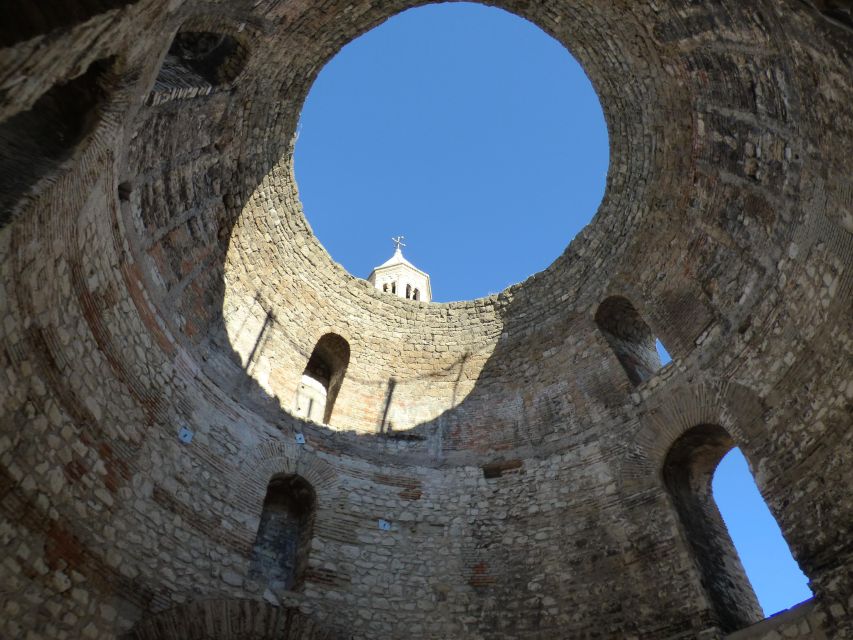
The Cathedral of Saint Domnius occupies a former Roman mausoleum. That change tells you a great deal about Split in a single building. A structure made for an emperor became a Christian cathedral, linking Roman power with the city’s later religious life.
The tour includes a guided look at the cathedral and passes by it. The listed stop is about 10 minutes, so do not expect a full cathedral visit with time for every interior detail. You can use the orientation to decide if you want to return independently.
Nearby, Jupiter’s Temple is now associated with the Baptistery. The tour provides an exterior visit without an entrance fee. This is another good example of layers changing purpose over time. A Roman temple site became part of the city’s Christian setting.
The two stops work well together. The mausoleum and temple help you see the Palace not just as a military enclosure or residence, but as a complex built around imperial ceremony and religion.
Gates, walls, and the old Jewish quarter
The Palace walls give you the clearest sense of the site’s defensive character. Sanja covers the four gates, including the Golden Gate, and explains how the old entrances connected the Palace to the surrounding town.
The route also reaches a small former Jewish quarter with a synagogue that is still active. This is one of the most human parts of the walk. It moves the story away from emperors and grand monuments and toward a smaller community that helped shape Split’s urban life.
A short stop like this is valuable because it widens your view of the city. Split’s past was not made only by rulers. It also came from religious communities, noble families, merchants, and residents adapting old spaces to new needs.
The lane network can be confusing, especially if you are trying to match a map to the buildings around you. Having Sanja point out the former quarter and its synagogue gives you a detail you might otherwise walk past.
Pjaca and the medieval town beyond the Palace
The second half moves outside the Roman Palace into the medieval neighborhood. Here, the tour shifts from imperial planning to the development of a town shaped by local politics, trade, and foreign rule.
People’s Square, known as Pjaca, is one of the main stops. The square helps show how Split expanded beyond the Palace walls. It is a good place to hear about the city’s later civic life and the way public spaces changed as the town grew.
The tour spends about 15 minutes here, longer than at several other stops. That gives Sanja time to connect the architecture with the social and political life of the city.
You then continue to Fruit Square, one of Split’s best-known public spaces. Its name reflects the old market activity associated with the square. The stop lasts about 10 minutes, enough to place it within the medieval town and explain how public spaces served everyday needs.
I like this part because it keeps the tour from becoming only a Roman history lesson. Split is much more than Diocletian’s Palace. The streets outside the walls show how the city continued to develop after the imperial period.
Venetian, French, Austro-Hungarian, and Yugoslav Split
One of Sanja’s most useful subjects is the political history of the city. Split passed through Venetian, French, Austro-Hungarian, and Yugoslav periods before Croatia’s independence. Each period left marks on the city’s buildings, public spaces, and civic life.
You will not get a full university course in 105 minutes, but the guide gives you a framework. That framework helps you read the old town after the tour. A square may seem simply attractive at first, but its shape and surrounding buildings can reflect a particular period of rule.
This political thread was especially useful to people who took the walk near the start of their stay. It gave them a better basis for choosing what to explore afterward. If you are staying within the old Palace walls, the orientation is even more practical, since you will pass these sites repeatedly.
Sanja has received strong praise for her language skills, especially in French. French-speaking visitors can expect clear explanations in French, while English, Italian, and Spanish are also available. Her command of French and her familiarity with French culture were singled out as helpful strengths.
Prokurative and the return to the Riva
The route includes Prokurative, a broad square influenced by Venetian architectural ideas. It provides a useful contrast with the tighter lanes inside the Palace and the medieval squares nearby.
This section helps you see how Split’s public face changed over time. The tour is not only about identifying buildings. It asks you to notice how different authorities shaped the city’s spaces and how those spaces supported public life.
The walk ends on the Riva by the sea, returning you to the same general area where you began. That is convenient if you want to continue along the waterfront, stop for a drink, or head back into the old town with a better map in your mind.
The final Riva stop is about 10 minutes. It is a calm way to finish after the tighter lanes of the Palace. You leave with practical ideas for further exploration rather than being dropped at an unfamiliar corner.
Is $153 good value for a private group?
The price is $153 for a group of up to 15 people. That can look high beside a standard group walk, but the calculation changes if you are traveling with family or a small party.
For four people, the cost works out to about $38 per person. For a group of eight, it is about $19 per person. At the full capacity, the per-person figure becomes much lower, although a group of 15 will not feel as personal as a group of four.
The strongest value is the private attention. You are paying for a licensed local guide with a Master’s degree, a choice of four languages, and a route that combines Roman, medieval, and later political history.
The Substructures entrance is extra, so include that in your plans if you want the underground visit. The private price also does not turn the walk into a full-day tour. You get a focused 105-minute introduction, not extended access to every monument.
I see this as good value for a first visit, especially if your group wants history explained in a chosen language and prefers not to follow a large crowd. It is less appealing if you want only a quick orientation or prefer to read signs and explore alone.
Who should book this Split walk?
I would recommend it to first-time visitors who want to understand the old town before spending the rest of their stay exploring independently. It also suits families and small groups who can share the private fee.
French-speaking visitors have a particularly strong reason to consider it, based on Sanja’s clear French and her ability to connect Croatian history with French cultural references. English, Italian, and Spanish speakers also have guided options.
The tour is a good match if you enjoy architecture, changing political borders, religious history, and old neighborhoods that still function as part of a modern city. It is less suitable if you need step-free access, since wheelchair users cannot take this tour.
You should also choose it with the right expectations. This is a walking introduction, not a series of long interior visits. The cathedral and Jupiter’s Temple are covered as guided sights and pass-bys, while the Palace Substructures require a separate entrance fee.
The booking terms are flexible: you can cancel up to 24 hours before the start for a full refund, and you can reserve without paying immediately. Check the available starting times when choosing your date.
My recommendation
Book this tour if you want a clear first look at Split’s layered past and value having Sanja adjust the explanation to your group and language. The private format is most worthwhile for families, couples traveling with friends, or any group of four or more.
Skip it if you already know the Palace well, want long visits inside every monument, or need wheelchair access. For most first-time visitors, though, the route covers the essential center in a sensible order and gives you a useful plan for the rest of your time in Split.
FAQ
Where does the Split walking tour begin?
It begins beside the bronze model of Split’s historic core on the Riva promenade by the sea, in front of the south entrance to Diocletian’s Palace.
How long does the tour last?
The tour lasts 105 minutes, or about 1 hour and 45 minutes.
What languages are available?
You can take the tour in English, Italian, French, or Spanish.
Is the tour private?
Yes. It is a private group tour for up to 15 people.
Is the entrance to the Palace Substructures included?
No. The entrance fee to Diocletian’s Palace Substructures, also called the Basements, is not included.
Is the tour suitable for wheelchair users?
No. The activity is not suitable for wheelchair users.
Just added around Split
- From Trogir, Seget, Okrug: Krka Waterfalls & Šibenik Culture Tour★ 5.0 · 10 reviews
- Krka Waterfalls & Primošten from Trogir, Seget, Čiovo & Kaštela★ 5.0 · 18 reviews
- Island Hopping Boat Excursion with Lunch (Trogir,Blue Lagoon, Šolta)★ 3.5 · 6 reviews
- From Split & Trogir: ATV Quad Tour on Island Čiovo★ 5.0 · 21 reviews
- Slatine – Island Hopping Excursion (Trogir/Blue Lagoon/Shipwreck)★ 4.0 · 24 reviews
- Split: Blue Lagoon Boat Trip with Lunch, Wine and Snorkeling★ 5.0 · 3 reviews
- Split Sunset Stand Up Paddle Tour★ 5.0 · 16 reviews
- Split: Sunset Guided Kayaking Tour★ 4.8 · 71 reviews
Split Tours, compared.

Krka Waterfalls Trip with Boat Cruise and Swimming
Read our review →

Blue cave, Mamma Mia and Hvar, 5 islands speedboat tour
Read our review →
Blue Cave, Mamma Mia, Hvar and 5 Island Tour
Read our review →
Blue Lagoon & 3 Islands Cruise with Lunch from Split
Read our review →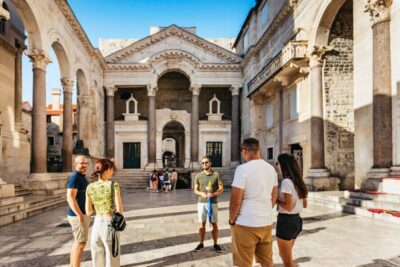

Blue Lagoon Boat Party with DJs, Shots & After Party
Read our review →Browse the lists this tour appears in