
Reviewed · SPLIT TOURS
Split Walking Tour with History Professor
Split’s Roman core is only the beginning. With history professor Mario, you move from Diocletian’s Palace into medieval and modern Split, following traces of Venice, the Ottomans, Napoleon, local legends, and Game of Thrones. The wider story gives the old stones much more meaning.
I like the small-group format and Mario’s lively teaching style. He uses questions, humor, and conversation rather than delivering a long speech, which helps the past feel close at hand. The main consideration is that the walk lasts about two hours, or up to two hours and 15 minutes, and includes uneven historic streets and steps, so it is not suitable for wheelchair users.
Key points to know before you book
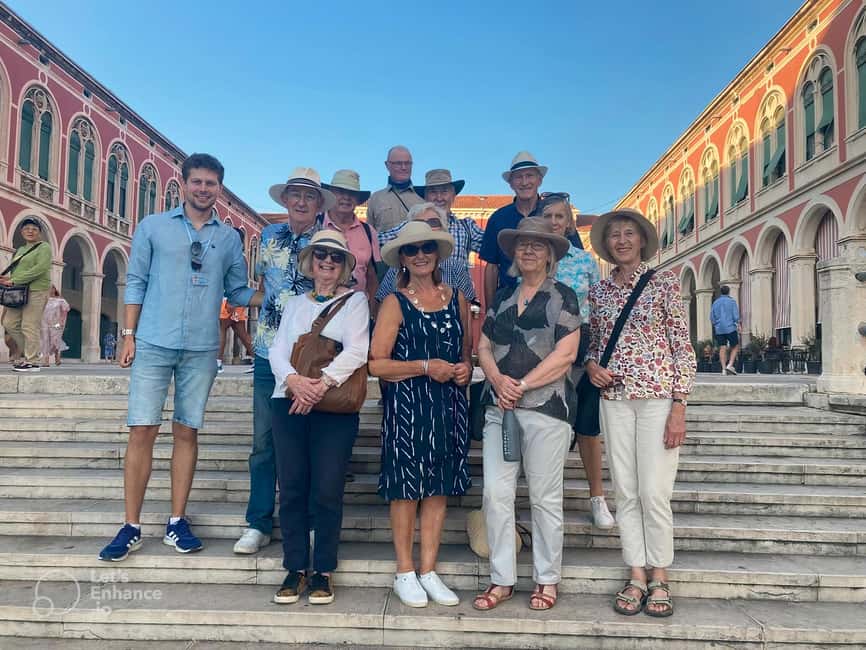
- A Roman palace becomes a living city: See how Diocletian’s Palace still forms the center of Split.
- Mario teaches rather than recites: Expect questions, conversation, humor, and clear historical explanations in English.
- The route goes beyond the palace: Medieval, Venetian, Ottoman, Napoleonic, and modern influences all appear.
- Several famous landmarks are included: The Peristyle, Vestibule, Cathedral of Saint Domnius, Golden Gate, and Fruit Square all feature.
- Admission is not included everywhere: Entry fees for the Cathedral and Temple of Jupiter are excluded.
- The price is modest for a history-led walk: At $23 per person, you get a focused introduction without committing to a full-day tour.
Why this Split walk is more than a palace tour
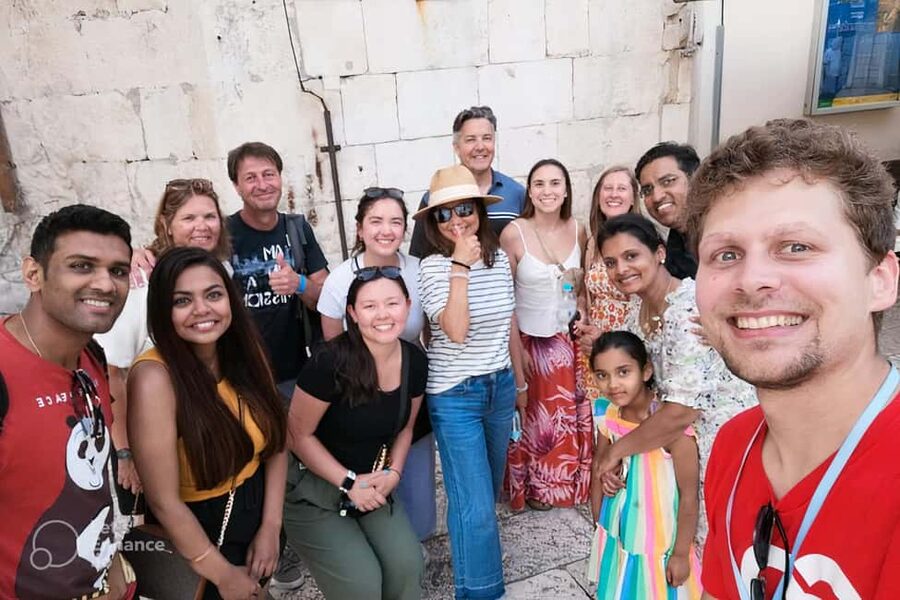
Many visitors arrive in Split with one target: Diocletian’s Palace. That makes sense. The palace is the city’s great Roman prize, but it is not an isolated monument behind a fence. It is woven into daily life, with lanes, homes, shops, cafés, and public squares inside and around the old walls.
This tour helps you see that change over time. You begin with the Roman foundation, then follow Split through medieval rule and later Venetian and Napoleonic influence. Ottoman connections, local legends, and modern city life also enter the story.
That wider view is the main reason I would choose this walk over a short palace-only introduction. You are not simply checking off a basement, a courtyard, and a gate. You are learning why Split looks and feels the way it does today.
Mario leads the tour in English and brings the background of a history professor. His approach suits visitors who like to ask questions and make connections. One especially useful feature is his habit of engaging the group instead of speaking without pause. He encourages questions and uses humor, which should help the information stick.
The tour is described as a small-group experience, with private tours available on request. The supplied information does not give a fixed maximum group size, so check the booking details if group size is your main concern.
More history-led days in Split:
- Walking Tour of Split with a ‘Magister’ of History
★ 5.0 · 1,122 reviews - Split Walking Tour with Professor of History
★ 5.0 · 926 reviews - Split: History and Heritage Walking Tour
★ 4.9 · 650 reviews
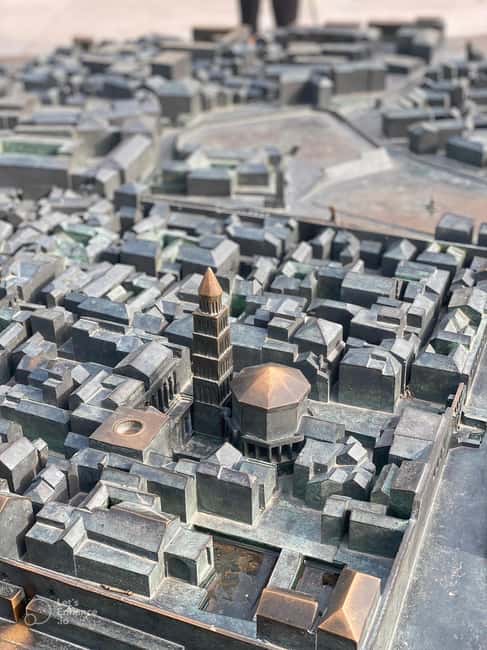
Starting at the Riva and the city model
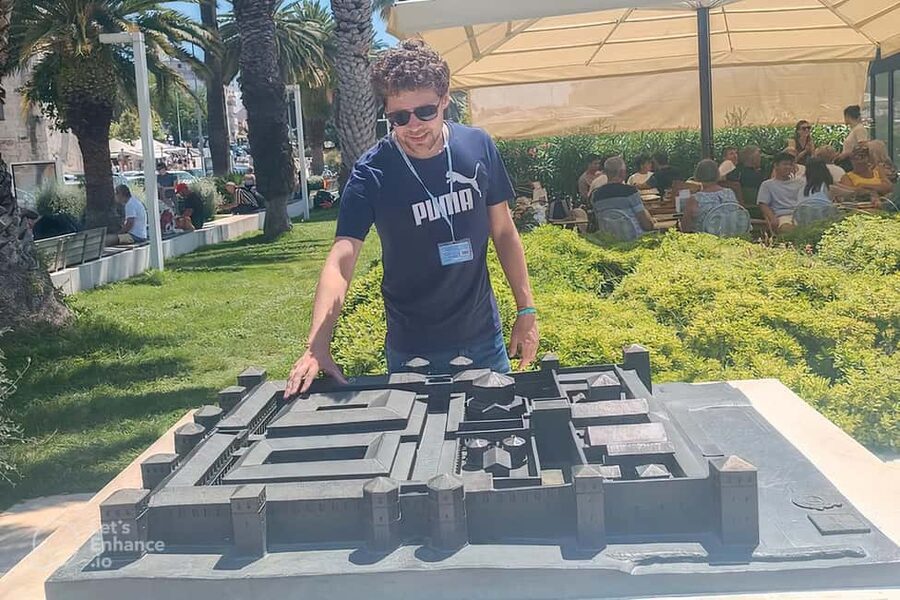
The meeting point is next to the Brass Gate of Diocletian’s Palace. The walk begins near a model of Split’s historic center at the Riva harbor, with about 10 minutes here to get oriented.
This is a smart starting point. Before entering the old center, you can see how the Roman palace sits beside the harbor and how the later city grew around it. The Riva is also an easy place to find when you first arrive in Split.
Use this opening to ask Mario for a simple map in your head. Where did the palace begin? Which parts still follow the Roman plan? How did a royal residence become the center of a living city? Those questions will make the later stops easier to follow.
The Riva is open and public, so this first stop is less about a single monument and more about setting the scene. If you prefer a tour that starts immediately with dramatic ruins, you may find this section slower. I think the orientation pays off.
The Substructures: Rome beneath your feet
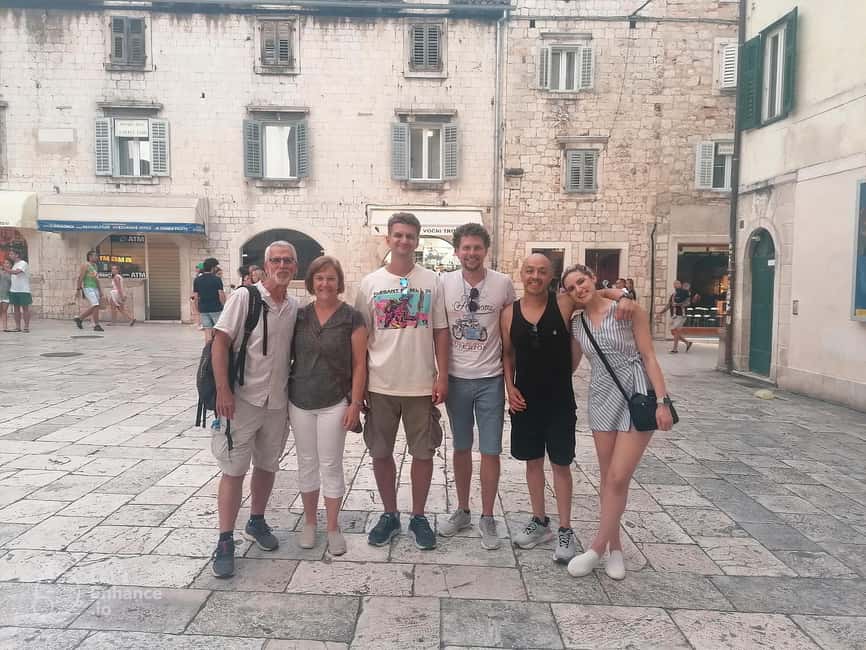
The palace substructures are the first major Roman stop. You have about five minutes here, which is brief, but the location matters because it shows the engineering below the palace level.
The substructures help explain the shape of the upper palace. Roman builders created a strong lower framework, and later generations used and adapted the space. This is where the tour can turn a confusing set of walls into part of a plan.
Do not expect a long museum visit. This is a quick introduction rather than a full examination of every chamber. The benefit is that you see the foundations early, then carry that understanding into the open spaces above.
Peristyle and Vestibule: the palace at full scale
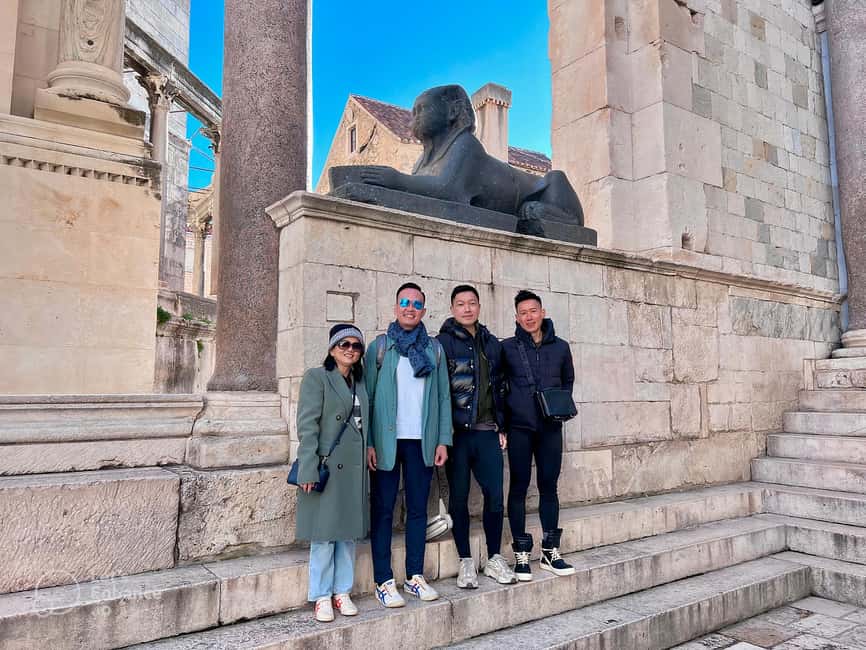
The Peristyle receives about 10 minutes. This is one of the most important open spaces in Diocletian’s Palace, and it gives you a clear sense of Roman ceremony and scale.
Here, Mario can connect the palace’s formal architecture with the emperor who ordered it. The columns, surrounding structures, and open court make more sense when you understand that this was not simply a private villa. It was a powerful imperial residence with public and ceremonial functions.
The Vestibule follows, with another 10 minutes. Its unusual form and strong acoustics make it one of the places where architecture becomes easy to remember. A good guide can explain its purpose while also pointing out how the space works for visitors standing inside it.
I like the pairing of these two stops. The Peristyle gives you a broad public space, while the Vestibule gives you a more enclosed architectural detail. Together, they prevent the palace from becoming a blur of old stone.
Because the route moves through an active city center, you should expect people, street activity, and changing conditions around the monuments. That is part of Split’s character, but it also means this is not a quiet archaeological site visit.
More walking tours in Split:
- Split: Old Town and Diocletian Palace Walking Tour
★ 4.9 · 4,727 reviews - Walking Tour of Split and Diocletian’s Palace
★ 5.0 · 2,588 reviews - Krka Waterfalls tour with Trogir Walking tour and Krka panoramic boat cruise
★ 5.0 · 1,659 reviews - Split & Diocletian’s Palace Walking Tour
★ 5.0 · 1,125 reviews
Saint Domnius Cathedral and the Temple of Jupiter
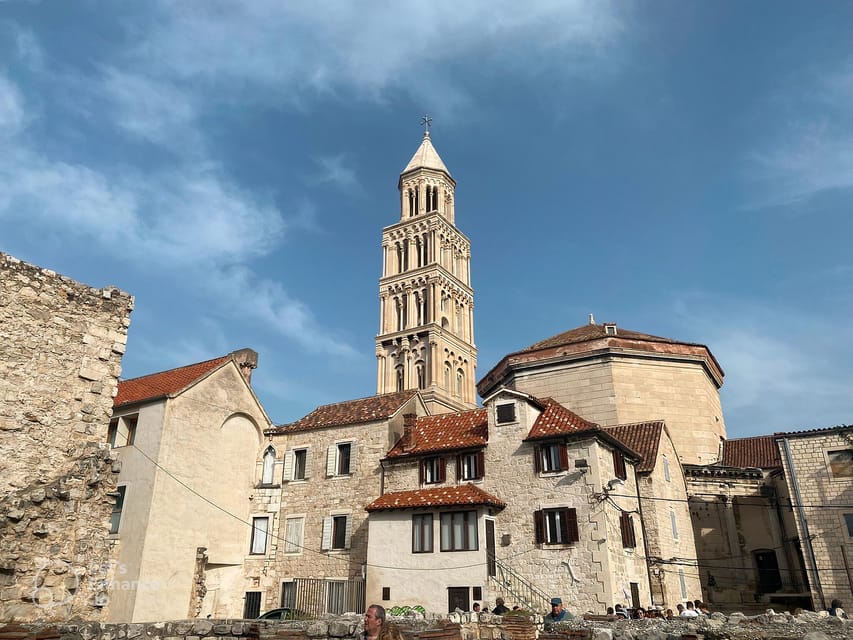
The Cathedral of Saint Domnius receives about 20 minutes, the longest scheduled stop. Admission is excluded, so you may need to pay separately if the group enters.
This stop matters because it shows how the Roman palace continued to serve later generations. The cathedral occupies part of the palace complex, bringing Christian use into an imperial Roman setting. That transition is one of the clearest examples of Split’s layered past.
The Temple of Jupiter receives another 10 minutes, and admission is also excluded. The temple lets Mario return to the Roman religious world and compare it with the later cathedral. You get two nearby places with very different religious roles, which makes the shift in belief and authority easier to grasp.
Keep the extra admission cost in mind when comparing this tour with other walks. The tour price covers the guide-led route, but not every interior visit. If you want to enter both paid sites, bring a little more money and allow for the possibility that the group’s timing depends on access.
Golden Gate and Grgur Ninski
The Golden Gate gets about 10 minutes. It is one of the palace’s best-known entrances and a useful place to think about movement through the Roman complex.
A gate is more than a photogenic arch. It tells you about control, defense, ceremony, and the relationship between the palace and the city outside. Mario’s broader historical approach should help you place the gate within Split’s changing political story.
The route then stops at the statue of Grgur Ninski for about 10 minutes. This brings the walk away from imperial Rome and toward Croatian cultural memory. The statue is also a natural point for local stories and practical sightseeing advice.
You will likely hear the familiar local custom connected with touching the statue’s toe for good luck. The supplied tour details specifically promise local legends and life insights, so this is the kind of stop where the formal timeline can give way to a more personal side of Split.
Marmontova Street and Prokurative
Marmontova Ulica receives 10 minutes and helps bring the walk into modern Split. Its name points to the Napoleonic period, one of the outside influences included in the tour.
This section is useful because many short old-town walks end before the city’s later chapters begin. Here, you see that Split did not stop changing when Roman rule ended. Venetian and Napoleonic influence are part of the route, along with the Ottoman connections that Mario explains along the way.
Prokurative follows for another 10 minutes. The square has a different feel from the tight lanes and enclosed palace spaces. It gives you a chance to see how public life and city design developed outside the Roman core.
I would pay attention here to the contrast between the palace and the later city. The Roman center feels inward-looking and controlled by its original plan. The later streets and squares show a city adapting to new rulers, new needs, and a broader public life.
Fruit Square and the final view of Split
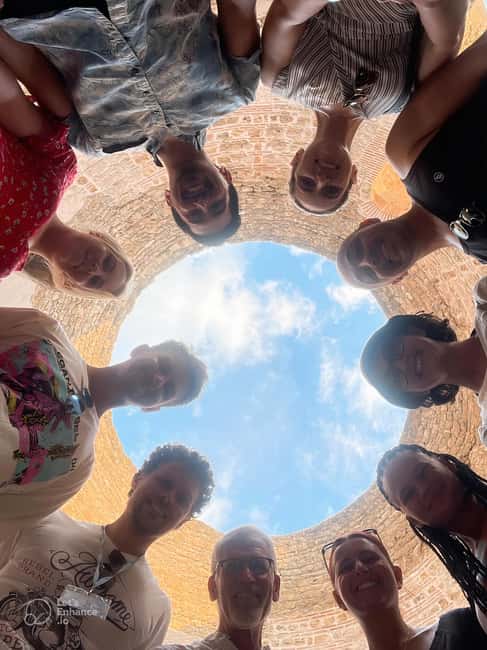
The final listed stop is Fruit Square, or Trg Brace Radic, with about 15 minutes. This is a good place to finish because it brings together several themes from the walk: trade, public space, medieval and later development, and present-day city life.
By this point, you should have a usable timeline rather than a pile of dates. You begin with the Roman palace, see Christian and medieval changes, follow later European influence, and end in a square that belongs to the working city as much as to its past.
The stop also gives you a chance to ask final questions. If you want advice on what to see next, this is the right moment to ask Mario about places connected to the tour. The provided information does not promise a formal restaurant or sightseeing recommendation session, so treat that as a chance for conversation rather than a guaranteed part of the program.
How Mario teaches the past
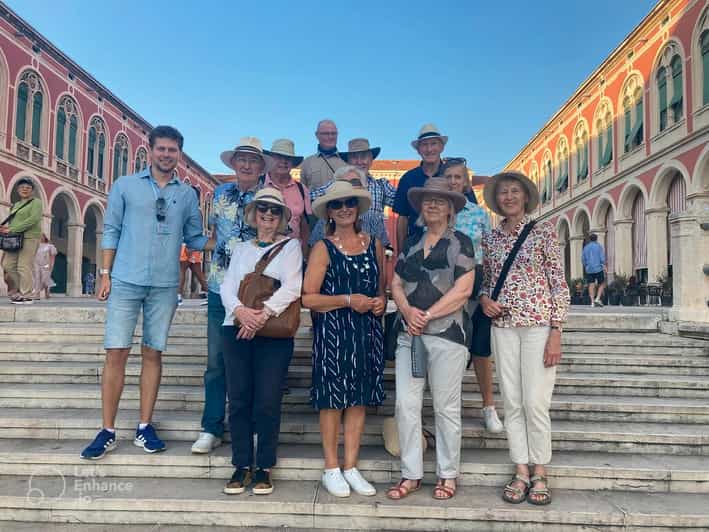
The strongest praise for this tour centers on Mario himself. His delivery is described as funny, charismatic, friendly, and full of historical information. More important, he does not treat his academic background as a reason to lecture at you.
He asks questions and encourages the group to participate. That matters on a walking tour because attention can fade quickly when you are standing in a sunny square listening to names and dates. A question gives you something to consider, while humor breaks up the heavier material.
His enthusiasm also appears to be a key part of the experience. You should expect a guide who cares about the subject and wants you to follow the story, not simply reach the next stop.
This style is best for you if you enjoy context and conversation. If you want only a quick list of major sights with minimal explanation, the tour may feel too detailed. The professor-led format is the point, so book it because you want the story as well as the photographs.
Is $23 a fair price?
At $23 per person, this is a good-value introduction to Split, especially if you are visiting for the first time. You get roughly two hours of live guiding through the city’s main historic zones, with a route that reaches beyond the palace.
The value comes from the range. A palace-only walk might explain Roman construction and imperial life, but this route adds medieval and modern Split, Venetian and Napoleonic influence, Ottoman connections, local legends, and Game of Thrones locations.
You should still budget for admission to the Cathedral of Saint Domnius and the Temple of Jupiter if you want to enter them. Those fees are not part of the $23 price.
The tour also offers free cancellation up to 24 hours before the start time and a reserve-now, pay-later option. Those terms are useful if your Croatia schedule is still changing, but check the exact booking conditions before you reserve.
Who should book this tour?
I would recommend it to first-time visitors who want a clear introduction to Split, history fans who prefer a real teacher, and anyone who wants more than Roman ruins. It also suits Game of Thrones fans who want filming locations placed in a wider local setting rather than treated as the whole point of the walk.
Families can book it because the activity is listed as suitable for all ages. Comfortable shoes and clothes are important, since you will be walking through an old urban center for about two hours.
The tour is not suitable for wheelchair users. Historic surfaces, steps, and access limits at old buildings can be difficult, and the provider specifically excludes wheelchair users from this activity.
Private tours are available on request through [email protected]. That may be worth asking about if you want a slower pace, a group tailored to your interests, or a more personal format.
Should you book the Split Walking Tour with History Professor?
Book it if you want Split explained by a local teacher who can connect Roman imperial life with the city’s medieval, Venetian, Napoleonic, and modern chapters. Mario’s humor, questions, and clear enthusiasm should keep the two-hour walk lively.
Skip it if you only want a fast photo stop at Diocletian’s Palace or need a fully wheelchair-accessible route. For most visitors who value context, the $23 price is reasonable, especially because the walk covers far more than the palace itself.
FAQ
How long does the Split walking tour last?
The activity is listed as lasting two hours, while the tour description refers to two hours and 15 minutes. Plan for roughly two hours to two hours and 15 minutes.
Who leads the tour?
The tour is led by Mario, a local history professor. He guides in English and uses questions, conversation, humor, and historical explanation during the walk.
Where does the tour meet?
The guide waits next to the Brass Gate of Diocletian’s Palace.
Which sights are included?
The route includes the Riva harbor model of Split’s historic center, the palace substructures, Peristyle, Vestibule, Cathedral of Saint Domnius, Temple of Jupiter, Golden Gate, Grgur Ninski Statue, Marmontova Ulica, Prokurative, and Fruit Square.
Are admission fees included?
Admission is excluded for the Cathedral of Saint Domnius and the Temple of Jupiter. The tour price does not include those entry fees.
Is the tour suitable for wheelchair users?
No. The activity is specifically listed as not suitable for wheelchair users. It is listed as appropriate for all ages, and comfortable shoes and clothes are recommended.
Just added around Split
- From Trogir, Seget, Okrug: Krka Waterfalls & Šibenik Culture Tour★ 5.0 · 10 reviews
- Krka Waterfalls & Primošten from Trogir, Seget, Čiovo & Kaštela★ 5.0 · 18 reviews
- Island Hopping Boat Excursion with Lunch (Trogir,Blue Lagoon, Šolta)★ 3.5 · 6 reviews
- From Split & Trogir: ATV Quad Tour on Island Čiovo★ 5.0 · 21 reviews
- Slatine – Island Hopping Excursion (Trogir/Blue Lagoon/Shipwreck)★ 4.0 · 24 reviews
- Split: Blue Lagoon Boat Trip with Lunch, Wine and Snorkeling★ 5.0 · 3 reviews
- Split Sunset Stand Up Paddle Tour★ 5.0 · 16 reviews
- Split: Sunset Guided Kayaking Tour★ 4.8 · 71 reviews
Split Tours, compared.

Krka Waterfalls Trip with Boat Cruise and Swimming
Read our review →

Blue cave, Mamma Mia and Hvar, 5 islands speedboat tour
Read our review →
Blue Cave, Mamma Mia, Hvar and 5 Island Tour
Read our review →
Blue Lagoon & 3 Islands Cruise with Lunch from Split
Read our review →

Blue Lagoon Boat Party with DJs, Shots & After Party
Read our review →Browse the lists this tour appears in