
Reviewed · ZAGREB TOURS
Zagreb: Restaurants, Food & Old Town Walking Tour
Zagreb’s best introduction may be a meal that keeps moving. This 3 to 4 hour walk links the city’s central square, Dolac Market, Tkalčićeva Street, Stone Gate, St. Mark’s Square, Grič Tunnel, and Strossmayer Promenade with four restaurant stops. You eat a little, walk a little, then eat again.
I like the full-meal approach, with several Croatian dishes and glasses of wine included rather than a token bite at each stop. I also like the way the route gives you both food and orientation, from the market below the cathedral to the old defense walls and the city views above Gradec.
The main catch is the price, $107.68 per person, which asks you to value the guide, the history, the restaurant planning, and the drinks as much as the food itself. You should also expect cobblestones, stairs, and hilly sections, plus no gluten-free menu and no vegan option.
Key points to know before booking

- Four substantial food stops: Expect an Istrian cold appetizer, warm Zagreb-area dishes, a regional main course, and a surprise dessert.
- A proper old-town route: The walk covers Ban Jelačić Square, Dolac Market, Stone Gate, St. Mark’s Square, Grič Tower, Grič Tunnel, and Strossmayer Promenade.
- Wine and rakija included: Several Croatian wines are served, along with one tasting of rakija, the country’s traditional brandy.
- Small group size: The maximum is 15 people, with a minimum of two required for the tour to operate.
- Strong guide element: Guides including Damjan, Damijan, Ivan, Patrik, and Marin have been praised for humor, local knowledge, and easy conversation.
- Best for hearty eaters: The portions can add up to something close to a full dinner, so arrive hungry and wear good walking shoes.
Starting at Ban Jelačić Square at 4 pm

The meeting point is Trg J. Jelačića, Zagreb’s main square, known locally as Jelačić plac. This is a sensible place to begin because it sits between the upper old-town areas of Kaptol and Gradec and remains the city’s main gathering point.
The square once went by Harmica and served as a market in the 17th century. Today, it is the natural place to get your bearings before the route turns into the older streets. The 4 pm start also shapes the mood of the experience. In summer, you begin in daylight and finish later in the evening. In late November, the route can coincide with Zagreb’s city lights and Christmas decorations.
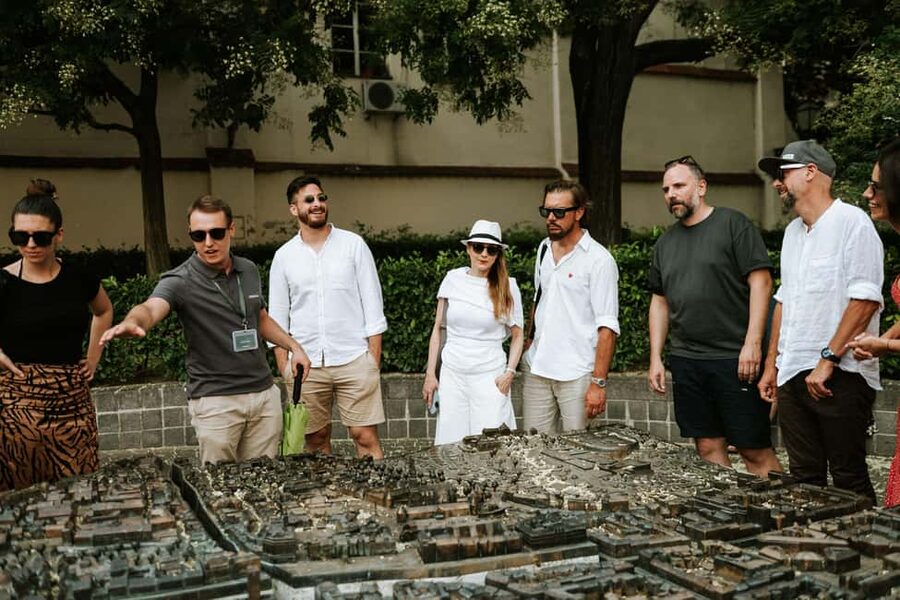
After only a short walk, you reach European Square. The cathedral overlooks this open space, which is also used for craft markets, outdoor events, and DJ sets. A miniature model of Zagreb shows the city’s main streets and landmarks, giving you a useful visual guide before you begin climbing through the old quarters.
This opening section is brief, but it helps make the rest of the walk easier to follow. You are not simply moving from restaurant to restaurant. The guide is building a map of Zagreb around you.
More old town walks in Zagreb:
- Dubrovnik: Old Town Walking Tour
★ 4.8 · 5,174 reviews - Split: Old Town and Diocletian Palace Walking Tour
★ 4.9 · 4,727 reviews - Dubrovnik Discovery Old Town Walking Tour
★ 5.0 · 4,458 reviews
First tasting: Istrian flavors and Croatian wine
The first restaurant, at Augusta Cesarca 2, introduces food from Istria, the peninsula in northwestern Croatia known for its own culinary traditions. The stop focuses on a cold appetizer and a regional wine.
The exact dish can vary, but the food may include the sort of cheese and truffle pairing that has been especially well received on this experience. This is a useful beginning because Istrian cooking shows how varied Croatian food can be. Croatia is not one single food culture. Coastal areas, inland Zagreb, Zagorje, and other regions each bring different ingredients and customs to the table.
You get about 30 minutes here. That is enough time to taste, listen, and ask questions without turning the first stop into a long restaurant meal. The wine is part of the teaching. You taste a regional variety alongside the food, rather than treating wine as an unrelated extra.
If you do not usually drink wine, tell the guide at the start. Several glasses are included across the route, and the pace can become generous. One useful point from the experience is that the wines may lean heavily toward white varieties, depending on the selections that day.
Dolac Market and warm Zagreb appetizers
From the first restaurant, the route continues to Dolac Market, one of Zagreb’s key food and cultural landmarks. The market has operated since 1930 and combines an open farmers market with a covered section beside it.
This is one of the best parts of the walk for anyone who likes to connect food with daily life. Dolac is not just a pretty stop for photographs. It helps explain where Zagreb’s cooking begins, with produce and local products sold in the middle of the city.
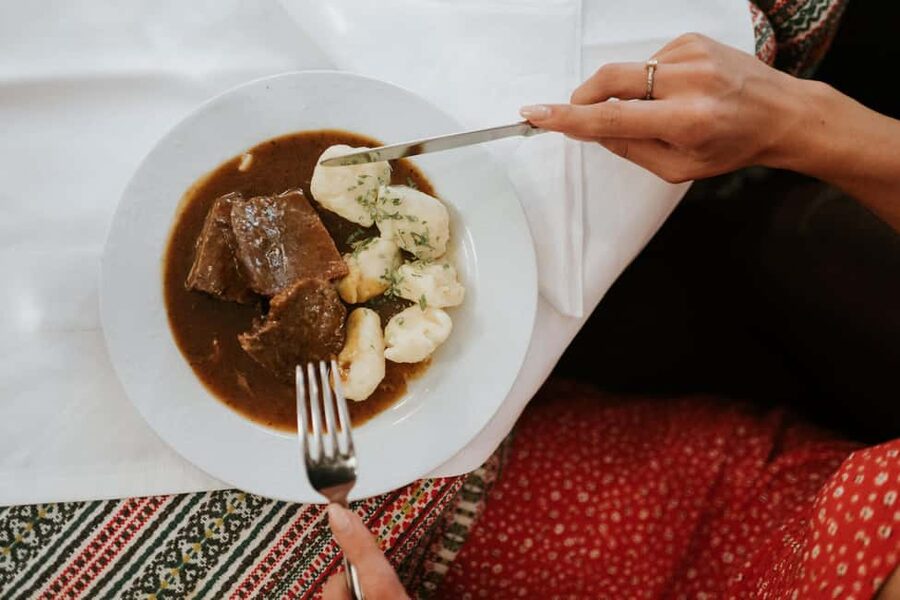
The second restaurant, at Dolac 2, serves warm appetizers connected with the Zagreb region. You can expect regional dishes and drinks, and this is where the meal begins to feel substantial. Several people have found the food portions surprisingly generous, so do not think of the tour as four tiny samples.
The 40-minute stop gives you more time to eat than the opening tasting. That balance works well. The first restaurant introduces a region and a wine, while the second gives you a warmer, more filling taste of inland Croatian cooking.
For some people, this may be the point where the value becomes clear. You are receiving food at multiple restaurants, not merely standing outside them while a guide describes what you could order later.
Tkalčićeva Street, Stone Gate, and the cathedral
After Dolac, you walk along Tkalčićeva Street, one of the city’s most social streets. Cafes, smaller restaurants, traditional shops, and boutiques line the route, giving you a look at Zagreb’s everyday urban life.
The street is lively, but the important thing is its contrast with the older landmarks ahead. You move from dining rooms and cafe terraces into quieter corners of the upper town. This change keeps the route from feeling like a standard restaurant crawl.
Stone Gate is the next major stop. It began as part of Zagreb’s medieval defensive system and is now a place where people pray and light candles. The atmosphere is quiet and reflective, even though the gate sits within the city center.
The walk then reaches Zagreb Cathedral, a Gothic landmark with two tall spires visible from many parts of the city. It is the second tallest building in Croatia and contains a treasury with religious documents and objects. The tour does not promise an extended interior visit, so think of this as a guided exterior and city-history stop unless the guide says otherwise.
This part of the route gives your meal some context. You see how Zagreb developed around its old religious and defensive centers, then return to the food with a better sense of place.
More food tours in Zagreb:
- Taste Zagreb Food Tour
★ 5.0 · 256 reviews - Zagreb: Food Tour with Tastings
★ 4.9 · 153 reviews - From Zagreb: Fairytale Castle & Wine Tasting & Lunch
★ 4.8 · 28 reviews - From Split: Krka Waterfalls, Food & Wine Tasting Tour
★ 5.0 · 9,326 reviews
St. Mark’s Square and the old Gradec defenses
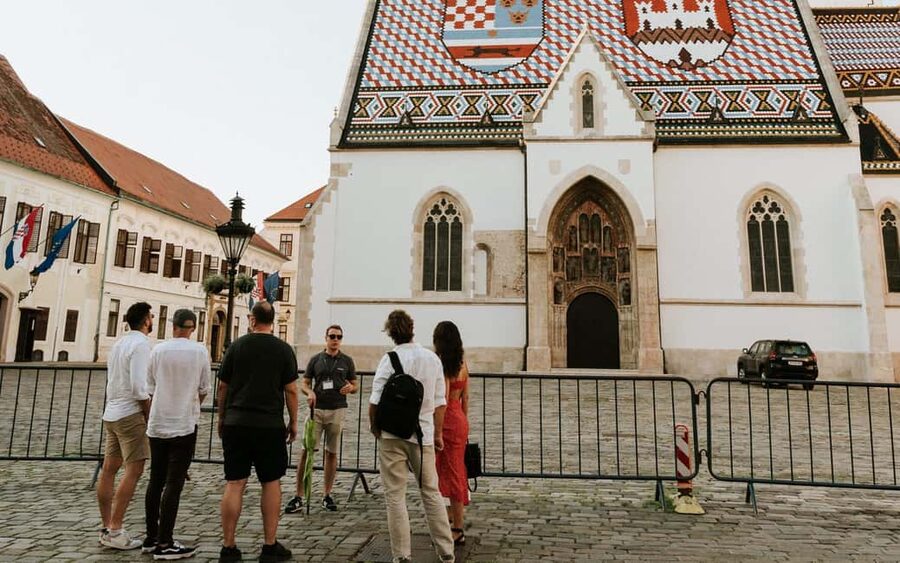
The route continues to St. Mark’s Square in the old town. The square shares its name with St. Mark’s Church and is also home to the Croatian parliament.
This is one of Zagreb’s most important civic spaces, but it is not a large plaza where you linger for hours. The value comes from the concentration of political and religious landmarks in one compact area. Listen closely here, because the guide’s explanation helps connect Zagreb’s old quarters with modern Croatia.
You then pass a formidable defense tower in Gradec, one of the last remnants of the city’s former fortifications. The tower gives you a physical reminder that Kaptol and Gradec were once separate communities, not simply two parts of one old town.
The route is not flat. Cobblestones, stairs, and inclines are part of the experience, especially as you move through Gradec. Comfortable shoes are not a throwaway suggestion. If you have trouble with hills or uneven surfaces, this is worth considering before you book.
The funicular stairs and Strossmayer Promenade
On the way to the third restaurant, you pass the stairs beside the Uspinjača, Zagreb’s famously short funicular ride. The funicular is described as the first form of public transportation in Zagreb and one of the earliest of its kind in the world.
The route emphasizes the stairs rather than promising a ride on the funicular itself. That distinction matters if you are booking mainly for the transport experience. You are seeing one of the city’s unusual landmarks as part of the walk.
From there, the path reaches Strossmayer Promenade. This upper-town walkway offers broad views over Zagreb and is one of the most rewarding photo stops on the route. It is also a welcome pause after the stairs and the earlier climbs.
I like this section because it breaks up the eating with a proper scenic moment. You are not just crossing streets between restaurants. You get a clear view of the city and a chance to understand how the upper town sits above the central streets.
Third tasting: a main course from Zagreb and Zagorje
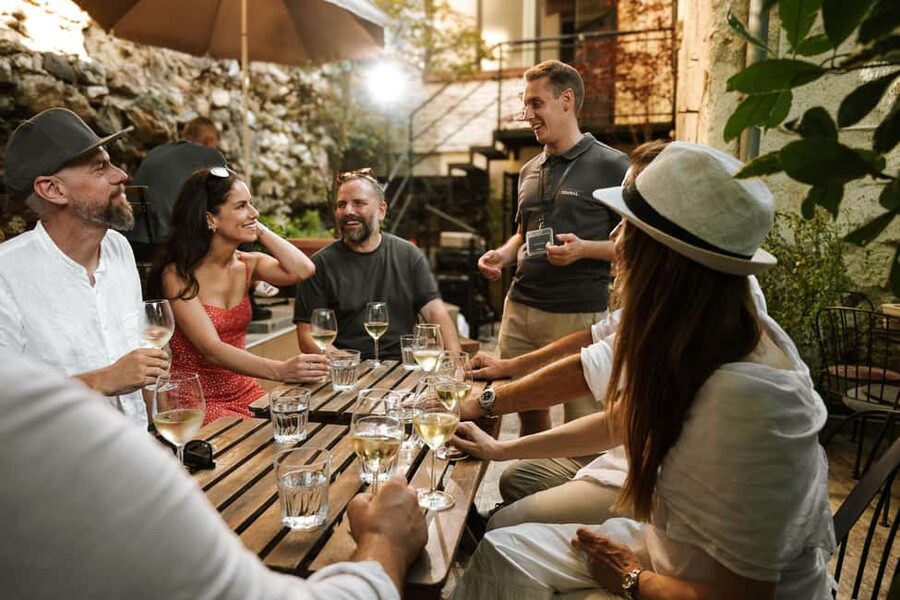
The third restaurant, at Mesnička 6, serves the main dish of the experience. It focuses on food from Zagreb and the Zagorje region, giving you a stronger taste of inland Croatian cooking.
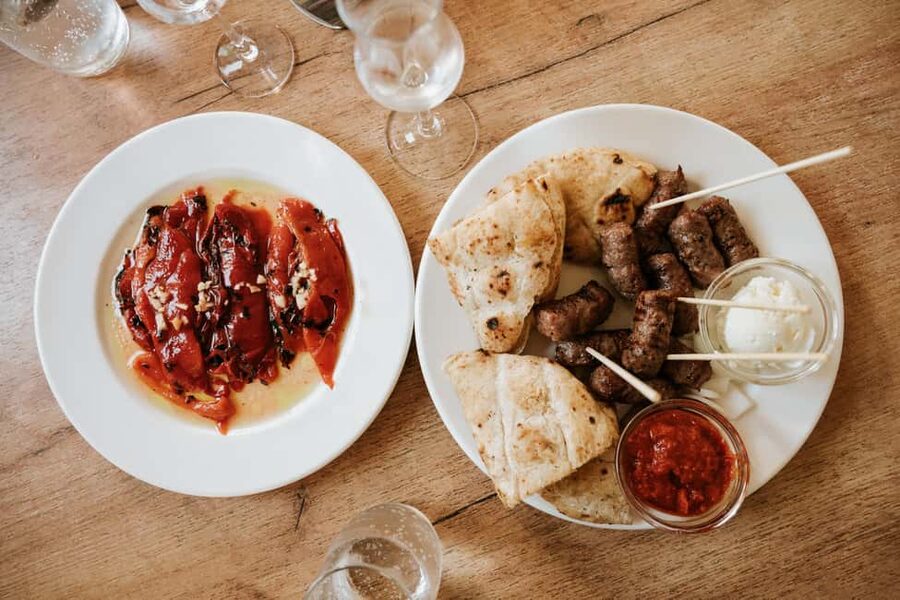
The reviews and food descriptions point to dishes such as ćevapčići and stuffed peppers as possibilities, though the exact meal may depend on the restaurant and day. These are filling foods, so pace yourself at the earlier stops. One dish in particular, stuffed pepper, has received strong praise, while ćevapčići and štrukli have also been singled out as memorable tastes.
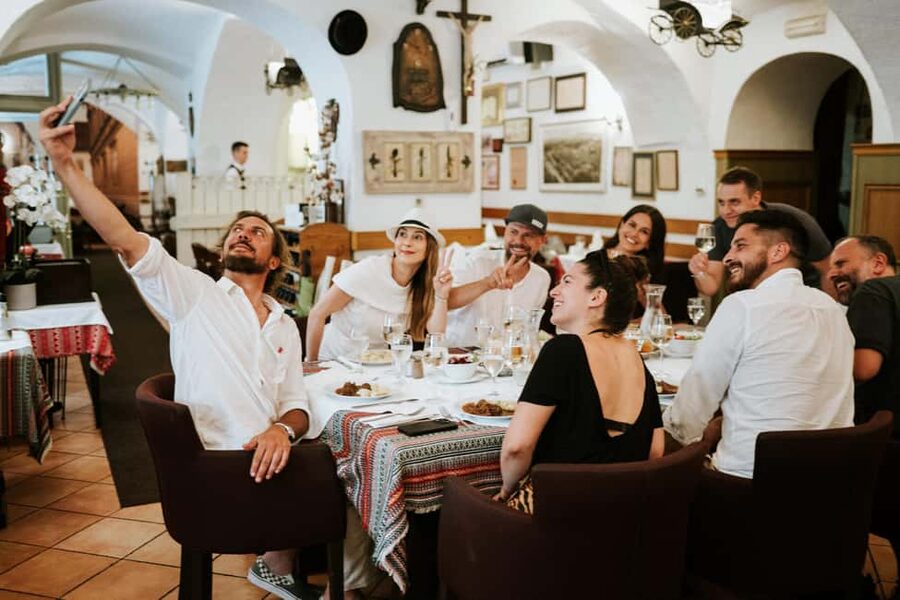
The restaurant may contain historical replicas and old photographs, adding another layer to the stop. You get about 40 minutes for the meal, which should be enough for eating and conversation, though the guide may not sit and dine with the group.
That last point is worth noting. The guide’s main job is to lead, explain, and coordinate the stops. One person who enjoyed the tour still wished the guide had shared more of the meal and conversation at the table. If you want a host who sits with you throughout dinner, this may feel a little formal.
Grič Tunnel and the Bloody Bridge
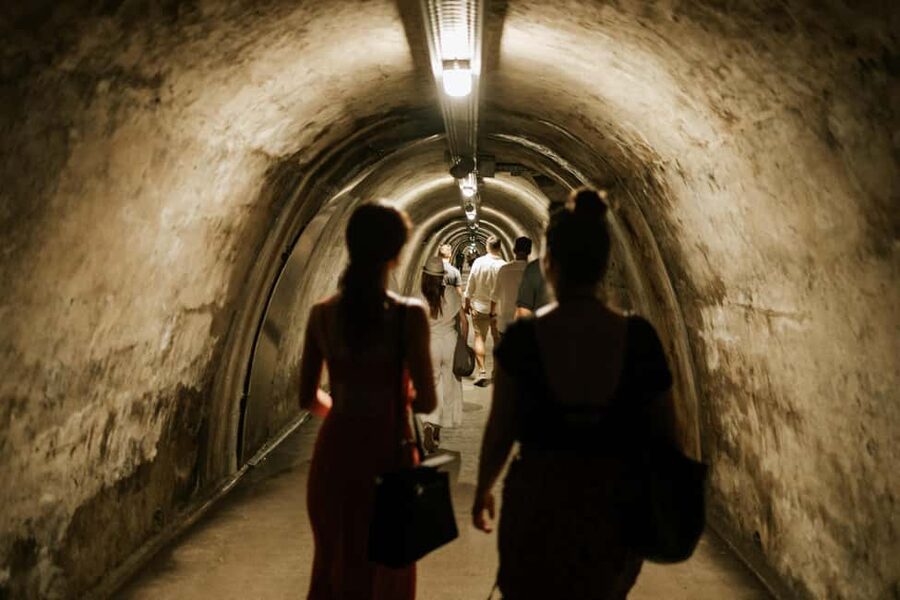
After the main course, the route goes through Grič Tunnel. Built during World War II, the tunnel first served as a bomb shelter before becoming a pedestrian passage and promenade. It has a central hall and two passageways.
This is a good example of Zagreb’s habit of layering new uses onto old spaces. The tunnel is practical, but it also carries the memory of wartime Zagreb. It gives the walking portion a change of scale, from open viewpoints and squares to an enclosed passage beneath the city.
The final walk passes along Bloody Bridge, a short street with a grim name and an equally memorable backstory. Kaptol and Gradec were once separate settlements, and conflicts between them gave the street its title. The route uses this small place to explain how the two communities eventually became Zagreb.
These stops are not grand monuments. That is precisely why they are useful. They show you the odd corners and old boundaries that a quick city-center stroll might miss.
Final tasting: dessert and wines for the last course
The last restaurant is at Skalinska 5, where you finish with a regional dessert. The specific dessert is kept as a surprise, but štrukli has been mentioned as one possible traditional taste in the overall food selection.
Several dessert wines are served with the final course. This is a nice way to end because the drink changes with the food, and you leave with an understanding that Croatian wine is not limited to one style.
The tour ends inside this last restaurant on Ulica Ivana Tkalčića 16, rather than returning to Ban Jelačić Square. This is convenient if you want to continue along Tkalčićeva Street afterward, but it is less convenient if you need to return to your hotel immediately.
By this stage, you should expect to be full. The experience is closer to a progressive dinner than a tasting menu of tiny bites. Eat lightly beforehand, but do not arrive so hungry that you rush the first stop.
How the guides shape the evening
The guide can make or break a food walk, and this experience has several names associated with particularly warm, entertaining tours. Damjan, also spelled Damijan in some accounts, is often praised for humor, energy, and his ability to connect food with Zagreb’s past. Ivan has also been described as friendly, funny, and generous with local suggestions.
Other guides have included Patrik and Marin. Patrik has taken solo visitors through pre-ordered dishes and wine pairings, while Marin has been described as enthusiastic and willing to explain both the city and its cuisine.
You should not assume you will receive a particular guide unless the booking process allows a request. The strongest pattern is clear, though: a guide who enjoys telling stories adds real value here. The restaurant stops alone may not justify the full cost for every diner, but the combination of meal planning, wine selection, and old-town interpretation can.
The group limit is 15 people. That is small enough for questions and table conversation, though the experience may feel more personal when the group is closer to the minimum of two.
Is $107.68 a fair price?
At $107.68 per person, this is not a cheap way to eat in Zagreb. You can certainly find individual meals for less, especially if you order one dish and skip the guide.
The price makes more sense if you count the full package: four food stops, several wines, one rakija tasting, a local guide, and a route through many of Zagreb’s major sights. You also avoid the work of choosing restaurants, ordering unfamiliar dishes, and guessing which local specialties are worth trying.
I would see this as an efficient first-day purchase, especially if you have only one or two nights in Zagreb. It gives you a city orientation and enough food to remove the pressure of planning dinner. If you are an experienced Croatia food enthusiast who already knows the regional dishes and has a list of restaurants, the value may feel less convincing.
The mixed response on food and wine also matters. Most ratings are very strong, but personal taste plays a role. Some people have found the food excellent and the wine generous. Others have felt that the quality did not fully match the price, or that later wines were less impressive than the first. Croatian wines vary by region and style, so the tasting is educational, but not every glass will suit every palate.
Who should book this Zagreb food walk?
I would recommend it to you if you want a practical first look at Zagreb and prefer learning through meals. It suits couples, small groups, solo visitors, and anyone with limited time who wants history and dinner handled in one outing.
It is also a good fit if you like traditional food and do not mind eating a lot. The route introduces several regional styles rather than focusing only on one famous Croatian dish.
You should think twice if you need gluten-free food. No gluten-free menu is available. Vegetarians can request a menu, but vegans are not recommended for this experience. The tour operates in all weather conditions, so bring suitable clothing, and remember that cancellation may occur if poor weather prevents the experience from running.
The tour is offered in English, uses a mobile ticket, and does not include hotel pickup or drop-off. Most people can take part, and service animals are allowed, but the uneven old-town streets and stairs still make footwear and mobility important.
Cancellation and minimum group details
You can cancel up to 24 hours before the 4 pm start for a full refund. Changes or cancellations inside that 24-hour window are not accepted for a refund.
A minimum of two people is required. If that number is not reached, you should be offered another date or experience, or a full refund. There has also been an isolated booking-system failure that left one person waiting without a guide, followed by a refund. That kind of problem is not presented as normal, but it is sensible to keep your confirmation and meeting details handy on the day.
Should you book it?
Book this tour if you want a filling Croatian dinner with a guided walk through old Zagreb. The combination is its strength. You see the market, cathedral, upper town, old defenses, tunnel, and panoramic promenade while trying regional food, Croatian wine, and rakija.
I would book it near the beginning of a Zagreb stay, not the final afternoon, because the route helps you understand the city and the guides may offer useful restaurant ideas. Wear sturdy shoes, skip a large lunch, and tell the guide about vegetarian needs or your limited interest in wine before the first stop.
Skip it if your main goal is the lowest possible food bill, if you need gluten-free or vegan meals, or if steep streets and stairs will make the walk tiring. For everyone else, the 4 pm start, generous food, small group, and strong guide element make this a useful and enjoyable way to meet Zagreb.
FAQ
How long does the Zagreb food and old-town tour last?
The tour lasts approximately 3 to 4 hours.
What time does the tour start?
The start time is 4:00 pm.
Where does the tour begin?
It begins at Trg J. Jelačića, also known as Ban Jelačić Square or Jelačić plac, in central Zagreb.
Where does the tour end?
The tour ends at the final restaurant on Ulica Ivana Tkalčića 16. Hotel pickup and drop-off are not included.
How many food stops are included?
There are four restaurant stops. They include a cold Istrian appetizer, warm Zagreb-area appetizers, a main dish from Zagreb and Zagorje, and a regional dessert.
Are drinks included?
Yes. Several Croatian wines are included, along with one tasting of Croatian rakija, a traditional brandy.
Is a vegetarian menu available?
A vegetarian menu is available on request. There is no gluten-free menu, and the tour is not recommended for vegans.
What is the maximum group size?
The maximum group size is 15 people. At least two people are required for the tour to operate.
More Walking Tours in Zagreb
- Zagreb: Small Group Walking Tour City Center and WW2 Tunnels
★ 4.9 · 895 reviews - Zagreb: City and WWII Tunnels Walking Tour
★ 4.9 · 845 reviews - Walking tour of Zagreb
★ 5.0 · 383 reviews - Zagreb Small Group Guided Walking Tour with WW2 Tunnels
★ 5.0 · 380 reviews
Just added around Zagreb
- Toast to the Morning After: Zagreb Museum of Hangovers Visit★ 4.0 · 39 reviews
- From Split: Transfer to Zagreb with Stop at Plitvice Lakes★ 4.6 · 44 reviews
- Severin na Kupi: Canoeing and Kayaking on the Kupa River★ 4.6 · 22 reviews
- Rafting/Kayaking adventure river Kupa★ 4.4 · 21 reviews
- Private Walking Tour of Zagreb★ 4.9 · 5 reviews
- Plitvice Lakes National Park – 2hr Inspiration Buggy Tour★ 5.0 · 3 reviews
- Jump into Zagreb: Walking Tour with local guide★ 4.8 · 3 reviews
- From Zagreb: Varazdin Baroque Town & Trakoscan Castle★ 4.9 · 38 reviews
Zagreb Tours, compared.
Plitvice & Rastoke Guided Day Trip with Ticket
Read our review →
Rastoke & Plitvice Lakes Guided Tour with Ticket
Read our review →

Plitvice Lakes with Ticket & Rastoke Guided Tour from Zagreb
Read our review →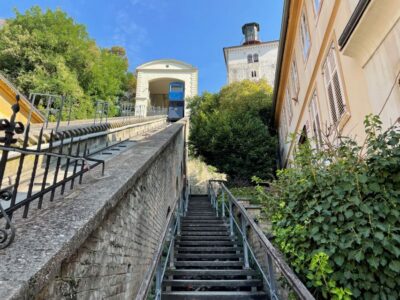
Small Group Walking Tour City Center and WW2 Tunnels
Read our review →
Skip-the-Ticket-Line Museum of Broken Relationships
Read our review →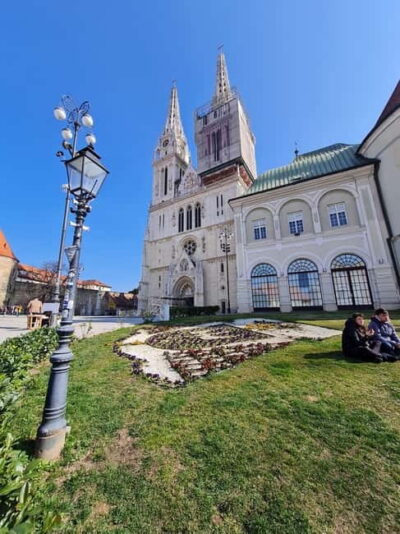
Browse the lists this tour appears in