

Reviewed · FOOD & DRINK
Zadar: Hinterland Hidden Treasures, Nature, History, Tasting
The best part of this half-day outing is the change of pace. You leave Zadar’s coast behind and enter rural Dalmatia, where a war memorial, a stone castle, an olive mill, and a hilltop viewpoint tell different parts of the same regional story. The tasting at the family grove is the heart of the day, with oil, wine, and a traditional lunch served beneath the trees.
I like the small group of up to eight and the way the tour links food with local history instead of treating lunch as an isolated stop. I also like the practical tasting lesson, which helps you tell good extra virgin olive oil from lesser oil rather than simply handing you a sample and moving on.
The main consideration is timing. This is an afternoon tour, usually running from about 12:30 to 17:00, so the schedule is fairly fixed and the experience may feel full for anyone who prefers a slow, unstructured day. Children under 12 are not accepted.
Key points to know before booking

- Taste olive oil with a purpose: You compare award-winning oils with lower-quality examples and learn about aroma, balance, and high-polyphenol content.
- See rural Dalmatia beyond Zadar: The route takes you through the inland countryside to Benkovac and Lepuri.
- Visit Benkovac Castle: This 15th-century fortress offers a short history stop and wide views from its hilltop position.
- Eat at a family olive grove: Local food is drizzled with the family’s oil and paired with your choice of red or white wine.
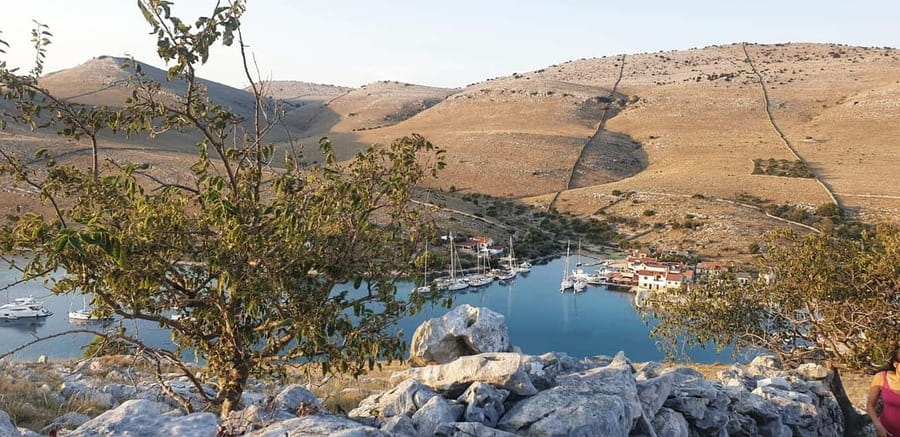
- Finish above Lake Vrana: Kamenjak Nature Park gives you a broad view toward vineyards, olive groves, and the Kornati Archipelago.
- Travel in a compact group: The usual vehicle holds up to eight people, though a larger air-conditioned coach may be used for groups of up to 16.
Why this tour works as a half-day escape from Zadar
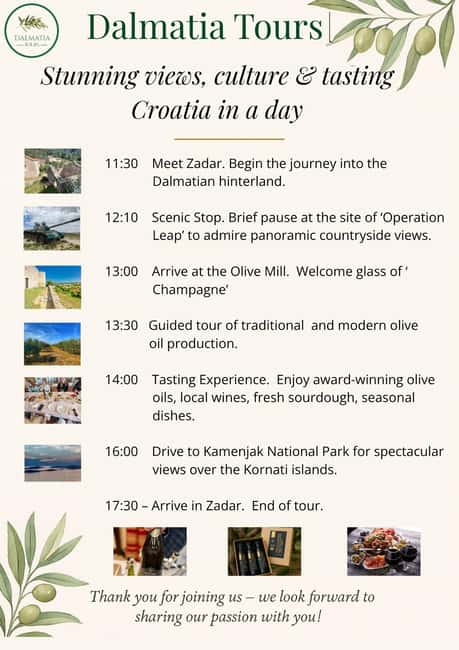
Zadar is an easy base for the northern Dalmatian coast, but its old town can keep you focused on Roman ruins, medieval churches, and the waterfront. This excursion gives you a look at the inland side of the region without taking an entire day away from the city.
The route has a useful mix. You get a short stop tied to Croatia’s recent independence, an older fortress tied to centuries of conflict, a working olive operation, and a scenic lookout. None of these visits lasts long enough to become a full museum-style tour, but together they create a clear picture of how food, land, and political history connect here.
I would think of this as a hosted countryside outing rather than a formal sightseeing circuit. The hosts are described as natural storytellers, with experience in regional history, olive oil production, and cuisine. That matters because the most valuable parts of the day are explained in person, especially the tasting and the background to the sites.
The price is $44 per person. For that amount, you receive transport, guiding in English, access to Benkovac Castle, an olive grove and mill visit, oil tasting tuition, wine, local food, and the health presentation. I consider that solid value, particularly because transportation between several inland stops would be awkward to arrange on your own in half a day.
More food tours in Croatia:
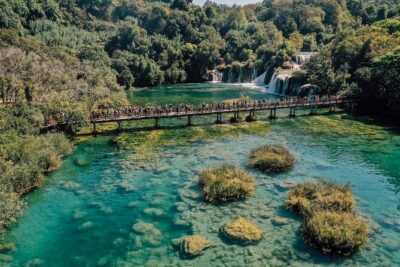
- From Split: Krka Waterfalls, Food & Wine Tasting Tour
★ 5.0 · 9,326 reviews - From Split: Krka Waterfalls, Food & Wine Tasting Tour
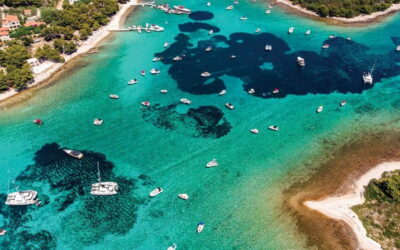
★ 4.9 · 6,598 reviews - Split: Blue Lagoon and 3 Island Cruise with Food and Drinks
★ 4.8 · 1,969 reviews
From Zadar’s bus station to the Dalmatian countryside
The meeting point is the parking area at Zadar’s central bus station, close to McDonald’s. Look for the vehicle with an olive oil advertising board on the side. The tour ends at the same place, which makes the outing easy to fit around other plans in Zadar.
The drive inland takes about 20 minutes at first. You pass from the urban edge into quieter countryside, and the scenery begins to show the agricultural side of northern Dalmatia. The vehicle is air-conditioned, which is welcome during hot months, and the small-group format should make the ride more personal than a standard large coach tour.
You should be ready to leave promptly around noon or 12:30, depending on the confirmed departure time. The operator uses WhatsApp or phone messages to confirm timing and advise you of any changes, so keep an eye on your messages before setting out.
One practical point: the published schedule includes several short transport segments, but the overall timing is approximate. You get roughly 4.5 hours from departure to return, with the main visit at the olive grove taking about two hours. That leaves enough time for each stop to feel purposeful, but not enough for long independent exploration.
A sobering stop at the Operation Leap tank memorial
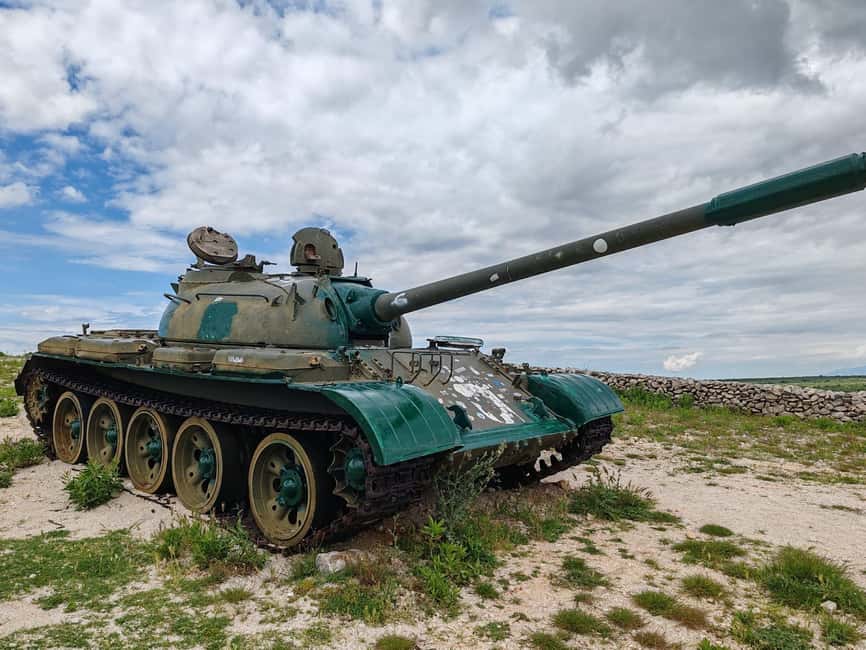
The first sightseeing stop is a tank memorial connected with Operation Leap, a military operation from Croatia’s struggle for independence. It is a brief photo stop of about 10 minutes, but the subject gives the journey a serious opening.
This is not presented as a long battlefield tour. Instead, your guide uses the memorial to explain recent events and the conflict that helped shape modern Dalmatia. That context is useful because the region’s past is not limited to Roman or Venetian monuments. The more recent war still forms part of local identity and memory.
The stop may feel abrupt if you were expecting food and scenery from the moment you leave Zadar. I think that is one reason it works: it prevents the day from becoming a simple tasting trip. You begin by hearing how difficult the area’s recent past has been, then move toward the older fortress and the agricultural traditions that continue today.
Because the visit is short, listen closely. You will not have a long period to wander or read extensive displays. The value is in the guide’s explanation and in seeing a physical memorial in the countryside rather than treating the conflict as an abstract topic.
Benkovac Castle and the frontier between coast and inland
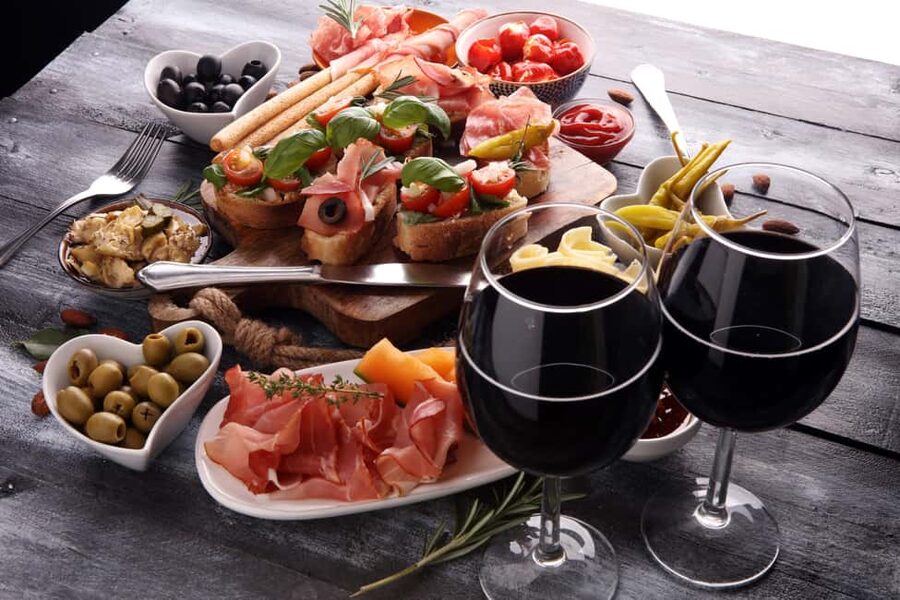
After another short drive, you reach Benkovac Castle. The fortress dates from the 15th century and sits on a hill, giving it a useful view over the surrounding area. You have around 30 minutes here, with a guided or self-guided visit.
Benkovac occupied a strategic position between the coast and the inland routes. That made this part of Dalmatia a frontier zone, shaped by the rise and fall of different powers. The castle’s stone walls make that story easier to grasp than a paragraph in a guidebook. You can see why a hilltop position mattered, even on a short visit.
I like the contrast between the memorial and the castle. One stop deals with 20th-century warfare, while the other points to centuries of shifting borders and military pressure. Together, they give the tour more substance than a standard country lunch excursion.
The drawback is the limited time. Thirty minutes is enough for a look around and some photos, but not for a detailed architectural study. If Benkovac Castle is your main interest, you may want a separate visit with more time. Here, it serves as one chapter in a wider story.
Wear sensible shoes for this part of the day. The information does not specify difficult walking, but a historic hilltop fortress can involve uneven stone surfaces. The stop is short, so you should not expect an extensive climb or a long guided walk.
More history-led days in Croatia:
- Dubrovnik Old Town History Walking Tour
★ 5.0 · 1,684 reviews - Walking Tour of Split with a ‘Magister’ of History
★ 5.0 · 1,122 reviews - Split Walking Tour with Professor of History
★ 5.0 · 926 reviews - Split: History and Heritage Walking Tour
★ 4.9 · 650 reviews
The family olive grove in Lepuri
The tour then heads to Lepuri, where the day’s main event takes place at a family-owned olive grove and mill. You are welcomed with a glass of local sparkling wine, described as Dalmatia’s answer to champagne, before walking among the olive trees.
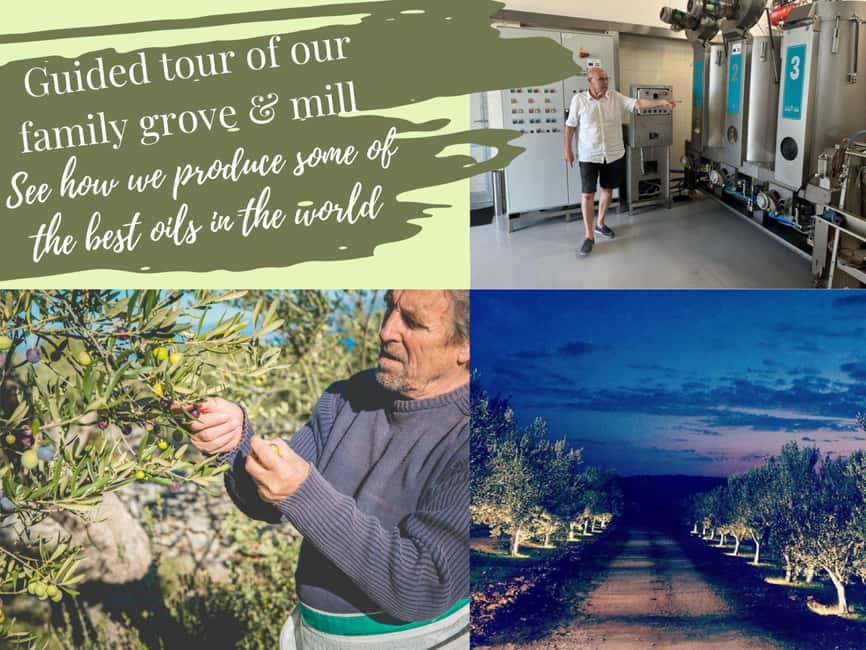
This is where the experience becomes personal. Instead of only tasting a finished product in a shop, you see the trees, hear how local soil and climate affect the fruit, and learn how family practice continues alongside modern production methods. The setting also gives the lunch and tasting a clear sense of place.
The olive mill uses cold-pressing methods. Your host explains how the olives are processed and how modern equipment fits with generations of family knowledge. The point is not simply to watch machinery. You learn why production choices affect freshness, flavour, and the character of the oil.
The olive grove and mill portion lasts about two hours, including the walk, presentation, tastings, and meal. That is a generous share of a 4.5-hour tour, and rightly so. It is the one stop where you get to ask questions, compare products, eat, and relax without constantly checking the clock.
How the olive oil tasting actually helps you
The oil tasting is designed as a lesson, not just a free sample. You compare award-winning oils with lesser oils and learn to notice aroma, balance, and quality. That comparison is useful because many people know they like olive oil but have little idea what separates a fresh extra virgin oil from a flat or inferior one.
The presentation also covers high-polyphenol oil and its health benefits. The focus is on the role of genuine extra virgin olive oil in Mediterranean eating, not on making medical promises. I would treat the health talk as general food education rather than personal health advice.
You may notice pepperiness or a bitter edge in a quality oil. Those sensations can surprise anyone used to mild supermarket oil, but they are part of learning how the product behaves. The point is to pay attention to what you smell and taste, then understand how the oil has been made.
The tasting is one of the strongest reasons to choose this tour over a simple winery visit. You leave with a practical skill you can use when shopping for oil later. You can also buy oil or wine to take home, though purchases are optional and not part of the advertised price.
Wine, lunch, and the best table of the day
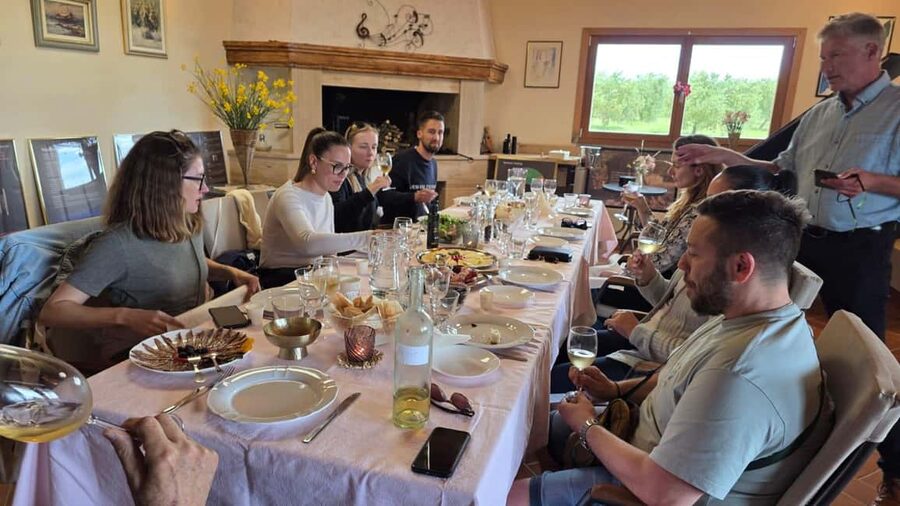
After the oil lesson, you taste red and white wines made from native Croatian grape varieties. This gives you another way to connect local soil and farming tradition with flavour. The choice of red or white wine with lunch lets you follow your own preference rather than forcing one pairing on everyone.
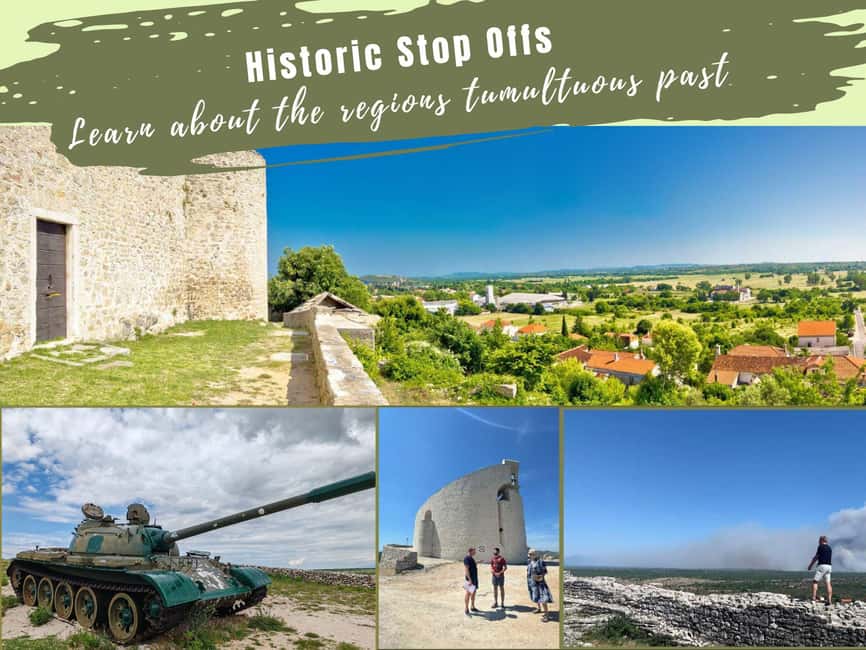
The meal consists of seasonal regional dishes served under the olive trees. The food is drizzled with the family’s oil, so the tasting becomes part of the meal rather than a separate activity. You also receive a glass of local wine with the food.
The exact dishes are not specified, which is worth knowing if you have strict dietary needs or are looking for a particular menu. What is clear is that the meal is traditional and seasonal, with the olive oil treated as a central ingredient. Ask about any dietary concerns before booking, since no special menu details are provided.
I like this format because you are not rushed through a tasting room and then sent away hungry. The meal gives you time to talk with the host and absorb what you learned. It also lets you judge the oil in an ordinary food setting, where it has to work with bread, vegetables, or other regional dishes rather than only on a tasting spoon.
The lunch is likely to be the most social part of the tour. A group of eight creates a shared table without the feel of a large dining room. If you prefer to eat privately or choose from a broad menu, this is not that kind of outing. You are joining a set food experience built around the family’s own products.
Kamenjak Nature Park above Lake Vrana
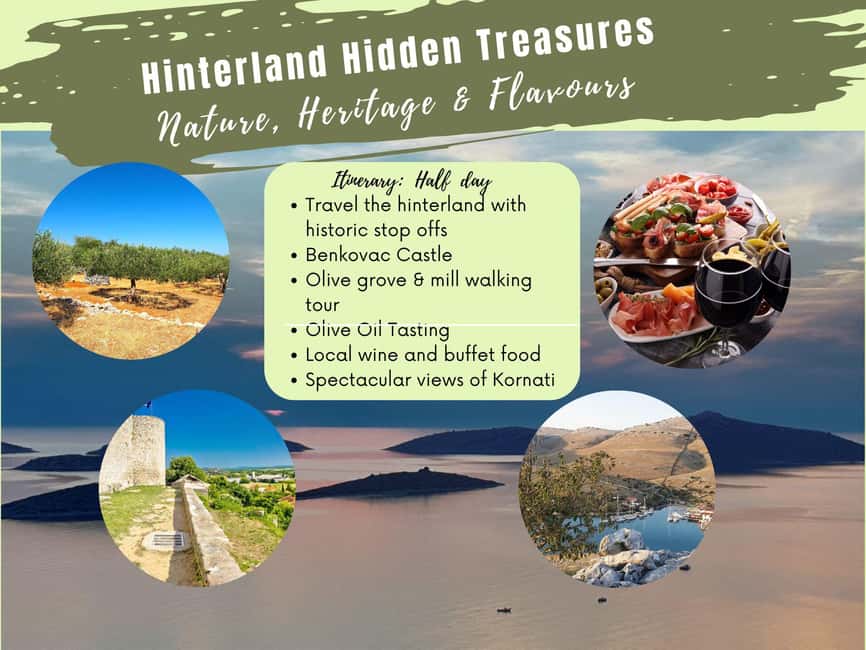
The final stop is Kamenjak Nature Park, high above Lake Vrana. From the hilltop, you can look across vineyards and olive groves toward the Kornati Islands. It is a strong ending because it pulls together the countryside you have crossed with the island views that make the northern Dalmatian coast so famous.
The viewpoint is about scenery rather than a long hike. The available schedule does not describe an extended walking route, so do not book this expecting a full nature trek. Think of it as a scenic pause where you can take photos and look back at the inland route.
The view is also a reminder that coastal Croatia is not only beaches and old-town lanes. From this height, agricultural fields, lake country, and island-dotted sea all belong to one connected region. After the olive grove lunch, the lookout gives the day a quiet final moment.
Weather can affect how clear the Kornati view appears. The tour promises the viewpoint, but no scenic stop can guarantee perfect visibility. Even so, the hilltop setting remains worthwhile because it gives you a different angle on Lake Vrana and the surrounding countryside.
Who will get the most from this experience
I would recommend this outing to anyone who wants food, history, and scenery in one manageable half-day. It suits couples, friends, and solo visitors who enjoy asking questions and trying local products. The small group is especially helpful if you want more contact with the host during the oil lesson.
It is a good fit for people who usually skip organized tours but are curious about local food. The experience has enough independent-looking stops to avoid feeling like a simple bus loop, while the included transport removes the need to navigate rural roads.
It may be less suitable if your priority is a long castle visit, a serious nature walk, or a flexible lunch. Benkovac Castle is brief, Kamenjak is a viewpoint stop, and the meal follows the family’s schedule. The tour also does not accept children under 12 or babies under one year, and it is not suitable for people over 95.
English is the tour language. The group is limited to eight in the usual minibus, though groups of up to 16 may travel by air-conditioned coach. If group size matters to you, confirm the vehicle when booking.
Timing, cost, and practical planning
At $44, the tour offers a useful amount for the time involved. You are paying not only for a ride from Zadar, but also for instruction, access to the castle, a working mill visit, several tastings, lunch, wine, and a guide who handles the regional context.
The afternoon schedule leaves your morning free for Zadar’s old town or a slower start. You should avoid booking another fixed activity too close to the 17:00 return, since traffic or a longer stop can affect the exact arrival time. The meeting and return point at the central bus station make onward plans fairly simple.
Free cancellation is available up to 24 hours before departure, and you can reserve now and pay later. That is helpful when your route through Dalmatia is still changing. Pickup details are centered on Zadar, with additional pickup information noted for Vodice, Sibenik, and Murter, so confirm your exact location before booking.
The operator also asks you to be ready on time. That small detail matters on a half-day trip with multiple stops. A late departure would cut into the castle or grove visit rather than simply making the whole afternoon longer.
Should you book the Dalmatian hinterland tour?
Book it if you want a compact introduction to the inland side of Dalmatia and care as much about how food is made as how it tastes. The strongest elements are the hands-on oil comparison, the family mill, the local lunch, and the final view toward the Kornati Islands.
I would especially choose it if you have already seen Zadar’s main sights and want a change from the coast. The historical stops add weight, while the olive grove keeps the day warm and social.
Skip it if you want a full castle tour, a strenuous walk, or complete control over your schedule. For most people seeking good value in a small group, though, $44 buys a well-balanced afternoon with useful food knowledge, regional stories, and scenery you would be unlikely to reach as easily on your own.
FAQ
Where does the tour start and finish?
The tour starts in the parking area of Zadar’s central bus station, close to McDonald’s. It ends back at the same meeting point.
How long does the experience last?
The experience lasts about 4.5 hours, generally from around 12:30 to 17:00. Check the available departure time when booking.
What is included in the price?
The price includes transport, an English-speaking guide, access to Benkovac Castle, the olive grove and mill visit, oil tasting tuition, local food, a glass of red or white wine, and the health education presentation.
How large is the group?
The usual small group has a maximum of eight people in an air-conditioned minibus. An air-conditioned coach may be used for groups of up to 16.
Can I buy olive oil or wine during the tour?
Yes. You can purchase olive oil or wine to take home, but buying products is optional.
Is the tour suitable for children?
The experience is not suitable for children under 12 or babies under one year. It is also not suitable for people over 95 years old.
Just added around Croatia
- Kamenjak Nature Park: Kayak Tour with Snorkeling & Cave Exploring★ 5.0 · 15 reviews
- Dolphin & Sunset tour with Brijuni panorama★ 5.0 · 119 reviews
- Transfer Pula – Poreč★ 5.0 · 5 reviews
- Clear Kayak Glow Night Tour★ 5.0 · 69 reviews
- Pula / Pješčana Uvala: Sunset SUP Tour – Explore & Chill★ 5.0 · 16 reviews
- Kayaking to Island Saint Jerolim with snorkeling activitie★ 4.5 · 26 reviews
- 1.5-hour Clear Kayak Rentals: Explore Verudela Cave & Islands★ 5.0 · 39 reviews
- Scuba Diving for Beginners in Pula★ 5.0 · 29 reviews
Food & Drink, compared.
Blue Lagoon and 3 Island Cruise with Food and Drinks
Read our review →

Full-Day Catamaran Cruise to Hvar & Pakleni Islands with Food and free Drinks
Read our review →
Dubrovnik Food and Drink Walking Tour with a Local Guide
Read our review →
Dubrovnik Guided Group Tour with Ston Oyster tasting from Split & Trogir
Read our review →
Split Food Tour: Discover Split One Bite At A Time
Read our review →Browse the lists this tour appears in