
Reviewed · HISTORICAL TOURS
Pula: Historic Sites Private Walking Tour
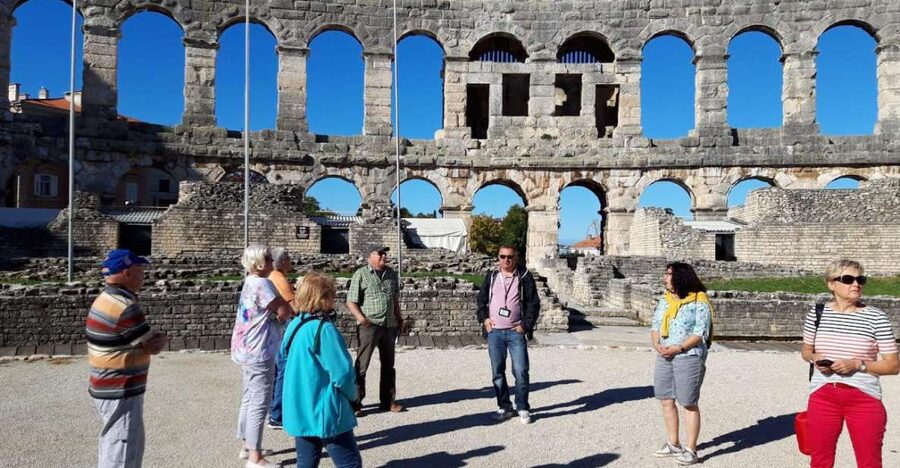
Pula’s 2,000-year-old Roman core is compact enough to explore on foot, but its layers can be hard to read without help. This private tour connects the enormous Arena, Venetian castle, Roman Forum, Augustus Temple, cathedral, market, and ancient gates into one clear story.
I like the private format, which gives your group room to ask questions and adjust the pace. I also like the guide’s practical care: one recent guest praised the advice on toilets and the willingness to suggest an easier route when a steep section proved difficult.
The main drawback is the pace. Two hours is enough for a strong introduction, but not a slow, detailed visit inside every sight. You also pay entry fees separately, and the route includes slopes and walking that may not suit people with mobility impairments.
Key points to know before booking
- Pula Arena begins the story: Spend about 40 minutes learning how this huge Roman amphitheater shaped the city.
- The castle gives you a high view: The 17th-century Venetian fortress adds a later chapter and a useful look across Pula.
- Roman details appear along ordinary streets: Look for mosaics, old gateways, the Arch of Sergii, and the Augustus Temple.
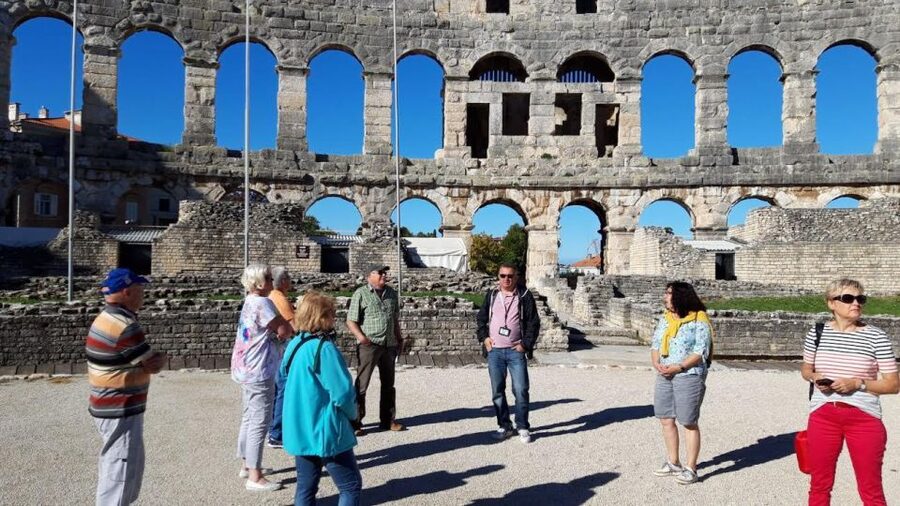
- The private group format matters: You can ask questions freely and keep the walk focused on your interests.
- Arena admission is extra: You can enter after the introduction, pay on the spot, and skip the ticket line.
- The walk is weatherproof: It runs rain or shine, so bring suitable clothing and shoes.
Starting at Pula Arena
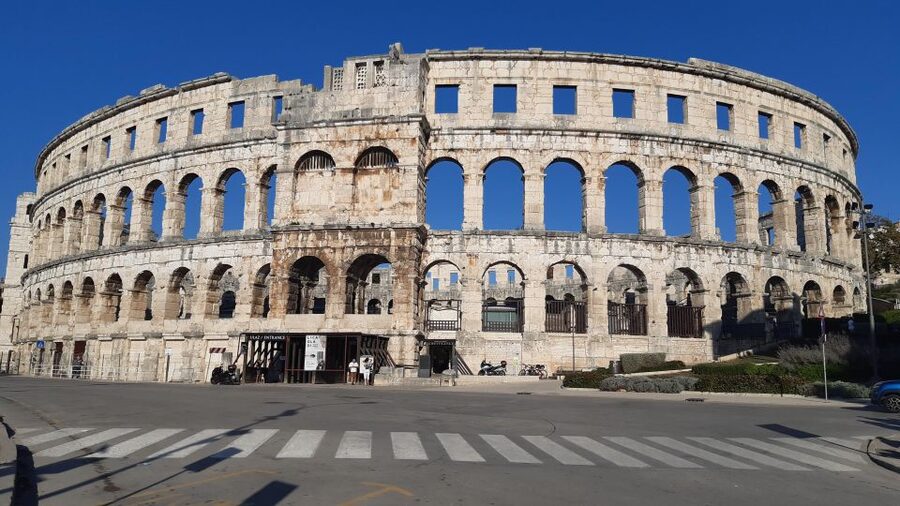
Meet your guide in front of the Amphitheater entrance at Istarska ul. 50. Look for a blue card around the guide’s neck and an umbrella. That detail matters because the Arena sits in a busy part of town, and a clear meeting signal saves time at the start.
The first part lasts about 40 minutes. Your guide gives you an overview of the amphitheater, one of Pula’s most striking sights and the natural anchor for understanding the city’s Roman past.
The Arena is more than a quick photo stop. Its size helps you grasp the importance of ancient Pula, while the guide can point out details you might otherwise pass without noticing. I like beginning here because the building gives the rest of the walk a clear reference point: after seeing the Roman monument at full scale, smaller ruins and fragments around town make more sense.
You may choose to go inside. Admission is not included, but you can buy your ticket on the spot, and the tour offers a way to skip the ticket line. If you care about seeing the interior, allow for that choice when planning your two-hour schedule. If you mainly want the city walk, the exterior explanation still gives you a useful start without adding an entry fee.
More history-led days in Croatia:
- Dubrovnik Old Town History Walking Tour
★ 5.0 · 1,684 reviews - Walking Tour of Split with a ‘Magister’ of History
★ 5.0 · 1,122 reviews - Split Walking Tour with Professor of History
★ 5.0 · 926 reviews
Climbing to the Venetian castle
From the Arena, the route continues to Pula Castle, built by the Venetians in the 17th century. This changes the focus from ancient Rome to the later powers that controlled the city.
The castle is useful because it shows that Pula is not only a Roman site. Your guide explains its past inhabitants and the role the fortress played, giving you a broader view of the city’s political and military story.
The climb also brings panoramic views. That is one of the strongest reasons to keep the castle on the route. From above, you can better understand how the old center fits together, rather than seeing each monument as an isolated stop.
There is a practical point here: the route includes a steep section. A recent guest specifically appreciated the guide checking if everyone could manage the climb and offering an alternative. That makes this a better choice for a mixed-age private group than a rigid walking route, although the activity is still not recommended for people with mobility impairments.
Cathedral, Forum, and Augustus Temple
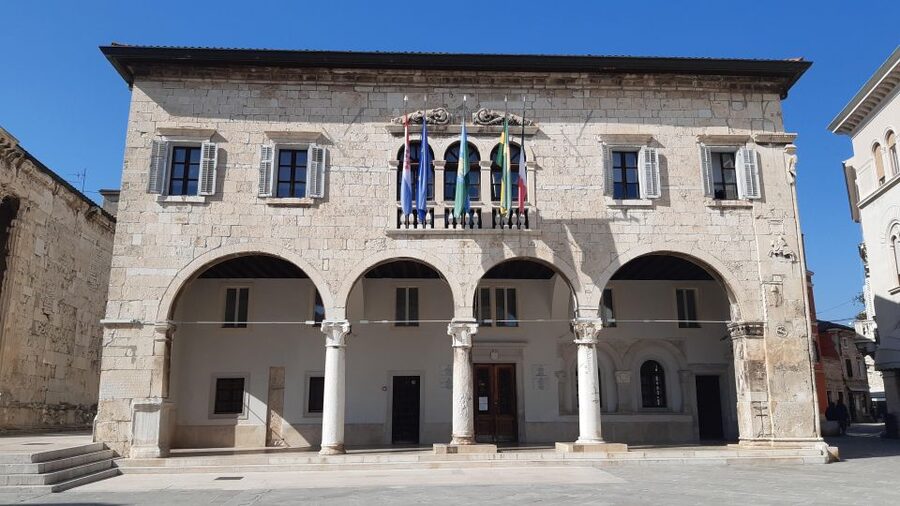
The walk then heads to the cathedral and the Roman Forum. This section puts Pula’s ancient civic life next to its later religious and municipal buildings.
The Forum is especially important because it was the public heart of Roman Pula. The Augustus Temple is the clearest surviving Roman feature here, and its age gives the square a powerful sense of continuity. You do not need a long lecture to appreciate it, but the guide’s explanation helps you understand why the temple matters and how it fits into the wider Roman town.
City Hall adds another layer to the same setting. I like this part of the route because the buildings are close enough to compare, yet they represent different periods and functions. In a few steps, you move from Roman worship and public life to later civic use.
The guide also points out Roman mosaics along the way. These are easy to miss because they are not presented as one grand monument. A local guide can show you where to look and explain why small surviving details matter. This is where a guided walk earns its keep: you are not simply led from one famous building to another, you are shown traces woven into the streets.
The Arch of Sergii and ancient street details
The Arch of Sergii is another major Roman marker on the route. It gives you a chance to see how ancient Pula survives within the modern city rather than in a separate archaeological park.
Your guide discusses architecture, culture, and the city’s heritage as you move between stops. The benefit of a private walk is that you can ask about details that catch your eye, including the meaning of a carved feature or the purpose of a building.
I would not expect every stop to receive the same amount of time. The Arena takes about 40 minutes, leaving about 80 minutes for the rest of Pula’s center. That is enough for an organized overview, but not for long independent pauses at every monument. If you want to photograph each site carefully or read every plaque, you may need to return later on your own.
More walking tours in Croatia:
- Dubrovnik: Old Town Walking Tour
★ 4.8 · 5,174 reviews - Split: Old Town and Diocletian Palace Walking Tour
★ 4.9 · 4,727 reviews - Dubrovnik Discovery Old Town Walking Tour
★ 5.0 · 4,458 reviews - Walking Tour of Split and Diocletian’s Palace
★ 5.0 · 2,588 reviews
Pula Market in the early 1900s
The route includes Pula Market, established in the early 1900s. This is a welcome change from temples, fortifications, and monumental arches because it brings the walk into the city’s everyday life.
A market can tell you something that formal ruins cannot. It shows how the center has continued to serve local needs, and it gives the tour a more grounded rhythm. Instead of moving only between grand attractions, you see a place tied to ordinary shopping and daily routines.
The market is also a useful pause in the historical sequence. By this point, you have moved from Roman rule to Venetian control and later civic life. The market helps connect that past to the living city around you.
Do not expect a food tour or a market tasting experience. The provided details describe a visit and historical context, not food samples or shopping time. I would treat it as a short cultural stop within the walking route.
Hercules Gate and the finish at Twin Gate
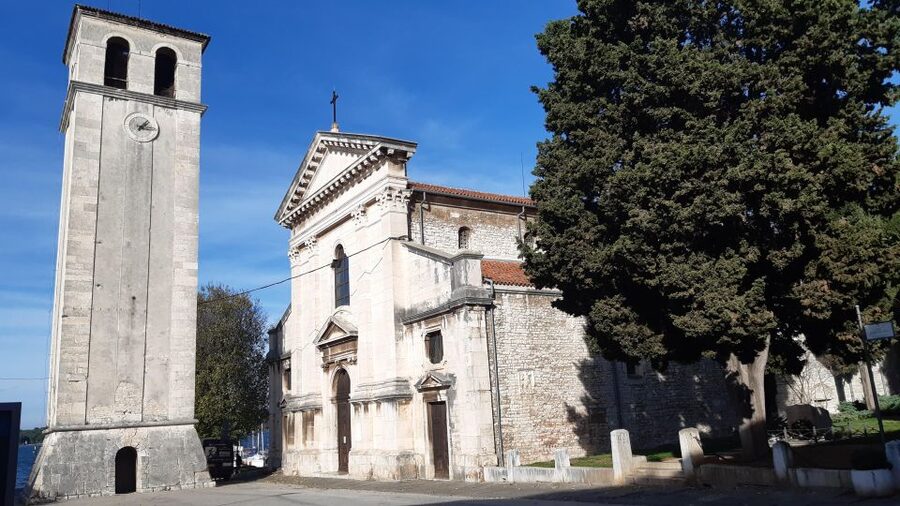
The ancient Gate of Hercules is one of the final historical points. It is another reminder that Pula’s Roman remains are spread through the center, sometimes in places that look modest beside the Arena or Augustus Temple.
This stop suits the tour’s main purpose: helping you spot Roman traces that you might otherwise walk past. The guide can explain the gate’s place in the city’s old defenses and point out how the surviving structure fits into the modern streets.
The tour finishes at the Twin Gate, with drop-off listed at Carrarina ul. 8. Ending there is practical if you plan to keep exploring the center, since you are not returned to the original meeting point. It also means you should think ahead about your next stop, especially if you have a timed reservation elsewhere.
What the private format is worth
The price is $136 per group of up to 49 people. That is not a per-person price, so the value improves sharply when several people share the cost. For two people, it is a costly way to get a short introduction. For a family or larger private party, the same flat rate can make more sense.
The maximum group size is unusually high for a private booking. A group of 49 would not feel as intimate as a small family walk, even though it remains private to your party. If your group is large, stay close to the guide and confirm that everyone can hear clearly in busy streets.
The best value comes from the local context. You are paying for a guide who links scattered Roman remains, Venetian defenses, religious buildings, and modern civic spaces. If you only want to see the Arena and take photographs, you can spend less by visiting independently. If you want the city’s pieces explained in one efficient route, the fee is easier to justify.
Entry tickets are not included. The Arena is the main optional admission mentioned, and you can pay at the site. Build that extra cost into your budget rather than treating the advertised group price as the full cost of every activity.
Language, pace, and accessibility
Tours are offered in English or German with a live guide. That makes the experience useful for visitors who want explanations rather than an audio guide or a self-led walk.
The tour takes place rain or shine. Pula’s historic center has outdoor sections, so you should dress for the forecast and wear shoes suited to slopes and uneven walking. The guide’s practical attention to toilet locations is worth noting on a two-hour route, especially for families or anyone who prefers to plan breaks.
The information says the activity is wheelchair accessible, while also stating that it is not suitable for people with mobility impairments. Those details do not fully agree. If accessibility is important for you, contact Istria Tours before booking and ask about the steep section, route alternatives, and the exact level of assistance possible.
Who will get the most from this walk
I would choose this tour if you have only a short time in Pula and want the main historic sights tied together. It also suits families, couples, and private groups who prefer to ask questions without sharing the walk with strangers.
It is a good fit for first-time visitors who want a clear introduction before exploring more deeply on their own. The guide can give you enough context to decide which places deserve a return visit.
You may want a different plan if you dislike walking, need a fully step-free route, or want long visits inside the monuments. The two-hour schedule favors coverage and explanation over a slow museum-style experience.
The strongest feature is the guide’s role as an interpreter of small details. Pula’s headline attractions are easy to find. Roman mosaics, old gates, and the relationship between the Forum and later buildings are harder to read without help. That is where this walk provides its main benefit.
Should you book Pula’s historic sites walk?
Book it if you want a focused private introduction to Pula and value clear historical explanation over free-form wandering. The route covers an impressive range in two hours, from the Arena and Augustus Temple to a Venetian castle, market, cathedral, mosaics, and ancient gates.
I would be cautious if your group includes anyone with serious mobility limits, since the route contains a steep section despite the accessibility note. I would also compare the flat $136 price with your group size and remember that admission tickets cost extra.
For a small group, the cost is easiest to defend when you want personal questions answered and the city explained in one sitting. For a larger group, the shared rate can be good value. Either way, wear sensible shoes, arrive at the Arena entrance early enough to spot the guide’s blue card and umbrella, and keep some time afterward to revisit the places that catch your eye.
FAQ
Where does the tour begin?
Meet your guide in front of the entrance to Pula Amphitheater at Istarska ul. 50.
How will I identify the guide?
The guide will have a blue card around their neck and hold an umbrella.
How long does the tour last?
The walking tour lasts two hours.
Is entry to Pula Arena included?
No. Entry tickets are not included. You can choose to go inside and pay for admission on the spot.
Can I skip the ticket line at the Arena?
Yes. The activity includes the option to skip the ticket line.
Which languages are available?
The live tour guide is available in English and German.
Is this a private tour?
Yes. It is offered as a private group activity.
Does the tour run in bad weather?
Yes. The tour takes place rain or shine.
Is the tour suitable for people with mobility impairments?
The activity information says it is not suitable for people with mobility impairments. It also identifies the tour as wheelchair accessible, so you should contact Istria Tours in advance to clarify the route and the steep section if accessibility is a concern.
Just added around Croatia
- Kamenjak Nature Park: Kayak Tour with Snorkeling & Cave Exploring★ 5.0 · 15 reviews
- Dolphin & Sunset tour with Brijuni panorama★ 5.0 · 119 reviews
- Transfer Pula – Poreč★ 5.0 · 5 reviews
- Clear Kayak Glow Night Tour★ 5.0 · 69 reviews
- Pula / Pješčana Uvala: Sunset SUP Tour – Explore & Chill★ 5.0 · 16 reviews
- Kayaking to Island Saint Jerolim with snorkeling activitie★ 4.5 · 26 reviews
- Scuba Diving for Beginners in Pula★ 5.0 · 29 reviews
- Pula Kayak Tour-Cliff jumping,snorkeling& free GoPro pictures★ 5.0 · 94 reviews
Historical Tours, compared.
Walking Tour of Split with a ‘Magister’ of History
Read our review →

Split History and Gastro Small-Group Tour with Food and Drinks
Read our review →
PREMIUM Emperor’s Walking Tour for History Lovers + Museum
Read our review →Browse the lists this tour appears in